
Yorkshire Terrier Guide: Temperament, Size & Health
Quick Facts
| Attribute | Detail |
| Group | AKC Toy Group |
| Height | 7–8 in |
| Weight | 7 lb or under (standard) |
| Lifespan | 11–15 years |
| Coat | Long, silky, hair-like (not fur) |
| Colors | Steel blue and tan |
| Temperament | Confident, feisty, affectionate, alert |
| Best suited for | Apartment living, owners ready for real grooming commitment |
The Yorkshire Terrier is a small dog with an outsized personality, built from working terrier stock and refined over more than a century into one of the world’s most recognizable toy breeds. Its silky blue-and-tan coat gets most of the attention, but the more useful story for a prospective owner is what’s underneath it: a confident, occasionally stubborn terrier temperament, real dental and orthopedic health considerations tied directly to its small size, and a grooming commitment that’s easy to underestimate.

History: From Yorkshire Mill Ratter to Victorian Lapdog
The Yorkshire Terrier’s origin has nothing to do with laps or fashion. In the mid-1800s, working-class families migrated from Scotland into the industrial mill towns of Yorkshire, England, bringing small terrier breeds with them. Mill and mine workers crossed several of these terrier types, likely including the Scottish Terrier, Skye Terrier, and now-extinct Clydesdale and Paisley Terriers, to produce a small, fast, tenacious dog capable of chasing rats through the cramped, dangerous spaces of textile mills and coal mines. Size and coat weren’t originally bred for elegance; they were incidental to a dog built for a job most owners today would find hard to picture.
The breed’s transformation began with a single, extensively documented dog: Huddersfield Ben, born in 1865, is widely credited as the father of the modern Yorkshire Terrier. Ben was a champion show dog and a prolific sire whose offspring set the template for the breed’s silky coat and compact frame, and his influence on the breed’s bloodlines is still traceable in pedigrees today. As Victorian England’s fascination with small, decorative companion dogs grew, breeders leaned further into refining the Yorkshire Terrier’s coat length and color rather than its ratting ability, and the breed’s identity shifted rapidly from working mill dog to fashionable lapdog. The American Kennel Club recognized the Yorkshire Terrier in 1885, and it has remained one of the most popular toy breeds in the world ever since — a striking journey for a dog whose ancestors were valued for surviving in a mill’s rafters.
That transformation accelerated once the breed entered the competitive dog show circuit in the late 19th century. Breeders began actively selecting for longer, silkier coats and a more consistent steel-blue-and-tan color pattern, traits that had far more to do with ring presentation than with any working ability. Coat length in particular became something of a status symbol among Victorian breeders and owners, and the show-ring standard that emerged from that era, favoring a floor-length, perfectly parted coat, still shapes how the breed is judged today, even though the vast majority of pet Yorkies never see a show ring and are kept in far more practical, shorter cuts.
Yorkshire Terrier vs. Biewer Terrier: A Modern Genetic Offshoot
One of the more interesting and least-discussed facts about the Yorkshire Terrier is that it has a direct modern descendant: the Biewer Terrier. In 1984, German breeders Werner and Gertrud Biewer noticed a piebald (white-spotted) puppy born from two purebred Yorkshire Terriers carrying a recessive color gene. Rather than a separate ancient lineage, the Biewer Terrier is genetically a Yorkshire Terrier color variant, deliberately developed into its own breed over the following decades and eventually granted separate recognition. If you’re comparing the two breeds, the practical differences come down to coat coloring and pattern rather than temperament or structure — a Biewer is, in essence, a piebald Yorkie with its own now-distinct breed standard. Our full Biewer Terrier guide covers that recognition history in more detail.
Yorkshire Terrier vs. Poodle vs. Bichon Frise
Buyers comparing small, low-shedding companion breeds frequently narrow their search to these three. All three are popular apartment-friendly choices, but their coat types, grooming demands, and terrier-versus-non-terrier temperaments differ meaningfully.
| Attribute | Yorkshire Terrier | Poodle (Toy) | Bichon Frise |
| Origin | England | Germany/France | France |
| Weight | 7 lb or under | 4–6 lb | 12–18 lb |
| Coat | Long, silky, hair-like | Dense, curly | Soft, curly, dense |
| Temperament | Feisty, confident terrier | Alert, highly trainable | Cheerful, sociable |
| Shedding | Minimal | Minimal | Minimal |
See our full guides to the Poodle and the Bichon Frise for a broader small-companion-breed comparison.
Appearance
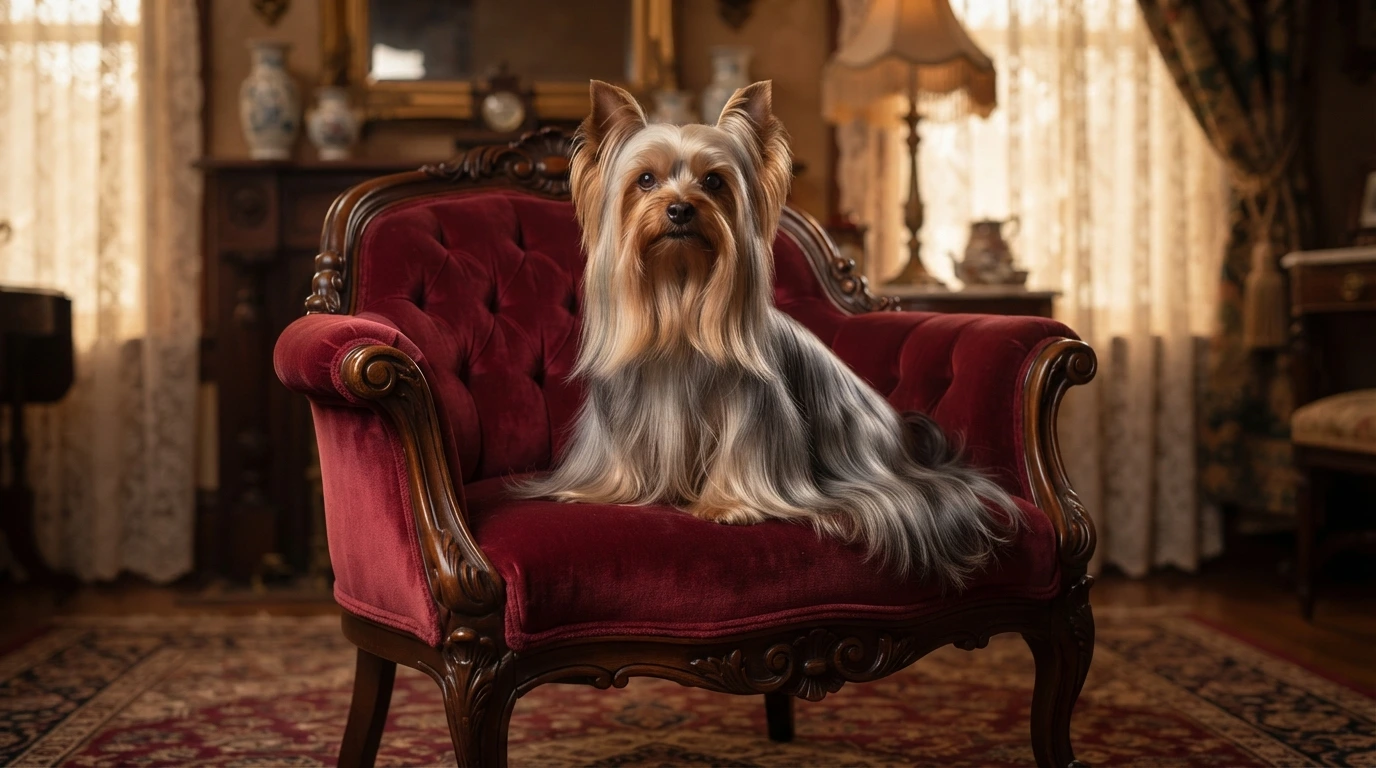
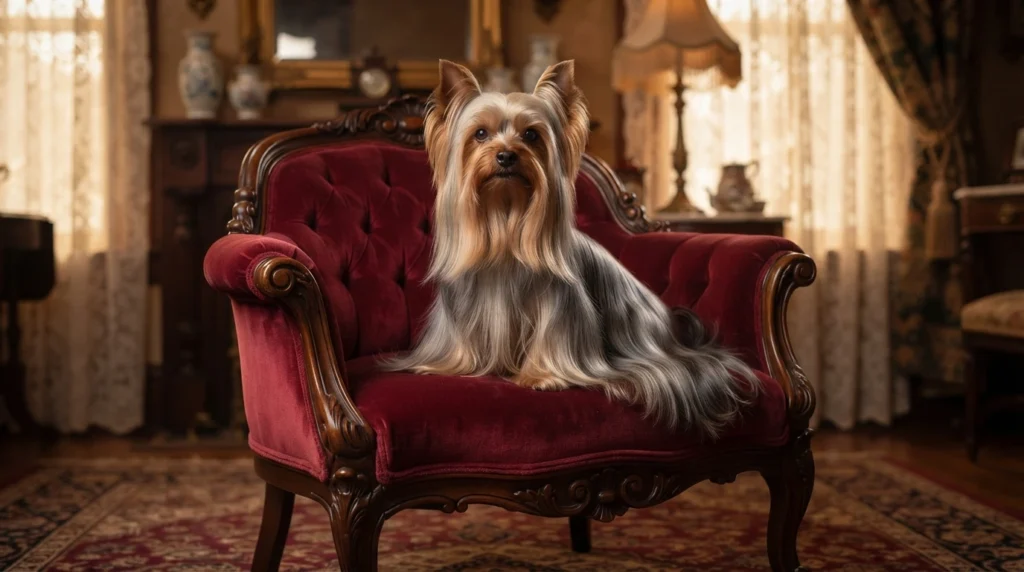
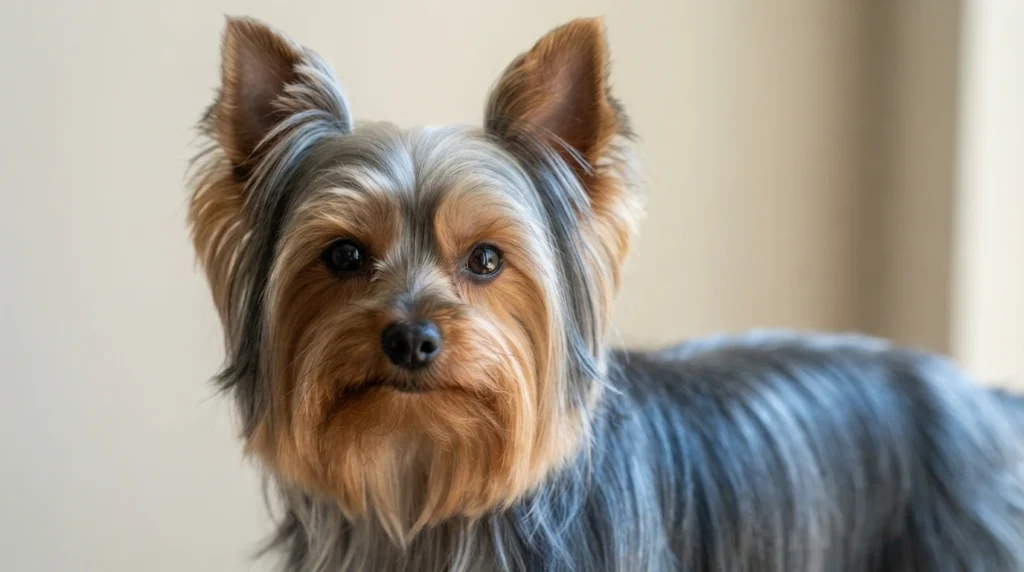
The Yorkshire Terrier’s defining feature is its coat: long, fine, and silky rather than fluffy, traditionally parted down the back and falling straight on either side. Correct adult coloring is a steel blue on the body with rich golden-tan on the head, chest, and legs — puppies are born black and tan and develop their adult blue coloring gradually over the first couple of years. The breed’s compact, level toy structure and confident carriage give it a presence disproportionate to its size.
Temperament
Yorkshire Terriers were bred to chase animals many times their own size, and that confidence didn’t disappear when the job did. Owners often describe the breed as a “big dog in a small body” — alert, bold, and sometimes entirely unaware of how small it actually is, which can lead a Yorkie to confidently challenge a much larger dog. With family, most Yorkies are deeply affectionate and enjoy being close to their people, though they can be reserved, vocal, or even snappish with strangers or unfamiliar dogs without adequate socialization. Their terrier instincts also mean a real prey drive toward small animals and a tendency to bark at anything unfamiliar, which is worth planning for in apartment settings with shared walls.
Is a Yorkshire Terrier Right for You?
The Yorkshire Terrier adapts well to apartment living and doesn’t need a yard, which makes it a popular urban companion. That said, its small size makes it genuinely fragile — falls, rough handling, or an accidental step can cause serious injury, which is why most breeders and veterinarians recommend against Yorkies in households with very young children who can’t yet be trusted to handle a small dog gently. Despite the compact size, this is not a low-engagement breed: Yorkies are intelligent and can become bored or anxious without regular mental stimulation, training, or companionship. If you want a portable, affectionate companion and can commit to its grooming and socialization needs, the fit is often excellent. Households with older, gentler children, or no children at all, tend to be the best match, and many Yorkies do well as a household’s only dog or alongside other calm, similarly sized pets.
Training
Yorkshire Terriers are intelligent and food-motivated, but their terrier stubbornness means training sessions need to stay short, consistent, and positive to hold their attention. Housebreaking often takes longer in toy breeds generally, Yorkies included, partly because of their small bladder capacity — patience and a consistent schedule matter more than corrections here. Early socialization to a range of people, dogs, and everyday sounds helps offset the breed’s tendency toward reactive barking or wariness of strangers.
Exercise Needs
Physical exercise needs are modest: short daily walks and indoor or yard play are typically sufficient to keep a Yorkie physically satisfied. Mental stimulation matters more than distance covered — puzzle toys, short training sessions, and varied walking routes help prevent the boredom-driven barking and mischief this breed is prone to when under-stimulated.
Grooming: The Real Cost of That Silky Coat
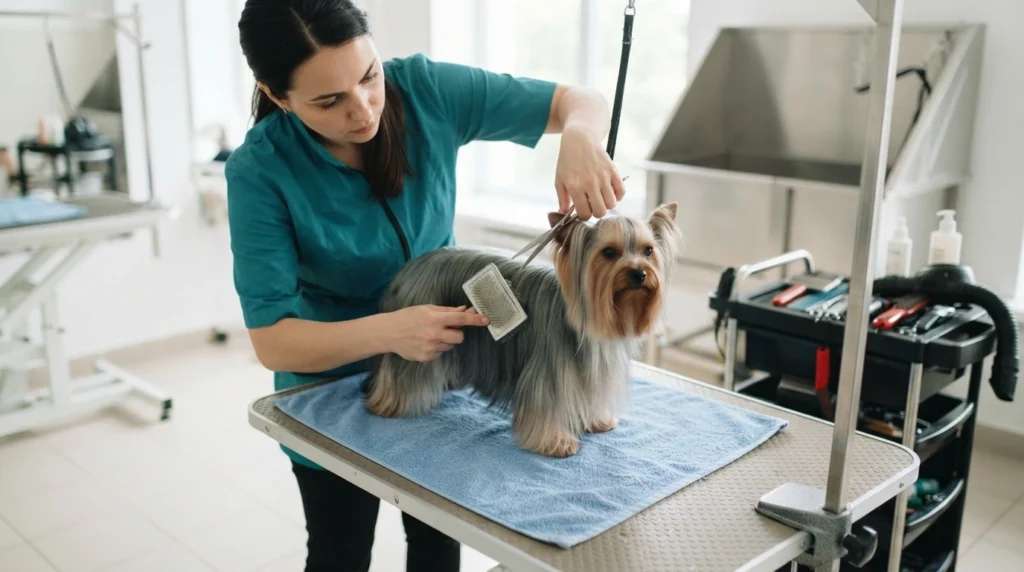
The Yorkshire Terrier’s coat is high-maintenance if kept in its traditional long, floor-length show style, requiring daily brushing to prevent matting and regular professional grooming to maintain length and condition. Most pet owners instead keep their Yorkie in a shorter “puppy cut,” which is far more manageable but still needs brushing several times a week and a professional trim roughly every 4 to 8 weeks. That recurring grooming appointment is a real, ongoing cost that first-time toy-breed owners frequently underestimate when budgeting for the dog, not a one-time expense.
Health and Lifespan: Small Size, Real Risks
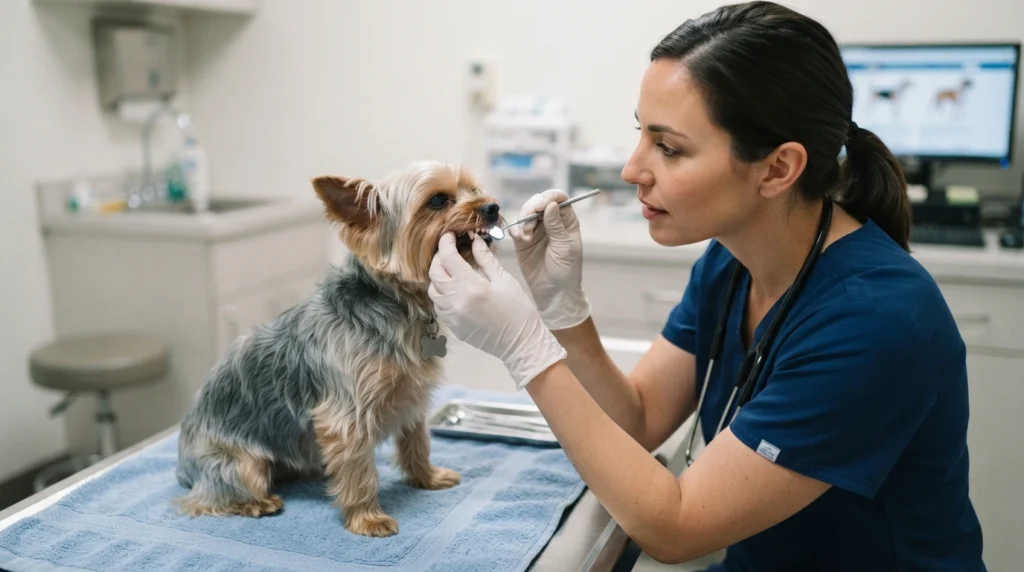
Toy breeds carry a specific cluster of health risks tied directly to their small size, and the Yorkshire Terrier is no exception. Periodontal disease is dramatically more common in toy breeds than in larger dogs, largely because a full set of adult teeth is crowded into a proportionally tiny jaw, making plaque buildup and early tooth loss common without consistent dental care; annual professional cleanings and daily at-home brushing meaningfully reduce this risk. Patellar luxation, a kneecap that slips out of its normal groove, is common in small breeds and ranges from a minor intermittent issue to one requiring surgical correction. Tracheal collapse, a weakening of the windpipe cartilage that causes a distinctive honking cough, also appears with some regularity in toy breeds as they age.
One issue deserves direct, unromanticized treatment: “teacup” Yorkies. Teacup is not a recognized size classification by the AKC or any legitimate breed standard — it’s a marketing term applied to dogs bred to be smaller than the standard, typically under 4 pounds. Breeding deliberately for extreme smallness meaningfully raises the risk of juvenile hypoglycemia (dangerously low blood sugar, especially in young puppies), portosystemic liver shunt, and other organ and skeletal defects, because it often means breeding from the runts of litters rather than selecting for health. A “teacup” label should be treated as a red flag warranting extra scrutiny of a breeder’s health-testing practices, not as a premium feature worth paying more for. With routine dental care, weight management, and screening for these known risks, a well-bred Yorkshire Terrier typically lives 11 to 15 years.
It’s also worth understanding that dental cleanings in toy breeds carry a genuine anesthesia consideration. Because Yorkies are so small, veterinarians calculate anesthesia dosing with extra precision and typically run pre-anesthetic bloodwork to check for underlying issues like liver shunt before any procedure requiring sedation. This isn’t a reason to avoid necessary dental cleanings, which are far riskier to skip than to schedule, but it is a reason to choose a veterinarian experienced with toy breeds and to ask directly about their small-patient anesthesia protocol.
Nutrition
Very young Yorkshire Terrier puppies, particularly smaller individuals, are prone to hypoglycemia and benefit from small, frequent meals rather than one or two large ones until they’re a bit older and better able to regulate blood sugar between feedings. A toy-breed-formulated food with appropriately sized kibble supports both nutrition and dental health, and owners should watch portion sizes carefully, since even small amounts of excess weight are proportionally significant on a 5-to-7-pound frame.
Cost and Adoption
A Yorkshire Terrier puppy from a reputable, health-tested breeder typically costs $1,200 to $2,500; “teacup” marketed puppies are sometimes priced higher despite carrying more health risk, not less, which is worth remembering when evaluating a listing. Annual costs, including food, routine veterinary care, and grooming, generally run $1,000 to $1,800, with professional grooming appointments and dental cleanings representing two of the more consistent recurring expenses that budget-conscious buyers sometimes overlook when first pricing out toy-breed ownership.
Common Buyer Mistakes
- Paying a premium for a “teacup” label. Extreme smallness is a health liability, not a bonus feature — verify a breeder’s health-testing practices rather than paying more for a riskier dog.
- Underestimating grooming time and cost. A long-coated Yorkie needs daily brushing; even a puppy-cut Yorkie needs regular professional trims, and skipping this leads to painful matting.
- Skipping dental care. Toy-breed dental disease progresses quickly without routine cleanings and at-home brushing; this is one of the most consequential and most avoidable health costs in the breed.
- Assuming the breed is fragile in temperament as well as body. Yorkies are physically delicate but temperamentally bold — under-socializing them because they seem “too small to need it” often produces a reactive, barky adult dog.
- Getting a Yorkie for a home with very young children. The size mismatch creates real injury risk for the dog; this pairing is generally discouraged by breeders and veterinarians alike.
- Overfeeding a proportionally tiny body. Excess weight has an outsized effect on joint and cardiac health in a dog this small.
- Choosing a veterinarian without toy-breed experience. Anesthesia dosing, dental work, and small-patient handling all benefit from a vet who regularly treats toy breeds rather than one whose caseload is mostly larger dogs.
FAQ
Is a teacup Yorkie safe to buy?
“Teacup” isn’t a recognized size class — it describes dogs bred deliberately smaller than the breed standard, which raises the risk of hypoglycemia, liver shunt, and other organ or skeletal problems. Treat the label as a red flag prompting more scrutiny, not a premium feature.
Are Yorkshire Terriers hypoallergenic?
No dog is truly hypoallergenic, but Yorkies have hair rather than fur and shed minimally, which makes them a common choice for allergy-sensitive households. Individual reactions still vary, so spending time with the breed before committing, ideally including a visit to the breeder’s home, is worthwhile for anyone with known allergies.
How is a Yorkshire Terrier different from a Biewer Terrier?
The Biewer Terrier descended directly from a piebald color mutation in Yorkshire Terrier bloodlines in 1984 Germany. The two breeds share structure and temperament; the main visible difference is the Biewer’s white-and-color patterning versus the Yorkie’s solid blue-and-tan coat.
How long do Yorkshire Terriers live?
Typically 11 to 15 years with routine dental care, weight management, and screening for patellar luxation and other small-breed-specific risks.
Do Yorkshire Terriers bark a lot?
They can. Strong terrier instincts and natural wariness of the unfamiliar mean Yorkies are prone to reactive barking without consistent socialization and training from puppyhood.
How big do Yorkshire Terriers get?
The breed standard calls for 7 pounds or under as an adult, typically standing 7 to 8 inches at the shoulder.
How much does a Yorkshire Terrier cost to own?
Expect $1,200 to $2,500 for a health-tested puppy from a reputable breeder and roughly $1,000 to $1,800 annually thereafter, with grooming and dental care as consistent recurring costs.
Conclusion
The Yorkshire Terrier’s journey from Yorkshire mill ratter to one of the world’s most popular lapdogs is a genuinely remarkable transformation, but the working terrier underneath the silky coat never fully disappeared. Prospective owners who understand that combination — a confident, occasionally stubborn temperament paired with real size-specific health and grooming demands — tend to be well matched with the breed. Those chasing a “teacup” novelty or underestimating the coat-care and dental commitment are the ones most likely to be caught off guard. Go in informed, well-prepared for the grooming table and the vet’s office alike, and the Yorkshire Terrier delivers an outsized amount of personality and companionship for its size.