
Biewer Terrier: The Complete Guide to the World’s Most Precisely Documented Breed
Biewer Terrier

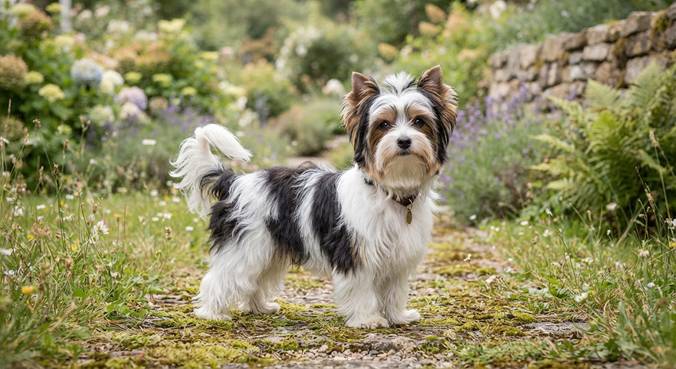
Most dog breeds trace back to centuries of vague regional tradition, their true origins lost somewhere in the fog of history. The Biewer Terrier is the opposite: it can trace its entire existence to one specific day, one specific kennel, and one specific puppy, whose birth record still exists. This guide gives that remarkably documented origin story its full due, explains exactly how scientists confirmed this breed’s genetic distinction from the Yorkshire Terrier, and covers everything from pronunciation to real-world care needs for this still-uncommon, recently AKC-recognized toy breed.
Biewer Terrier Quick Facts
The Biewer Terrier originated from a single documented litter born on January 20, 1984, in Germany, and became the AKC’s 197th recognized breed in 2021.
| Attribute | Detail |
| AKC Group | Toy Group (recognized 2021) |
| FCI Group | Group 3, Section 4 |
| Country of Origin | Germany |
| Height | 7-11 in |
| Weight | 4-8 lb |
| Lifespan | 12-16 years |
| Coat | Long, silky, single coat |
| Colors | Tricolor: black, white, and gold/tan (piebald pattern) |
| Temperament | Playful, affectionate, energetic, loyal |
What Is a Biewer Terrier?
A Breed Born on a Specific Day: January 20, 1984
| Key Fact The Biewer Terrier traces its entire existence to a single puppy, Schneeflocken von Friedheck (“Snowflake of Friedheck”), born January 20, 1984, carrying a recessive piebald gene never before seen in the Biewers’ Yorkshire Terrier line. |
On January 20, 1984, in the Hunsruck region of Germany, a litter was born in the kennel of Werner and Gertrud Biewer, experienced Yorkshire Terrier breeders with more than two decades in the breed. One puppy in that litter carried something the Biewers had never seen before: a recessive piebald gene that interrupted the expected coloring pattern, producing bold, asymmetrical white patching across what would otherwise have been a standard Yorkshire Terrier coat. That puppy was eventually named Schneeflocken von Friedheck, “Snowflake of Friedheck,” and she became the foundation of an entirely new breed. A veterinarian friend of the Biewers suggested calling the new variety “Biewer Yorkshire Terrier,” and singer Margot Eskens, an early owner of two puppies from the line, suggested adding “a la Pom Pon” – giving the breed its full original name, Biewer Yorkshire Terrier a la Pom Pon.
Proving It: DNA and the Path to AKC Recognition
American interest in the breed began with imports from Germany starting in 2002, and the Biewer Terrier Club of America formed in 2006 to organize and promote the growing US population. Because the breed descended directly from Yorkshire Terriers, an obvious question followed the breed wherever it went: was this genuinely a distinct breed, or simply an unusually colored Yorkie? BTCA members arranged for blood samples to be analyzed by Mars Veterinary, and the genetic testing confirmed the Biewer Terrier as a breed genetically distinct from the Yorkshire Terrier, giving breeders and the AKC the scientific basis needed to treat it as its own breed. The AKC admitted the Biewer Terrier to its Foundation Stock Service in 2014, and granted full recognition in the Toy Group in 2021, making it the 197th breed in AKC history.
How to Pronounce “Biewer”
Because the breed’s name comes directly from the Biewer family surname, it’s pronounced “BEE-ver” – like the animal that builds dams – rather than any of the alternative pronunciations newcomers sometimes guess at. Getting this right matters more than it might seem, since the breed is still uncommon enough that mispronunciation is a common giveaway of unfamiliarity with the breed’s actual history.
Biewer Terrier vs. Yorkshire Terrier vs. Maltese


Given the Biewer Terrier’s direct genetic origin from the [Yorkshire Terrier], and its general resemblance to other small, silky-coated toy breeds like the [Maltese], a direct comparison clears up the most common confusion.
| Attribute | Biewer Terrier | Yorkshire Terrier | Maltese |
| Coat | Long, silky, tricolor with piebald white patching | Long, silky, blue and tan, no white patching | Long, straight, silky, solid white |
| Origin | Germany, 1984, from a genetic mutation in Yorkshire Terriers | England, 19th century | Ancient Mediterranean origin |
| Distinguishing Trait | Bold white patching from a recessive piebald gene | No white patching; classic blue-and-tan coloring | Solid white, no tricolor pattern |
The easiest way to distinguish a Biewer Terrier from a Yorkshire Terrier at a glance is the coat pattern: the Biewer’s bold white patches are the direct result of the piebald gene that started the entire breed, while a standard Yorkshire Terrier coat has no white in it at all. The [Silky Terrier], another close toy-terrier relative, has a similar blue-and-tan coloring to the Yorkshire Terrier but a somewhat coarser coat texture and different body proportions.
Appearance

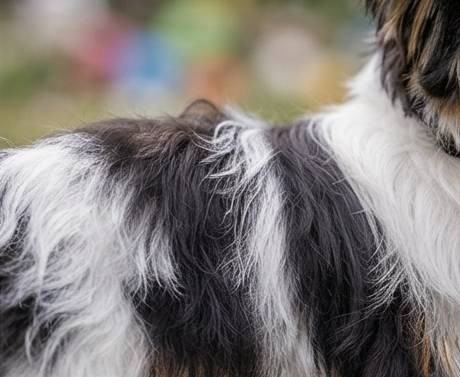
The Biewer Terrier is a small, well-proportioned toy dog with a long, silky, single coat displaying a distinctive tricolor piebald pattern of black, white, and gold or tan. That white patching, the genetic signature that started the entire breed, is what most reliably distinguishes the Biewer Terrier from its Yorkshire Terrier ancestors at first glance.
Temperament
Biewer Terriers are playful, affectionate, and genuinely energetic for their small size, forming close bonds with their families and generally enjoying being included in everyday activities. They tend to be loyal and attentive companions, alert without being excessively yappy when properly socialized, and their small size belies a confident, engaged personality. Many owners describe the breed as surprisingly comedic, prone to sudden bursts of playful energy indoors and genuinely curious about whatever activity is happening around the household, traits that trace directly back to the same Yorkshire Terrier working-terrier temperament the breed descended from.
Is a Biewer Terrier Right for You?


Families and Children
Biewer Terriers are generally friendly and affectionate with children and other pets, making them a reasonable fit for families, though their small size calls for the same gentle handling and supervision that most toy breeds require around very young kids. Early socialization helps this naturally sociable breed reach its full potential around new people and animals.
First-Time Owners
The Biewer Terrier’s manageable size, affectionate nature, and genuine eagerness to please make it a workable choice for first-time owners, provided they’re prepared for the coat-care commitment a long-haired toy breed genuinely requires. Given how uncommon the breed remains, first-time owners should also be prepared to do more legwork finding a reputable breeder than they would with a more established breed. That extra effort tends to pay off, since breeders working with a still-small gene pool are typically motivated to screen carefully and share detailed health history, something a first-time owner benefits from regardless of the breed they eventually choose.
Training
Biewer Terriers are intelligent and generally responsive to positive, reward-based training, though like many toy terriers they can show a stubborn streak if training feels repetitive or unrewarding. Early socialization and consistent house-training routines matter, since small breeds in general are more prone to house-training setbacks than larger dogs. Crate training and a predictable daily schedule tend to work especially well with this breed, giving structure to a dog that is smart enough to get bored quickly with anything that feels repetitive.
Exercise Needs
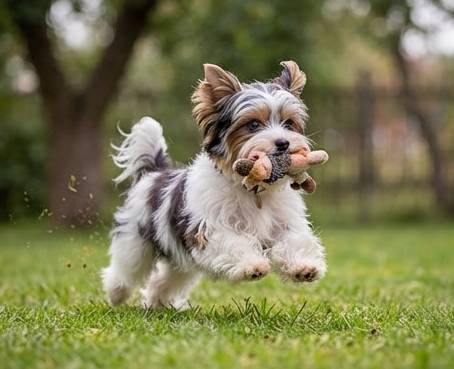
Despite their small size, Biewer Terriers are surprisingly energetic and benefit from regular daily activity rather than being treated as purely sedentary lap dogs. A daily walk combined with active indoor or yard play generally covers this breed’s physical needs well, and mental engagement through simple training games helps satisfy their genuine intelligence.
Grooming
Grooming expectations for a Biewer Terrier depend heavily on which coat style an owner chooses to maintain. A full, long silky coat, closer to the show-ring standard, needs brushing daily or every other day to prevent tangles and matting. A shorter, practical “puppy cut” reduces that commitment substantially, generally requiring only weekly brushing to stay manageable. Either way, the coat is fine and can tangle quickly if neglected, so most owners settle into a grooming routine early and stick with it. A good pin brush and a wide-toothed metal comb are worth investing in from the start, and many owners find that regular use of a leave-in conditioning spray between full washes makes daily brushing sessions noticeably faster and more comfortable for the dog. Professional grooming every four to eight weeks, depending on which coat style is being maintained, rounds out a realistic care routine for most owners.
Health and Lifespan


Biewer Terriers typically live 12 to 16 years, a solid lifespan for a toy breed, though several conditions common to small dogs are worth understanding before bringing one home.
| Condition | What It Is | What Owners Should Watch For |
| Patellar luxation | A kneecap that slips out of its normal position, common in small breeds | Skipping steps, sudden limping, holding a leg up |
| Portosystemic (liver) shunt | An abnormal blood vessel that bypasses the liver, affecting toxin filtering | Poor growth, disorientation after eating, lethargy |
| Tracheal collapse | Weakening of the windpipe cartilage, common in small breeds | Honking cough, especially with excitement |
| Dental disease | Plaque and tartar buildup leading to gum disease | Bad breath, red or swollen gums |
[Patellar luxation] and [tracheal collapse] screening are reasonable, standard questions to ask a breeder, and awareness of [portosystemic shunt] symptoms matters especially in puppies, since early signs can be subtle and easy to miss.
Nutrition
A high-quality diet formulated for small or toy breeds suits the Biewer Terrier well, with portion sizes carefully measured given how easily a dog this small can become overweight, which places additional strain on joints already prone to patellar luxation.
Cost and Adoption
Pet-quality Biewer Terrier puppies typically range from one thousand to twenty-five hundred dollars, while show- or breeding-quality puppies from top lines can run thirty-five hundred dollars or more. Because the breed remains genuinely uncommon in the United States even after AKC recognition, prospective owners should expect longer waiting lists and should work through the Biewer Terrier Club of America’s breeder referral resources rather than a general online search. Rescue organizations specific to the breed are still limited given how recently it achieved AKC status, so most prospective owners will end up going the breeder route rather than adoption, at least for the time being.
Frequently Asked Questions
What is a Biewer Terrier?
The Biewer Terrier is a small German toy breed that originated from a single documented litter born on January 20, 1984, when a recessive piebald gene produced distinctive white patching in a Yorkshire Terrier line.
How do you pronounce “Biewer”?
“BEE-ver,” like the animal, since the name comes directly from the Biewer family surname.
Is a Biewer Terrier a type of Yorkshire Terrier?
No – while it descended from Yorkshire Terriers, DNA testing confirmed the Biewer Terrier as a genetically distinct breed, and the AKC recognizes it separately.
Are Biewer Terriers good with kids?
Generally yes, thanks to their friendly, affectionate temperament, though their small size calls for gentle handling and supervision around very young children.
How much grooming does a Biewer Terrier need?
It depends on the coat style: a full long coat needs daily or near-daily brushing, while a shorter puppy cut only needs weekly brushing.
What health problems do Biewer Terriers have?
Patellar luxation, portosystemic (liver) shunts, tracheal collapse, and dental disease are the most commonly documented concerns.
How much does a Biewer Terrier cost?
Pet-quality puppies typically range from one thousand to twenty-five hundred dollars, with show- or breeding-quality dogs often costing thirty-five hundred dollars or more.
Conclusion
Few breeds can point to an exact birth date, a named founding dog, and a scientific paper trail confirming their genetic identity, but the Biewer Terrier can do all three. Understanding that remarkably specific origin, along with the real coat-care commitment and health considerations that come with any toy breed, gives prospective owners a clear, honest picture of this playful, still-uncommon dog with one of the best-documented family trees in the entire dog world.