
Pembroke Welsh Corgi Guide: Temperament & Back Health
Quick Facts
| Attribute | Detail |
| Group | AKC Herding Group |
| Height | 10–12 in |
| Weight | 22–30 lb |
| Lifespan | 12–13 years |
| Coat | Medium double coat, heavy shedding |
| Colors | Red, sable, fawn, black and tan |
| Temperament | Intelligent, bold, affectionate, vocal |
| Best suited for | Owners ready for a big personality and real weight-management commitment |
The Pembroke Welsh Corgi is a working herding dog packed into an unmistakably low, long body, and that combination is more than a cute quirk. Its short legs come from a specific genetic mutation with real health consequences, and understanding that connection is the single most useful thing a prospective owner can learn before bringing one home. Beyond the health picture, this is a smart, bold, food-motivated dog bred to move cattle three times its size, and that working intelligence needs an outlet regardless of how short its legs are.


History: Wales’s Cattle-Droving Herder
The Pembroke Welsh Corgi originates in Pembrokeshire, in southwest Wales, where accounts suggest it developed from dogs brought over by Flemish weavers who settled in the region centuries ago, crossed with local Welsh herding stock. Whatever its exact ancestral mix, the breed was shaped by a very specific job: driving cattle by nipping at their heels and then dropping low and quick to dodge the resulting kick. A tall dog couldn’t do this work nearly as safely, which is very likely why the breed’s short-legged structure was preserved and reinforced by generations of Welsh farmers rather than bred out.
For a long time, the Pembroke was considered the same breed as its cousin, the Cardigan Welsh Corgi, and the two were shown together in Britain. The Kennel Club in the UK didn’t formally separate them into two distinct breeds until 1934, and the American Kennel Club followed the same distinction, recognizing the Pembroke Welsh Corgi separately from the Cardigan that same year. The breed’s global fame took off dramatically in the 20th century thanks to one very well-known owner: Queen Elizabeth II received her first Pembroke, named Susan, as a childhood gift in 1933, and she went on to own and breed Pembroke Welsh Corgis for the rest of her life, making the breed one of the most recognizable royal-associated dogs in modern history and fueling much of its enduring popularity well beyond the UK.
Over her lifetime, Queen Elizabeth II owned more than 30 Pembroke Welsh Corgis, many descended from that original dog, Susan, and the breed became such a fixture of royal life that it appeared in official portraits, documentaries, and countless news photographs over the following seven decades. That level of sustained visibility is a large part of why the Pembroke, despite its working-class Welsh farm origins, is now more commonly associated with royal palaces than cattle pastures in the public imagination. The irony is worth noting: a dog bred for the distinctly unglamorous job of dodging kicks from cattle became one of the most photographed dogs in the world.
Pembroke vs. Cardigan Welsh Corgi: Two Distinct Breeds
A common misconception is that “Pembroke” and “Cardigan” describe two sizes or colors of the same Corgi. They don’t. The Cardigan Welsh Corgi is actually the older of the two breeds, with a longer, fox-like tail and generally heavier bone structure, while the Pembroke has a naturally bobbed tail or a docked one (docking is increasingly restricted in various regions, similar to other breeds with historically docked tails) and a comparatively lighter frame. Both are fully recognized as separate breeds by the AKC, each with its own breed standard, and while they share a herding heritage and general silhouette, a knowledgeable buyer should treat them as two different breeds when researching rather than as variations of one.
[FUTURE LINK: Cardigan Welsh Corgi breed guide]
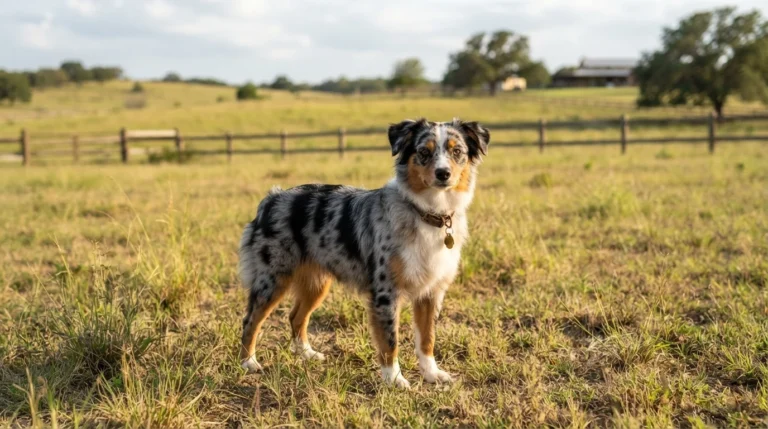
Pembroke Welsh Corgi vs. Australian Shepherd vs. Border Collie
Buyers drawn to the Pembroke’s intelligence and herding instinct sometimes compare it against larger herding breeds. All three share strong working intelligence and trainability, but their size, coat, and exercise demands differ substantially.
| Attribute | Pembroke Welsh Corgi | Australian Shepherd | Border Collie |
| Origin | Wales | United States | Scotland/England border |
| Weight | 22–30 lb | 40–65 lb | 30–55 lb |
| Original purpose | Cattle droving | Livestock herding | Sheep herding |
| Energy level | Moderate–high | High | Very high |
| Coat maintenance | Heavy seasonal shed | Moderate–heavy | Moderate |
See our full guides to the Australian Shepherd and the Border Collie for a broader herding-breed comparison.

Appearance
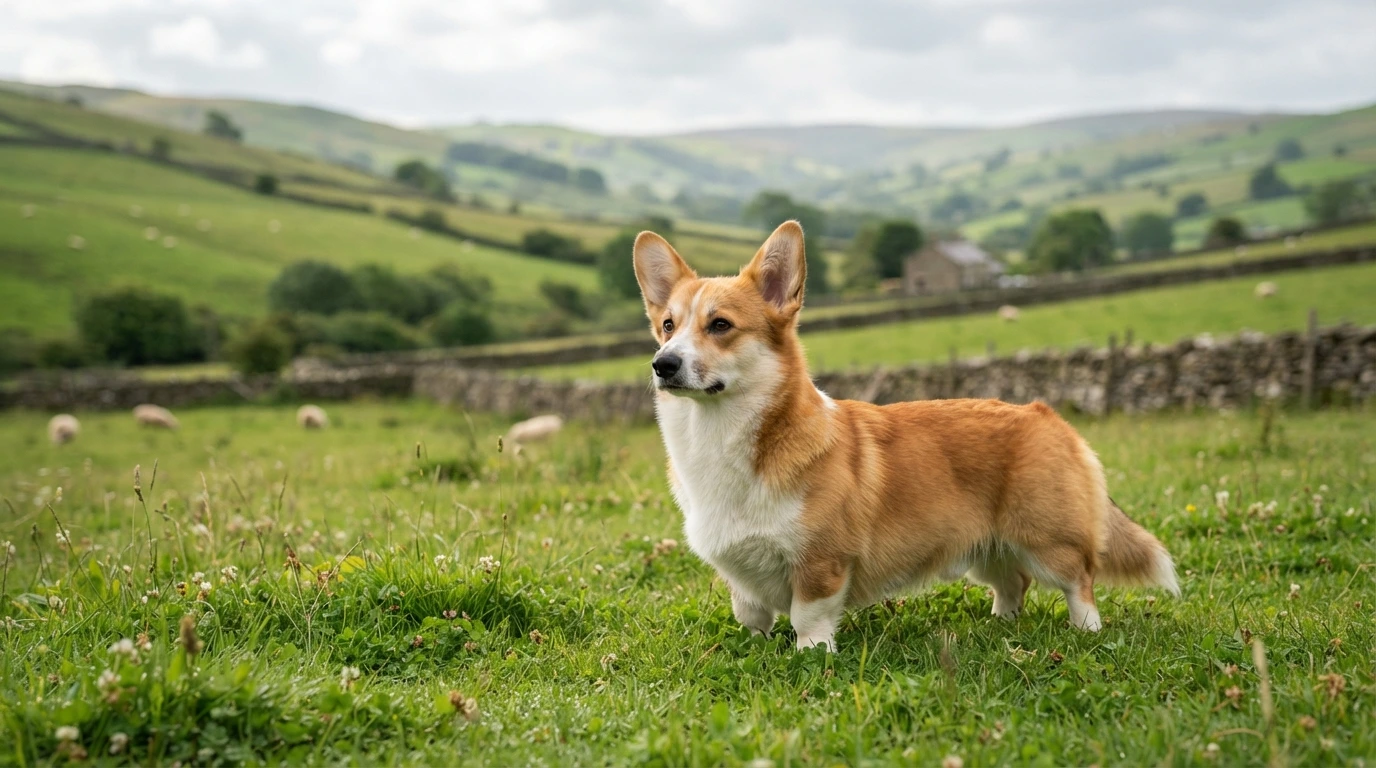
The Pembroke’s most recognizable trait is its long, low body carried on short legs, paired with a fox-like head, large erect ears, and an alert, expressive face. The medium-length double coat comes in red, sable, fawn, or black and tan, often with white markings on the chest, legs, and face. Correct Pembrokes have either a naturally bobbed tail or a docked one; a natural, undocked tail is also accepted in some standards and does not indicate incorrect breeding.
Temperament
Pembroke Welsh Corgis are intelligent, bold, and often surprisingly assertive for their size, a personality trait that made sense in a dog once expected to stand its ground against cattle. That same herding instinct doesn’t disappear in a household setting, and Corgis will sometimes nip at the heels of children or other pets, especially during play, if the behavior isn’t redirected early. With their family, most Pembrokes are deeply affectionate and thrive on close companionship, and their intelligence makes them quick learners, though that same intelligence means boredom shows up fast as barking, digging, or other attention-seeking behavior. This is not a quiet, low-key lapdog breed despite the short legs; it’s a working dog in a compact frame.
Is a Pembroke Welsh Corgi Right for You?
The Pembroke adapts well to a range of households, from apartments to homes with yards, but prospective owners should go in understanding this is a genuinely active, vocal, intelligent breed rather than a low-energy companion. Corgis do well with families, including those with children, provided the herding-nipping instinct is addressed through consistent training from puppyhood. Their vocal tendency, a real asset for an alert farm dog, means they’ll bark at doorbells, passersby, and anything else that catches their attention, which is worth considering for apartment living with close neighbors. If you want a smart, engaged, food-motivated dog and are prepared to manage its weight carefully given the spinal risks discussed below, the Pembroke is an excellent, deeply rewarding companion. Multi-pet and multi-generational households tend to do particularly well with the breed, since Corgis generally enjoy having company throughout the day and can become bored or anxious when left alone for long stretches without adequate mental stimulation.
Training
Pembroke Welsh Corgis are highly trainable and food-motivated, which makes obedience training generally straightforward, though that same food motivation is a genuine double-edged sword given the breed’s obesity-related back-health risk covered later in this guide. Positive reinforcement works well, and early redirection of natural nipping and herding behaviors, teaching an appropriate outlet like a flirt pole or structured play, helps prevent the habit from becoming a problem with children or visitors. Mental stimulation matters as much as physical training for this breed; puzzle feeders, scent games, and short structured training sessions all help satisfy the working intelligence bred into the dog.
Exercise Needs
Despite the short legs, this is a real herding breed with real exercise needs, generally 45 to 60 minutes of daily activity combining walks with mentally engaging play. Because a Corgi’s long spine and short legs make it structurally different from a typical dog, high-impact activities like repeated jumping from height or excessive stair use are worth moderating, favoring controlled, low-impact exercise like flat walks and gentle fetch over activities that jar the spine.
Grooming: Managing a Heavy-Shedding Double Coat
The Pembroke’s medium-length double coat is deceptively low-maintenance most of the year but genuinely demanding during seasonal shedding periods, often called “blowing coat,” which typically happens twice annually as the dense undercoat releases in large volumes. During these weeks, daily brushing with an undercoat rake makes a real difference in managing loose hair around the house; outside of those periods, a thorough brushing two to three times a week is usually sufficient to control shedding and prevent matting. Routine nail trims, ear checks, and dental care round out the maintenance routine, and prospective owners with significant allergy sensitivity or a strong aversion to dog hair around the home should weigh the shedding reality carefully before committing to the breed.
Health and Lifespan: The Chondrodystrophy Connection
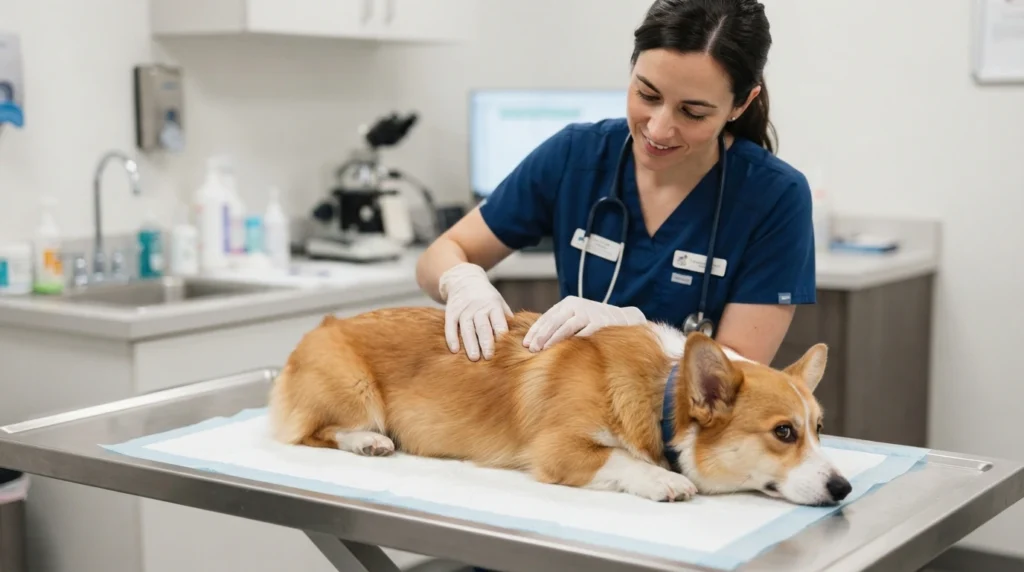
The Pembroke’s short legs aren’t simply a cute proportional trait; they’re the visible result of chondrodystrophy, a mutation in the FGF4 gene that affects cartilage growth and produces the shortened limbs seen in Corgis, Dachshunds, and several other breeds. This is the same genetic mechanism covered in more depth in our Dachshund guide, and it matters here for exactly the same reason: chondrodystrophic breeds carry a meaningfully elevated risk of intervertebral disc disease, or IVDD, a condition where the cushioning discs between spinal vertebrae degenerate prematurely and can herniate, causing pain, weakness, or in severe cases, hind-limb paralysis. A Corgi’s naturally long back combined with its short legs creates real mechanical stress on the spine, which is why this condition deserves direct, practical attention rather than a passing mention.
Hip dysplasia also appears in the breed, screened for via OFA or PennHIP evaluation in responsible breeding programs. Degenerative myelopathy, a progressive spinal cord disease that typically appears later in life and causes gradual hind-limb weakness, has a known genetic marker that a DNA test can identify, and reputable breeders increasingly test for it in breeding stock. Of everything covered in this section, the single most actionable thing an owner can control is body weight: because the spine already carries extra mechanical load in this breed’s structure, even modest excess weight measurably increases IVDD and joint-injury risk. Keeping a Pembroke lean throughout its life, discouraging jumping on and off furniture, and using ramps or steps for cars and beds are all practical, low-cost ways to meaningfully reduce spinal injury risk. With attentive weight management and routine veterinary care, most Pembroke Welsh Corgis live a full 12 to 13 years.
Recognizing early IVDD symptoms matters, since prompt treatment significantly affects outcomes. Warning signs include reluctance to jump or climb stairs, a hunched back or lowered head, yelping when picked up or touched along the spine, and in more advanced cases, wobbliness, dragging of the hind legs, or apparent paralysis. Any of these symptoms warrants an immediate veterinary visit rather than a wait-and-see approach, since the window for effective non-surgical treatment, generally strict crate rest combined with anti-inflammatory medication, narrows quickly once neurological symptoms appear. In more severe cases, surgical decompression is the recommended course, and Corgi owners should know both options exist and discuss a plan with their veterinarian before an emergency happens rather than during one.
Nutrition
Because obesity has an outsized effect on spinal health in this breed specifically, portion control deserves more attention here than in an average-structured dog. Corgis are notoriously food-motivated, which makes overfeeding an easy trap, so measuring meals precisely, limiting treats, and monitoring body condition regularly are important health measures, not just cosmetic ones.

Cost and Adoption
A Pembroke Welsh Corgi puppy from a reputable, health-tested breeder typically costs $1,500 to $3,000. Annual costs, including food, routine veterinary care, and grooming for the heavy-shedding coat, generally run $1,200 to $1,800. Buyers should also budget-plan for the real possibility of IVDD-related veterinary costs; when disc herniation requires surgical intervention, procedures can run several thousand dollars, and this is a genuine enough risk in chondrodystrophic breeds that pet insurance or a dedicated emergency fund is a reasonable precaution rather than an overreaction.
Common Buyer Mistakes
- Underestimating shedding volume. The double coat “blows” heavily twice a year, and daily brushing during those periods is close to essential, not optional.
- Overfeeding a food-motivated dog. Given the direct link between excess weight and spinal injury risk in this breed, portion discipline matters more here than in most breeds.
- Allowing repeated jumping from furniture or vehicles. Small, repeated impacts add up; ramps and steps are a low-cost, high-value investment.
- Not redirecting heel-nipping early. Herding instinct toward children or other pets is manageable with early, consistent training, but often gets worse if ignored.
- Assuming short legs mean low exercise needs. This is a genuine herding breed that needs real daily activity and mental engagement, not just a short walk.
- Skipping breeder health testing questions. Ask specifically about hip screening and degenerative myelopathy DNA testing, not just general “health guarantees.”
FAQ
Why do Corgis have short legs?
A mutation in the FGF4 gene, known as chondrodystrophy, produces the breed’s shortened limbs. It’s the same mutation responsible for the Dachshund’s build, and it also elevates the risk of intervertebral disc disease in both breeds.
What’s the difference between a Pembroke and a Cardigan Welsh Corgi?
They’re two separate AKC-recognized breeds, not size variants of one. Cardigans are older, generally have a longer tail and heavier bone; Pembrokes have a naturally bobbed or docked tail and a lighter build.
Do Corgis have tails?
Pembrokes traditionally have a naturally bobbed or docked tail, though undocked Pembrokes exist and are accepted in some standards. Cardigan Welsh Corgis always have a long, full tail.
Are Pembroke Welsh Corgis good with kids?
Generally yes, with early training to redirect their natural heel-nipping herding instinct, which can otherwise show up during active play with children.
How much exercise does a Pembroke Welsh Corgi need?
Roughly 45 to 60 minutes of daily activity, combining walks with mentally engaging play, favoring low-impact movement over repeated jumping given the breed’s spinal structure.
How long do Pembroke Welsh Corgis live?
Typically 12 to 13 years, with lifelong weight management playing an outsized role in reducing spinal injury risk.
How much does a Pembroke Welsh Corgi cost to own?
Expect $1,500 to $3,000 for a health-tested puppy and roughly $1,200 to $1,800 annually thereafter, with IVDD-related veterinary costs a real enough possibility to plan for financially.
Conclusion
The Pembroke Welsh Corgi’s charm is genuine and well-earned: an intelligent, bold, deeply affectionate herding dog that happens to come in one of the most distinctive silhouettes in the dog world. That silhouette, though, is a direct product of a genetic mutation with real spinal-health consequences, and understanding the chondrodystrophy-to-IVDD connection is the most important piece of homework a prospective owner can do. Buyers who commit to lifelong weight management, low-impact exercise habits, and early behavioral training around the breed’s herding instincts tend to get exactly what generations of Welsh farmers and one famous queen found so appealing: an outsized personality in a small, unforgettable package.