
Australian Shepherd: The Complete Guide to This All-American Herding Breed
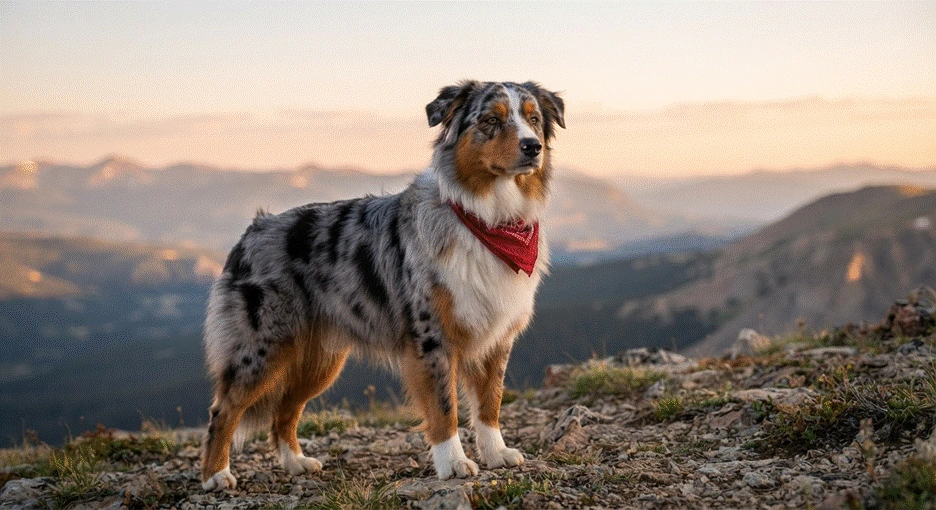
Despite the name, the Australian Shepherd isn’t from Australia at all — it’s a genuinely American breed, developed in the 19th-century American West. This guide explains exactly how that misnomer happened, alongside sourced facts on temperament, training, and two genetics topics that matter more than most breed guides let on: the MDR1 drug-sensitivity mutation and the real health risks of double-merle breeding. Whether you’re considering an Aussie as a working partner or a very active family companion, this covers what you actually need to know.
Australian Shepherd Quick Facts
The Australian Shepherd belongs to the AKC Herding Group [Internal Link], a category built around dogs bred to control the movement of livestock.
| Attribute | Detail |
| AKC Group | Herding Group; registered 1993 |
| FCI Status | Recognized 1996 |
| Country of Origin | United States (American West) |
| Height | 20–23 in (males), 18–21 in (females) |
| Lifespan | 12–15 years |
| Coat | Medium-length double coat |
| Colors | Merle and tri-color patterns common, among others |
| Temperament | Loyal, energetic, intelligent, high working drive |
What Is an Australian Shepherd?
An American Breed With an Australian Name
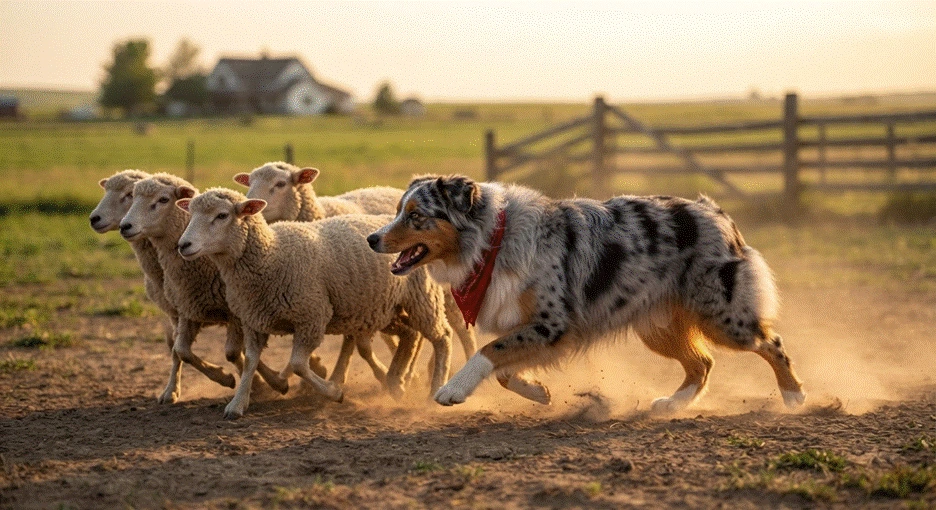
The Australian Shepherd was developed in the 19th century in Western US states, including California, Colorado, Wyoming, and Idaho, specifically to work large sheep flocks. The name traces back to the foundation stock’s arrival route: dogs came to California with Basque shepherds who had transited through Australia on their way to the United States, and American ranchers began associating the dogs with that port of arrival. The name stuck, even though the breed itself was built in America. A 2017 genetic study published in Cell Reports places the Australian Shepherd in the “UK Rural clade,” alongside the Border Collie [Internal Link], the Collie [Internal Link], and the Shetland Sheepdog, with additional ancestral ties to herding dogs from northwest Spain — genetic evidence that lines up with the Basque-shepherd origin story rather than any actual Australian ancestry.
AKC and FCI Recognition
The AKC registered the Australian Shepherd in 1993, and the FCI followed with recognition in 1996 — both relatively recent milestones for a breed that had already been working American ranches for well over a century by that point. That gap between the breed’s practical working history and its formal recognition is common among ranch and farm dogs, whose value was long measured by usefulness rather than pedigree paperwork, and it partly explains why regional variation in size, coat, and working style still shows up across different Aussie lines today.
Appearance and Coat Genetics
The Australian Shepherd has a medium-length, weather-resistant double coat built for real outdoor work, and its coloring is a big part of the breed’s visual identity: merle and tri-color patterns are especially well known, though the breed comes in other color combinations too.
Understanding Merle and Double Merle
Merle is a coat pattern caused by a specific gene that creates the mottled, marbled look many people associate with the breed. It’s a single-gene trait, which means breeding two merle-coated dogs together — known as “double merle” — significantly increases the risk of congenital deafness and blindness in the resulting puppies, according to the Australian Shepherd Health and Genetics Institute (ASHGI). This isn’t a reason to avoid merle Australian Shepherds; it’s a reason to avoid breeders who pair two merle dogs together. If you’re buying a puppy, asking directly about the coat colors of both parents is a simple, worthwhile question, and reputable breeders should be able to explain their responsible breeding [Internal Link] practices around merle pairings without hesitation.
Temperament
Australian Shepherds are loyal, energetic, and highly intelligent, with a working drive that shapes nearly everything about how they behave day to day. That drive comes from generations of breeding for herding work, and it shows up even in dogs that never see a sheep — untrained Aussies sometimes nip at heels or try to “herd” children, joggers, or other pets, a behavior rooted in instinct rather than aggression, but one that benefits from early, consistent redirection.
Alongside that working drive, most Aussies are also deeply attuned to their people, often described as “velcro dogs” for how closely they track their owner’s movements and moods around the house. That attentiveness is part of what makes the breed so trainable, but it also means Australian Shepherds generally don’t do well left alone for long stretches, and separation-related stress is a genuinely common complaint among owners who underestimate how much companionship this breed expects.
Is an Australian Shepherd Right for You?

Families and Children
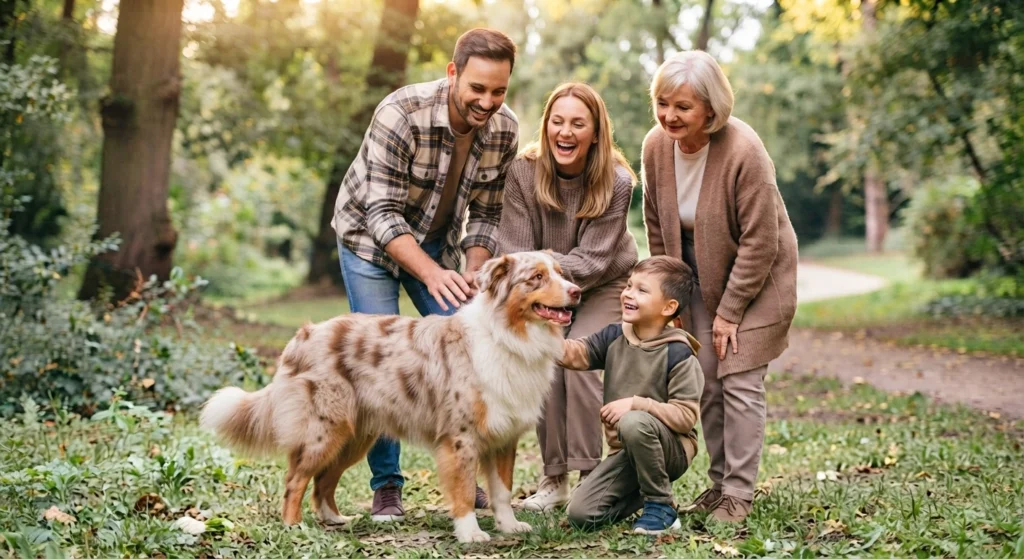
Australian Shepherds are typically loyal and affectionate with their families. Because the herding instinct can translate into nipping or chasing around small children, early training that redirects this behavior is genuinely worthwhile rather than optional.
Other Pets
The same herding drive can extend to other household pets, particularly smaller ones. Socialization and consistent training generally help an Aussie learn appropriate boundaries around cats and other animals.
First-Time Owner Suitability
This is a breed research consistently flags as demanding: Australian Shepherds are not well-suited to sedentary owners or first-time owners who haven’t specifically researched the breed’s exercise and mental-stimulation needs beforehand. Prospective owners should honestly assess their activity level and available time before committing to this breed.
That said, an experienced or willing first-time owner who genuinely enjoys an active lifestyle, hiking, running, or regularly playing structured games, often finds the Australian Shepherd to be an ideal match precisely because the breed thrives on that kind of engagement. The mismatch problems generally show up when an active-looking breed ends up in a low-activity household, not because the breed itself is inherently difficult.
Training
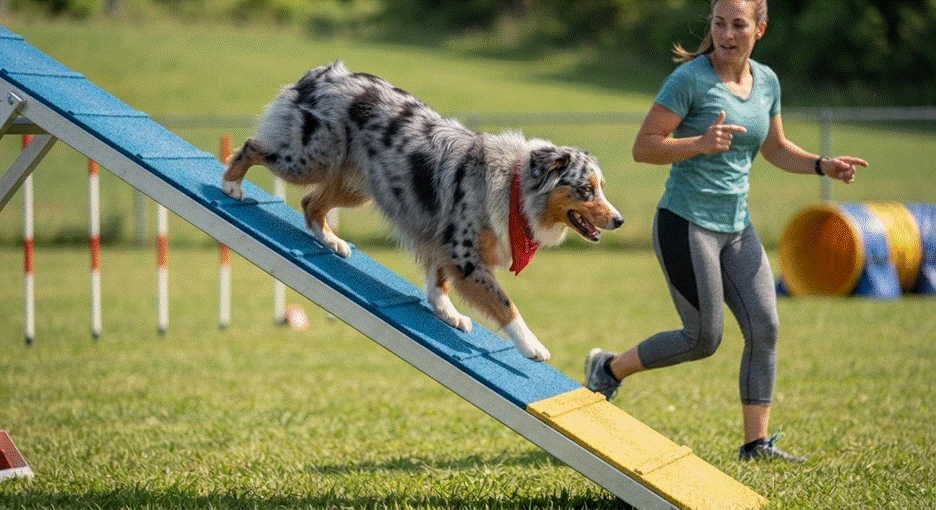
Australian Shepherds are highly intelligent and generally excel at training, especially when sessions are engaging and varied rather than repetitive. Their herding instinct can be channeled productively into structured activities like agility, herding trials, or advanced obedience work, giving the dog a genuine outlet rather than letting that drive show up as unwanted behavior at home.
Many Aussie owners find that formal dog sports aren’t optional extras for this breed so much as genuinely important outlets for a mind that’s constantly looking for a job to do. Flyball, disc dog competitions, nose work, and treibball are all popular choices among Aussie owners specifically because they engage the same problem-solving instincts the breed was originally bred to use on a ranch, just redirected toward a sport instead of livestock.
Exercise Needs
This breed needs substantial daily exercise and mental stimulation — a quick walk isn’t enough for a dog bred to work all day on a ranch. Activities that combine physical exertion with problem-solving, like agility courses, advanced fetch games, or structured herding work, tend to satisfy an Aussie far better than repetitive walking alone. Under-stimulated Australian Shepherds are prone to developing problem behaviors, directly tied to that unmet working drive.
Grooming
The double coat needs moderate, regular attention: brushing two to three times a week generally keeps shedding manageable, with more frequent brushing needed during seasonal coat blows. Standard nail trims, ear checks, and dental care round out the routine.
Health and Lifespan
MostAustralian Shepherds live between 12 and 15 years. Before covering general health conditions, there’s one genetics topic every prospective and current owner should understand.
The MDR1 Gene Mutation
Testing Note: Roughly 50% of Australian Shepherds carry one or two copies of the MDR1 gene mutation, according to the Australian Shepherd Health and Genetics Institute. This mutation affects a protein that normally limits certain drugs’ absorption into the brain, which means dogs carrying it can have severe, sometimes fatal reactions to standard doses of some heartworm preventives, anti-diarrheal medications, and anesthetics. ASHGI recommends DNA testing every Australian Shepherd for MDR1 status, and making sure every veterinarian who treats the dog knows the result before prescribing anything. This is a simple, inexpensive test that genuinely changes how safely certain medications can be used.
Beyond MDR1, a few other conditions are worth understanding for this breed.
| Condition | What It Is | What Owners Should Watch For |
| Hip dysplasia | Abnormally formed hip joint; relatively less common in this breed (~6%) but still worth screening for | Limping, stiffness, reluctance to jump |
| Hereditary cataracts | Clouding of the eye lens with a genetic basis, more commonly noted in this breed | Cloudy-looking eyes, reduced vision, bumping into objects |
| Epilepsy | Seizure disorder with a hereditary component in some lines | Seizures, disorientation, unusual repetitive movements |
Responsible breeders typically screen for hip dysplasia [Internal Link] and hereditary cataracts [Internal Link] before pairing dogs, in addition to MDR1 testing. Combined with avoiding double-merle pairings, these three checks cover the breed’s most consequential hereditary concerns, and asking about all three is a reasonable, standard part of vetting any breeder.
Nutrition
A high-quality, active-breed formula suited to a genuinely high-energy working dog is a solid foundation for an Australian Shepherd. Careful portion control matters for joint health, particularly relevant given the breed’s activity level and the (lower but present) hip dysplasia risk.
Cost and Adoption
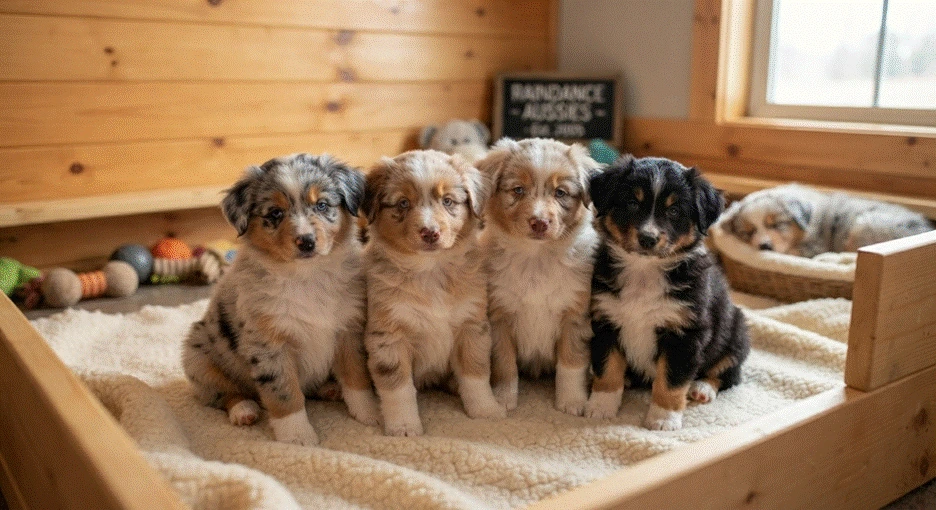
Given the breed’s popularity, pricing varies significantly by breeder, region, and lineage, so prospective buyers should confirm current pricing directly. Two things worth asking any breeder directly: whether they MDR1-test their breeding stock and puppies, and whether they avoid pairing two merle-coated parents. Because the breed is popular enough to see meaningful shelter and rescue presence, adoption through breed-specific rescue organizations is also a realistic and often more affordable path to ownership, and rescue groups are frequently well-versed in exactly the genetics questions covered above, making them a genuinely knowledgeable resource for first-time Aussie adopters as well as breeder buyers.
Frequently Asked Questions
What is an Australian Shepherd?
The Australian Shepherd is an American herding breed developed in the 19th-century American West, AKC-registered since 1993, known for high working drive and distinctive merle or tri-color coats.
Why is it called an Australian Shepherd if it’s an American breed?
The name comes from the foundation stock’s arrival route: dogs came to California with Basque shepherds who had passed through Australia en route to the US, and American ranchers associated the dogs with that transit point, and the name stuck.
What is MDR1 and why does it matter for Australian Shepherds?
MDR1 is a gene mutation carried by roughly half of Australian Shepherds that can cause severe reactions to certain common medications. DNA testing is recommended for every Aussie so vets know to avoid or adjust dosing for affected drugs.
Are Australian Shepherds good family dogs?
Generally yes, though their herding instinct can show up as nipping or chasing around children and other pets without early training to redirect it.
What is double merle and why is it risky?
Double merle refers to breeding two merle-coated dogs together, which significantly increases the risk of congenital deafness and blindness in puppies. Responsible breeders avoid pairing two merle parents.
What health problems do Australian Shepherds have?
Beyond MDR1, common concerns include hip dysplasia (relatively less common in this breed), hereditary cataracts, and epilepsy in some lines.
How much does an Australian Shepherd cost?
Pricing varies by breeder, region, and lineage; ask directly about MDR1 testing and merle-breeding practices. Rescue and adoption are also realistic options given the breed’s popularity.
Conclusion
The Australian Shepherd is a breed whose name has misled people for well over a century, but the facts underneath are far more interesting than the myth: a genuinely American working dog with real, actionable genetics considerations that most breed guides skip. For owners ready to meet its serious exercise and mental-stimulation needs, and informed enough to ask the right questions about MDR1 testing and merle breeding, the Australian Shepherd is a loyal, intelligent, and deeply capable companion.