
Barbet: The Complete Guide to France’s Historic Water Dog
Barbet
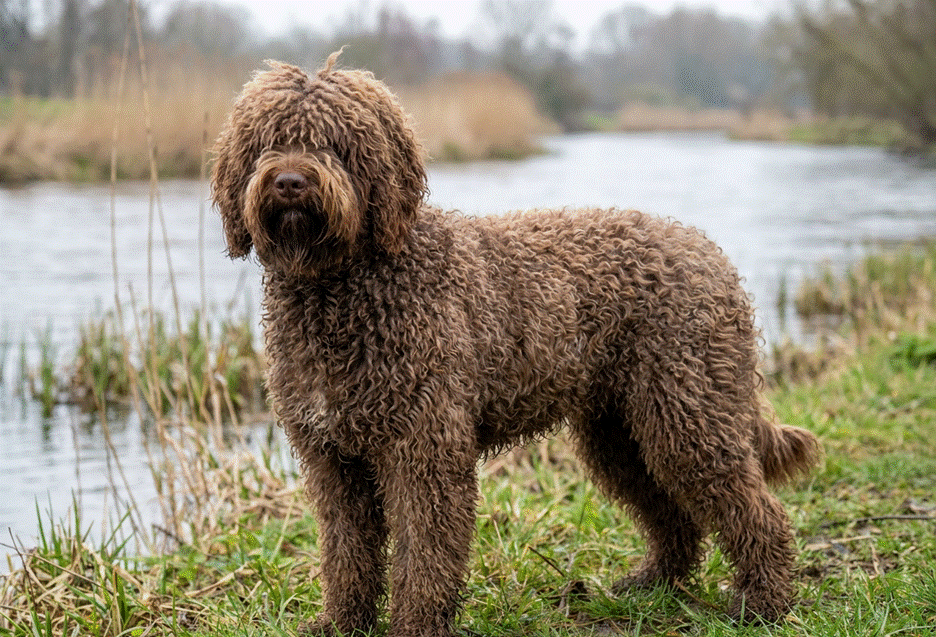
The Barbet is a French water-retrieving gun dog with a documented history stretching back to at least the 16th century — and a modern population that exists today largely because of a dedicated 1970s revival effort after the breed nearly vanished. Recognized by the AKC’s Sporting Group only in 2020, the Barbet is still a rare sight in the US despite its deep history. This guide covers the breed’s sourced origins, its low-shedding curly coat and what that really means for allergies, and how it compares to its closest relatives, the Poodle and the Portuguese Water Dog.
Barbet Quick Facts
The Barbet belongs to the AKC Sporting Group [Internal Link], recognized in 2020, and the FCI Group 8, Section 3 (Water Dogs), under the French Kennel Club (SCC).
| Attribute | Detail |
| AKC Group | Sporting Group; recognized 2020 |
| FCI Group | Group 8, Section 3 (Water Dogs) |
| Country of Origin | France |
| Height | 20–25 in at the shoulder |
| Weight | 30–60 lb |
| Lifespan | 12–14 years |
| Coat | Long, woolly, curly, continuously growing |
| Colors | Black, brown, fawn, gray, white, or pied combinations |
| Temperament | Gentle, joyful, obedient, sociable |
What Is a Barbet?
A French Water Dog Since the 1500s
The Barbet appears in French artwork and written record as early as the 16th century, developed as a working water-retrieving gun dog for hunters along the marshlands, estuaries, and coastal wetlands of France. The breed’s job was genuinely dirty work — wading into muddy water to retrieve duck, goose, and other waterfowl — dirty enough that the 19th-century French phrase “muddy as a barbet” entered common use to describe someone thoroughly covered in mud. That practical, unglamorous working history is worth keeping in mind: this is fundamentally a rustic field dog, not a breed developed for the show ring.
Near-Extinction and Revival
The World Wars devastated the Barbet population along with many working dog breeds in Europe, and the breed came close to disappearing entirely in the 20th century. A small group of dedicated French fanciers began a focused revival effort in the 1970s, carefully rebuilding the population from the surviving dogs. Nearly every Barbet alive today traces back to that revival work, which makes the breed’s continued existence a genuinely recent achievement rather than an unbroken historical line. This narrow founding population is also why responsible breeders today put real emphasis on genetic diversity and health testing — the breed’s history makes careful, deliberate breeding decisions more consequential than they might be for a breed with a larger, more established gene pool.
AKC and FCI Recognition
The FCI classifies the Barbet under Group 8, Section 3, Water Dogs, recognized through the French Kennel Club (SCC) as the breed’s country of origin authority. AKC recognition came far more recently, in 2020, placing the Barbet in the Sporting Group alongside other breeds developed to hunt and retrieve feathered game. That recent recognition means the Barbet remains genuinely uncommon in the US, even as interest in low-shedding sporting breeds continues to grow.
Barbet vs. Poodle vs. Portuguese Water Dog
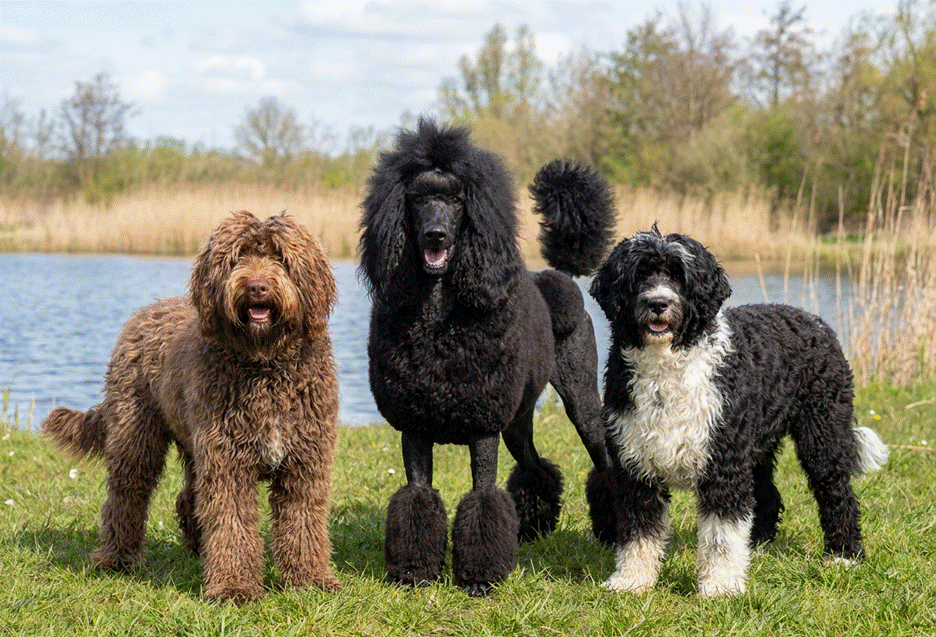
These three curly-coated water dogs share overlapping ancestry — the Barbet is widely considered an ancestral breed behind both the Poodle [Internal Link] and the Portuguese Water Dog [Internal Link] — which causes real confusion in casual searches. Here’s how they compare.
| Attribute | Barbet | Poodle | Portuguese Water Dog |
| Origin | France | Germany/France (disputed) | Portugal |
| Coat | Long, woolly, loosely curled | Dense, tightly curled | Curly or wavy, single coat |
| Historic Role | Marshland waterfowl retrieving | Water retrieving, later companion/show | Fishing boat assistant, net retrieval |
If the dog you’re picturing has a looser, woollier curl and a more rustic, less sculpted look than a groomed Poodle, that’s likely the Barbet rather than its more polished relative.
Appearance and Coat

The Barbet has a balanced, medium-sized build suited to its working water-dog history, with webbed feet that aid swimming. Its defining feature is the coat: long, woolly, and loosely curled, growing continuously rather than shedding out seasonally the way many double-coated breeds do.
Is the Barbet Hypoallergenic?
Honest Answer: No dog breed is truly 100% hypoallergenic — all dogs produce some dander and saliva proteins that can trigger allergies. That said, the Barbet’s continuously growing, low-shedding coat traps loose hair and dander rather than releasing it into the environment, which many allergy-sensitive owners find more manageable.
Anyone with significant allergies should spend real time around an individual Barbet before committing, since sensitivity varies considerably from person to person.
Temperament
The Barbet is known for a gentle, joyful, and genuinely happy disposition, bonding closely with its family and often showing particular warmth toward children. Barbets are obedient and quick to learn, and with proper socialization they generally get along well with other household animals. This combination of trainability and good nature is part of why the breed’s revival attracted such dedicated support even from a very small founding population. Many owners also describe the Barbet as notably vocal and expressive compared to some other Sporting breeds, a trait worth knowing about for households with close neighbors.
Is a Barbet Right for You?
Families and Children
Barbets are typically playful and affectionate with children, and their gentle, people-oriented temperament makes them a strong match for active families who can commit to the coat’s maintenance demands.
Other Pets
With proper socialization from puppyhood, Barbets generally coexist well with other dogs and household pets, reflecting their historically cooperative working role alongside hunters.
First-Time Owners
The Barbet can work well for a committed first-time owner, though the substantial grooming commitment and the breed’s continued rarity in the US (making veterinary and grooming expertise less widely available) are worth weighing honestly before committing.
Training
Barbets are intelligent, obedient, and quick to learn, responding well to consistent positive-reinforcement methods. Their working retriever background means many Barbets take naturally to structured training and enjoy having a job to do, whether that’s formal obedience work or simply structured daily routines.
Exercise Needs

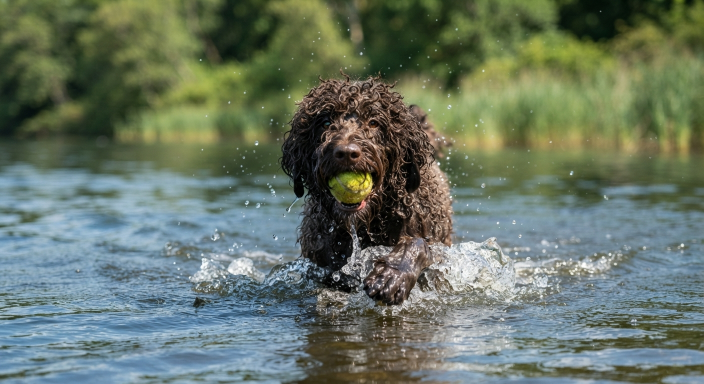
As a working water-retrieving gun dog, the Barbet genuinely enjoys swimming and benefits from regular access to water when possible, alongside daily walks and active play. This is a breed that thrives with a real outlet for its retrieving instincts rather than a purely sedentary lifestyle. Fetch and retrieving games on land are a good substitute when open water isn’t available, and many Barbets also enjoy scent work and other structured mental-stimulation activities that echo their working history.
Grooming
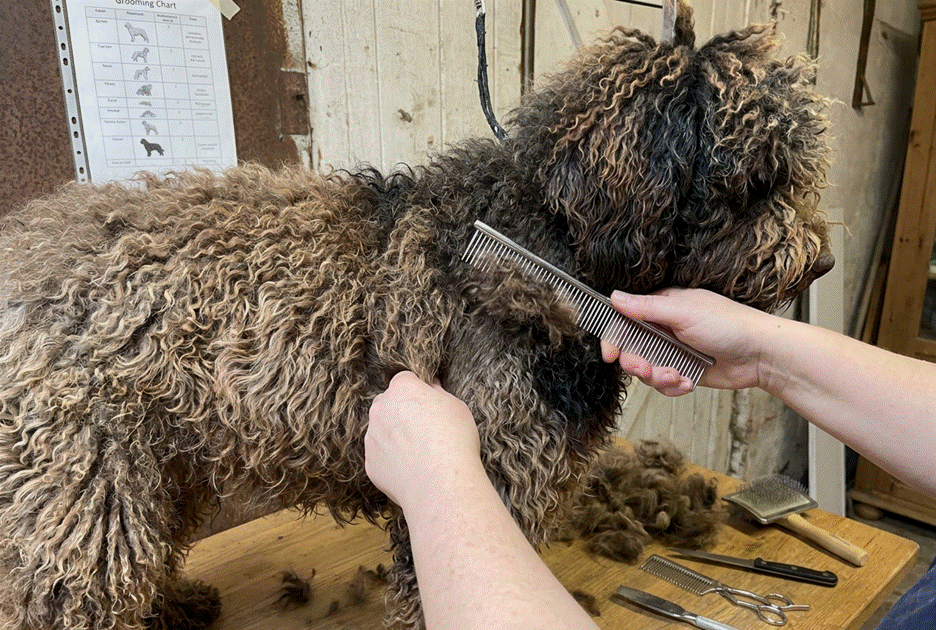
This is the Barbet’s single biggest care commitment. The coat grows continuously throughout the dog’s life and needs regular brushing — several times a week at minimum — plus routine trimming every six to eight weeks to prevent painful matting, particularly around the ears, legs, and paws. Because the coat traps rather than sheds debris and moisture, thorough drying after swimming matters too, and the long ears are prone to ear infections [Internal Link] without regular checks and cleaning, a common issue across water-retrieving breeds with pendant ears.
Health and Lifespan


Most Barbets live between 12 and 14 years and are generally considered a healthy breed. Still, a few conditions are worth knowing about, per veterinary sources including PetMD and WebMD.
| Condition | What It Is | What Owners Should Watch For |
| Hip dysplasia | Malformation of the hip joint | Difficulty rising, reluctance to jump, altered gait |
| Epilepsy | Recurring seizure disorder | Episodes of disorientation, collapse, or convulsions |
| Ear infections | Common in long-eared, water-loving breeds | Head shaking, odor, redness inside the ear |
Hip dysplasia [Internal Link] screening is a standard part of responsible Barbet breeding programs, and early detection through veterinary evaluation makes long-term management considerably more effective.
Nutrition
A high-quality, medium-to-large breed active-dog formula suits the Barbet well. Because the breed is genuinely active and enjoys swimming and retrieving, portion control and regular weight checks help prevent the joint strain that excess weight can add to a breed already monitored for hip dysplasia.
Cost and Adoption

Given the Barbet’s continued rarity in the US even after 2020 AKC recognition, prospective owners should expect a genuine wait and should expect to work with a small number of dedicated breeders, often requiring travel. Asking about hip and health testing is a standard, reasonable part of vetting a responsible breeding [Internal Link] program for this still-recovering breed. Breed-specific rescue is extremely limited given the population size, so most new owners work directly with breeders and the Barbet Club of America, and joining that community early is often the most realistic path to finding a well-bred puppy.
Frequently Asked Questions
What is a Barbet?
The Barbet is a French water-retrieving gun dog with roots dating to at least the 16th century, recognized by the AKC’s Sporting Group in 2020.
Is the Barbet rare?
Yes — the breed nearly went extinct after the World Wars and was rebuilt from a small founding population starting in the 1970s, so it remains genuinely uncommon today.
Is the Barbet hypoallergenic?
No dog is truly 100% hypoallergenic, but the Barbet’s low-shedding, continuously growing coat traps dander rather than releasing it, which many allergy-sensitive owners find more manageable than heavily shedding breeds.
Are Barbets good family dogs?
Yes, generally — they’re gentle, playful, and affectionate, particularly with children, given proper socialization.
What’s the difference between a Barbet and a Poodle?
The Barbet has a looser, woollier curl and a more rustic build, while the Poodle’s coat is more tightly curled and typically more sculpted for the show ring. The Barbet is considered an ancestral breed behind the Poodle.
How much grooming does a Barbet need?
Substantial — brushing several times a week and professional or thorough at-home trimming every six to eight weeks to prevent matting in the continuously growing coat.
How much does a Barbet cost?
Pricing varies, but given the breed’s rarity in the US, prospective owners should expect limited availability and a longer search than with more common Sporting Group breeds.
Conclusion
The Barbet carries a genuinely remarkable story: a French water-retrieving gun dog documented since the 1500s, nearly lost to history after the World Wars, and rebuilt through a dedicated 1970s revival before finally reaching AKC recognition in 2020. Its gentle temperament and low-shedding coat make it a rewarding companion for owners ready to commit to real grooming work — and a breed whose history is worth understanding regardless of whether you’ll ever bring one home.