
Azawakh: The Complete Guide to West Africa’s Rare Sighthound
Azawakh
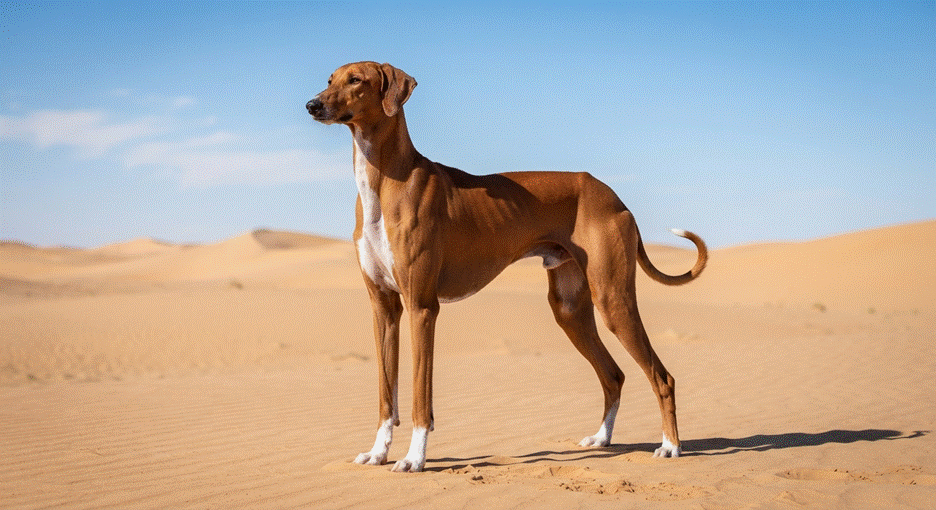
The Azawakh is one of the rarest breeds recognized by the American Kennel Club, joining the Hound Group only in 2019 — one of the most recent additions to that group. Long before that recognition, the breed had already spent centuries as a guardian and coursing companion to Tuareg and Fula nomads across the Sahel and Sahara. This guide covers the Azawakh’s sourced history, its genuinely distinctive lean build, its reserved but deeply loyal temperament, and how it compares to the two sighthounds it’s most often confused with: the Sloughi and the Saluki.
Azawakh Quick Facts
The Azawakh belongs to the AKC Hound Group [Internal Link], recognized in 2019, and the FCI Group 10, Section 3 (Short-haired Sighthounds), under Standard No. 307.
| Attribute | Detail |
| AKC Group | Hound Group; recognized 2019 |
| FCI Group | Group 10, Section 3 (Short-haired Sighthounds), Standard No. 307 |
| Country of Origin | Mali, Niger, Burkina Faso (West African Sahel) |
| Height | 23–29 in at the shoulder |
| Weight | 33–55 lb |
| Lifespan | 12–14 years |
| Coat | Short, fine, single coat |
| Colors | Red, clear sand to fawn, brindle, parti-color, blue, black, brown |
| Temperament | Reserved, independent, loyal, attentive |
What Is an Azawakh?
Origins in the Sahel
The Azawakh takes its name from the Azawagh valley, a region spanning parts of Mali, Niger, and Burkina Faso where Tuareg and Fula nomads bred and kept the dog for generations, not primarily as livestock guardians in the Western sense but as close companions that also hunted gazelle and hare and watched over camps. The breed’s genuinely close relationship with its nomadic keepers — often living alongside families rather than working at a distance — shaped a dog that bonds tightly with its people and remains wary of outsiders, a temperament trait that persists in the breed today. That daily closeness with nomadic families, generation after generation, is part of what makes the Azawakh’s modern temperament so consistent: this is a breed selected for partnership as much as for performance in the field.
AKC and FCI Recognition
The FCI first acknowledged the Azawakh in 1981, classifying it under Group 10, Section 3, with France serving as the breed’s patron country under FCI rules — a role that reflects the significant part French military personnel and civil servants played in exporting Azawakhs to Europe starting in the 1970s. One particularly well-documented early import came through a Yugoslavian diplomat stationed in Burkina Faso, who received a male Azawakh as a gift from local nomads and later bartered his own hunting services for a female, giving the breed an early foothold in Europe outside France as well. The AKC’s recognition came much later, in 2019, making the Azawakh one of the newest members of the Hound Group and still a genuinely rare sight at shows and in American households alike. That recency matters practically: many general veterinarians and trainers in the US have limited hands-on experience with the breed, so new owners often benefit from connecting with breed-specific clubs early rather than relying solely on generalist advice.
Azawakh vs. Sloughi vs. Saluki

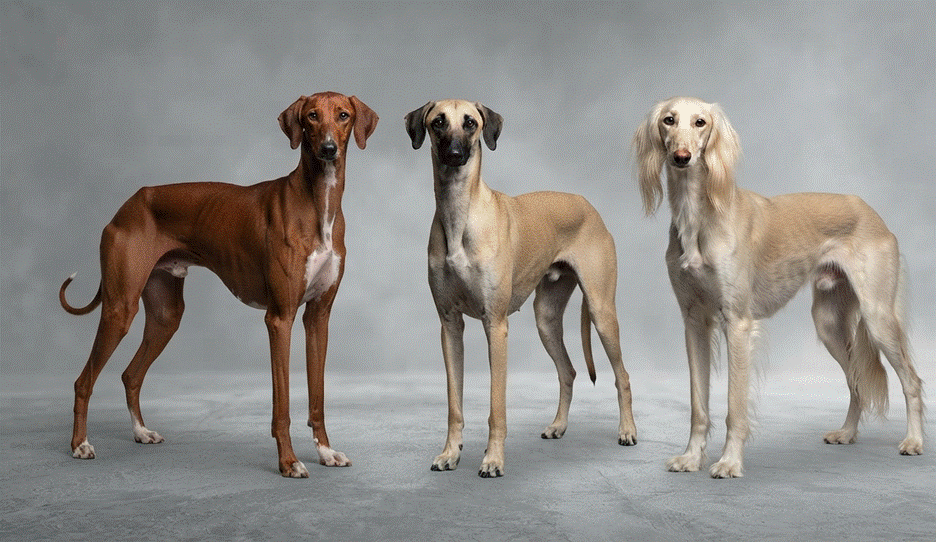
These three slender sighthounds are frequently mistaken for one another in searches and casual conversation. Here’s how the Azawakh compares to the Sloughi [Internal Link] and the Saluki [Internal Link].
| Attribute | Azawakh | Sloughi | Saluki |
| Origin | West Africa (Mali, Niger, Burkina Faso) | North Africa (Morocco) | Middle East / Fertile Crescent |
| Coat | Short, fine, single coat | Short, fine, single coat | Feathered on ears, legs, tail |
| Build | Extremely lean, high-set, visible skeletal structure | Lean but slightly less angular than the Azawakh | Lean with more coat feathering softening the silhouette |
If the dog you’re picturing has almost no visible coat feathering and a strikingly angular, high-legged build with visible hip bones, that’s almost certainly the Azawakh rather than its North African or Middle Eastern cousins.
Appearance and Build

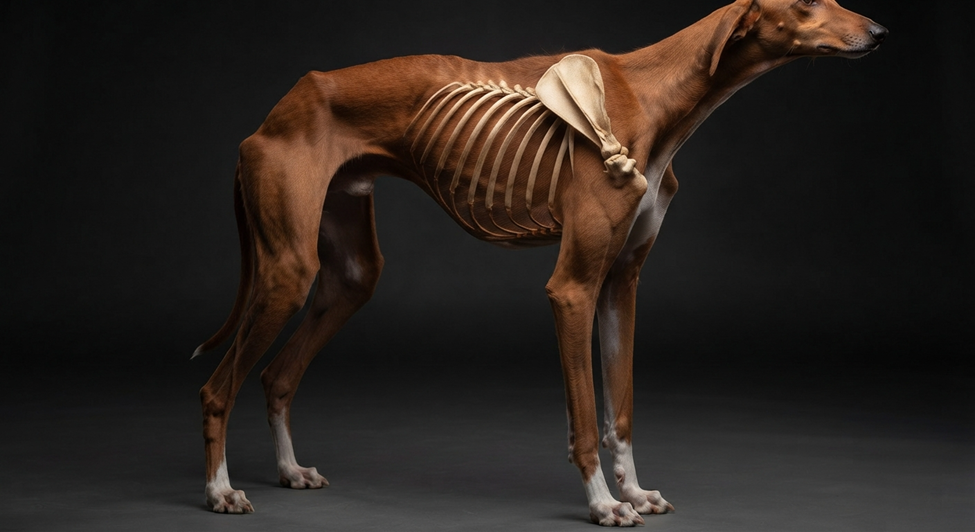
Understanding the Lean Skeletal Structure
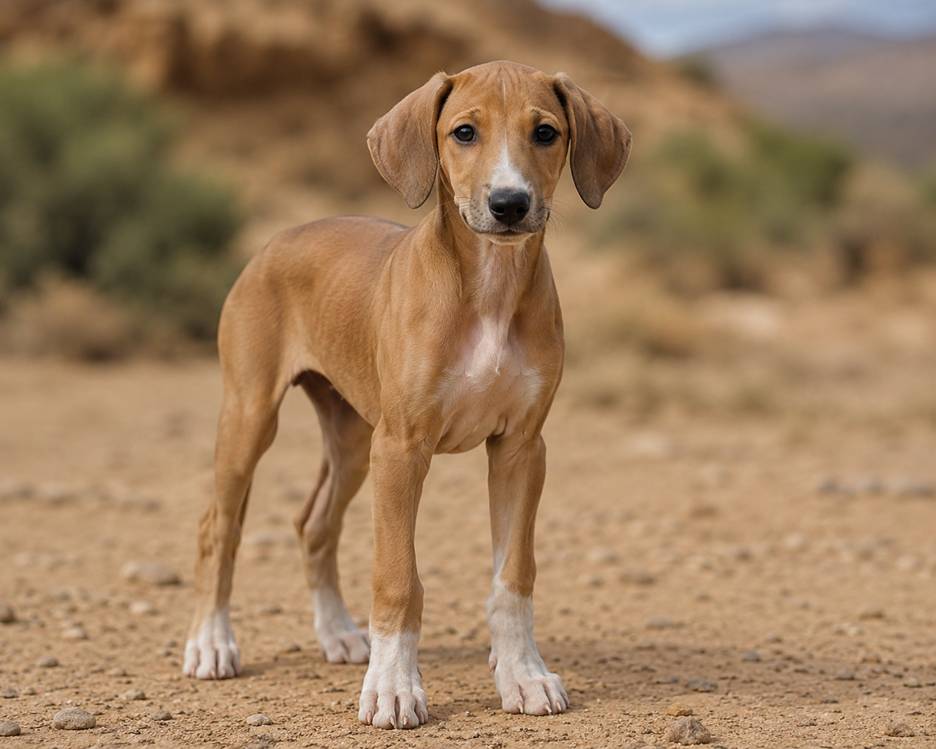
Reassurance Note: New Azawakh owners and casual searchers alike sometimes worry that a dog with visible ribs and hip bones must be underweight. For the Azawakh, that appearance is breed-standard-correct, not a sign of poor health. The official breed standard specifically calls for a lean, high-set frame with visible bone structure at a healthy weight.
This is simply what a fit, correctly conditioned Azawakh looks like, and it’s worth understanding before meeting one in person so the build doesn’t read as alarming.
Temperament
The Azawakh is attentive, reserved, and independent, forming an extremely close bond with its own family while remaining genuinely standoffish toward strangers. This isn’t shyness so much as a direct reflection of its history as a close nomadic companion rather than a dog bred for indiscriminate friendliness. Azawakhs are loyal and observant, often described as almost cat-like in their independence, and they tend to select one or two favorite people within a household rather than distributing affection evenly. At home with their own people, though, that reserve tends to fall away entirely — many owners describe a genuinely affectionate, even clingy dog once trust is established, a contrast that surprises people expecting the breed’s public aloofness to carry over into private life.
Is an Azawakh Right for You?

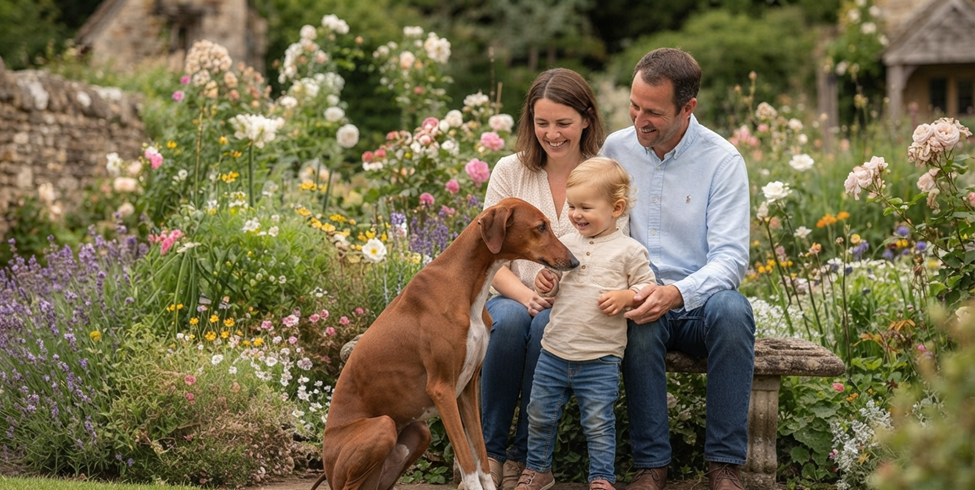
Families and Children
Azawakhs can do well with children they’ve grown up around, but their reserved nature with unfamiliar people and their sensitivity to rough handling make them a better match for households with older, calmer children than for very young kids and boisterous play.
Other Pets
Like most sighthounds, the Azawakh has a strong prey drive rooted in its gazelle- and hare-coursing history, which makes introductions to small pets like cats or rodents something that requires real care and, in many cases, simply won’t work.
First-Time Owners
This is not typically recommended as a first dog. The combination of a genuinely rare breed, a reserved and independent temperament, and specific socialization needs generally suits owners with prior sighthound or working-breed experience better than true beginners.
Training
Azawakhs are intelligent but independent, and they respond far better to patient, relationship-based training than to repetitive drilling. Early and consistent socialization is particularly important given the breed’s natural wariness of strangers, helping a young Azawakh learn to distinguish genuine threats from ordinary unfamiliar people and situations. Positive reinforcement methods tend to work best; harsh corrections can damage trust with a breed that is already naturally cautious, and rebuilding that trust takes considerably longer than building it correctly the first time.
Exercise Needs
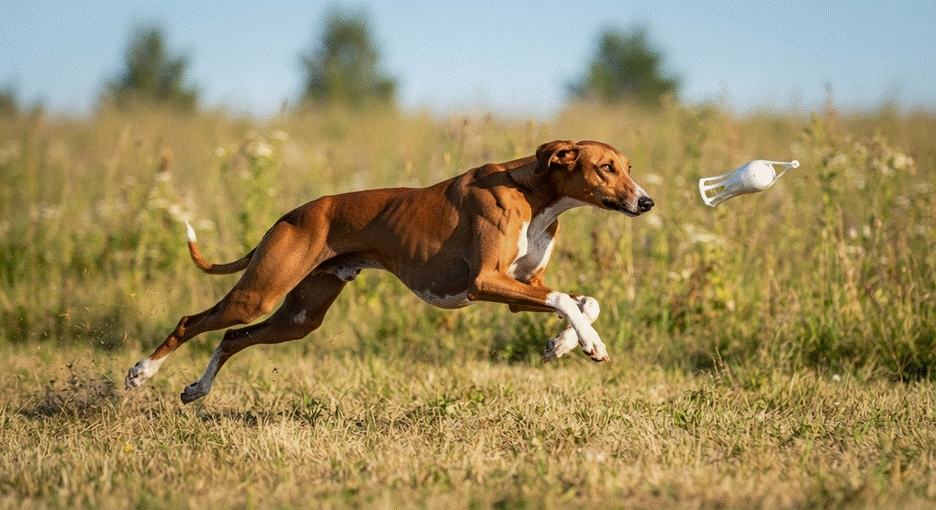
As a sighthound bred for coursing gazelle across open terrain, the Azawakh needs a genuine outlet for its speed — a securely fenced yard for free running and structured activities like lure coursing [Internal Link] work well. This is not a breed suited to apartment life without a real exercise plan, and given the strong prey drive, off-leash exercise in unfenced areas carries real risk.
Grooming
The short, fine coat is low-maintenance, generally needing only occasional brushing to manage shedding. Standard nail trims, ear checks, and dental care round out the routine, and because the breed carries very little body fat, some owners in colder climates use a coat or sweater during winter walks, since there’s very little natural insulation to rely on.
Health and Lifespan

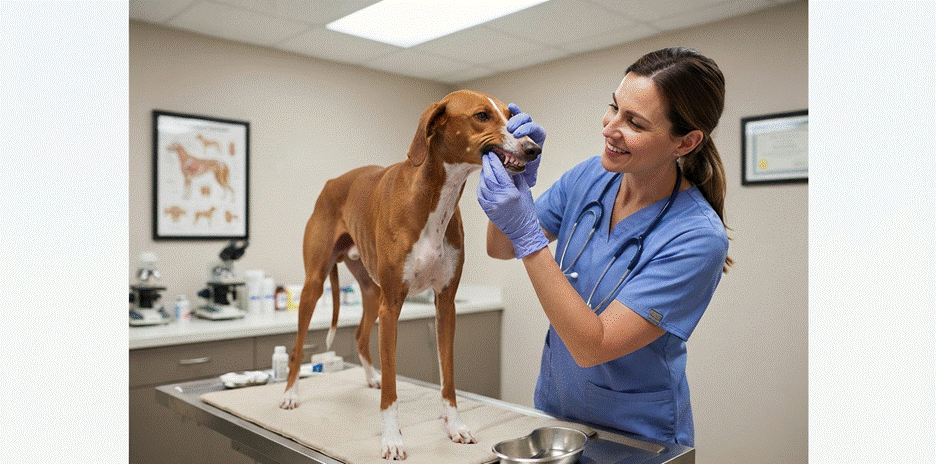
Most Azawakhs live between 12 and 14 years and are considered a generally healthy breed. Still, a few conditions are worth knowing about, per veterinary sources including PetMD and WebMD.
| Condition | What It Is | What Owners Should Watch For |
| Hypothyroidism | Reduced thyroid hormone production | Weight gain, lethargy, recurring skin or ear infections |
| Seizure disorders | Abnormal neurological electrical activity | Episodes of disorientation, collapse, or convulsions |
| Cardiac issues | Various heart conditions reported in the breed | Reduced stamina, coughing, fainting episodes |
Hypothyroidism [Internal Link] is one of the more commonly reported issues in the breed, and routine veterinary bloodwork can catch it early, when management is most effective.
Nutrition
A high-quality, lean-body-type sighthound formula suits the Azawakh well. Because the breed naturally carries very little body fat even at a healthy weight, owners should work with a veterinarian to judge body condition by the breed standard rather than by comparison to more conventionally built dogs. This distinction matters at every life stage — a puppy or senior Azawakh that looks lean by generic standards may be entirely appropriate for the breed, and adjusting feeding based on unfamiliar comparisons rather than breed-specific guidance can do more harm than good.
Cost and Adoption

Given how genuinely rare the Azawakh remains in the US even after 2019 AKC recognition, prospective owners should expect a real wait and should expect to travel or work with breeders outside their immediate region. Asking about health testing for thyroid and cardiac issues is a standard, reasonable part of vetting a responsible breeding [Internal Link] program for this breed. Breed-specific rescue is extremely limited given the breed’s rarity, so most new owners work directly with breeders and dedicated breed clubs, and joining a breed community early is often the most realistic path to finding a well-bred puppy.
Frequently Asked Questions
What is an Azawakh?
The Azawakh is a West African sighthound from Mali, Niger, and Burkina Faso, recognized by the AKC’s Hound Group in 2019 and by the FCI since 1981.
Is the Azawakh rare?
Yes — it’s one of the rarest breeds in the AKC’s Hound Group and remains uncommon even in countries where it has been established longest.
Why does my Azawakh look so thin — is that normal?
Yes, this is normal and breed-standard-correct. The Azawakh’s lean build with visible ribs and hip bones reflects a healthy weight for this specific breed, not underfeeding.
Are Azawakhs good family dogs?
They can be, particularly with older children and calm households, though their reserved nature with strangers and sensitivity to rough handling make them a better fit for experienced owners.
What’s the difference between an Azawakh and a Sloughi?
Both are lean North/West African sighthounds, but the Azawakh has an even more angular, high-set build with more pronounced visible skeletal structure than the Sloughi.
What health problems affect Azawakhs?
Hypothyroidism, seizure disorders, and cardiac issues are the main conditions reported in the breed, though it is generally considered healthy overall.
How much does an Azawakh cost?
Pricing varies, but given the breed’s rarity in the US, prospective owners should expect limited availability and a longer search than with more common breeds.
Conclusion
The Azawakh carries a genuinely distinctive story: a companion and coursing dog shaped by generations of Tuareg and Fula nomads in the Sahel, only formally recognized by the AKC in 2019. Its striking, breed-standard-correct lean build and reserved, deeply loyal temperament make it a rewarding dog for the right experienced owner — and a fascinating one to understand even for those who will only ever meet one in a book or at a rare show appearance.