
Miniature American Shepherd Guide: Temperament & Care
Quick Facts
| Attribute | Detail |
| AKC Group | Herding |
| Height | 13–18 inches |
| Weight | 20–40 lb |
| Lifespan | 12–13 years |
| Coat | Medium-length double coat |
| Colors | Merle, black, red, red merle, blue merle |
| Temperament | Intelligent, energetic, loyal |
The Miniature American Shepherd looks like a compact, more manageable version of the Australian Shepherd, and in some respects it is. But the “miniature” in its name refers to size alone, not to energy, drive, or intelligence, and that distinction matters enormously for anyone considering the breed. This is a genuine working-line herding dog packed into a smaller frame, and treating it like a low-key lap dog because of its size is one of the most common and most consequential mistakes new owners make.

History: From Ranch Dog to Recognized Breed
The Miniature American Shepherd’s origin traces to the smaller-statured Australian Shepherds that occasionally appeared within working litters on California ranches and in the rodeo circuit beginning in the 1960s. Ranchers and rodeo performers who wanted a capable herding and trick-performing dog that was easier to transport and handle began deliberately selecting and breeding these smaller individuals, prioritizing the same working drive, intelligence, and trainability that defined the standard Australian Shepherd while consistently reducing size over successive generations.
The breed’s path to formal recognition involved a sequence of name changes that often gets garbled or oversimplified in casual breed writeups. Early breeders and clubs called the developing type the Miniature Australian Shepherd, a name that stuck for decades even as the breed diverged further from its larger relative through selective breeding. As the breed gained a distinct identity and a formal breed club, it was renamed the North American Shepherd for a period, reflecting an effort to establish it as a separate breed rather than simply a size variant of the Australian Shepherd. The United Kennel Club recognized the breed under the name Miniature American Shepherd in 2012, and the American Kennel Club followed with full recognition in 2015, cementing the name still used today.
That naming history isn’t just trivia. It reflects a genuine, purposeful breed-development effort rather than an informal size-reduction project, and it’s part of why the Miniature American Shepherd Club of the USA and other breed advocates are careful to distinguish the breed from unregistered “toy” or “teacup” Aussies [FUTURE LINK: “toy/teacup” breed-marketing scrutiny guide] sometimes marketed by breeders prioritizing extreme smallness over the working temperament and structural soundness the formal breed standard was built to preserve.
The breed’s rodeo-circuit roots deserve particular attention, since they explain a distinctive trait many owners notice: an unusual comfort with performing in front of crowds and adapting quickly to new environments, a trait that traces directly back to dogs bred specifically for trick performances and demonstration work at rodeos, not just ranch herding. That dual heritage, working ranch dog and performance animal, helps explain why the modern Miniature American Shepherd tends to be both a capable herder and an unusually quick study in structured training environments like obedience and agility.
Miniature American Shepherd vs. Australian Shepherd: What Actually Changed
The single most important thing to understand about the Miniature American Shepherd’s relationship to the Australian Shepherd is what the breeders deliberately did and didn’t change. Size dropped substantially, from the Australian Shepherd’s 18–23 inch height range down to the Miniature American Shepherd’s 13–18 inches, but the breed’s working-line drive, herding instinct, intelligence, and trainability were preserved by design rather than bred out. This is a genuinely distinct, separately recognized breed, not a “toy” or downsized version created primarily for cuteness or portability. Coat colors, patterns, and general structure remain closely related between the two breeds, which is exactly why the size-versus-temperament distinction matters so much for prospective buyers: a smaller body does not mean a smaller exercise requirement.
Miniature American Shepherd vs. Border Collie vs. Australian Cattle Dog: Herding Breed Comparison
| Attribute | Miniature American Shepherd | Border Collie | Australian Cattle Dog |
| Origin | United States | Scotland/England border | Australia |
| Weight | 20–40 lb | 30–45 lb | 35–50 lb |
| Height | 13–18 in | 18–22 in | 17–20 in |
| Exercise needs | High | Very high | High |
| Temperament | Intelligent, energetic, loyal | Intelligent, intense, driven | Alert, energetic, independent |
Buyers weighing compact but high-drive herding breeds often compare the Miniature American Shepherd against the Border Collie and the Australian Cattle Dog. All three share a real need for daily vigorous exercise and mental stimulation, and none of them are a good match for a sedentary household regardless of their differing size ranges.
Appearance
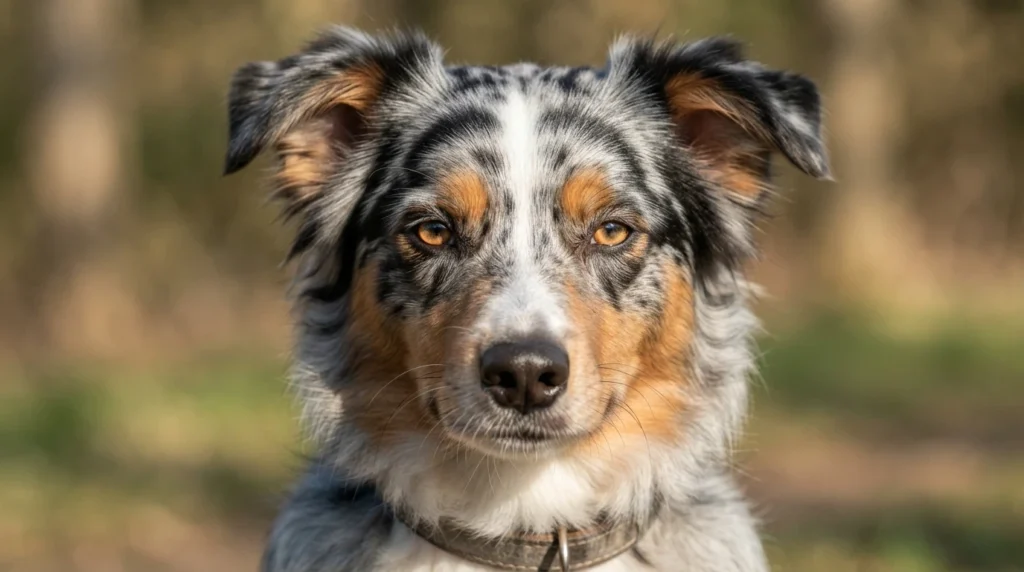
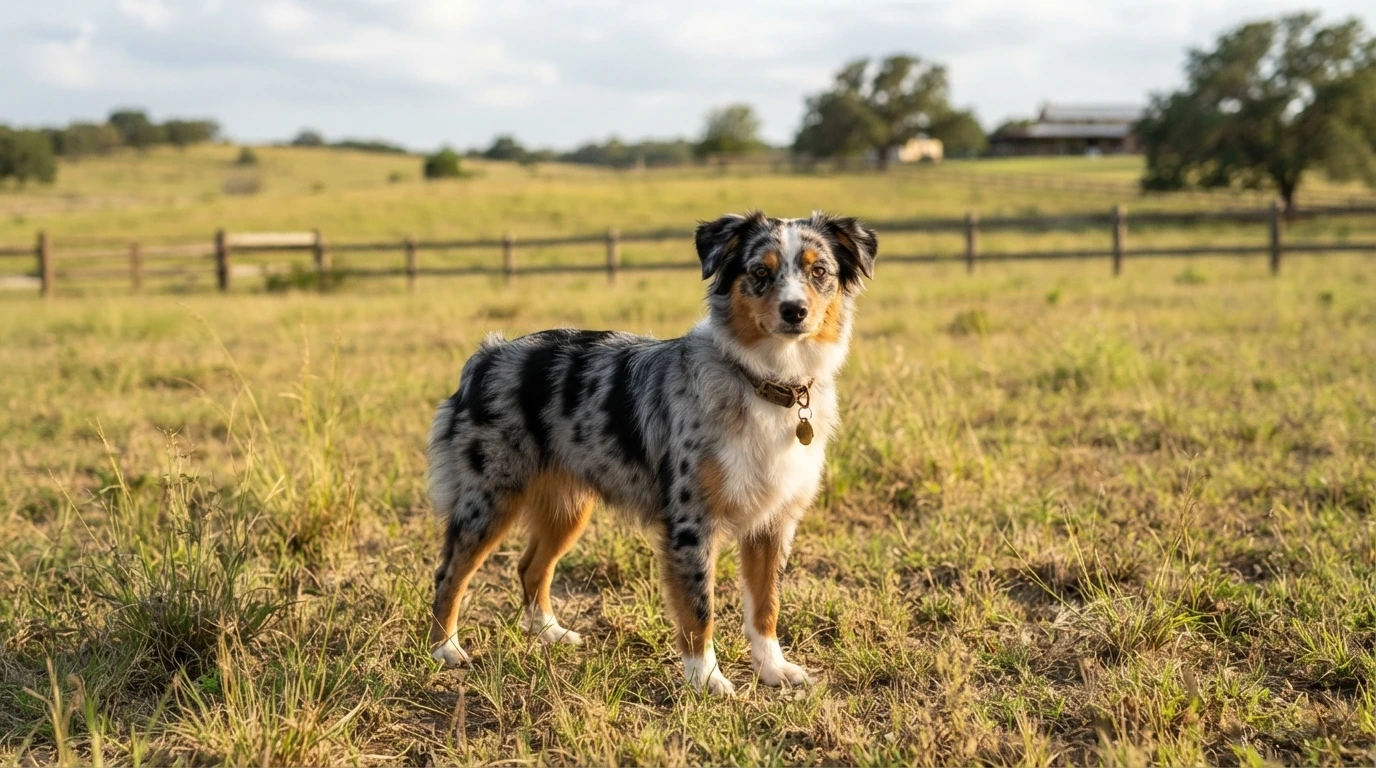
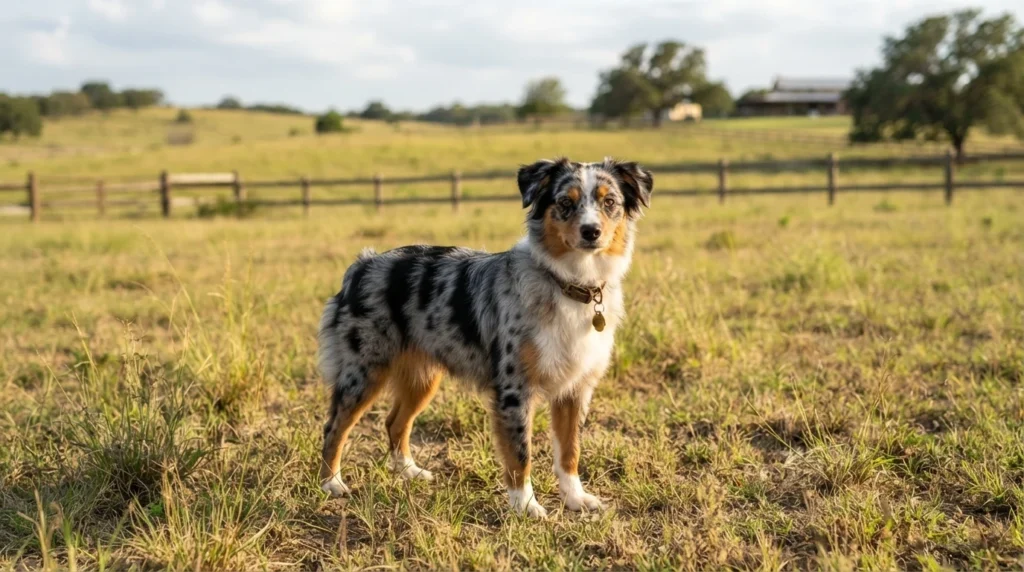
The Miniature American Shepherd is compact and sturdy, with a medium-length double coat that comes in merle, black, red, and red merle patterns, often with white and copper markings. The tail may be naturally bobbed or docked depending on breeder and regional practice. Overall structure closely mirrors the Australian Shepherd at a reduced scale: balanced, athletic, and built for sustained working movement rather than a delicate companion-breed frame.
Temperament
Miniature American Shepherds are intelligent, energetic, and deeply loyal to their households, with a genuine herding instinct that persists whether or not the dog ever encounters actual livestock. That instinct can show up as nipping at heels, circling, or attempting to “herd” children or other pets, behaviors that are natural for the breed but need active management in a non-working household. Without proper early socialization, the breed can also be somewhat reserved or watchful with strangers, a trait consistent with its working-dog heritage rather than a temperament flaw.
Managing that herding instinct constructively rather than suppressing it tends to produce the best outcomes. [FUTURE LINK: canine herding-instinct enrichment guide] Structured outlets, herding trials for owners with access to livestock, treibball (a herding-inspired sport using large balls), or simply consistent training games that channel the dog’s drive to chase and control movement, give the instinct somewhere productive to go rather than leaving it to surface as unwanted nipping or fixation on joggers, cyclists, or moving vehicles. Owners who invest in this kind of structured outlet early tend to report far fewer behavior problems than those who try to eliminate the instinct entirely, which is rarely realistic given how deeply it’s bred into the breed.
Is a Miniature American Shepherd Right for You?
This is the section where the breed’s name most often misleads prospective owners. “Miniature” describes size, not energy level, and that distinction deserves real emphasis: this is a genuine working-line herding dog that needs daily vigorous exercise and consistent mental stimulation, not a low-key companion that happens to be small. Households without the time, yard access, or commitment to provide that outlet often end up with a bored, frustrated dog prone to destructive behavior or excessive herding-instinct expression directed at children or other pets. Herding-instinct management matters specifically in homes with kids, since nipping at heels during play is a natural but correctable behavior that benefits from early, consistent redirection. For active owners who want a compact, trainable, deeply engaged working dog and can commit to real daily exercise and structured mental enrichment, the Miniature American Shepherd is an outstanding match.
Training
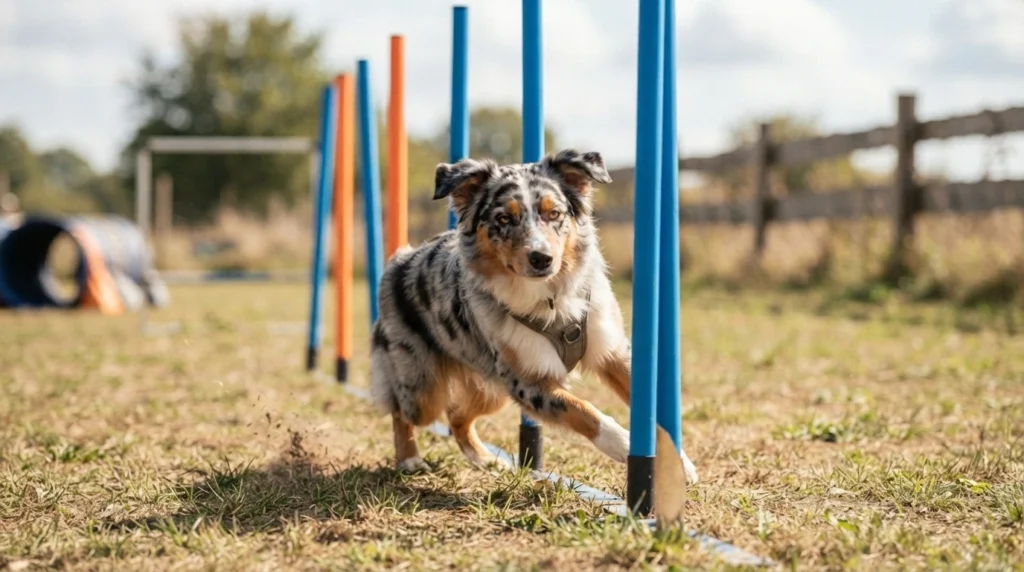
Highly intelligent and eager to work, Miniature American Shepherds generally excel at agility, obedience, and herding sports, often outperforming larger breeds in trainability given the right structured outlet. That same intelligence becomes a liability without one: a bored, understimulated Miniature American Shepherd is prone to inventing its own “jobs,” which often means unwanted behaviors like excessive barking, chewing, or herding household members.
Exercise Needs
The breed’s exercise needs are genuinely high, disproportionate to its compact size, and this is the single most important practical fact for prospective owners to internalize. A daily combination of vigorous physical exercise, a long walk or run plus active play, and structured mental stimulation, puzzle toys, training sessions, or herding/agility sports, is realistically necessary to keep most Miniature American Shepherds content and well-behaved. Owners expecting a “smaller equals easier” experience are usually surprised by how much this breed actually needs.
Grooming
Grooming needs are moderate: regular brushing, generally a few times a week, manages the medium double coat and controls shedding, which increases seasonally during coat blowouts. This isn’t a especially high-maintenance coat compared to longer-haired toy breeds, but consistent brushing meaningfully reduces matting and loose-hair buildup around the house. Routine nail trims, ear checks, and dental care round out the basic grooming routine, and none of these add substantially to the time commitment beyond the coat brushing already described.
Health and Lifespan: MDR1 Gene and Genetic Screening Deserve Attention
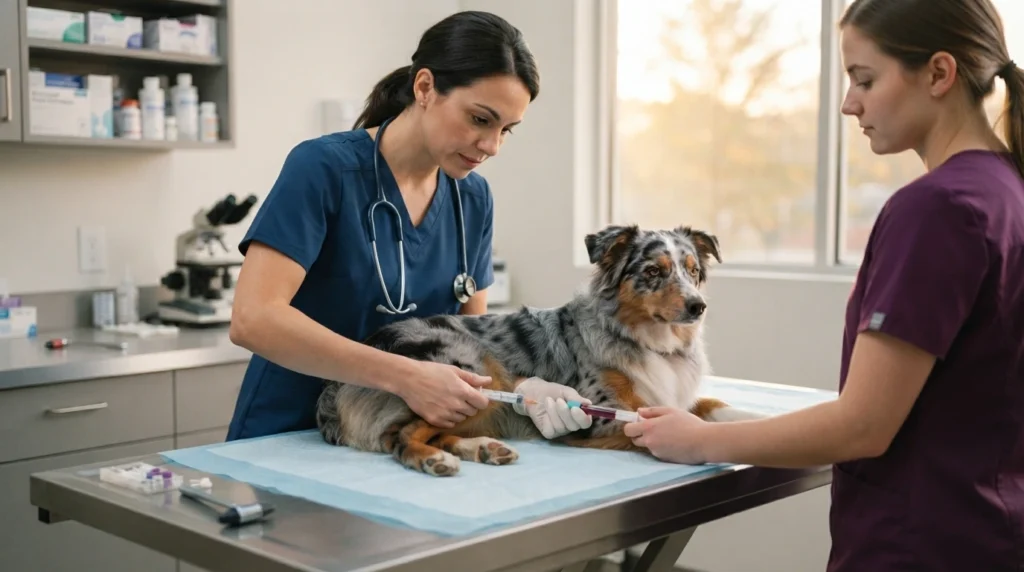
The MDR1 gene mutation is the single most important, actionable health consideration for this breed, inherited from its Australian Shepherd and broader herding-breed ancestry. [FUTURE LINK: canine MDR1/drug-sensitivity health guide] Dogs carrying this mutation have an impaired ability to clear certain common medications, including some anti-parasitic drugs, sedatives, and chemotherapy agents, from the brain, which can cause severe, sometimes life-threatening neurological reactions at doses safe for dogs without the mutation. A simple, inexpensive genetic test, often a cheek swab, identifies whether a dog carries one or two copies of the mutation, and every Miniature American Shepherd owner should have this test done and keep the result on file for any veterinarian or emergency clinic to reference before prescribing medication.
Beyond MDR1, hip dysplasia appears in the breed at a meaningful rate, as it does across most herding breeds of this general size and build, and reputable breeders should provide hip health screening on breeding stock. Patent ductus arteriosus, a congenital heart defect where a fetal blood vessel fails to close properly after birth, is another herding-breed-relevant consideration, generally identified via a heart murmur on early veterinary exams and often correctable with treatment if caught early. Collie eye anomaly, a inherited eye condition affecting the retina and other eye structures, also traces to the breed’s herding-dog ancestry, which is why eye screening on breeding stock matters. With attentive genetic screening and care across these known risk areas, Miniature American Shepherds commonly live 12 to 13 years.
The merle coat pattern, while visually striking and popular, also carries a genetic consideration worth understanding before breeding two merle-coated dogs together: pairing two merle parents significantly raises the risk of “double merle” puppies, which can face serious vision and hearing impairments. Reputable breeders test coat-color genetics and avoid merle-to-merle pairings specifically to prevent this outcome, and buyers evaluating a litter should feel comfortable asking directly about the parents’ coat genetics and any double-merle risk in the pairing.
Nutrition
Active-breed feeding guidance applies, matched realistically to the dog’s actual daily exercise level rather than its compact size alone; an active Miniature American Shepherd has caloric needs closer to a working dog than a sedentary small breed.
Cost and Adoption
A Miniature American Shepherd puppy from a reputable, health-tested breeder typically costs $1,200 to $2,800. Annual costs, including food, routine veterinary care, and grooming, generally run $1,000 to $1,800, with genetic screening, including the MDR1 test, representing a worthwhile upfront cost rather than an optional add-on. Buyers should be cautious of unregistered “toy” or “teacup” marketing applied to individuals within this already-small breed, since that framing often prioritizes extreme smallness over the structural soundness and working temperament the formal breed standard protects. A reputable breeder should be able to provide documentation of hip, eye, and MDR1 genetic screening on both parents without hesitation, and buyers should treat reluctance to share that documentation as a meaningful red flag rather than a minor inconvenience.
Common Buyer Mistakes
- Assuming “miniature” means low-exercise. This is a genuine working-line herding breed; the smaller size does not reduce its daily exercise and mental-stimulation needs.
- Underestimating herding-instinct management needs. Nipping at heels and circling behaviors are natural but require active, consistent redirection, especially in households with children.
- Skipping MDR1 genetic testing. This inexpensive test can prevent a severe, potentially life-threatening drug reaction; every owner should have it done and keep the result accessible.
- Falling for unregistered “toy” or “teacup” marketing. Extreme smallness within an already-small breed isn’t a premium feature and often comes at the expense of structural soundness and temperament.
- Not asking about merle-to-merle breeding. Double-merle puppies face real vision and hearing risks; buyers should confirm a litter’s parent coat genetics before committing.
FAQ
Is a Miniature American Shepherd the same as a Toy Australian Shepherd?
“Toy Australian Shepherd” isn’t a formally recognized breed or size class; the Miniature American Shepherd is the officially recognized, deliberately developed smaller breed, distinct from unregistered “toy” marketing terms.
How much exercise does a Miniature American Shepherd need?
A high amount, daily vigorous physical exercise plus structured mental stimulation, disproportionate to the breed’s compact size. This is not a low-exercise breed.
What is the MDR1 gene?
A genetic mutation, common in herding breeds including this one, that impairs a dog’s ability to safely process certain medications. A simple genetic test identifies carriers, and the result should guide veterinary medication choices for life.
Are Miniature American Shepherds good with kids?
Generally yes with proper socialization and herding-instinct management, though their tendency to nip at heels during play needs consistent, early redirection.
Do Miniature American Shepherds shed a lot?
Moderately, with seasonal increases during coat blowouts. Regular brushing manages shedding effectively.
What health problems are Miniature American Shepherds prone to?
The main areas of concern are the MDR1 drug-sensitivity gene mutation, hip dysplasia, patent ductus arteriosus, collie eye anomaly, and, in merle-to-merle pairings specifically, double-merle-related vision and hearing risk. Genetic and health screening on breeding stock meaningfully reduces these risks.
Is the Miniature American Shepherd a good apartment dog?
Only for owners committed to meeting its high daily exercise and mental-stimulation needs through outside activity; the breed’s compact size makes apartment living physically possible, but it doesn’t reduce the underlying exercise requirement.
How long do Miniature American Shepherds live?
With attentive care and genetic screening, Miniature American Shepherds commonly live 12 to 13 years.
Conclusion
The Miniature American Shepherd proves that “smaller” doesn’t mean “easier.” This is a deliberately developed, genuinely distinct working breed that preserved the Australian Shepherd’s intelligence, drive, and herding instinct in a more compact frame, not a downsized companion dog bred for cuteness alone. It’s a breed built by ranchers and rodeo performers who needed real working ability in a smaller package, and that history still shapes what the breed needs from its owners today. Its real health considerations, the MDR1 gene chief among them, deserve proactive genetic screening rather than being treated as an afterthought. For active owners ready to meet its real exercise and mental-stimulation needs, the Miniature American Shepherd offers an exceptionally capable, deeply loyal working companion in a more manageable size. Owners who go in with clear eyes about what this breed actually requires, rather than assuming its smaller stature translates to smaller needs, tend to find it one of the most rewarding and versatile companions available in the herding group.