
Airedale Terrier: The Complete Guide to the “King of Terriers”
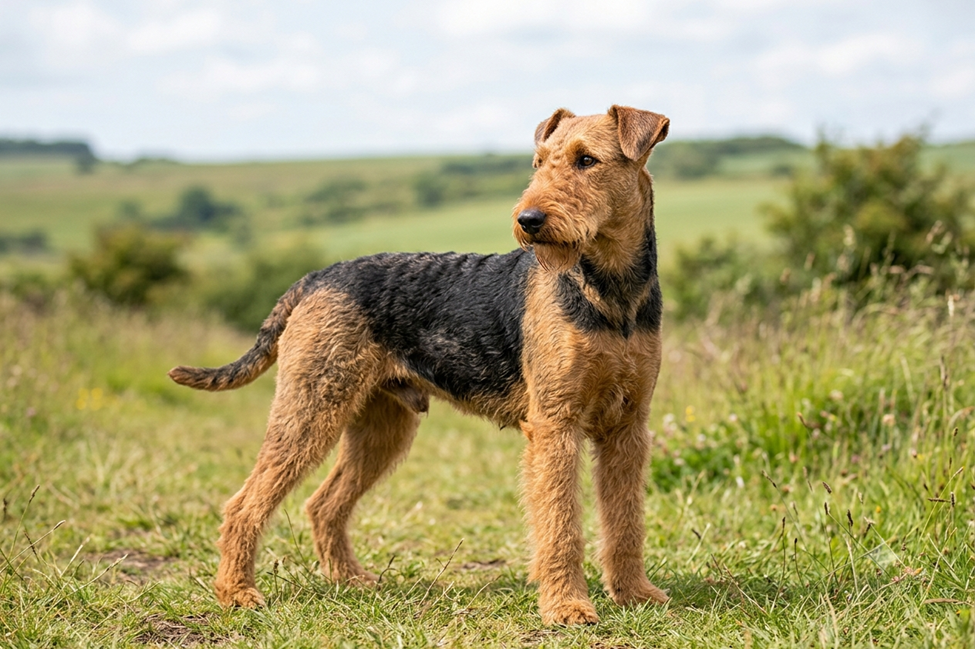
Stand an Airedale Terrier next to any other terrier breed and the nickname makes instant sense: this is the largest of them all, a wiry-coated, square-jawed dog with the confident bearing of something built to handle real work. That’s exactly what it was bred for. Before it was a show-ring regular, the Airedale Terrier hunted otters and vermin along an English river valley, then went on to serve as a decorated military dog. This guide covers what that working heritage means for life with an Airedale today — including the exercise and grooming commitment that catches a lot of new owners off guard.
Airedale Terrier Quick Facts
| Attribute | Detail |
| AKC Group | Terrier Group |
| FCI Group | Group 3, Section 1 (Large and Medium-sized Terriers) |
| Country of Origin | England (Yorkshire, Aire Valley) |
| Height | About 23 in at the shoulder |
| Weight | 50–70 lb |
| Lifespan | 10–13 years |
| Coat | Hard, wiry outer coat over a softer undercoat |
| Colors | Black and tan; grizzle and tan |
| Temperament | Bold, confident, alert, intelligent |
What Is an Airedale Terrier?
Origins in Yorkshire’s Aire Valley
The Airedale Terrier takes its name from the Aire River and the valley, or “dale,” in Yorkshire, England, where the breed was developed in the mid-1800s. Working-class breeders in the region crossed various local terriers with the Otterhound, a shaggy-coated hunting hound that contributed size, bone structure, a strong nose, and an affinity for water — traits none of the smaller terriers of the era had on their own. The goal wasn’t a specialist but a generalist: a dog that could dispatch vermin, track and hold larger game, and guard the family and property all at once, standing in for the small stable of specialized dogs a working family couldn’t afford to keep.
A Decorated Military Dog
The American Kennel Club recognized the Airedale Terrier in 1888, placing it in the Terrier Group [Internal Link], where it remains today. The breed’s reputation grew well beyond the show ring during World War I, when Airedales served as the premier military dog of the era — working as sentries, message runners, explosives detectors, and search dogs that located wounded soldiers on the battlefield. That combination of intelligence, courage, and physical capability still defines the breed’s temperament.
Appearance & Coat

Size and Build
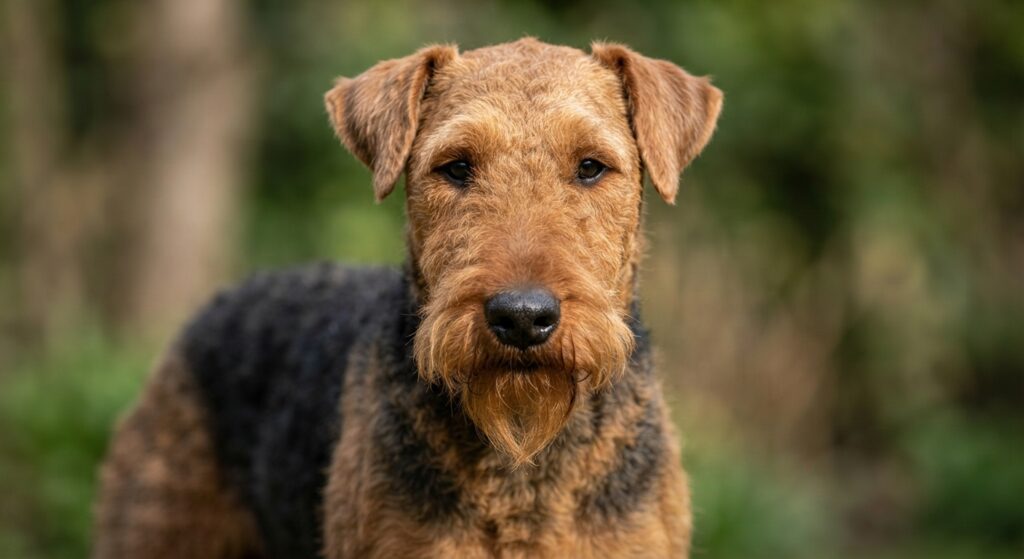
Airedale Terriers stand roughly 23 inches at the shoulder and weigh between 50 and 70 pounds, making them substantially larger than most other terrier breeds — hence the “King of Terriers” title. The build is square and sturdy, with enough bone and muscle to back up the breed’s working history.
Coat Texture and Colors
The Airedale’s coat is hard and wiry on the outside, covering a softer, denser undercoat beneath. This double-coat structure sheds very little, which makes the breed a popular choice for owners sensitive to loose hair, though “low-shedding” doesn’t mean “low-maintenance” — more on that in the grooming section below. Two color patterns are standard: black and tan, and grizzle and tan, both typically featuring a darker saddle marking across the back.
Temperament and Personality
An Airedale Terrier carries itself with head and tail held high, radiating the alert, inquisitive confidence the breed standard calls for. They’re outgoing and bold without tipping into aggression, and while they’re somewhat more reserved than many other terrier breeds, a well-socialized Airedale shouldn’t act shy or spooky around new people.
That confidence comes paired with real intelligence and a genuinely gentle side toward family once trust is established, though the breed tends to stay wary of strangers until it’s had a chance to size them up. Given its working-dog background, an Airedale is happiest with a job to do, whether that’s structured training, a hike, or simply an active daily routine.
Is an Airedale Terrier Right for You?


First-Time Owners
Airedales can work for first-time owners, but only ones ready to commit to real daily exercise and consistent training from day one. This isn’t a breed that thrives on a passive routine, and owners who underestimate the activity and structure it needs often end up with a bored, destructive dog.
Families and Children
When properly trained and socialized, Airedale Terriers tend to be gentle, patient family companions, and their size and sturdiness hold up well to typical household activity with older children in particular.
Other Pets
Terrier instincts run deep in this breed, so a strong prey drive toward small animals is common. Early socialization helps with other dogs, but cats and small pets may always require careful management.
Apartment Living
Given their size, energy level, and exercise needs, Airedale Terriers generally do better with access to a yard than in a small apartment, though the exercise commitment matters more than the square footage — a securely fenced outdoor space to run in makes a real difference.
Training an Airedale Terrier
Airedale Terriers are famously quick learners, which cuts both ways. They pick up new commands and tricks fast, but they absorb bad habits just as quickly, so consistency from the very beginning matters more with this breed than with slower-to-learn dogs. An untrained Airedale isn’t a blank slate for long — whatever habits take hold early tend to stick.
Positive reinforcement paired with patience and a firm, consistent routine tends to produce the best results. Because the breed is intelligent and easily bored, mixing in mental challenges alongside basic obedience work — puzzle toys, scent games, or structured play — helps keep an Airedale engaged and less likely to find its own, less desirable entertainment.
Exercise Needs

This is a genuinely high-energy breed. Airedale Terriers need somewhere in the range of one to two hours of exercise daily to stay physically and mentally satisfied, split across walks, active play, and off-leash time in a secure space when possible. A bored, under-exercised Airedale is far more likely to develop destructive habits than one whose energy has a regular outlet.
Commitment Note: The 1–2 hour daily figure isn’t a maximum for especially active dogs — it’s closer to the baseline this breed needs to stay balanced. Anyone weighing this breed against a more sedentary lifestyle should factor that in honestly before bringing one home.
Grooming: Coat Care and Professional Cadence
The Airedale’s wiry coat sheds very little, but maintaining its texture and appearance takes real, scheduled effort. According to Airedale Terrier Club of America guidance, the breed should see a professional groomer three to four times a year for hand-stripping or clipping, which keeps the outer coat from looking shaggy and clears dead hair from the undercoat.
Grooming Tip: Between professional sessions, a good home brushing routine a few times a week keeps the coat healthy, prevents matting, and — as many longtime owners note — doubles as quality bonding time with the dog. [Internal Link: home brushing]
Health and Lifespan

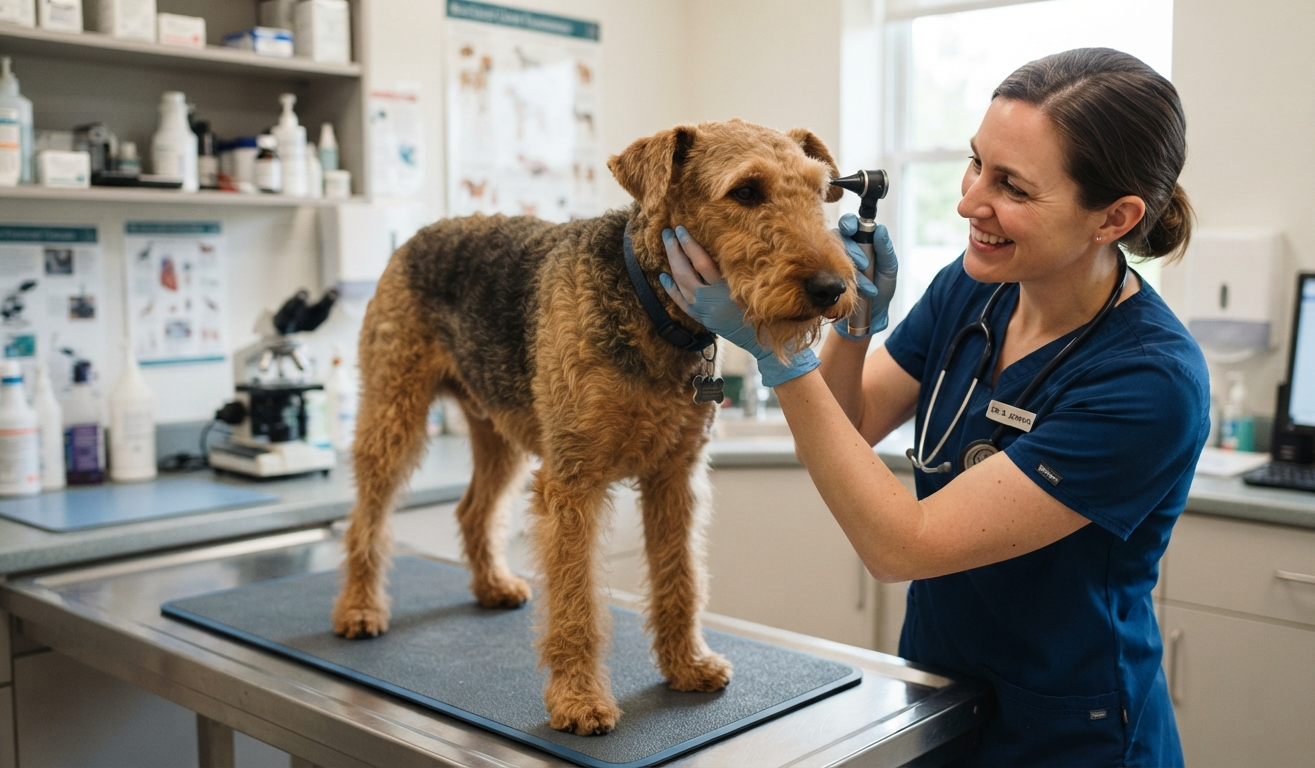
Most Airedale Terriers live between 10 and 13 years. As the largest terrier breed, they carry some health risks more typical of medium-to-large dogs alongside a few terrier-specific concerns.
| Condition | What It Is | What Owners Should Watch For |
| Hip dysplasia | Abnormally formed hip joint | Limping, popping joints, “bunny-hopping” gait |
| Bloat (GDV) | Life-threatening stomach distension/twisting | Restlessness, distended abdomen, unproductive retching — emergency care |
| Dilated cardiomyopathy | Genetic heart condition weakening the heart’s pumping ability | Coughing, panting, reduced appetite |
| Hypothyroidism | Underactive thyroid slowing metabolism | Appetite changes, hair loss, lethargy, slow heart rate |
| Cataracts | Clouding of the eye lens, mainly in older dogs | Vision changes, cloudy eye appearance |
| Dental disease | Tooth and gum problems affecting overall health | Bad breath, visible tartar, reluctance to chew |
Because Airedales are susceptible to bloat as a large, deep-chested terrier, feeding practices deserve special attention — covered in the nutrition section below.
Nutrition and Bloat Prevention
A high-quality large-breed formula suited to an active dog is a solid nutritional foundation for an Airedale Terrier, ideally one that matches the calorie needs of a genuinely active dog without encouraging the kind of rapid weight gain that stresses joints already at some risk for hip dysplasia.
Bloat prevention should shape feeding habits directly: avoid exercise immediately before and after meals, skip raised food bowls, and consider splitting daily food into two or more smaller meals rather than one large feeding, since all of these measures are commonly recommended to reduce bloat risk in large, deep-chested breeds [Internal Link] like this one. Slow-feeder bowls can also help with dogs that tend to gulp their food quickly, which is itself a contributing risk factor worth managing.
Cost and Finding a Breeder
Puppy prices for Airedale Terriers vary considerably by breeder, lineage, and region — reported figures range from around $1,500 to well over $4,000 for dogs from top show lines, with an average frequently cited around $2,500. Adoption through rescue is typically far less expensive, often in the $100 to $300 range including basic veterinary care.
Because of the breed’s grooming needs and working temperament, a reputable breeder [Internal Link] affiliated with the Airedale Terrier Club of America is a strong starting point. Ask about hip and heart health testing on the parents, temperament of the line, and what ongoing support the breeder offers after you bring a puppy home. A breeder who asks just as many questions about your lifestyle and home setup as you ask them is usually a good sign — it means they care where their puppies end up, not just that they’re sold.
Related Terrier Breeds
The Airedale Terrier shares direct ancestry with a couple of other distinctive British breeds. (See Welsh Terrier and Otterhound — internal links.)
| Breed | Size | Coat | Notable Trait |
| Welsh Terrier | Smaller, ~20 lb | Wiry, similar texture | Often described as a smaller cousin in look and temperament |
| Otterhound | Larger, ~80–115 lb | Shaggy, rough double coat | Direct ancestor breed; contributed size and water-hunting instinct |
Frequently Asked Questions
What is an Airedale Terrier?
The Airedale Terrier is the largest terrier breed, developed in Yorkshire, England, in the mid-1800s. Known as the “King of Terriers,” it’s a bold, intelligent, wiry-coated dog with a working and military-service history.
Why is it called the “King of Terriers”?
The nickname comes from its size — it’s the largest of all terrier breeds — combined with its versatile working ability and commanding, confident presence.
Are Airedale Terriers good family dogs?
Yes, when well-trained and socialized. They tend to be gentle and patient with their own family, particularly older children, though they can be wary of strangers.
Do Airedale Terriers shed?
They shed very little thanks to their wiry double coat, but that coat still needs regular home brushing and professional grooming several times a year.
How much exercise does an Airedale Terrier need?
Plan on roughly one to two hours of exercise daily. This is a high-energy, working-heritage breed that doesn’t do well with a sedentary routine.
What health problems do Airedale Terriers have?
Common concerns include hip dysplasia, bloat, dilated cardiomyopathy, hypothyroidism, cataracts, and dental disease.
How much does an Airedale Terrier cost?
Puppy prices commonly range from about $1,500 to over $4,000 depending on lineage and breeder, with an average around $2,500. Rescue adoption is typically far less expensive.
Conclusion
The Airedale Terrier earns its “King of Terriers” title honestly — it’s larger, more versatile, and more historically decorated than any other breed in its group. That stature comes with real responsibilities, though: a genuine daily exercise commitment, a structured training approach from puppyhood, and a grooming routine that requires professional attention several times a year. For owners ready to meet that standard, the payoff is a loyal, intelligent, and remarkably capable companion with a working dog’s heart underneath the show-ring polish.