
Bavarian Mountain Hound: The Complete Guide to Germany’s Specialized Tracking Dog
Bavarian Mountain Hound
The Bavarian Mountain Hound (Bayerischer Gebirgsschweisshund) is a German scent hound developed for one of the most specialized jobs in the hunting world: tracking wounded game through steep, difficult mountain terrain so it can be humanely recovered. First exhibited in 1883 and formalized with a dedicated breed club in Munich in 1912, the breed entered the AKC’s Foundation Stock Service in October 2016 and remains today almost exclusively a working dog rather than a general household companion. This guide explains exactly what blood tracking means, the breed’s German history, its verified US recognition status, and how it compares to its closest relatives, the Hanoverian Scenthound and the Bloodhound.
Bavarian Mountain Hound Quick Facts
The Bavarian Mountain Hound entered the AKC’s Hound Group-adjacent Foundation Stock Service in October 2016, not yet eligible for regular AKC group competition, and is classified under FCI Group 6, Section 2 (Leash/Scent Hounds), Standard No. 217, officially published September 22, 2017.
| Attribute | Detail |
| AKC Status | Foundation Stock Service since October 2016; not yet eligible for regular Hound Group competition |
| FCI Group | Group 6, Section 2 (Leash/Scent Hounds), Standard No. 217 (published September 2017) |
| Country of Origin | Germany (Bavaria) |
| Height | 17-20 in at the shoulder |
| Weight | 44-66 lb |
| Lifespan | 12-14 years |
| Coat | Short, dense, close-lying |
| Colors | Reddish-fawn, brindle, deer-red shades |
| Temperament | Calm, loyal, intelligent, reserved with strangers, somewhat stubborn |
What Is a Bavarian Mountain Hound?
Origins in Bavaria, Germany
The Bavarian Mountain Hound was developed in the 19th century by crossing the Hanoverian Scenthound with the Tyrolean Hound and other local hunting stock, aiming for a lighter, more agile dog capable of working steep alpine terrain that the heavier Hanoverian struggled to navigate efficiently. The breed’s development is closely tied to changes in hunting technology: as firearms became more accurate and longer-range through the 19th century, hunters increasingly faced wounded game that traveled some distance before stopping, creating real demand for specialized dogs capable of following a faint, cold blood trail. The breed was first exhibited in 1883, and the Klub fuer Bayerische Gebirgsschweisshunde (Club for Bavarian Mountain Hounds) was formally founded in Munich in 1912, giving the breed an organized home for standardization and promotion. That timeline places the Bavarian Mountain Hound’s formal organization roughly a century after many older European hound breeds, reflecting how directly its development responded to a fairly specific, late-19th-century hunting problem rather than emerging from centuries of gradual, informal breeding.
What Does Blood Tracking Mean?
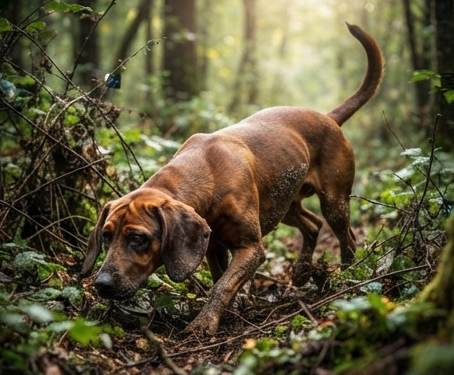
Key Explanation: Blood tracking refers to using a dog’s scenting ability to follow the trail of a wounded animal after a legal hunt, so it can be located and humanely dispatched or recovered rather than left to suffer unrecovered in the wild. It is an important ethical practice in regulated hunting, not a violent trait.
AKC and FCI Status
The Bavarian Mountain Hound entered the AKC’s Foundation Stock Service (FSS) program in October 2016, a category for breeds working toward full AKC recognition, and it remains listed among the Hound Group’s FSS breeds – eligible for AKC companion events but not yet for regular conformation competition. The FCI’s official standard for the breed, Standard No. 217, was published on September 22, 2017, classifying it under Group 6, Section 2, among leash and scent hounds specifically.
Bavarian Mountain Hound vs. Hanoverian Scenthound vs. Bloodhound

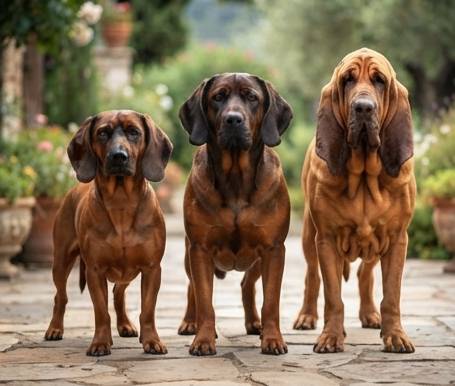
These three tracking breeds share overlapping ancestry and purpose, causing real confusion in searches. Here’s how the Bavarian Mountain Hound compares to the Hanoverian Scenthound [Internal Link] and the Bloodhound [Internal Link].
| Attribute | Bavarian Mountain Hound | Hanoverian Scenthound | Bloodhound |
| Origin | Germany (Bavaria) | Germany (Hanover) | Belgium/France, developed in England |
| Coat | Short, dense | Short, dense, heavier-boned | Short, dense |
| Primary Use | Wounded-game tracking in mountain terrain | Wounded-game tracking on flatter terrain | General trailing, historically law enforcement and hunting |
The Bavarian Mountain Hound is directly descended from the Hanoverian Scenthound but built lighter and more agile for alpine terrain, while the Bloodhound is a separate, larger breed known more broadly for general trailing work rather than specifically wounded-game recovery.
Appearance

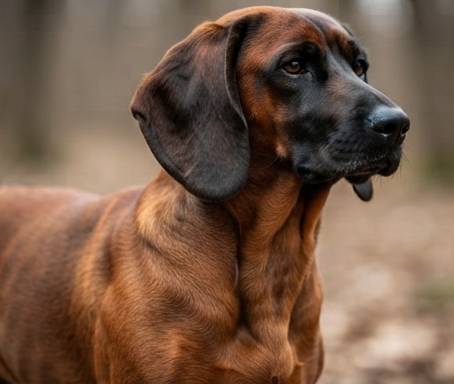
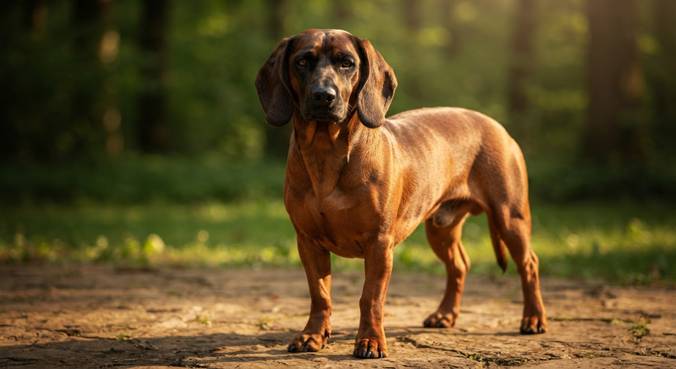
The Bavarian Mountain Hound has a compact, muscular build with a slightly elongated body and a rear end carried slightly higher than the shoulder, a proportion suited to steep terrain. The short, dense coat comes in reddish-fawn or brindle shades, with moderately long drop ears and an alert, focused expression.
Temperament
The Bavarian Mountain Hound is calm, loyal, and intelligent, generally reserved with strangers but forming strong bonds with its own family. Owners and breed sources consistently describe a somewhat stubborn streak – this is a dog that can do its own thing when its nose engages with an interesting trail, a trait rooted directly in its specialized working purpose. Working drive and scenting focus dominate the breed’s personality far more than general sociability. That focus is by design: breeders have deliberately prioritized functional tracking ability over show-ring qualities for generations, which has kept the temperament closely tied to the job the breed was built for.
Is a Bavarian Mountain Hound Right for You?

Working Dog vs. Companion
This is the single most important honest point in this guide: the Bavarian Mountain Hound is, and remains, an overwhelmingly specialized working breed. Its small global population is maintained deliberately close to its functional roots – working ability is prized well above show success – and most breeders in Germany and the small number working in the US place puppies specifically with gamekeepers, foresters, and serious hunters, not with households seeking a general family pet. Readers considering this breed purely as a companion should weigh that reality carefully.
Families and Children
In an active hunting household where the dog has a genuine working role, the Bavarian Mountain Hound can be a loyal, steady presence. Without that outlet, the breed’s intense focus and working drive can be difficult to satisfy in a purely companion setting.
First-Time Owners
This breed is not recommended for first-time dog owners generally, and specifically not for owners without hunting experience or a genuine use for the dog’s specialized tracking ability.
Training
Bavarian Mountain Hounds are highly trainable within their specialized working context, responding well to experienced handlers who understand scent-tracking work specifically. General obedience training benefits from the same handler-focused bond the breed’s working role depends on, but this is not a breed that thrives on generic pet-obedience training alone, and its documented stubborn streak means consistency matters more than with more naturally biddable breeds.
Exercise Needs

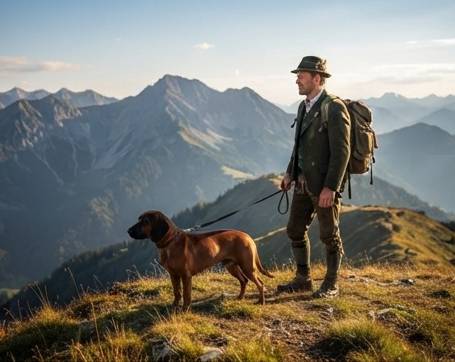
This breed needs a genuinely large amount of exercise to stay happy, ideally through actual tracking work or structured scent activities that engage its purpose-bred abilities. Plain walks or general play are unlikely to satisfy a breed built around such a specific, demanding job.
Grooming
The short, dense coat is low-maintenance, needing only occasional brushing. Standard nail trims, dental care, and ear checks round out the routine – the breed’s drop ears carry a documented ear infection risk common to floppy-eared hounds generally, so regular checks are worthwhile.
Health and Lifespan

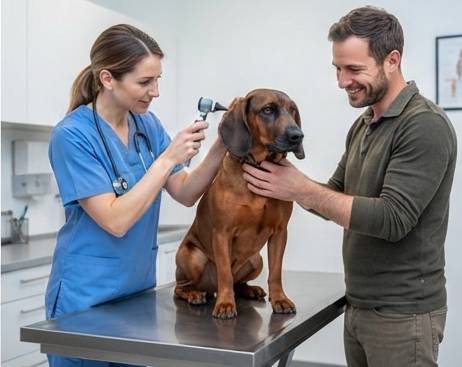
Most Bavarian Mountain Hounds live between 12 and 14 years. Because the breed has been kept close to its working roots rather than heavily reshaped for the show ring, it generally supports good overall health, though a few conditions are documented and worth knowing about.
| Condition | What It Is | What Owners Should Watch For |
| Hip dysplasia | Abnormal hip joint development leading to laxity and arthritis over time | Difficulty rising, reluctance to jump, altered gait |
| Idiopathic epilepsy | A hereditary seizure disorder, manageable with medication but not curable | Episodes of disorientation, collapse, or convulsions |
| Ear infections | Common in drop-eared hounds due to reduced airflow | Odor, redness, head shaking, scratching at ears |
Hip dysplasia [Internal Link] screening (parental hip scoring) is a standard, reasonable part of responsible breeding for a working breed that relies so heavily on sound joints for its job. Knowing the health history of both parents is also worth asking about given the documented, heritable nature of epilepsy [Internal Link] in the breed.
Nutrition
A high-quality, active-working-dog formula suits the Bavarian Mountain Hound well, particularly for dogs genuinely engaged in field tracking work, which demands real caloric and joint-support needs beyond a sedentary companion’s requirements.
Cost and Adoption


The Bavarian Mountain Hound remains genuinely rare in the US, available almost exclusively through specialized hunting-dog breeders, often with a strong preference for placing puppies with working homes. Asking about hip and epilepsy history and working-line pedigree is a standard, reasonable part of vetting a responsible breeding [Internal Link] program for this specialized breed. Prospective owners without a genuine tracking or hunting use for the dog should think carefully about whether this breed, versus a more general companion breed, truly fits their household. Given how few breeders exist in the US relative to demand from working homes, patience and a genuine willingness to travel are often part of the process.
Frequently Asked Questions
What is a Bavarian Mountain Hound?
The Bavarian Mountain Hound is a German scent hound developed to track wounded game through mountain terrain, descended from the Hanoverian Scenthound and Tyrolean Hound.
What does blood tracking mean?
It refers to using a dog’s scenting ability to locate wounded game after a legal hunt for humane recovery – an ethical practice in regulated hunting, not a violent trait.
When was it recognized by the AKC?
The breed entered the AKC’s Foundation Stock Service in October 2016 and remains eligible for companion events but not yet for regular Hound Group conformation competition.
Is it a good family pet?
Generally not as a primary purpose – this is an overwhelmingly specialized working breed best suited to genuine hunting households.
How is it different from the Hanoverian Scenthound?
The Bavarian Mountain Hound is lighter and more agile, bred specifically for steep mountain terrain, while the Hanoverian Scenthound is heavier and works better on flatter ground.
What health problems affect the breed?
Hip dysplasia, idiopathic epilepsy, and ear infections are the main documented considerations.
How much does one cost?
Pricing varies, but given the breed’s rarity and working-home preference among breeders, prospective owners should expect a limited, specialized search.
Conclusion
The Bavarian Mountain Hound represents something genuinely distinct in the world of dog breeds: a dog purpose-built for one of hunting’s most ethically important and technically demanding jobs, tracking wounded game to humane recovery across difficult mountain terrain. Understanding what that means – and honestly assessing whether your household can offer the working outlet this breed needs – matters more with this breed than with almost any other profile in this guide series.