
Argentine Dogo (Dogo Argentino): The Complete, Fact-Based Guide
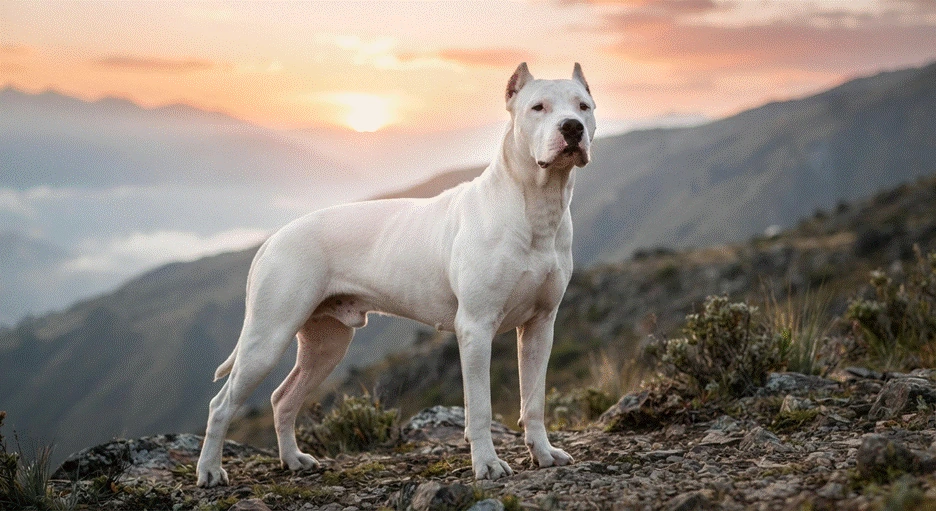
The Argentine Dogo, formally known as the Dogo Argentino, is a large, powerfully built, all-white hunting and guardian breed developed in 1920s Argentina. It’s internationally recognized by the FCI since 1973, but only recently recognized by the AKC — in January 2020, placing it in the Working Group. That recency matters: it means a lot of published information about the breed is either outdated or incomplete. This guide covers the breed’s sourced history, temperament, health, and — critically — the genuine, well-documented breed-specific legislation that restricts or bans the Dogo Argentino in a number of countries.
Argentine Dogo Quick Facts
The Argentine Dogo belongs to the AKC Working Group [Internal Link], a category built around dogs bred for guarding, pulling, and other physically demanding jobs.
| Attribute | Detail |
| FCI Group | Group 2, Section 2.1 (Molossoid breeds, Mastiff type); recognized 1973 |
| AKC Group | Working Group; recognized January 2020 |
| Country of Origin | Argentina (Córdoba) |
| Height | 24–27 in at the shoulder |
| Weight | Approximately 88–100 lb |
| Lifespan | 9–15 years |
| Coat | Short, white; small dark head spot sometimes tolerated |
| Temperament | Loyal, protective, intelligent, high energy |
What Is an Argentine Dogo?
Origins in 1920s Córdoba, Argentina
The Dogo Argentino was developed in the 1920s in Córdoba, Argentina, by brothers Antonio and Agustín Nores Martinez, who set out to create a big-game hunting dog capable of taking on wild boar, peccary, and puma. Foundation stock included the now-extinct Córdoba fighting dog, along with the Bull Terrier and the Pyrenean Mastiff (Mastín del Pirineo), among other breeds, combined specifically for size, strength, and cooperative pack-hunting ability rather than solitary aggression. Antonio Nores Martinez presented the breed formally in 1947, and a breed standard was published the following year. The goal from the start was a dog that could hunt cooperatively in packs rather than fight solo, since a lone dog going after a wild boar or puma alone is a genuinely dangerous proposition — the breed’s stamina, coordination, and biddability around other dogs of its own kind trace directly back to that specific hunting requirement. Antonio Nores Martinez was murdered in 1956, and his brother Agustín continued promoting the breed internationally afterward, work that eventually contributed to its formal recognition decades later.
FCI and AKC Recognition
The Fédération Cynologique Internationale recognized the Dogo Argentino in 1973, giving the breed decades of international standing before it reached the United States’ primary registry. The American Kennel Club granted the breed full recognition only in January 2020, placing it in the Working Group — a genuinely recent addition worth knowing, since it means the breed lacks the decades of AKC-specific breed-club infrastructure and owner community that longer-recognized breeds have built up in the US.
Argentine Dogo vs. Related Breeds
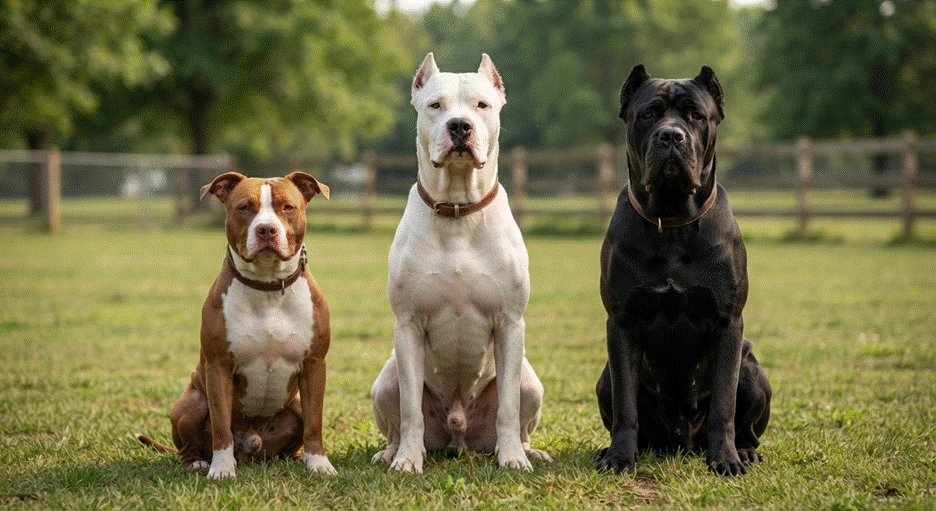
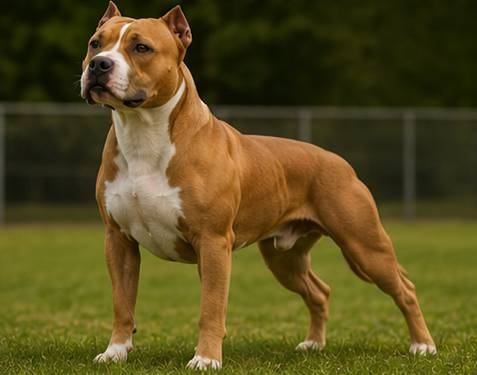
The Dogo Argentino gets grouped with other large, powerful breeds in public conversation, sometimes inaccurately. Here’s how it compares to two commonly confused breeds, the American Pit Bull Terrier [Internal Link] and the Cane Corso [Internal Link].
| Attribute | Argentine Dogo | American Pit Bull Terrier | Cane Corso |
| Registry Status | FCI (1973), AKC (2020) | UKC, ADBA (not AKC/FCI) | AKC, FCI-recognized |
| Typical Size | 88–100 lb, 24–27 in | 30–65 lb, 17–21 in | 90–120 lb, 23–28 in |
| Origin/Purpose | Argentina; big-game hunting and guardian work | United States; farm work, historical blood-sport ancestry | Italy; historically a guardian and working farm dog |
Appearance

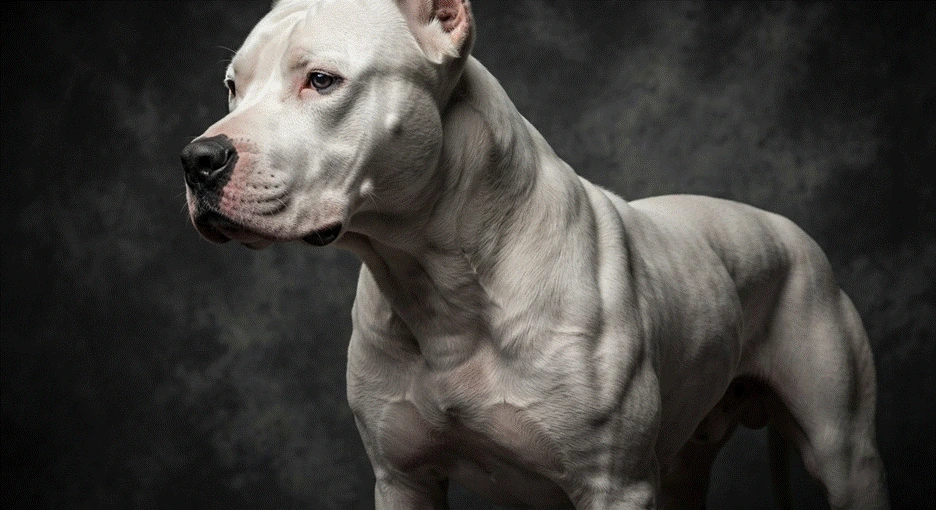
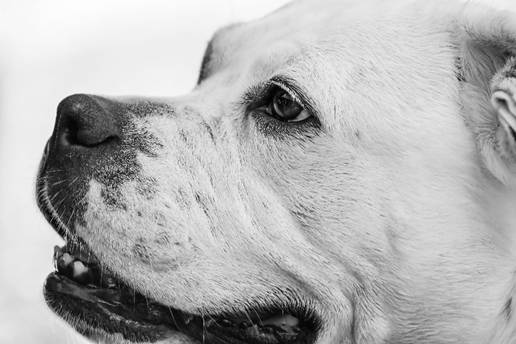
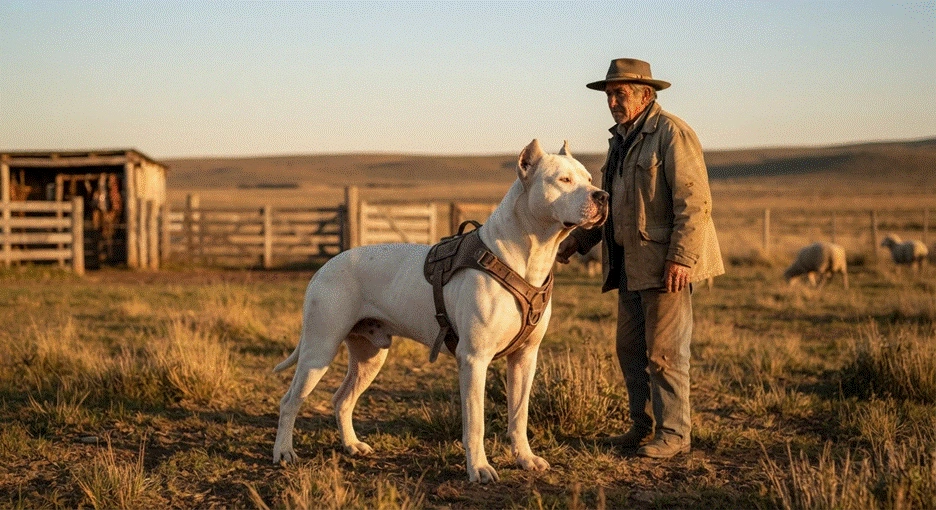
The Argentine Dogo is large, muscular, and athletic, built for the stamina and power big-game hunting demands. The coat is short and always white, and some breed standards tolerate a small dark spot on the head, provided it doesn’t exceed roughly a tenth of the head’s size.
Temperament
Breed sources and working history both point to a dog that’s loyal, protective, and genuinely intelligent — the Dogo Argentino has real, documented use in police, military, and search-and-rescue work, and its calmer individuals are also used in therapy contexts, all of which speak to a trainable, biddable temperament in capable hands. At home, the breed is typically described as affectionate and devoted to its family. That said, this is a working hunting breed bred for stamina and drive, and long stretches without adequate physical and mental stimulation are commonly linked to destructive behavior at home, a practical consideration more than a character flaw. It’s also worth being clear about what the breed’s pack-hunting design means in practice: a Dogo Argentino bred and raised well is not the same thing as a reactive or unstable dog, but the size, strength, and drive involved mean that training lapses or inadequate socialization carry more real-world consequence than they would with a smaller breed — a distinction that matters for anyone weighing the breed’s genuine working pedigree against internet reputation. Prospective owners researching the breed should look for temperament information sourced to breed clubs, veterinary organizations, or documented working use, rather than anecdotal claims in either direction.
Is an Argentine Dogo Right for You?

Families and Children
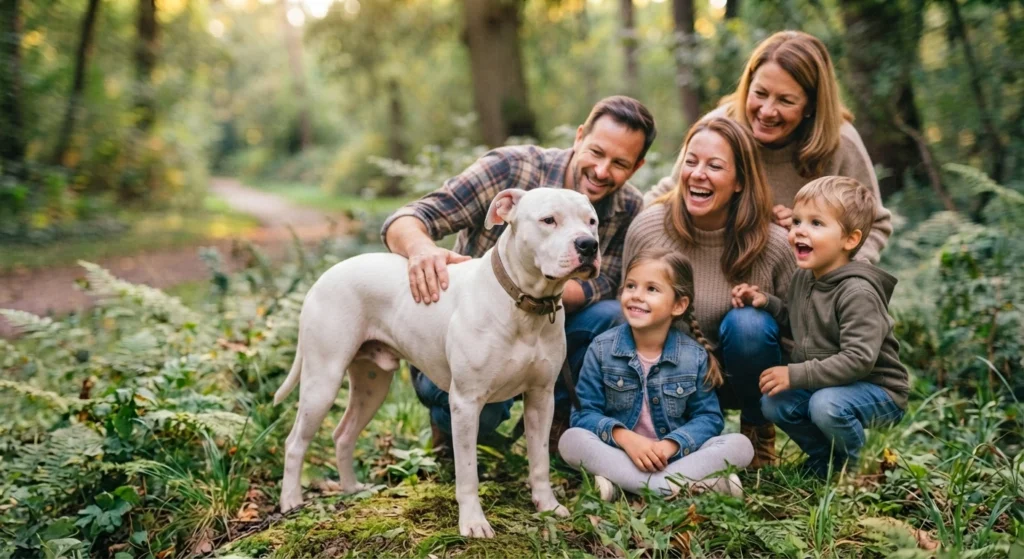
Dogo Argentinos are frequently described by breed sources as loyal and affectionate with their own families. Given the breed’s size and strength, standard supervision during play with children is especially important, and this is generally considered a breed best suited to experienced dog owners rather than first-time ones.
Other Animals
The breed’s hunting heritage gives it a genuine prey drive, and caution is warranted around small animals without careful, gradual socialization from puppyhood. Introductions to other dogs should also be managed thoughtfully, particularly with unfamiliar dogs.
Breed-Specific Legislation
Legal Note: The Dogo Argentino is banned or significantly restricted in a number of countries, including the United Kingdom, Australia, New Zealand, Singapore, Denmark, Norway, Iceland, Ukraine, Israel, Fiji, and the Cayman Islands, along with some regions of Germany, such as Bavaria and Hesse, where ownership is prohibited or heavily restricted. Breed-specific legislation changes over time and varies significantly by jurisdiction, so this list should be treated as a starting point rather than a final answer — always verify current local, regional, and national law directly before acquiring the breed or traveling with one, since restrictions can apply even to visiting pets in some jurisdictions. Within the United States, there is no federal ban on the Dogo Argentino, but individual states, cities, counties, and even homeowners associations or insurance carriers can impose their own restrictions, so a check that stops at the national level isn’t necessarily enough. Prospective owners who travel or relocate frequently should treat this as an ongoing consideration rather than a one-time check made before the first purchase.
Training
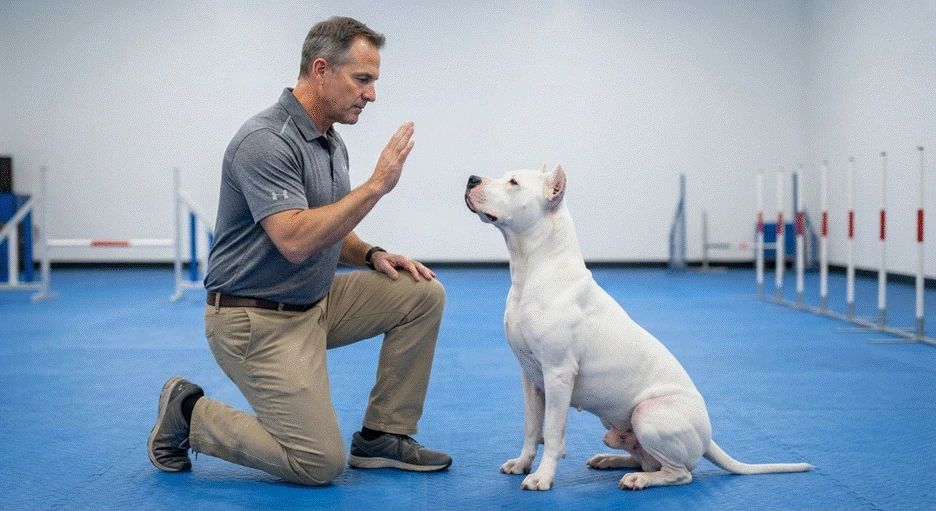
Dogo Argentinos are intelligent and generally responsive to firm, consistent, positive-reinforcement training, reflecting the same trainability that makes the breed suitable for working roles. Early socialization is essential given the breed’s size and prey drive, and because of the strength and drive involved, this breed is best matched with owners who have prior experience handling large, powerful dogs.
Puppy classes and structured obedience training are strongly recommended starting as early as possible, both to build good leash and household manners before the dog reaches full adult size and strength, and to give the puppy broad, positive exposure to new people, dogs, and environments during the critical socialization window. Because the breed was developed to work cooperatively in hunting packs, most Dogo Argentinos respond well to clear leadership and consistent household rules, and tend to do less well with inconsistent or overly permissive handling.
Exercise Needs
This is a genuinely high-energy working breed that needs substantial daily exercise, generally 60 minutes or more, ideally including structured activity that engages both body and mind rather than passive time in a yard. Under-exercised Dogo Argentinos are more prone to destructive behavior, so consistent, real physical and mental outlets matter for this breed more than for many companion-focused breeds.
Grooming
The short white coat is low-maintenance: weekly brushing is generally enough to manage shedding and keep the coat healthy. Standard care — nail trims, ear checks, and dental hygiene — completes the routine.
Health and Lifespan
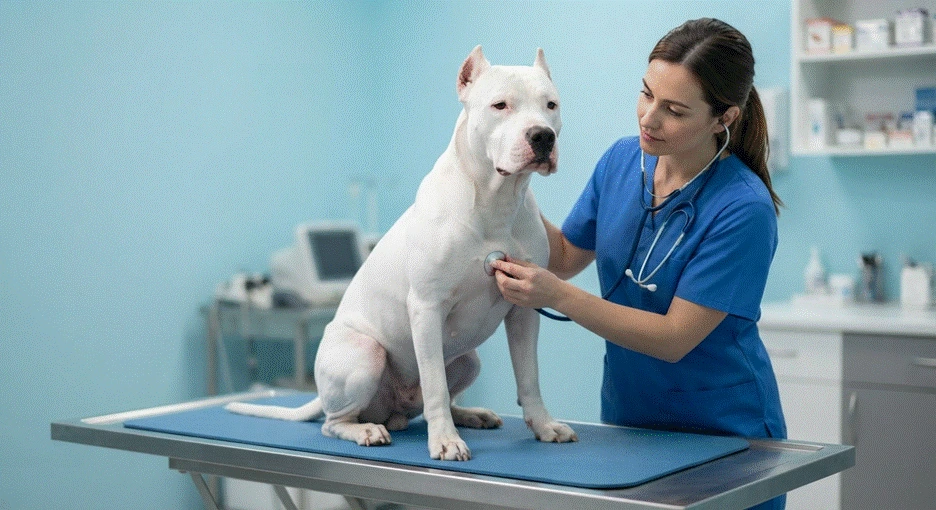
Most Argentine Dogos live between 9 and 15 years. A few conditions are particularly worth understanding for this breed.
| Condition | What It Is | What Owners Should Watch For |
| Hip dysplasia | Abnormally formed hip joint, common in large breeds | Limping, stiffness, reluctance to jump |
| Congenital deafness | Affects roughly 10% of the breed, in one or both ears | Present from birth; responsible breeders BAER-test puppies to identify it |
| Gastric dilatation-volvulus (bloat) | Life-threatening stomach distension and twisting, more common in large, deep-chested breeds | Restlessness, distended abdomen, unproductive retching — emergency care |
Responsible breeders typically screen for hip dysplasia [Internal Link] before pairing dogs and BAER-test every puppy for deafness. Because gastric dilatation-volvulus [Internal Link] is a true emergency, knowing the warning signs in advance and having a plan to reach a veterinarian quickly matters more for this breed than for smaller, less deep-chested dogs.
Nutrition
A high-quality, large-breed, active-dog formula is a solid foundation for an Argentine Dogo. Given the breed’s deep-chested build and real bloat risk, feeding multiple smaller meals rather than one large one, and avoiding vigorous exercise immediately before or after eating, are standard, evidence-based precautions worth following.
Cost and Adoption
Because AKC recognition is so recent and the breed faces legal restrictions in a number of countries, breeder availability and pricing vary significantly by region, and prospective buyers should confirm current pricing directly. Given the breed’s two most consequential hereditary concerns, working with a breeder who BAER-tests for deafness and screens for hip dysplasia is a meaningful, worthwhile check before committing to a puppy — ask to see documentation for both rather than taking a breeder’s word for it. Breed-specific rescue is limited given the breed’s relative rarity in AKC circles, and rescue availability may also be affected by regional legal restrictions, so patience with reputable breeders is often the more realistic path to ownership in most parts of the United States.
Frequently Asked Questions
What is an Argentine Dogo (Dogo Argentino)?
The Argentine Dogo is a large, muscular, white-coated hunting and guardian breed developed in 1920s Argentina, FCI-recognized since 1973 and AKC-recognized since January 2020.
Is the Dogo Argentino the same as a Pit Bull?
No. They’re different breeds with different origins — the Dogo Argentino was developed in Argentina for big-game hunting, while the American Pit Bull Terrier descends from English bull-and-terrier stock and is registered by the UKC and ADBA rather than the AKC.
Is the Dogo Argentino banned anywhere?
Yes. It’s banned or significantly restricted in a number of countries, including the UK, Australia, New Zealand, Singapore, Denmark, Norway, Iceland, Ukraine, Israel, and parts of Germany, among others. Laws change, so verify current regulations for your specific location.
Are Dogo Argentinos good family dogs?
Generally, breed sources describe them as loyal and affectionate with their own families, though their size and strength make them a better fit for experienced owners than first-time ones.
Are Dogo Argentinos prone to deafness?
Yes — approximately 10% of the breed is born deaf in one or both ears, which is why responsible breeders BAER-test puppies.
What health problems do Dogo Argentinos have?
Common concerns include hip dysplasia, congenital deafness, and gastric dilatation-volvulus (bloat), a life-threatening emergency condition more common in large, deep-chested breeds.
How much does a Dogo Argentino cost?
Pricing varies significantly by region given the breed’s recent AKC recognition and legal restrictions in some countries; confirm current pricing directly with breeders who health-test.
Conclusion
The Argentine Dogo is a breed defined by two things that don’t get equal airtime in most coverage: a genuinely impressive working history as a big-game hunter and, more recently, a police, military, and therapy dog, and a real, extensive body of breed-specific legislation that restricts ownership in a meaningful number of countries. Both facts matter for anyone considering the breed. For prospective owners with the experience to handle a large, powerful, high-drive dog and the diligence to verify current local law before acquiring one, the Argentine Dogo is, by its working history, a capable and loyal companion.