
Beauceron: The Complete Guide to France’s Bas-Rouge Sheepdog
Beauceron
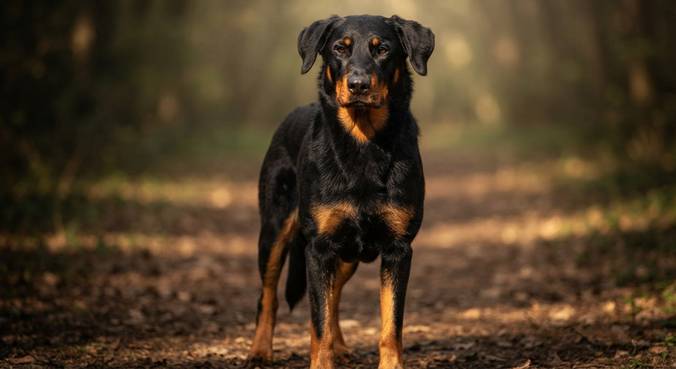
At first glance, most people assume the Beauceron is some kind of Doberman variant – the sleek black-and-tan coat and cropped-looking ears invite the comparison immediately. But this French herding breed predates the Doberman by centuries, carries a nickname rooted in its own distinctive markings, and has a feature written directly into its official breed standard that no Doberman shares: double dewclaws on each rear leg, a trait so central to breed identity that its absence is a disqualification in the show ring. This guide covers the Beauceron’s genuine French origins, its documented service in two World Wars, how it actually differs from the Doberman, and an honest look at what living with this intelligent, protective breed involves.
Beauceron Quick Facts
The Beauceron was moved into the AKC’s Herding Group on June 28, 2007, and is classified under FCI Group 1, Section 1 (Sheepdogs), Standard No. 44, internationally.
| Attribute | Detail |
| AKC Group | Herding Group (moved in 2007) |
| FCI Group | Group 1, Section 1, Standard No. 44 |
| Country of Origin | France |
| Height | 24-27.5 in (males), 23.5-26.5 in (females) |
| Lifespan | 10-12 years (up to 15 with good care) |
| Coat | Short, dense, harsh outer coat over a fine undercoat |
| Colors | Black and tan, harlequin (grey, black, and tan) |
| Temperament | Watchful, confident, intelligent, loyal, standoffish with strangers |
What Is a Beauceron?
French Origins and the Bas-Rouge Nickname
The Beauceron, known in France as the Berger de Beauce, takes its name from La Beauce, the flat agricultural plains region south of Paris where the breed developed over centuries as a general-purpose sheepdog. Nineteenth-century French breeders also called the dog Bas-Rouge, meaning red stockings, a direct reference to the distinctive tan markings that run down the lower legs of the breed’s classic black-and-tan coat. The Beauceron is one of France’s oldest herding breeds, developed well before the more famous guard breeds it’s often mistaken for today.
A Breed That Served in Two World Wars
The Beauceron’s history includes genuine wartime service that most competing content barely touches on. During both World War I and World War II, Beaucerons worked as messenger dogs carrying communications across dangerous terrain, as trail finders, and as mine detectors – dangerous, demanding work that took a severe toll on the breed’s population. By the end of World War II, the breed had been pushed close to extinction, and the modern Beauceron population was rebuilt largely from roughly 50 surviving dogs, a genuine bottleneck in the breed’s genetic history that responsible breeders still account for today.
The Double Dewclaw Standard
Key Fact: The AKC standard requires double dewclaws on each rear leg, forming well-separated “thumbs” with nails set close to the foot. A Beauceron with anything less than double rear dewclaws is disqualified from conformation showing entirely – one of the breed’s most identifiable, standard-defining physical traits.
Breed historians generally believe the trait relates to the dog’s working function on the flat, sometimes muddy plains of Beauce, though the precise original purpose isn’t fully documented.
AKC and FCI Status
The Beauceron was moved into full AKC recognition within the Herding Group on June 28, 2007. The FCI classifies the breed under Standard No. 44, Group 1, Section 1, among sheepdogs, with the most recent standard revision published in August 2023.
Beauceron vs. Doberman Pinscher vs. Rottweiler

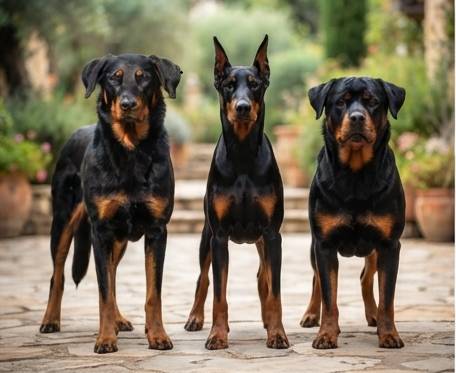
These three dark-coated working breeds are frequently confused. Here’s how the Beauceron compares to the Doberman Pinscher [Internal Link] and the Rottweiler [Internal Link].
| Attribute | Beauceron | Doberman Pinscher | Rottweiler |
| Origin | France | Germany | Germany |
| Size | 24-27.5 in, leaner build | 26-28 in, sleeker build | 22-27 in, heavier/stockier build |
| Primary Use | General-purpose herding, later military service | Personal protection, guard work | Cattle droving, guard work |
The Beauceron predates the Doberman by centuries and has no documented ancestral relationship to it despite the visual similarity; the resemblance is largely coincidental coloring rather than shared lineage. The Rottweiler, by contrast, shares a working-guard heritage with both breeds but comes from a noticeably stockier, more heavily boned build. The Briard [Internal Link], another French herding breed, is a closer cousin in spirit if not in coat – long-haired where the Beauceron is short-coated, but built around the same centuries-old plains-herding purpose.
Appearance

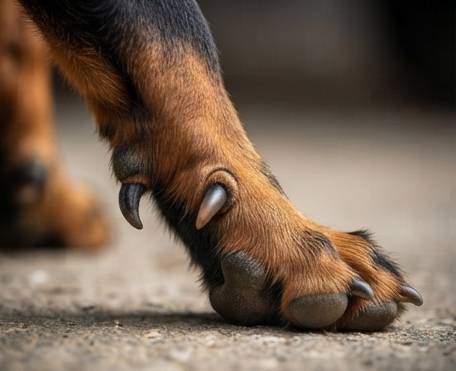
The Beauceron is a large, athletic, muscular dog with a smooth black-and-tan or harlequin coat and a confident, alert bearing. The short, dense double coat lies close to the body, and the breed’s signature double rear dewclaws are visible as distinct thumbs on the lower legs – a detail worth looking for if you’re trying to identify one.
Temperament
Beaucerons are watchful, confident, and highly intelligent, bred for centuries to work independently while managing livestock across open plains. That independence translates into a dog that thinks for itself and can be genuinely standoffish with strangers, though this reserve is not the same thing as aggression – well-socialized Beaucerons are typically calm and discerning rather than reactive. With their own family, the breed is famously loyal, affectionate, and often surprisingly gentle.
Is a Beauceron Right for You?


Families and Children
Beaucerons can be excellent family dogs for households prepared to meet their exercise and socialization needs; the breed is generally gentle and protective with its own family’s children, though early socialization is important given the breed’s natural wariness of unfamiliar people.
First-Time Owners
This is generally not a breed recommended for first-time owners. The Beauceron’s intelligence, size, independence, and protective instincts call for an experienced handler comfortable with consistent training and clear leadership.
Protective Instincts (What This Means in Practice)
It’s worth being precise about what protective means for this breed: a well-raised Beauceron is watchful and will alert to unfamiliar people or situations, but this is fundamentally different from unprovoked aggression. Poor socialization, not breed temperament alone, is the most common cause of genuinely problematic guarding behavior in this and similar breeds.
Training
Beaucerons are highly intelligent and trainable, but their independent, working-dog mindset means they respond best to confident, consistent handlers who establish clear expectations early. Early and ongoing socialization is especially important given the breed’s natural wariness of strangers, and positive reinforcement paired with real structure tends to produce the most reliable results.
Exercise Needs

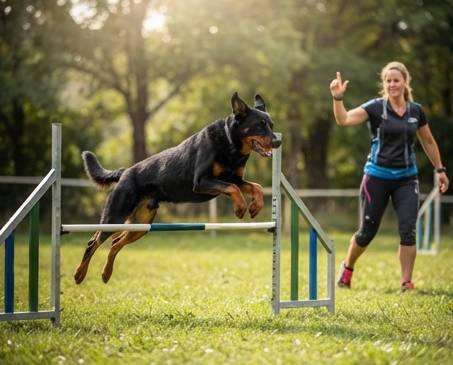
Beaucerons need substantial daily exercise – long walks, off-leash activity in secure areas, and mentally engaging work like herding trials, obedience, or protection sports. This breed was built for a full working day, and insufficient exercise or mental stimulation often shows up as restlessness or unwanted guarding behavior. Structured outlets like herding trials or bite-sport training tend to satisfy this breed’s working drive far more completely than physical exercise alone.
Grooming
The Beauceron’s short, dense double coat is relatively low-maintenance, needing weekly brushing with heavier shedding during seasonal coat blowouts. Routine nail trims should include careful attention to the double dewclaws, which need regular checking since they don’t wear down naturally the way weight-bearing nails do.
Health and Lifespan

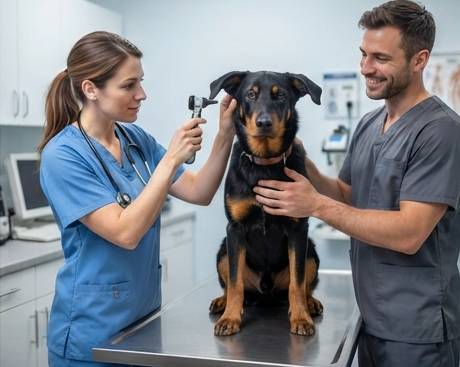
Beaucerons typically live 10 to 12 years, sometimes reaching 15 with good genetics and care, and are a generally robust breed, though several conditions are well-documented and worth understanding before bringing one home.
| Condition | What It Is | What Owners Should Watch For |
| Hip dysplasia | Abnormal hip joint development leading to laxity and arthritis over time | Difficulty rising, reluctance to jump, altered gait |
| Bloat (GDV) | A life-threatening twisting of a gas-distended stomach, a real risk given the breed’s deep chest | Distended abdomen, unproductive retching, restlessness – emergency vet care needed |
| Progressive retinal atrophy | A degenerative eye condition leading to gradual vision loss | Night blindness, reluctance to move in dim light |
| Hypothyroidism | An underactive thyroid gland, easily managed with daily medication | Weight gain despite normal eating, lethargy, hair loss |
Hip dysplasia [Internal Link] and progressive retinal atrophy [Internal Link] screening are both standard, reasonable things to ask a breeder about, and given the breed’s bloat [Internal Link] risk, prospective owners should ask veterinarians about preventive measures like gastropexy at the time of spay or neuter.
Nutrition
Because Beaucerons are a deep-chested breed with a documented bloat risk, feeding two or three smaller meals rather than one large one, and avoiding vigorous exercise for an hour before and after meals, are genuinely important practices rather than optional precautions.
Cost and Adoption

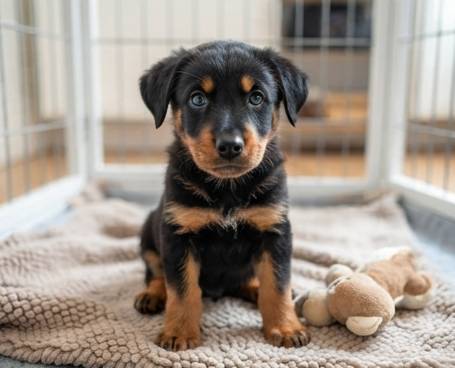
Beauceron puppies from health-tested breeders typically range from around a thousand to over two thousand dollars, and prospective owners should ask specifically about hip, eye, and thyroid history in the puppy’s parents. Because the breed’s size, protective instincts, and exercise needs sometimes surprise unprepared owners, Beauceron-specific rescue organizations exist and are worth considering as a genuinely responsible adoption path. Spending real time with a breeder’s adult dogs before committing, rather than judging solely from puppy photos, tends to give a far more accurate picture of what daily life with the breed actually looks like.
Frequently Asked Questions
What is a Beauceron?
The Beauceron is a large French herding breed, historically called Berger de Beauce, known for its black-and-tan coat, watchful temperament, and mandatory double rear dewclaws.
Is a Beauceron the same as a Doberman?
No – despite the visual similarity, the Beauceron predates the Doberman by centuries, originates from France rather than Germany, and has no documented ancestral connection to the breed.
Why do Beaucerons have double dewclaws?
The AKC standard requires double dewclaws on each rear leg; a Beauceron without them is disqualified from conformation showing, and breed historians believe the trait relates to the dog’s original working function.
Are Beaucerons good with kids?
Generally yes, especially with their own family, though early socialization matters given the breed’s natural wariness of unfamiliar people.
Are Beaucerons aggressive?
Not inherently – Beaucerons are watchful and protective, but well-socialized dogs are discerning rather than reactive; poor socialization, not breed temperament, is the usual cause of problem behavior.
What health problems do Beaucerons have?
Common concerns include hip dysplasia, bloat (GDV), progressive retinal atrophy, and hypothyroidism.
How much does a Beauceron cost?
Puppies from health-tested breeders typically range from around a thousand to over two thousand dollars; breed-specific rescues also offer a responsible adoption path.
Conclusion
The Beauceron is a breed defined by substance over style – centuries of working history, genuine wartime service, and a physical standard (right down to its double dewclaws) built entirely around function rather than appearance. Understanding the real commitment this intelligent, protective dog requires, and giving it the experienced handling and structured exercise it needs, is the clearest path to a good match for both dog and owner.