

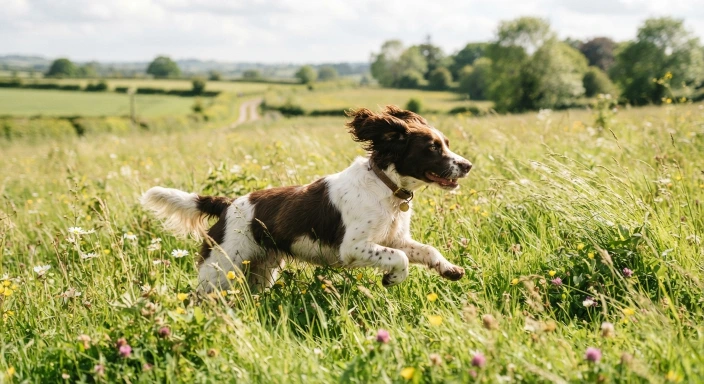
English Springer Spaniel: The Complete Breed Guide
Bred to “spring” game birds into flight for hunters, the English Springer Spaniel combines an eager, bustling energy with one of the sweetest temperaments in the AKC Sporting Group. Whether working a field or curled up at home, the breed tends to approach everything — people, toys, tennis balls — with the same enthusiastic devotion.
This guide covers what any current or prospective English Springer Spaniel owner needs to know: history, physical traits, temperament, training, exercise, grooming, health, and the real costs of ownership.
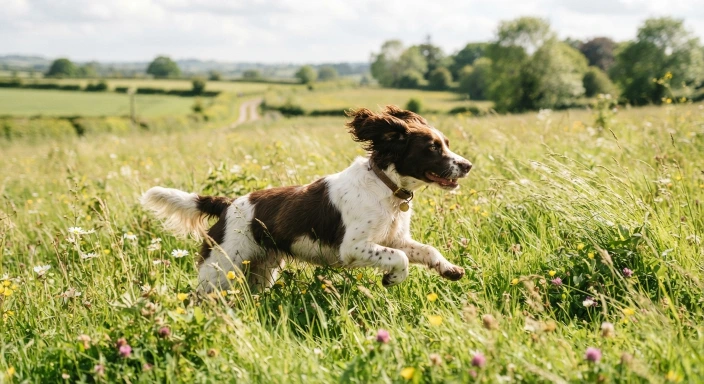
English Springer Spaniel at a Glance
| Trait | Details |
| Group | Sporting Group (AKC), Group 8 (FCI) |
| Origin | England |
| Height | Males 20 in; Females 19 in |
| Weight | Males 45–55 lb; Females 35–45 lb |
| Coat | Medium length, flat or wavy, weather-resistant |
| Colors | Black and white, liver and white, tricolor, blue or liver roan |
| Lifespan | 12–14 years |
| Temperament | Friendly, eager to please, energetic, affectionate |
| Exercise Needs | 2 hours of daily activity |
| Grooming | Moderate; benefits from periodic professional trimming |
| Trainability | High; responds very well to positive reinforcement |
| Good With Kids | Yes, playful and gentle family companion |
History and Origin
The English Springer Spaniel shares ancestry with other British land spaniels, all originally grouped together before selective breeding split them by size and function in the 19th century. Springers were bred specifically to flush, or “spring,” game birds from cover so hunters could shoot them on the wing, a role that demanded a dog with drive, stamina, and a close, methodical hunting style.
The breed was formally separated from the Cocker Spaniel by size distinction in England in the late 19th century — dogs over a certain weight were classified as Springers, smaller ones as Cockers. The American Kennel Club recognized the English Springer Spaniel in 1910, and the breed has gone on to excel both as a field dog and as a consistently popular family companion and show dog.
Physical Characteristics
The English Springer Spaniel is a compact, well-balanced sporting breed built for a full day’s work in the field. Males stand about 20 inches at the shoulder and weigh 45 to 55 pounds; females are slightly smaller, standing about 19 inches and weighing 35 to 45 pounds. The breed standard calls for a sturdy, athletic body capable of sustained activity without excess bulk.
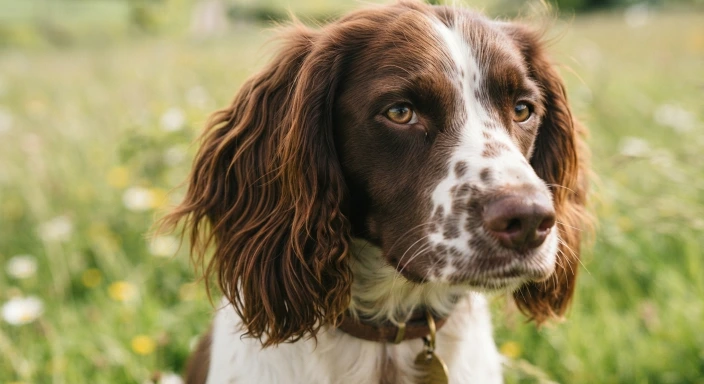
The coat is medium length, flat or slightly wavy, and weather-resistant, with moderate feathering on the ears, chest, legs, and belly. Recognized colors include black and white, liver and white, tricolor (black or liver with white and tan markings), and blue or liver roan patterns — a range broad enough that individual Springers can look quite different from one another while remaining true to standard.
Temperament and Personality
The AKC breed standard describes the ideal English Springer Spaniel as friendly, eager to please, and quick to learn — traits that make the breed one of the more consistently affectionate and biddable members of the Sporting Group. Excessive shyness or aggression are both considered serious deviations from correct temperament.
Most Springers are genuinely happy dogs, enthusiastic about nearly everything from walks to car rides to greeting visitors. That enthusiasm, paired with real intelligence, makes the breed a strong fit for active households willing to match its energy and give it a job — whether that job is formal fieldwork, dog sports, or simply a demanding daily exercise routine.
Living With an English Springer Spaniel
Families and children:
English Springer Spaniels are typically playful, gentle, and well suited to families with children, particularly active households that can match the breed’s energy. As with any dog, play between young children and an exuberant Springer benefits from supervision.
Other pets:
With socialization, Springers generally get along well with other dogs and household pets. Their bird-hunting heritage means a natural interest in small animals or birds may surface without early, careful introduction.
Living space:
Springers can adapt to apartment living only if their substantial exercise needs are genuinely met; most do better with a house and secure yard. This is not a breed suited to a low-activity lifestyle — insufficient exercise quickly shows up as restlessness, destructiveness, or excessive barking.
Training and Socialization
English Springer Spaniels are highly intelligent, eager to please, and among the more trainable Sporting breeds, responding especially well to positive reinforcement methods built around treats, praise, and play. Their enthusiasm for learning makes them strong candidates for obedience, agility, and formal gun-dog training alike.
Early and thorough socialization matters for this breed as it does for most — consistent, positive exposure to new people, animals, and situations during puppyhood supports the stable, friendly temperament the breed is known for. Responsible breeders also screen temperament carefully given the breed’s rare but documented association with sudden, unexplained aggression (discussed further below).
Exercise and Mental Stimulation
English Springer Spaniels need a genuinely demanding amount of exercise — around two hours of daily activity split across walks, play, fetch, and off-leash time in a secure area. This is one of the higher-energy breeds commonly kept as family pets, and owners who underestimate that requirement often end up with a bored, difficult-to-manage dog.
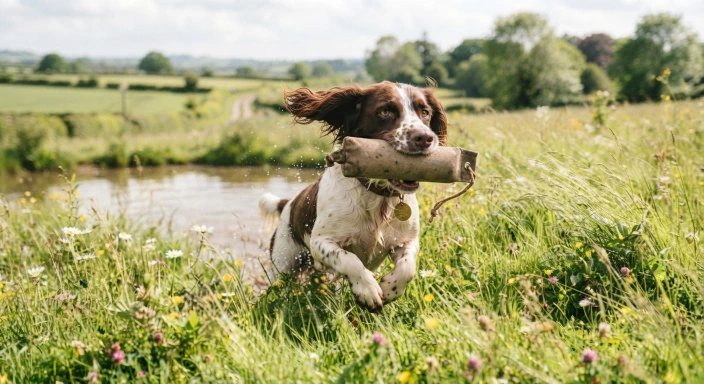
Scent work, retrieving games, and structured field training give the breed a purposeful outlet that taps directly into its hunting instincts. Mental engagement alongside physical exercise helps prevent the restlessness that shows up in under-stimulated Springers as excessive barking or destructive chewing.
Grooming and Coat Care
The Springer’s coat needs brushing and combing one to two times a week to prevent matting, particularly around the feathered ears, legs, and belly where tangles form most easily. Professional grooming and trimming every couple of months helps keep the coat manageable and reduces at-home maintenance.
A complete grooming routine should also include:
- Regular ear checks and cleaning — the breed’s long, floppy ears are prone to moisture buildup and infection (otitis)
- Nail trims every three to four weeks
- Routine dental care, including brushing several times a week
- Prompt de-matting and debris removal after time spent outdoors in brush or tall grass
Nutrition and Feeding
A high-quality diet formulated for active, medium-sized sporting breeds suits most English Springer Spaniels, with portions adjusted for age, weight, and actual activity level. Given the breed’s enthusiasm at mealtimes, portion control matters for preventing the weight gain that can aggravate joint conditions like hip and elbow dysplasia.
Because the breed is prone to ear infections, some owners work with their veterinarian on diets aimed at reducing food-related allergies that can contribute to chronic ear issues.
Health and Lifespan
The average English Springer Spaniel lives 12 to 14 years and is generally considered a healthy breed. Prospective owners should still understand the hereditary and structural conditions the breed is predisposed to.
| Condition | What It Is | What Owners Should Watch For |
| Hip dysplasia | Malformation of the hip joint | Reluctance to rise or climb stairs, stiffness after rest, an altered gait |
| Elbow dysplasia | Abnormal development of the elbow joint | Front-leg lameness, especially after exercise |
| Otitis (chronic ear infections) | Inflammation of the ear canal, common given the breed’s long, floppy ears | Head shaking, scratching at ears, odor, or visible redness |
| Cranial cruciate ligament disease | Tearing or degeneration of a key knee ligament | Sudden or gradual rear-leg lameness, reluctance to bear weight |
| Progressive retinal atrophy (PRA) | Gradual, inherited deterioration of the retina | Night blindness progressing to full vision loss |
| Idiopathic aggression (“Springer rage”) | A rare, poorly understood condition causing sudden, unprovoked aggressive episodes, more often reported in males | Sudden, out-of-character aggressive outbursts with no clear trigger |
Responsible breeders screen for hip and elbow health and eye disease before breeding, and temperament-test breeding stock carefully given the rare association with idiopathic aggression. Prospective buyers should ask about temperament history in a litter’s lines. Routine ear checks are especially important given how common otitis is in this breed.
Cost of Owning an English Springer Spaniel
| Expense | Typical Range |
| Puppy from a reputable breeder | $800–$2,500 |
| Rescue or shelter adoption | $50–$400 |
| First-year setup and veterinary costs | $1,500–$3,000 |
| Ongoing annual costs (food, routine vet care, grooming) | $1,000–$2,000 |
| Lifetime cost of ownership | $16,000–$30,000+ |
Grooming and ear care are the more notable recurring expenses for this breed, alongside routine veterinary costs. Owners planning to compete in field trials or hunting tests should also budget for training and entry fees beyond basic ownership costs.
Finding an English Springer Spaniel: Breeders and Rescue
Anyone looking for an English Springer Spaniel puppy should seek out a breeder who health-tests for hip and elbow dysplasia and eye disease, evaluates temperament carefully across their breeding lines, and raises puppies in the home. The English Springer Spaniel Field Trial Association and the English Springer Spaniel Club of America both maintain breeder referral resources.
Rescue is also a strong option. Breed-specific Springer rescues regularly place adult dogs — often already trained and past the demanding puppy stage — at a fraction of breeder prices. [Internal Link — English Springer Spaniel Rescue Guide]
Frequently Asked Questions
What is “Springer rage”?
A rare, poorly understood condition causing sudden, unprovoked aggressive episodes with no clear trigger, documented most often in the breed and more frequently in males. It’s uncommon, and responsible breeders temperament-test to avoid passing on the trait.
Are English Springer Spaniels good with kids?
Yes, typically playful and gentle, especially in active households that can match the breed’s energy level.
How much exercise does an English Springer Spaniel need?
Around two hours of daily activity — this is a genuinely high-energy breed that does poorly with a sedentary lifestyle.
How long do English Springer Spaniels live?
The typical lifespan is 12 to 14 years.
Do English Springer Spaniels shed a lot?
They shed moderately year-round, with heavier shedding in spring and fall.
How much does an English Springer Spaniel cost?
Puppies from reputable breeders typically run $800 to $2,500, while rescue adoption generally costs $50 to $400.
What health problems are English Springer Spaniels prone to?
Common concerns include hip and elbow dysplasia, chronic ear infections, cruciate ligament disease, and progressive retinal atrophy.
Conclusion
The English Springer Spaniel pairs genuine field-dog capability with one of the friendliest, most eager-to-please temperaments in the Sporting Group. That combination asks a real commitment from owners in return — substantial daily exercise, regular grooming, and attentive ear care chief among them. Given that commitment, the breed’s warmth, trainability, and sheer enthusiasm for life make it one of the more consistently rewarding sporting breeds a family can bring home.