

Boxer Dog Guide: Temperament, Cancer & Heart Health
Quick Facts
| Attribute | Detail |
| Group | AKC Working Group |
| Height | 21.5–25 in |
| Weight | 50–80 lb |
| Lifespan | 10–12 years |
| Coat | Short, smooth |
| Colors | Fawn, brindle, with white markings |
| Temperament | Playful, energetic, loyal, protective |
| Best suited for | Active families who want an exuberant, deeply loyal companion |
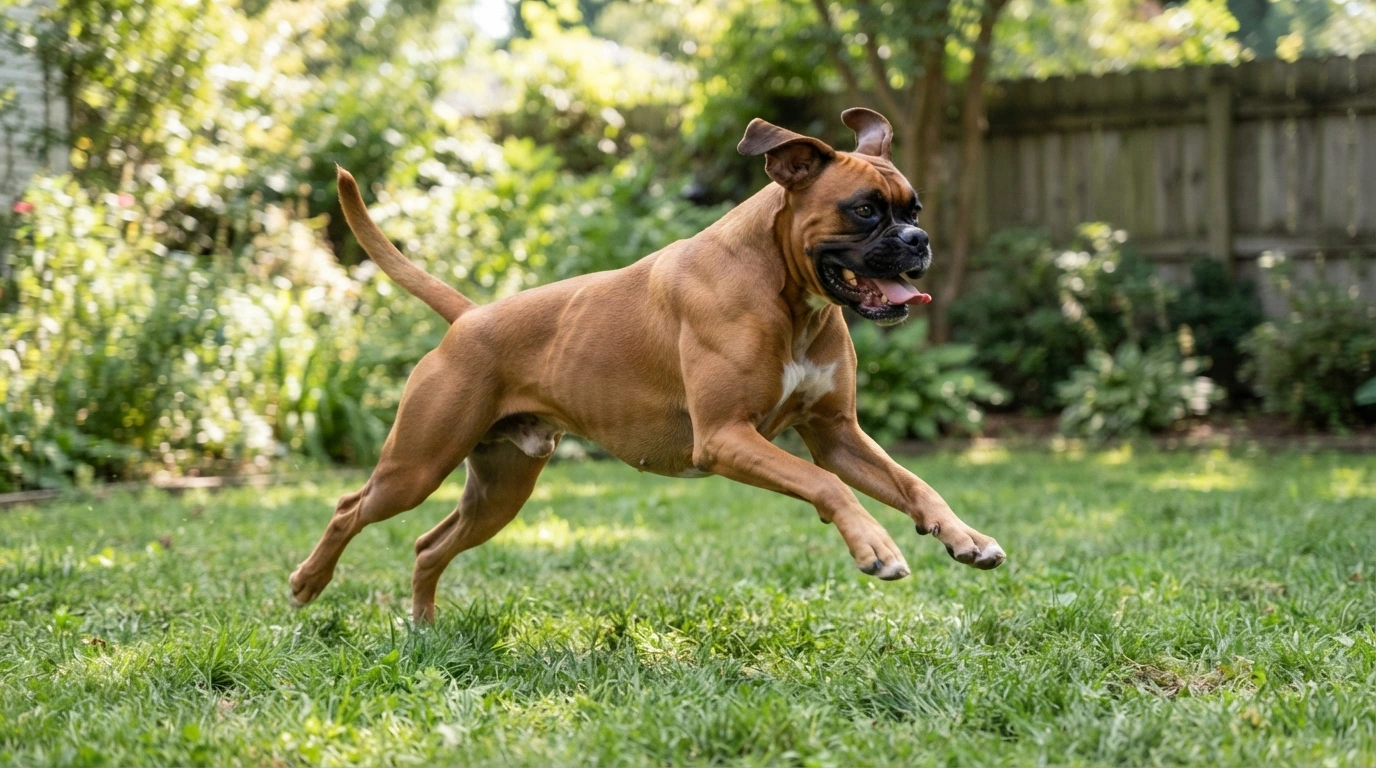
The Boxer is a muscular, square-built working breed best known for a temperament that seems to stay puppyish well past puppyhood, an exuberant, bouncy energy that makes it a favorite family dog for households that can keep up. Behind that playful reputation is a health picture that deserves equally direct attention: Boxers carry one of the higher cancer rates of any breed and a heart condition specific enough to carry the breed’s own name in veterinary literature. Understanding both sides, the joy and the real health responsibility, gives a much more complete picture than either the “goofy family dog” or “high-risk breed” framing alone.

History: From Bull-Baiting to Beloved Family Dog
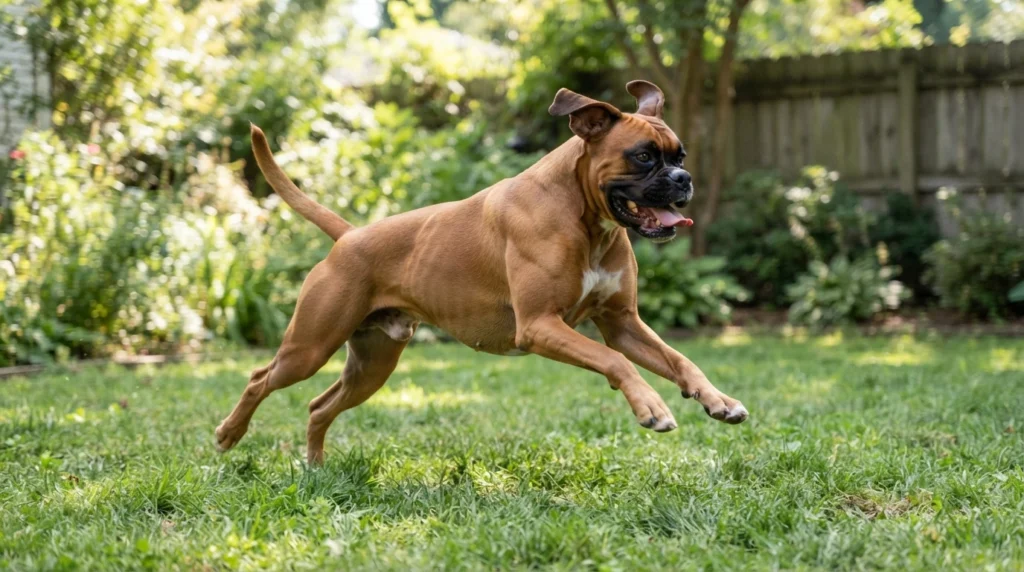
The Boxer descends from the Bullenbeisser, an extinct German breed used for centuries in bull-baiting and boar hunting, a large, powerful dog built to grip and hold large game. When bull-baiting was outlawed in the 19th century, German breeders crossed the Bullenbeisser with Bulldog-type dogs, producing the foundation of the modern Boxer and shifting the breed’s purpose toward cattle droving, butcher’s-dog work in stockyards, and general utility guarding. The breed’s name most likely comes from its distinctive habit of standing on its hind legs and “boxing” with its front paws during play, a behavior still visible in many modern Boxers and a fitting namesake for a dog whose personality has always leaned toward physical, animated expression.
The Boxer arrived in the United States in the early 20th century and gained American Kennel Club recognition in 1904, though its popularity didn’t fully take off until soldiers returning from World War I and World War II, where Boxers had served in messenger and guard-dog roles, brought a fondness for the breed home with them. That mid-20th-century popularity surge cemented the Boxer’s transition from working and guard dog to one of America’s most beloved family companions, a role the breed has held onto tightly for decades since.
The Boxer’s close structural relative, the Bullmastiff, developed along a parallel path in England around the same era, also descending from bull-and-bear-baiting stock crossed with Mastiff lines, though bred for a different job: silently tracking and pinning poachers on large estates rather than droving cattle. The two breeds share enough ancestry and general temperament traits that they’re often mentioned together in working-breed discussions, even though the AKC recognizes them as fully separate breeds with distinct standards.
[FUTURE LINK: Bullmastiff breed guide]
Boxer vs. German Shepherd Dog vs. American Staffordshire Terrier
Buyers comparing loyal, protective working breeds often narrow their search to these three. All are capable family guardians, but their energy style, guarding instinct, and typical household temperament differ in ways worth understanding.
| Attribute | Boxer | German Shepherd Dog | American Staffordshire Terrier |
| Origin | Germany | Germany | United States |
| Weight | 50–80 lb | 50–90 lb | 40–70 lb |
| Original purpose | Cattle droving, guarding | Herding, police/military work | Farm work, companionship |
| Energy level | High, playful | Moderate–high | Moderate–high |
| Guarding instinct | Alert, protective | Strong, confident | Moderate |
See our full guides to the German Shepherd Dog and the American Staffordshire Terrier for a broader working-breed comparison.
A Note on Muzzle Length: Boxer vs. French Bulldog
Boxers are sometimes lumped in with true brachycephalic (flat-faced) breeds, but the comparison deserves nuance. The Boxer’s muzzle is moderately shortened compared to a long-nosed working dog, giving it a distinctive squared profile and undershot jaw, but it’s nowhere near as extreme as a truly brachycephalic breed like the French Bulldog. That structural difference matters practically: Boxers do have real heat-sensitivity precautions and should be watched carefully during vigorous exercise in hot, humid weather, but they don’t carry the same severity of airway obstruction risk documented in extreme brachycephalic breeds. Our French Bulldog guide covers that more severe end of the brachycephalic spectrum in detail, and comparing the two side by side helps clarify where the Boxer actually sits on that structural continuum, closer to a working dog than to a true flat-faced breed.

Appearance
The Boxer’s build is square and muscular, with a broad chest and a distinctive undershot jaw where the lower jaw extends slightly past the upper, a structural trait that shaped the breed’s original bull-baiting grip. The short, smooth coat comes in fawn or brindle, typically with white markings on the chest, feet, and face. Ears were traditionally cropped to stand erect and the tail docked short, both cosmetic traditions rather than health necessities, and both are increasingly restricted or discouraged in parts of Europe; a natural-eared, natural-tailed Boxer is just as correct an example of the breed as a cropped, docked one.
Temperament
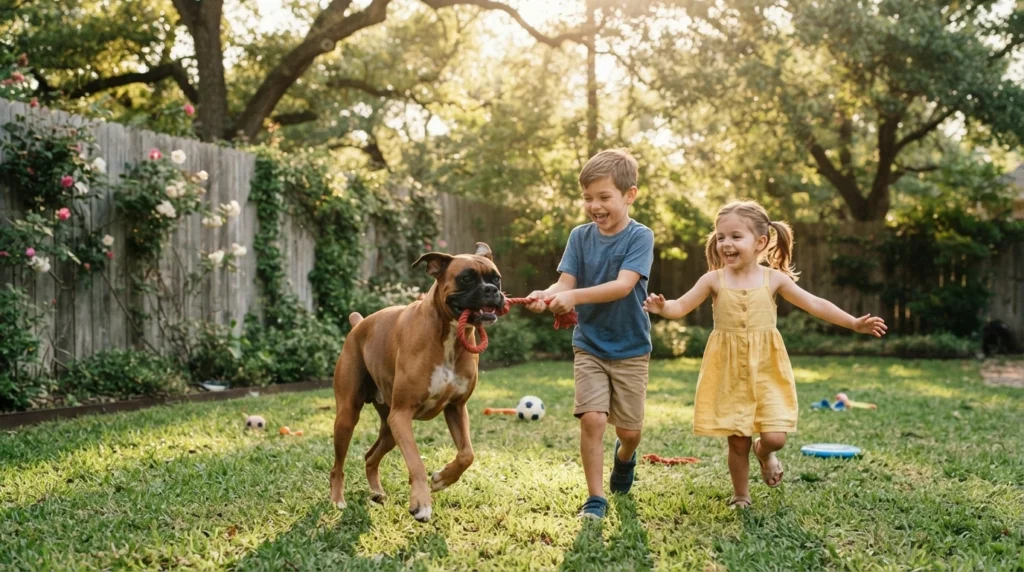
Boxers have a well-earned reputation for staying playful and puppy-like well into adulthood, often described by owners as “clowns” for their goofy, physical, attention-seeking energy. That exuberance is paired with deep loyalty and a genuine protective instinct toward family, expressed as watchfulness rather than indiscriminate aggression in a well-socialized dog. Boxers are typically excellent with children, patient and playful, though their size and bounciness mean supervision with very young children is worthwhile simply to prevent accidental knockdowns during enthusiastic play. This combination of high energy and strong family attachment makes the Boxer a wonderful match for households that can genuinely keep up with it.
That said, the breed’s protective instinct is real and worth taking seriously in early socialization. A Boxer raised without adequate exposure to a range of people, dogs, and situations can become overly wary of strangers rather than simply alert, and because the breed is muscular and physically enthusiastic, an under-socialized adult Boxer’s greeting behavior alone, jumping, barreling into visitors, can feel like more than most guests bargain for. None of this reflects aggression so much as under-channeled enthusiasm, but it underscores why training investment matters as much for this breed’s happy-go-lucky reputation as it does for more overtly serious guardian breeds.
Is a Boxer Right for You?
A Boxer thrives with an active family who wants a dog fully involved in daily life rather than a background pet. This breed needs real daily exercise and enjoys being included in activities, from jogging to games of fetch to simply following the household around. Prospective owners in hot, humid climates should plan exercise around cooler parts of the day given the breed’s heat sensitivity, discussed further below. Boxers generally do well with children and other pets when properly socialized, and their loyal, protective nature makes them attentive, engaged family members. If you want a dog that will happily wrestle with the kids, greet you at the door with full-body enthusiasm, and stay playful for years, the Boxer is an excellent match. Households with a fenced yard tend to have an easier time meeting the breed’s exercise needs day to day, though apartment living can work well too provided owners commit to real daily outings rather than relying on limited indoor space alone.
Training
Boxers are intelligent and generally food and play motivated, which makes training approachable, though young Boxers can be quite headstrong and bouncy, sometimes prioritizing enthusiasm over focus during early training sessions. Positive reinforcement, kept upbeat and consistent, tends to work best with this breed’s personality. Structured early training matters given the Boxer’s size and physical exuberance; a well-trained adult Boxer channels its energy appropriately, while an undertrained one can be a lot of enthusiastic dog to manage, particularly around greeting behavior with guests.
Exercise Needs
This is a genuinely high-energy breed that needs vigorous daily exercise well into middle age, more than many owners expect from a dog with a moderate size and short coat. Daily runs, active play sessions, and mental engagement through training or games all help satisfy the Boxer’s real physical and mental needs. A Boxer without adequate exercise tends to channel that unspent energy into exuberant, sometimes destructive household behavior rather than settling quietly.
Grooming
Grooming needs are minimal. The short, smooth coat sheds moderately and is easily managed with a weekly brush, and routine nail trims, ear checks, and dental care round out the maintenance routine, making this one of the more low-maintenance aspects of Boxer ownership relative to its exercise demands.
Health and Lifespan: The Cancer and Heart-Health Reality
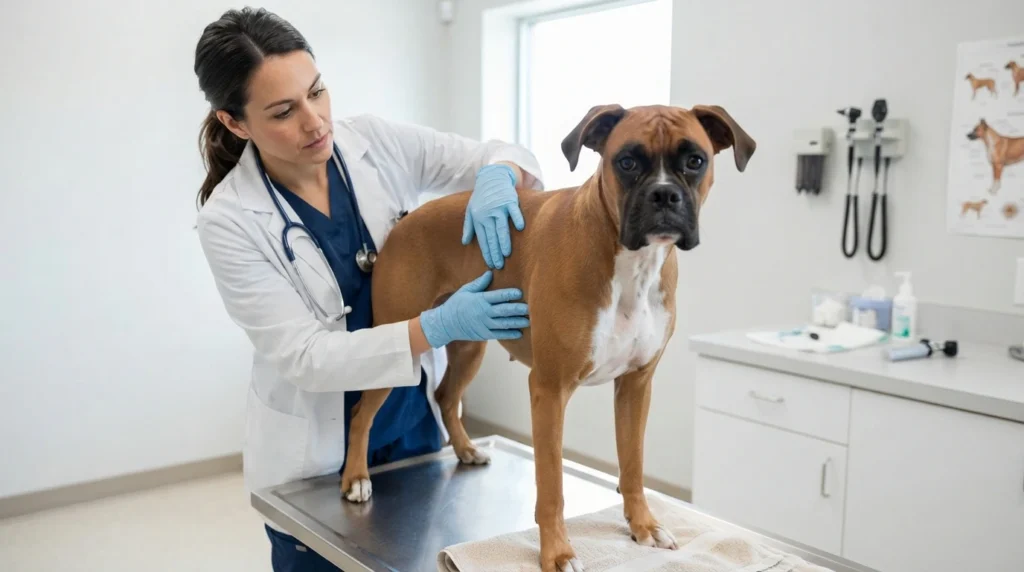
Boxers carry one of the higher cancer rates of any dog breed, and this deserves direct, practical attention rather than a passing mention. Mast cell tumors, a type of skin cancer, appear with notable frequency in the breed, along with lymphoma and, less commonly but still elevated relative to other breeds, brain tumors. The practical response to this isn’t fear; it’s routine vigilance. Regular at-home lump and bump checks, combined with prompt veterinary evaluation of any new growth, meaningfully improve outcomes, since many of these cancers are far more treatable when caught early. Reputable breeders increasingly screen breeding stock and discuss family cancer history openly, and that’s a reasonable, direct question to ask when evaluating a breeder.
[FUTURE LINK: canine cancer screening guide]
The breed’s other defining health concern is cardiac: Boxer cardiomyopathy, formally known as arrhythmogenic right ventricular cardiomyopathy, or ARVC, is specific enough to this breed that it carries an informal name referencing the Boxer directly in veterinary cardiology literature. ARVC causes abnormal heart rhythms that can range from mild to life-threatening, and it often develops without obvious symptoms until an arrhythmia event occurs. Cardiologists recommend Holter monitor screening, a 24-hour heart rhythm recording, particularly for breeding dogs and for pet Boxers as they age, since early detection changes management options significantly.
[FUTURE LINK: canine cardiomyopathy guide]
Recognizing warning signs at home is worth knowing alongside formal screening: fainting episodes (sometimes called syncope), unexplained lethargy or exercise intolerance, and an irregular or racing pulse felt at rest all warrant a prompt veterinary visit rather than a wait-and-see approach, since ARVC can progress to sudden cardiac events without adequate monitoring. Hip dysplasia and degenerative myelopathy also appear in the breed at rates worth screening for, hip evaluation through OFA or PennHIP and, where available, genetic testing for degenerative myelopathy markers in breeding stock. With attentive cancer and cardiac screening, most Boxers live a full 10 to 12 years, and buyers should treat both forms of screening as a genuine, ongoing part of responsible ownership rather than an optional extra.
Nutrition
Standard large-breed feeding guidance applies, with portion control and weight management carrying extra importance given the breed’s joint and cardiac considerations. A consistent, appropriately portioned diet and regular body-condition checks support both orthopedic and heart health over the dog’s lifetime. As with several breeds prone to cardiac issues, some cardiologists currently advise caution around grain-free and boutique exotic-ingredient diets pending ongoing research into potential links with heart disease, and this is worth discussing directly with a veterinarian rather than deciding based on packaging claims alone.
Cost and Adoption
A Boxer puppy from a reputable breeder who health-tests for cardiac issues, hip dysplasia, and family cancer history typically costs $1,500 to $3,000. Annual costs, including food, routine veterinary care, and training, generally run $1,200 to $2,000, and buyers should realistically budget for periodic cardiac screening, a Holter monitor session typically runs a few hundred dollars, as a genuine recurring line item given the breed’s ARVC prevalence, alongside routine cancer-vigilance veterinary visits.
Common Buyer Mistakes
- Underestimating exercise needs. Boxers stay high-energy well into middle age; a bored, under-exercised Boxer channels that energy into unwanted household behavior.
- Skipping cancer and cardiac screening conversations with breeders. Given this breed’s documented risk profile, asking about family health history is a reasonable, important question, not an overreach.
- Overheating the dog in hot weather. The Boxer’s moderate muzzle length means real heat-sensitivity precautions matter, even though the breed isn’t a true brachycephalic type.
- Mistaking normal breed exuberance for a training failure. Boxer bounciness and enthusiasm are breed-typical traits that respond to structured training, not signs something is fundamentally wrong with the dog.
- Ignoring new lumps or bumps. Given elevated cancer risk, any new growth deserves prompt veterinary evaluation rather than a wait-and-see approach.
- Assuming a natural-eared, natural-tailed Boxer is somehow incomplete. Ear cropping and tail docking are cosmetic choices, not requirements.
- Skipping cardiac screening because the dog “seems fine.” ARVC frequently has no obvious symptoms until an arrhythmia event occurs, making proactive Holter monitor screening genuinely important rather than optional.
FAQ
Why do Boxers get cancer so often?
Boxers carry a breed-specific elevated risk for several cancer types, particularly mast cell tumors and lymphoma, likely tied to genetic factors within the breed. Regular lump checks and prompt veterinary evaluation of new growths significantly improve treatment outcomes.
What is Boxer cardiomyopathy?
Formally called arrhythmogenic right ventricular cardiomyopathy, or ARVC, it’s a heart condition causing abnormal rhythms that’s specific enough to the breed to carry its informal name. Holter monitor screening helps catch it early, particularly in breeding stock.
Are Boxers good with kids?
Generally yes. Boxers are typically playful, patient, and protective with children, though their size and bounciness mean supervision during play with very young children is well worth it.
How much exercise does a Boxer need?
A significant amount, generally 60 minutes or more of vigorous daily activity, and this high-energy need continues well into middle age, longer than many owners initially expect.
Do Boxers need their ears cropped?
No. Ear cropping is a cosmetic tradition, not a health necessity, and increasingly restricted or discouraged in parts of Europe. Many owners today keep ears natural.
How long do Boxers live?
Typically 10 to 12 years, with regular cancer and cardiac screening, along with attentive weight management, playing a meaningful role in both quality of life and longevity.
How much does a Boxer cost to own?
Expect $1,500 to $3,000 for a health-tested puppy and roughly $1,200 to $2,000 annually thereafter, including periodic cardiac screening and routine cancer-vigilance checkups as genuine recurring costs.
Conclusion
The Boxer’s reputation as an eternally playful, deeply loyal family dog is well earned, and that exuberant personality is a large part of why the breed has remained a favorite for generations. That same devotion deserves an equally serious commitment from owners: routine lump checks, cardiac screening awareness, and honest conversations with breeders about family health history. Buyers who embrace both sides of the Boxer, the joy and the genuine health responsibility, tend to get exactly what the breed has always offered: an athletic, affectionate companion that never quite stops acting like a puppy, lumps checked, heart monitored, and full of enthusiasm the whole way through.