
Shih Tzu Guide: Temperament, Breathing & Eye Health
Quick Facts
| Attribute | Detail |
| Group | AKC Toy Group |
| Height | 9–10.5 in |
| Weight | 9–16 lb |
| Lifespan | 10–18 years |
| Coat | Long, flowing double coat, low-shedding |
| Colors | Gold, black, white, brindle, and many combinations |
| Temperament | Affectionate, outgoing, friendly, devoted |
| Best suited for | Owners ready for real grooming commitment and genuine heat-exertion caution |
The Shih Tzu is an ancient toy breed built for exactly one job: companionship. Unlike most toy breeds with a working or ratting past hiding underneath the fluff, the Shih Tzu was bred inside Chinese imperial palaces for centuries with no purpose beyond being a devoted, decorative companion, and that history shows in a temperament that’s unusually friendly and outgoing even with strangers. The flowing coat gets most of the attention, but the more useful story for a prospective owner involves the breed’s truly brachycephalic structure and its large, prominent eyes, both of which carry real, manageable health considerations worth understanding upfront.

History: Little Lion of the Chinese Imperial Court
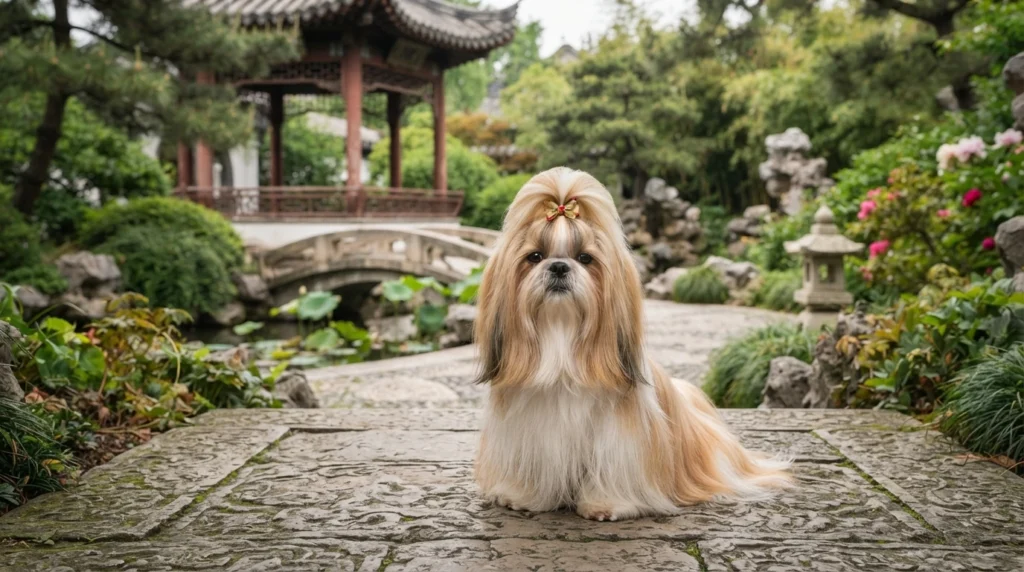
The Shih Tzu’s ancestry traces back to small Tibetan companion dogs, refined over centuries inside the Chinese imperial court into the breed recognized today. That refinement is most closely associated with the Ming and Qing dynasties, when palace breeders favored small, long-coated companion dogs as prized possessions of the imperial household, sometimes kept exclusively within palace walls and rarely seen by the outside world. The breed’s name, Shih Tzu, translates from Mandarin as “little lion,” a reference to its resemblance to the stone guardian lion statues common at Chinese temples and palaces, an image the breed’s flowing mane-like coat and confident bearing were deliberately bred to echo.
The breed’s survival into the modern era was far from guaranteed. Political upheaval in China through the early-to-mid 20th century disrupted centuries of continuous imperial breeding, and much of what preserved the Shih Tzu as a distinct breed is credited to a relatively small number of dogs exported to Europe before that disruption fully took hold. European and British breeders worked from that narrow founding stock to reestablish and standardize the breed through the mid-20th century, refining a formal breed standard from a genetic base far smaller than most established breeds enjoy, and the American Kennel Club granted recognition in 1969. That the breed survived at all, given how thoroughly its history was tied to a specific vanished court culture, makes the modern Shih Tzu’s popularity as a global companion breed a remarkable continuity story.
Shih Tzu vs. Lhasa Apso and Pekingese: Untangling the Tibetan/Chinese Toy Breeds
The Shih Tzu is frequently confused with two other closely related toy breeds: the Lhasa Apso and the Pekingese. All three share Tibetan or Chinese court ancestry and a long, flowing coat, which explains the mix-up, but each is a fully separate AKC-recognized breed with its own standard. The Lhasa Apso is generally taller and leaner, historically bred in Tibet as a monastery watchdog rather than a purely decorative companion, giving it a somewhat more independent temperament. The Pekingese has a more pronounced brachycephalic structure and a distinctive rolling gait, and was, like the Shih Tzu, an imperial Chinese palace favorite, though the two breeds developed along separate lines within that court tradition. Knowing these distinctions matters for buyers: a breeder or listing describing a dog as any of these three should match a specific, verifiable breed standard rather than being treated as interchangeable “Tibetan lapdog” types.
[FUTURE LINK: Lhasa Apso breed guide]
[FUTURE LINK: Pekingese breed guide]
Shih Tzu vs. French Bulldog vs. Poodle
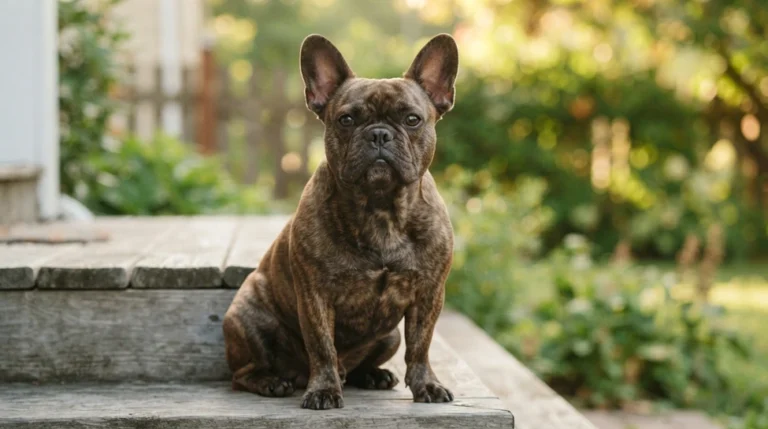
Buyers comparing low-shedding, personality-forward companion breeds often narrow their search to these three. All three make popular choices for their affectionate temperaments, but their muzzle structure, brachycephalic-risk severity, and grooming needs differ significantly.
| Attribute | Shih Tzu | French Bulldog | Poodle (Toy) |
| Origin | China/Tibet | France | Germany/France |
| Weight | 9–16 lb | 16–28 lb | 4–6 lb |
| Muzzle structure | Brachycephalic (moderate) | Brachycephalic (severe) | Non-brachycephalic |
| Coat | Long, flowing double coat | Short, smooth | Dense, curly |
| Temperament | Affectionate, outgoing | Playful, adaptable | Alert, highly trainable |
Our French Bulldog guide covers the more severe end of the brachycephalic spectrum in detail, useful context for understanding where the Shih Tzu’s breathing risk sits by comparison. See our full guide to the Poodle as well, or our Bichon Frise guide for a broader low-shedding companion-breed comparison.
Appearance
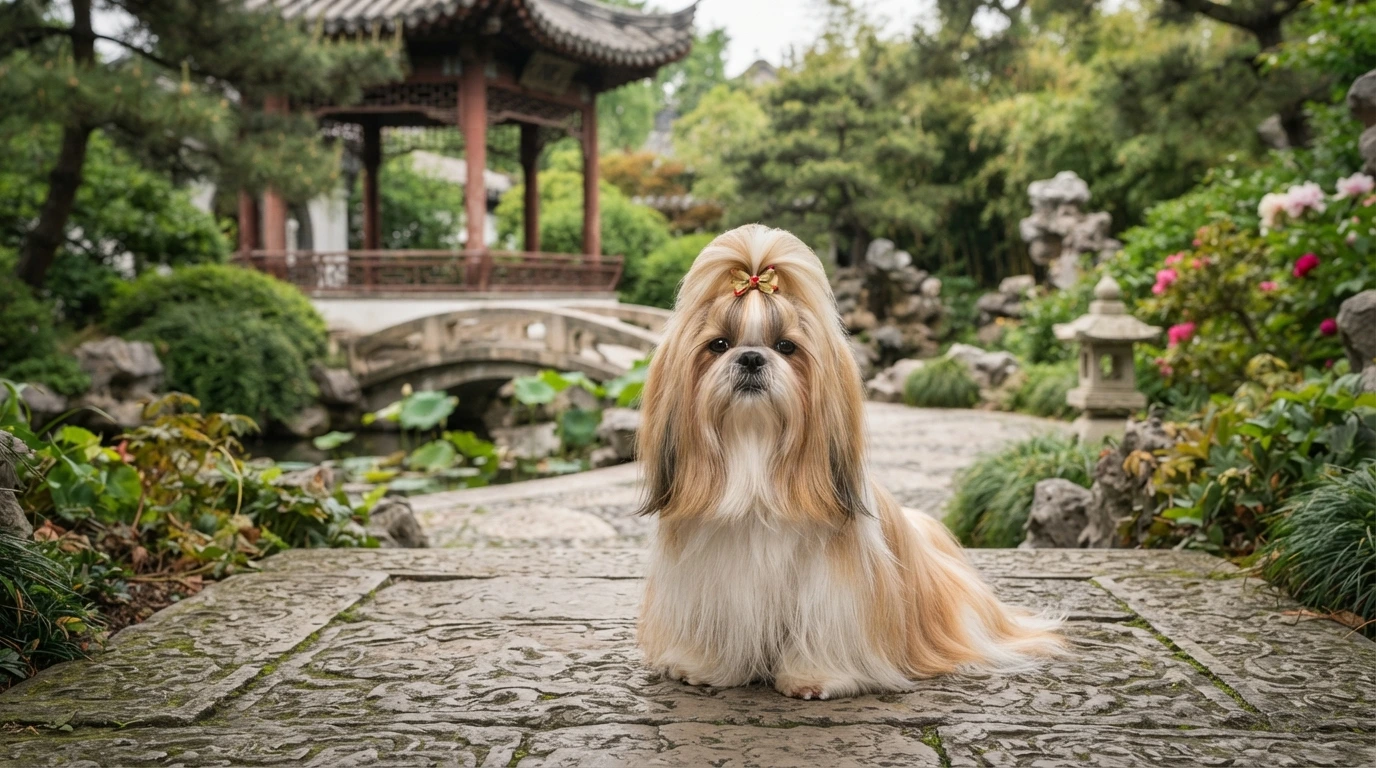
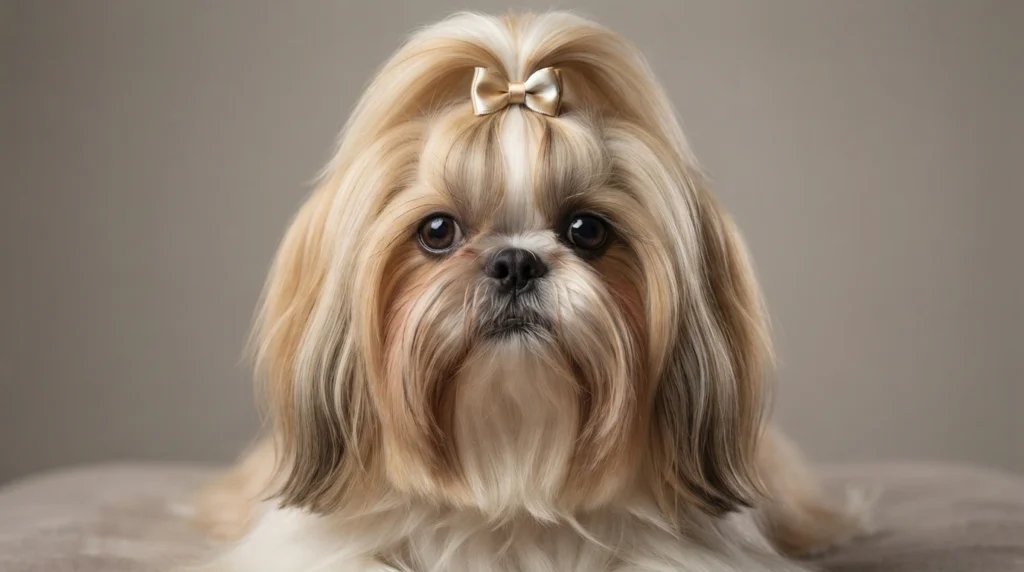
The Shih Tzu’s defining features are its long, flowing double coat, which can grow to floor length if left untrimmed, and its large, round, dark eyes set in a short-muzzled, brachycephalic face. The breed comes in an unusually wide range of colors and patterns, including gold, black, white, brindle, and countless combinations. Beneath the glamorous coat is a sturdy, compact, well-boned little body, closer to solidly built than delicate, despite the breed’s diminutive size.
Temperament
What sets the Shih Tzu apart from many toy breeds is its outgoing friendliness, including with strangers, a trait that makes sense once you understand it was bred purely for companionship rather than watchdog duty or any working role. Most Shih Tzus are affectionate, people-oriented, and eager to be close to their family, often following owners from room to room and settling contentedly on a lap for hours. This isn’t a breed with strong guarding instincts or notable wariness of visitors; if anything, most Shih Tzus greet new people with the same enthusiasm they show their own family, which is worth knowing if you were hoping for a natural watchdog.
Is a Shih Tzu Right for You?
The Shih Tzu adapts well to apartment living and makes an excellent companion for owners who want a dog fully engaged in home life. Because of its brachycephalic structure, discussed in more detail below, owners should exercise real caution during hot or humid weather and avoid strenuous exertion, this breed overheats more easily than a longer-muzzled dog of similar size. As with other toy breeds covered elsewhere in this guide series, the Shih Tzu’s small size makes it genuinely fragile, and households with very young children who can’t yet be trusted to handle a small dog gently should weigh that carefully. For owners who want an affectionate, low-exercise, deeply devoted companion and can commit to the grooming and heat precautions this breed requires, the Shih Tzu is an outstanding match.
Training
Shih Tzus are intelligent but can be a bit independent-minded, a trait some owners describe as stubbornness, and training tends to go best with patience, consistency, and positive reinforcement rather than repetition-heavy drilling. Housebreaking often takes longer in toy breeds generally, and the Shih Tzu is no exception, so a consistent schedule and realistic expectations matter more than corrections. Early socialization helps, though this breed’s natural friendliness toward people generally makes that process easier than with more reserved toy breeds.
Exercise Needs
Exercise needs are modest: short daily walks and indoor play are typically sufficient, and given the breed’s brachycephalic airway structure, gentle, low-exertion activity is actually the appropriate standard rather than a compromise. Exercise should be scheduled during cooler parts of the day, and any signs of excessive panting, blue-tinged gums, or labored breathing during activity warrant stopping immediately and seeking veterinary attention if symptoms don’t resolve quickly.
Grooming: Full Coat vs. Puppy Cut
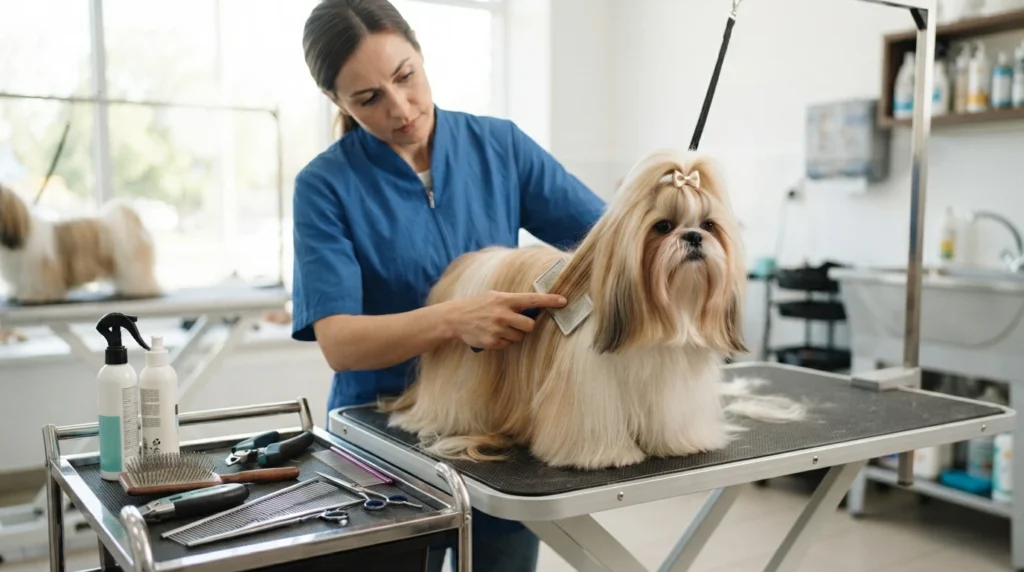
The glamorous floor-length coat seen in show photos requires daily brushing, careful bathing, and often a top-knot to keep hair out of the eyes, a serious time commitment most pet owners don’t take on. The vast majority of pet Shih Tzus are instead kept in a shorter “puppy cut,” which is far more manageable, generally needing brushing two to three times a week and professional grooming every 6 to 8 weeks. Tear staining around the eyes is common in the breed and needs regular gentle cleaning to prevent skin irritation and discoloration, an underappreciated part of the grooming routine that first-time owners sometimes overlook. Whichever coat length you choose, this remains a higher-maintenance breed than its small size might suggest.

Health and Lifespan: Breathing and Eyes Deserve Real Attention
The Shih Tzu is a genuinely brachycephalic breed, though its muzzle structure is moderate rather than extreme, sitting closer to the middle of the flat-faced spectrum than breeds like the Pekingese or French Bulldog. That said, brachycephalic airway obstruction syndrome, or BOAS, still affects the breed to a real degree, causing narrowed nostrils, an elongated soft palate, and labored breathing that worsens with heat, excitement, or exertion. Severity varies meaningfully between individual dogs depending on muzzle length and nostril conformation, and the most actionable thing an owner can do is manage heat and exercise intensity proactively rather than waiting for a breathing crisis; a Shih Tzu should never be left in a hot car or exercised heavily during warm weather.
[FUTURE LINK: canine BOAS/brachycephalic health guide]
Recognizing early distress signs at home is worth knowing alongside general heat caution: excessive panting that doesn’t subside with rest, gagging or retching sounds, blue or grayish gum color, and visible struggle to catch a breath all warrant immediate cooling measures and, if symptoms don’t resolve quickly, an emergency veterinary visit. Some Shih Tzu owners find it helpful to keep a mental baseline of their individual dog’s normal breathing sounds at rest and after mild activity, since that makes it easier to recognize when something has changed and needs attention.
The breed’s large, prominent, shallow-socket eyes are its second major health consideration. That eye conformation looks striking but carries real injury risk: corneal ulcers, scratches to the surface of the eye, occur more easily in breeds with this much eye prominence, and in severe trauma cases, proptosis, where the eye partially or fully dislocates from its socket, is a genuine veterinary emergency in exophthalmic-eyed breeds. Practical prevention includes avoiding rough, face-first play with other dogs and being mindful of low branches or furniture edges during play, and any redness, squinting, or visible cloudiness in the eye warrants prompt veterinary evaluation rather than a wait-and-see approach. Beyond breathing and eyes, portosystemic liver shunt and periodontal disease, the latter following the same toy-breed dental-crowding pattern covered elsewhere in this guide series, both appear in the breed at meaningful rates. Regular veterinary dental cleanings, alongside daily at-home brushing where the dog will tolerate it, meaningfully reduce the long-term impact of that dental crowding. With attentive care around these known risk areas, Shih Tzus commonly live 10 to 18 years, among the longest lifespans of any toy breed.
Nutrition
Standard toy-breed feeding guidance applies, with small, appropriately sized kibble supporting both nutrition and the breed’s dental-crowding-related needs. Portion control matters given how easily excess weight accumulates on a small frame, and maintaining a lean body condition also modestly reduces the exertion burden on an already brachycephalic airway.
Cost and Adoption
A Shih Tzu puppy from a reputable, health-tested breeder typically costs $1,000 to $2,500. Annual costs, including food, routine veterinary care, and grooming, generally run $1,200 to $2,000, with professional grooming and eye-care checkups representing two of the more consistent recurring expenses. Buyers should budget realistically for grooming from the outset rather than treating it as an occasional expense, since this breed’s coat requires regular professional maintenance regardless of length chosen.
Common Buyer Mistakes
- Underestimating grooming time and cost. Even a puppy-cut Shih Tzu needs regular brushing and professional trims; the full coat is a serious daily commitment few pet owners sustain.
- Over-exercising in heat. Given this breed’s brachycephalic structure, warm-weather exertion is a genuine risk that deserves proactive management, not an afterthought.
- Allowing rough, face-first play. The breed’s prominent eyes are more vulnerable to injury than a typical dog’s, making supervised, gentle play genuinely important.
- Ignoring tear staining. Left unmanaged, it can lead to skin irritation around the eyes, not just a cosmetic issue.
- Skipping dental care. Toy-breed dental crowding makes routine cleanings and at-home brushing a real health priority, not a luxury.
- Getting a Shih Tzu for a home with very young children. The size mismatch creates real injury risk for the dog, a pairing generally discouraged by breeders and veterinarians alike.
- Ignoring early breathing-distress signs. Excessive panting that doesn’t subside, gagging, or bluish gums warrant immediate cooling and veterinary attention, not a wait-and-see approach.
- Confusing the Shih Tzu with a Lhasa Apso or Pekingese when researching breeders. Ask specifically which breed a listing describes rather than assuming interchangeability among these related Tibetan and Chinese toy breeds.
FAQ
Are Shih Tzus hypoallergenic?
No dog is truly hypoallergenic, but Shih Tzus have hair rather than fur and shed minimally, making them a popular choice for allergy-sensitive households. Individual reactions still vary, so spending time with the breed beforehand is worthwhile.
Why does my Shih Tzu snore?
Snoring and noisy breathing are common in brachycephalic breeds like the Shih Tzu due to a narrowed airway and elongated soft palate. Mild snoring is typical, but loud, labored breathing or visible distress should always be evaluated promptly by a veterinarian.
What’s the difference between a Shih Tzu, a Lhasa Apso, and a Pekingese?
All three are related Tibetan or Chinese court toy breeds with long coats, but they’re separate AKC-recognized breeds. The Lhasa Apso is generally taller and leaner with a more independent, watchdog-influenced temperament; the Pekingese has a more pronounced brachycephalic structure and a distinctive rolling gait.
How long do Shih Tzus live?
Typically 10 to 18 years, among the longest lifespans of any toy breed, with attentive eye, dental, and heat-exertion care throughout its life.
Are Shih Tzus good with strangers?
Generally yes, unusually so for a toy breed. The Shih Tzu was bred purely for companionship rather than guarding, and most individuals greet new people with genuine, outgoing friendliness rather than reserve.
How much grooming does a Shih Tzu need?
A puppy-cut Shih Tzu needs brushing two to three times a week and professional grooming every 6 to 8 weeks; a full show coat needs daily brushing, careful bathing, and much more intensive upkeep overall.
How much does a Shih Tzu cost to own?
Expect $1,000 to $2,500 for a health-tested puppy and roughly $1,200 to $2,000 annually thereafter, with grooming, dental cleanings, and routine eye care as consistent recurring costs to budget for.
Conclusion
The Shih Tzu’s centuries-long history as a Chinese imperial companion dog shows clearly in its unusually friendly, people-first temperament, a breed built with no purpose beyond devotion. That same history left the breed with a moderate brachycephalic structure and strikingly prominent eyes, both of which deserve real, practical attention rather than either alarm or dismissal. Owners who commit to genuine heat caution, gentle play, consistent grooming, and routine eye and dental care tend to get exactly what centuries of palace breeders were after: an endlessly affectionate, deeply devoted companion built for exactly that role and nothing else, snoring, tear stains, top-knots, and all.