
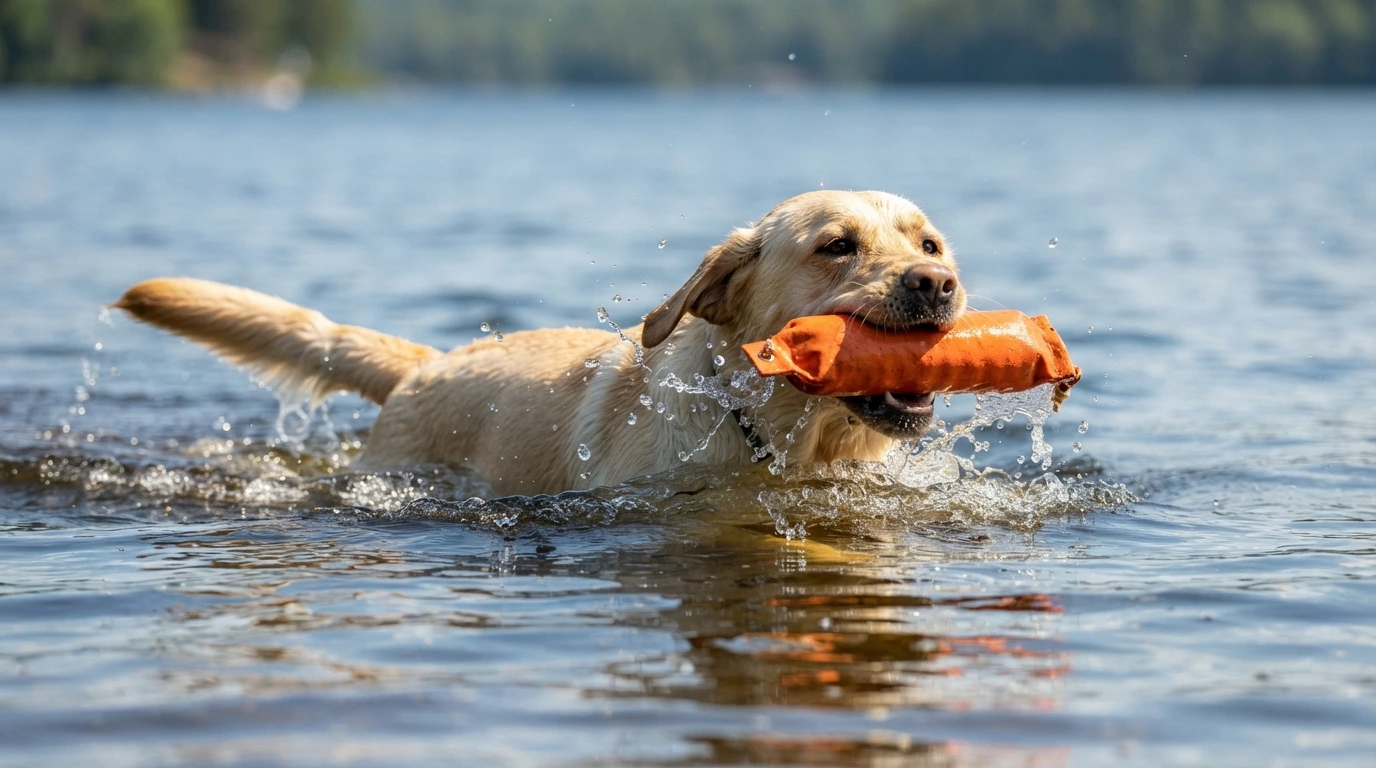
Labrador Retriever: The Complete 2026 Owner’s Guide
Long before the Labrador Retriever became a household name, its ancestor nearly vanished entirely. The breed descends from the now-extinct St. John’s Water Dog, a Newfoundland fishing dog so skilled in the water that it hauled fishing nets and dove for cod that slipped off the line. A combination of punitive taxes and a foreign quarantine law almost erased that dog from history, and only a chance meeting between two English sportsmen saved the bloodline that would become one of the world’s most beloved breeds. This guide covers that dramatic rescue story, the real science behind why Labs are always hungry, the English-versus-American type divide most breed guides skip entirely, and the honest, statistically grounded health guidance every prospective owner needs.

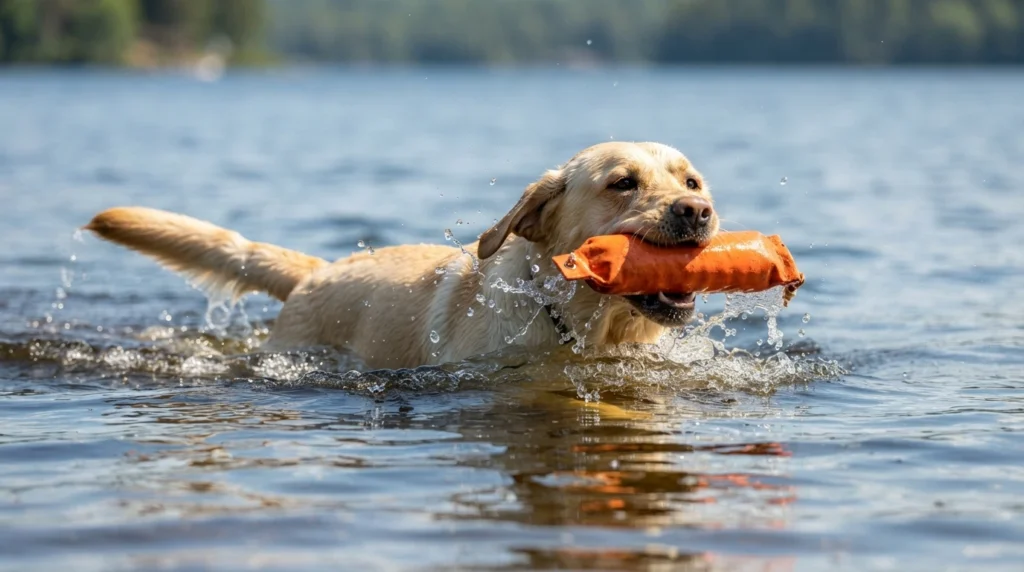
Labrador Retriever Quick Facts
The Labrador Retriever is a medium-large, athletic sporting breed developed from Newfoundland fishing stock and refined in England as a versatile hunting retriever.
| Attribute | Detail |
| AKC Group | Sporting Group |
| Country of Origin | Canada (Newfoundland), developed in England |
| Height | 21.5–24.5 in |
| Weight | 55–80 lb |
| Lifespan | 10–12 years (UK study median: 12.0 years) |
| Coat | Short, dense, water-resistant double coat |
| Colors | Black, yellow, chocolate |
| Temperament | Friendly, outgoing, active, eager to please |
History: The St. John’s Water Dog and a Near-Extinction
The Labrador Retriever’s earliest ancestor was the St. John’s Water Dog, a working breed that emerged in Newfoundland’s fishing communities, prized for hauling nets and diving into cold water to retrieve cod that had slipped off the hook. The second Earl of Malmesbury, an English sportsman hunting with these dogs as early as 1809, recognized their potential for duck hunting and famously noted that their dense coat “turns the water off like oil,” alongside their distinctive otter-like tail. Back in Newfoundland, however, the original breed faced genuine peril: local taxes punished owners of dogs not used for herding or tending livestock, and in 1885 Britain imposed a rabies quarantine on imported dogs, cutting off the flow of fresh Newfoundland bloodlines and pushing the St. John’s Water Dog toward extinction in its own homeland.
In the 1880s, the third Earl of Malmesbury and the Duke of Buccleuch in Scotland, both of whom had independently imported Labrador-type dogs from Newfoundland, met and compared notes. Malmesbury sent two of his dogs, named Ned and Avon, to Buccleuch’s estate in Scotland, and this exchange became the foundation of the modern Labrador Retriever bloodline. Without that specific meeting, the breed as it exists today might never have survived.
Labrador Retriever vs. Golden Retriever vs. French Bulldog
The Labrador Retriever shares Sporting Group ancestry and a similarly devoted family temperament with the Golden Retriever, and its 31-year run as America’s most popular AKC breed makes for an interesting comparison with the French Bulldog, the breed that ended that streak in 2022.
| Attribute | Labrador Retriever | Golden Retriever | French Bulldog |
| Origin | Newfoundland, developed in England | Scotland | England, developed in France |
| Size | Medium-large (55–80 lb) | Medium-large (55–75 lb) | Small (16–28 lb) |
| Coat | Short, dense, water-resistant | Long, wavy, water-resistant | Short, smooth |
| AKC popularity history | #1 for 31 consecutive years (1991–2021) | Consistently top 5 | #1 since 2022 |
English (Show) Labrador vs. American (Field) Labrador
This is the comparison most breed profiles skip, and it’s one of the most useful things a prospective buyer can understand before choosing a puppy — because “Labrador Retriever” actually covers two quite different dogs depending on which side of the Atlantic shaped the bloodline.
In the early 20th century, Labradors were introduced to England, where breeders selectively bred toward the conformation show ring, producing a blockier, stockier build with a broader head and a calmer, quieter temperament. In the United States, breeders prioritized field performance instead, producing a leaner, more athletic dog with substantially higher drive, built for hours of retrieving work in open country.
| Trait | English (show/bench) Labrador | American (field/working) Labrador |
| Build | Stockier, blockier, broader head | Leaner, more athletic |
| Temperament | Calmer, quieter, easier in the home | Higher energy, higher drive |
| Daily exercise need | ~1 hour is often sufficient | 2+ hours of vigorous activity |
| Best suited to | Family households, calmer homes | Active owners, hunting, field trials, dog sports |
Neither type is “more purebred” than the other — both are registered as the same breed — but the practical difference in day-to-day living is large enough that asking a breeder which line their dogs come from is one of the most useful questions a prospective owner can ask.

Appearance
The Labrador Retriever is a sturdy, athletic dog with a broad head, expressive eyes, and a short, dense, water-resistant double coat in black, yellow, or chocolate. Its distinctive “otter tail,” thick at the base and tapering to a point, remains one of the breed’s most functional physical traits, acting as a rudder while swimming.
Temperament
The Labrador Retriever is friendly and outgoing, consistently ranked among the most people-oriented breeds for its eagerness to please and its enthusiastic, good-natured approach to nearly everything. Active and intelligent, the breed’s temperament reflects its working retriever heritage, combining real drive with a fundamentally gentle disposition.
Is a Labrador Retriever Right for You?
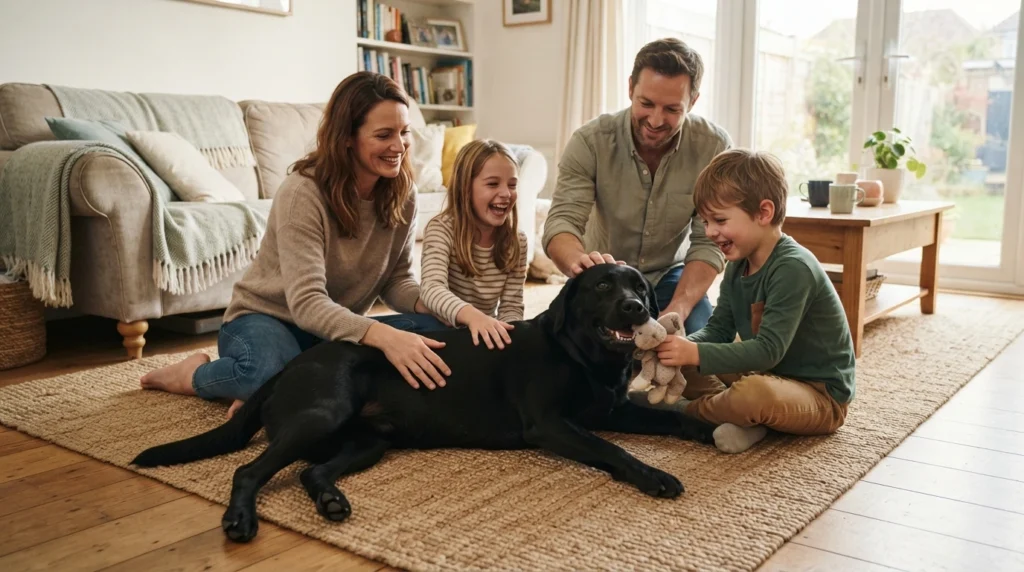
Labrador Retrievers are typically excellent family dogs, known for their patience and gentle enthusiasm with children of all ages. Their sturdy build and stable temperament have made them one of the most consistently recommended breeds for households with kids.
That said, this is a breed where prospective owners need to plan for real daily engagement. Labradors were bred as working retrievers, and without sufficient exercise and mental stimulation, that same energy and drive can turn into destructive or overweight behavior, since this breed’s genuine love of food combines poorly with an under-exercised lifestyle — a tendency that, as the health section below explains, has an identified genetic basis in a meaningful share of the breed.
Training
Labrador Retrievers are highly intelligent and eager to please, making them one of the most trainable breeds, particularly with positive, reward-based methods. Early socialization and consistent training help channel the breed’s natural enthusiasm into good manners rather than boisterous overexuberance.
Exercise Needs
Labrador Retrievers need substantial daily exercise, including vigorous walks, swimming, and retrieving games, reflecting their working heritage as an athletic sporting breed — American/field-line dogs typically need considerably more than English/show-line dogs (see the type comparison above). Without adequate exercise, and especially warm-weather exertion, monitor your dog closely; the summer feeding and heat guide covers safe hot-weather activity and diet adjustments.
Grooming
The Labrador Retriever’s short, dense double coat sheds significantly, particularly during seasonal blowouts, and benefits from regular brushing to manage loose fur. Routine ear checks are especially important given the breed’s love of swimming, along with nail trims and dental care.
Health and Lifespan: The Science Behind “Always Hungry”
Labrador Retrievers typically live 10 to 12 years, with a UK study of more than 33,000 dogs finding a median lifespan of 12.0 years. Generally a healthy breed, Labs still carry a few specific, well-documented health risks that responsible ownership requires taking seriously.
| Condition | What it is | What owners should watch for |
| Exercise-induced collapse (EIC) | A genetic disorder from a DNM1 gene mutation; ~30% of Labradors carry at least one copy | Muscle weakness, incoordination, and collapse 5–15 minutes into strenuous exercise, especially in warm weather |
| Hip dysplasia | Skeletal disorder affecting hip joint development | Reluctance to jump, altered gait, stiffness |
| Elbow dysplasia | Skeletal disorder affecting elbow joint development | Front-leg lameness, stiffness after rest |
| Obesity | Excess body weight, extremely common in this breed | Reduced mobility, joint strain, shortened lifespan |
Exercise-induced collapse is caused by a mutation in the DNM1 gene, and while roughly 30% of Labradors carry at least one copy of the mutation, the condition only appears in dogs with two copies, since it follows an autosomal recessive inheritance pattern — meaning most carriers show no symptoms at all. A genetic test is available for breeders to identify carriers and avoid pairing two of them.
The “food-motivated breed” reputation has an actual genetic mechanism behind it, identified by University of Cambridge researchers in a 2016 study. Roughly a quarter of Labrador Retrievers carry a small deletion in the POMC gene, which disrupts the coding for two appetite-regulating compounds, β-MSH and β-endorphin. Dogs carrying the deletion are measurably heavier, more food-motivated, and more prone to begging behavior than dogs without it — and interestingly, the mutation turned out to be significantly more common in Labradors selected specifically to become assistance and guide dogs, likely because that same intense food motivation makes a dog easier to train with treat-based methods. In other words, some of the traits that make Labradors excellent working and service dogs and the traits that make them prone to obesity may share the same genetic root.
That matters for everyday ownership: even modest weight loss has been shown to meaningfully improve mobility and reduce joint strain in overweight Labs, and color appears to affect longevity too, with chocolate Labradors averaging 10.7 years compared to a year or two longer for black and yellow Labradors.
Coat Color and the Silver Labrador Controversy
Standard AKC-recognized Labrador colors are black, yellow, and chocolate — full stop. Silver and charcoal Labradors, marketed by some breeders at a premium, sit outside that standard and carry a genuinely contested history worth understanding before you pay extra for one.
Silver coloring comes from the dilute gene (dd), and the Labrador Retriever Club, the breed’s oldest US parent club, has gone on record noting there is no confirmed evidence that this gene has ever naturally existed in the purebred Labrador gene pool. The dilute gene is, however, a defining, universal trait of the Weimaraner — and the original breeders who introduced silver Labradors to the market were also connected to Weimaraner breeding. No peer-reviewed study has definitively settled the question either way, and any breeder who claims it’s “settled science” in either direction is overstating the evidence. What is settled: the AKC does not recognize silver as an official color, silver puppies can still be AKC-registered but not shown in conformation under that color designation, and charcoal Labs are registered simply under the black color code.
None of this means a silver or charcoal Lab is unhealthy or a bad pet — most are perfectly normal, happy dogs. It means the premium price tag reflects rarity and marketing, not a documented trait of purebred Labrador heritage, and it’s worth asking a breeder directly about the line’s history before paying extra for the color alone.
[FUTURE LINK: silver Labrador color guide]
Nutrition
A high-quality diet formulated for active, medium-large breeds suits the Labrador well, with portion sizes monitored carefully and consistently. Given the POMC-linked food motivation documented in roughly a quarter of the breed, measured feeding and resisting the “he’s still hungry” begging cue matter more for this breed than almost any other.
Practical feeding tips that help: use a measuring cup or kitchen scale rather than eyeballing portions, split the daily total into two meals rather than one, factor treats into the day’s total calories rather than adding them on top, and weigh your dog monthly rather than relying on visual judgment — Labs carry weight well under a dense coat, and a body condition score by hand (feeling for ribs, not just looking) catches early weight gain far more reliably than eyesight alone.
Cost and Adoption
Labrador Retriever puppies from reputable breeders typically range from $1,000 to $2,500, with annual ownership costs, including food, routine veterinary care, and the exercise and enrichment this active breed requires, generally running $1,500 to $2,500. The Labrador Retriever Club maintains breeder referral resources, and prospective owners should ask directly about EIC genetic testing and hip and elbow screening for any litter’s parent dogs before committing to a puppy — and, per the section above, ask about English versus American lineage if a specific energy level matters to your household.
Common Buyer Mistakes
- Not asking about English vs. American lineage. A high-drive field-line puppy in a low-activity household is a common source of behavior problems.
- Underestimating food motivation. Free-feeding or excessive treats compound naturally with this breed’s genetics; measured portions matter from day one.
- Skipping EIC and joint screening. Ask for DNM1 test results and hip/elbow scores on both parents.
- Paying a premium for silver or charcoal color. The markup reflects rarity and marketing, not documented purebred history.
- Assuming low exercise needs. Even calmer English-line Labs need real daily activity, not just a backyard.
Frequently Asked Questions
Where do Labrador Retrievers come from?
The breed descends from the St. John’s Water Dog, a Newfoundland fishing dog, later developed into the modern Labrador Retriever in England.
Were Labrador Retrievers almost extinct?
Yes. Newfoundland taxes on non-working dogs and an 1885 British rabies quarantine nearly wiped out the original St. John’s Water Dog, and the breed survived largely through two dogs, Ned and Avon, exchanged between English sportsmen in the 1880s.
What’s the difference between an English and American Labrador?
English (show) Labradors are stockier, calmer, and need less exercise. American (field) Labradors are leaner, higher-energy, and bred for hunting and field work. Both are the same registered breed.
Why do some Labradors collapse after exercise?
A genetic mutation in the DNM1 gene causes exercise-induced collapse in dogs that inherit two copies of the mutation, though roughly 30% of Labradors carry at least one copy without symptoms.
What is the POMC gene, and why does it matter for Labradors?
A 2016 Cambridge study found roughly a quarter of Labradors carry a POMC gene deletion linked to increased food motivation and weight gain — a specific genetic explanation for the breed’s famous appetite.
Are silver Labradors purebred?
It’s genuinely contested. The silver color comes from a dilute gene not otherwise documented in purebred Labradors, and it’s strongly associated with historical Weimaraner crossbreeding, though no peer-reviewed study has settled the question definitively. The AKC doesn’t recognize silver as an official color.
How long do Labradors live?
Typically 10 to 12 years, with a large UK study finding a median lifespan of 12.0 years.
Are Labradors good family dogs?
Yes — they are widely regarded as one of the best family breeds thanks to their patient, gentle, and outgoing temperament.
How much does a Labrador puppy cost?
Typically $1,000 to $2,500 from a reputable breeder, with annual ownership costs generally running $1,500 to $2,500.
Conclusion
The Labrador Retriever’s documented history — a Newfoundland fishing dog that nearly went extinct before two specific dogs named Ned and Avon rescued the bloodline — gives this breed a genuinely dramatic backstory behind its familiar, friendly reputation. Owners who understand the English-versus-American divide, take the POMC-linked appetite seriously, screen for EIC and joint health, and look past color-based pricing tend to find the Labrador Retriever every bit as devoted and rewarding as its decades of AKC popularity suggest.