
Berger Picard: The Complete Guide to France’s “Winn-Dixie Dog”
Berger Picard
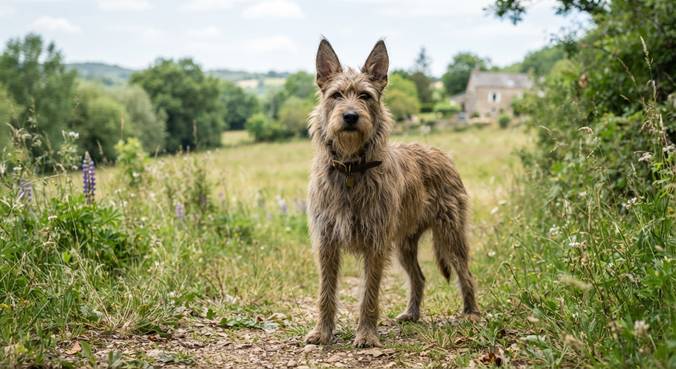
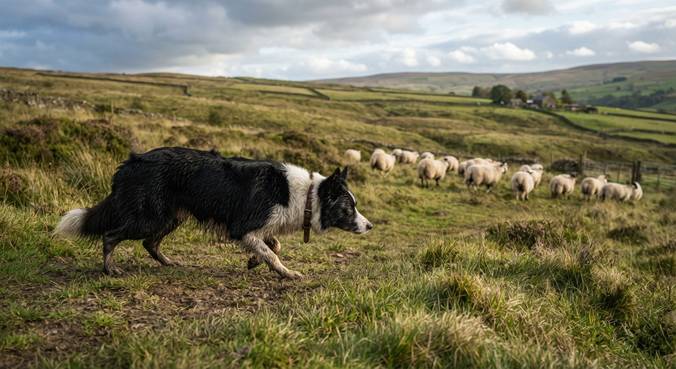
Most Americans first met this breed on a movie screen, not a show ring: the scruffy, soulful star of “Because of Winn-Dixie” was a real Berger Picard, and the film sparked enough curiosity to help push this ancient French herding breed toward AKC recognition decades after most of its Herding Group peers. But the Berger Picard’s real story starts centuries earlier, in the farm fields of northern France, and includes a near-extinction so severe that trench warfare in the Somme almost wiped the breed out entirely – twice. This guide covers the Berger Picard’s full history, exactly what makes its wiry coat different from its French cousins, and an honest look at what this athletic, devoted breed actually needs from a home.
Berger Picard Quick Facts
The Berger Picard nearly went extinct during both World War I and World War II, was formally recognized by the FCI in 1964, and only joined the AKC’s Herding Group in 2015 – one of the longest gaps between a breed’s ancient working history and its modern American recognition.
| Attribute | Detail |
| AKC Group | Herding Group (recognized 2015) |
| FCI Group | Group 1, Section 1, Standard No. 176 |
| Country of Origin | France (Picardy region) |
| Height | 21.5-25.5 in |
| Weight | 50-70 lb |
| Lifespan | 12-14 years |
| Coat | Wiry, moderate length, weather-resistant |
| Colors | Fawn, gray, and brindle shades |
| Temperament | Intelligent, devoted, aloof with strangers, athletic |
What Is a Berger Picard?
An Ancient Breed of the Picardy Region
The Berger Picard was developed by farmers and shepherds in the Picardy region of northern France, and the breed is old enough to appear in medieval tapestries and woodcuts, complete with the wiry coat, upright prick ears, and the distinctive J-shaped hook near the tip of the tail that still define the breed today. Despite that ancient working history, the Berger Picard wasn’t formally distinguished as its own breed for a long time – when the first Picard was exhibited at a French dog show in 1863, it was judged alongside the [Beauceron] and the [Briard] rather than as a separate breed in its own right. A dedicated French standard wasn’t drafted until 1922, with formal French recognition following in 1925.
Near Extinction in the World Wars
The Berger Picard’s population was concentrated on farms in northeastern France, precisely where some of the First World War’s most brutal trench warfare took place along the Somme. That fighting devastated the breed’s numbers, and just as the population was recovering, World War II brought a second wave of destruction to the same region. By the end of the Second World War, the Berger Picard’s breeding stock had been reduced to a genuinely precarious level, and only dedicated postwar conservation breeding programs kept the breed from disappearing entirely. The FCI formally recognized the recovered breed in 1964, decades after the near-extinction events that had nearly erased it from existence.
From Winn-Dixie to AKC Recognition
American recognition of the Berger Picard took an unusually indirect path. The breed had essentially no presence in the United States until “that Winn-Dixie dog” from the 2005 film “Because of Winn-Dixie” introduced American audiences to its scruffy, expressive look. Interested fans connected with European breeders, began importing dogs, and eventually formed the Berger Picard Club of America to support the growing American population. That grassroots effort, born out of genuine movie-driven curiosity, helped build the case for the AKC’s eventual 2015 recognition of the breed into its Herding Group – a genuinely unusual origin story for a modern AKC breed.
Berger Picard vs. Beauceron vs. Briard

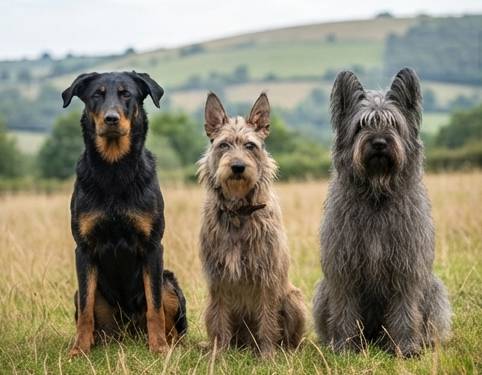
Because the Berger Picard was historically judged alongside the [Beauceron] and [Briard] before earning its own standard, comparing all three directly clears up a common point of confusion.
| Attribute | Berger Picard | Beauceron | Briard |
| Coat | Wiry, moderate length | Short, smooth, double coat | Long, wavy, goat-like texture |
| Size | Medium (50-70 lb) | Large (70-110 lb) | Large (55-100 lb) |
| Distinguishing Trait | Prick ears and a J-hook tail; low-maintenance wiry coat | Short coat, often black-and-tan, historically a dual-purpose herder and guard dog | Long, flowing coat requiring significant grooming |
The easiest way to separate the three at a glance is coat type and size together: the Picard’s coat is short and wiry, the Beauceron’s is short and smooth, and the Briard’s is long and shaggy. The [Bearded Collie] and the [German Shepherd Dog] both get mentioned in comparison discussions occasionally, but neither shares direct ancestry with the Picardy region breeds – the Bearded Collie is Scottish, and the German Shepherd Dog has entirely separate German origins.
Appearance

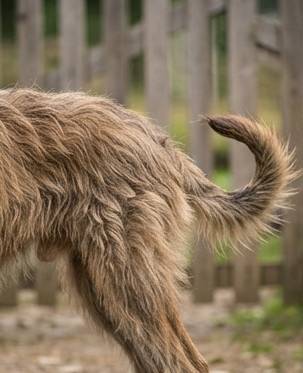
The Berger Picard is a medium-sized, sturdily built dog, slightly longer than tall, with a weather-resistant wiry coat that gives it a naturally rugged, unkempt look even when well maintained. Its most recognizable features are its large, erect, forward-set ears and its distinctive tail, which hangs down and ends in a small hook shaped like the letter J.
Temperament
Berger Picards are intelligent, lively, and deeply devoted to their families, often described by owners as having a genuine sense of humor alongside real sincerity and loyalty. The breed tends to be reserved and watchful around strangers at first, warming up once new people are clearly welcomed into the household, but the Picard’s heart is firmly oriented toward its own people above almost anything else.
Is a Berger Picard Right for You?
Families and Children
Berger Picards generally do well in active families, forming close, playful bonds with children in their own household while remaining naturally protective. Early socialization matters given the breed’s initial wariness with unfamiliar people and animals, and the breed does best in a home able to match its genuine need for daily engagement.
First-Time Owners
The ideal Berger Picard owner has some prior experience with working or herding breeds, since this dog’s intelligence, independence, and real exercise requirements can catch first-time owners off guard. A first-timer willing to commit to daily vigorous activity and consistent, patient training can still succeed with this breed, but going in without that understanding tends to lead to frustration on both ends of the leash.
Training
Berger Picards are bright and capable, but their independent streak means they respond best to positive, reward-based training rather than repetitive or forceful methods, to which this sensitive breed can react poorly. Early, consistent socialization during the first several months of a puppy’s life is particularly important given the breed’s natural reserve around strangers and new situations.
Exercise Needs

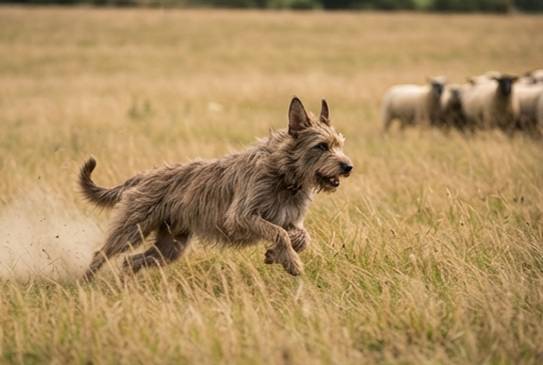
| Key Fact The Berger Picard’s coat is genuinely low-maintenance, but the dog underneath it is anything but low-energy – it was bred to work fields all day and needs substantial daily exercise. |
Here’s the detail that trips up a lot of prospective owners: the Berger Picard’s coat is genuinely low-maintenance, but the dog underneath it is anything but low-energy. Bred to work the fields of northern France, Picards are athletic dogs that need substantial daily exercise, and a bored, under-exercised Picard tends to become destructive or vocal in ways that surprise owners who assumed the easy coat meant an easy dog overall. Vigorous daily activity, ideally including some off-leash running or structured dog sports, keeps this breed genuinely content.
Grooming
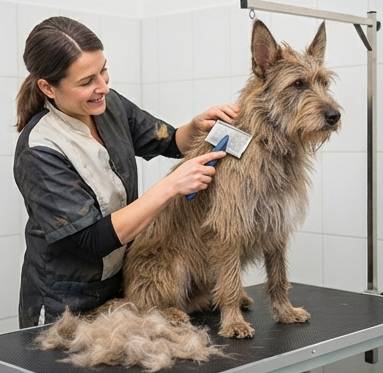
The Berger Picard’s wiry coat is refreshingly easy to maintain for most of the year, generally needing only occasional brushing to stay tidy. During spring and summer shedding season, the undercoat comes out more heavily and needs more frequent brushing, roughly once or twice a week, to prevent matting and keep loose hair under control. The coat is also naturally low-oil and low-odor, and it repels dirt well enough that baths are rarely necessary outside of genuinely muddy situations.
Health and Lifespan


Berger Picards typically live 12 to 14 years and are widely considered one of the healthier breeds in the Herding Group, though two conditions are documented closely enough to be worth understanding.
| Condition | What It Is | What Owners Should Watch For |
| Hip dysplasia | Abnormal hip joint development leading to joint laxity and arthritis over time; estimated at 10-15% in screened breeding lines | Difficulty rising, reluctance to jump, altered gait |
| PRA (early-onset) | A degenerative eye condition with clinical signs typically appearing around 3-4 years of age | Night blindness, reluctance to move in dim light |
| PRA (late-onset) | A separate, later-appearing form of the same degenerative eye condition, typically appearing around 8-9 years of age | Gradually worsening vision loss later in life |
The breed’s [progressive retinal atrophy] doesn’t match any of the common genetic mutations tested for in most standard panels, which makes ongoing regular eye exams a more reliable screening tool than genetic testing alone; [hip dysplasia] screening through a breeder is still a reasonable, standard question to ask before bringing home a puppy.
Nutrition
A high-quality diet formulated for an active, medium-sized working breed suits the Berger Picard well, with portions calibrated to match its genuinely high activity level rather than a more sedentary companion-breed baseline.
Cost and Adoption

Berger Picard puppies typically cost between about two thousand and thirty-five hundred dollars from a reputable breeder, reflecting the breed’s continued rarity in the United States even a decade after AKC recognition. The Berger Picard Club of America maintains breeder referral resources, and given the breed’s small population, prospective owners should expect longer waiting lists and, in many cases, some travel to reach an available litter.
Frequently Asked Questions
What is a Berger Picard?
The Berger Picard is an ancient French herding breed from the Picardy region, known for its wiry coat, prick ears, and distinctive J-hook tail.
What breed was Winn-Dixie?
The dog featured in the 2005 film “Because of Winn-Dixie” was a Berger Picard, and American interest in the breed following the film helped drive its eventual 2015 AKC recognition.
Is a Berger Picard the same as a Beauceron or Briard?
No – all three were historically judged together at early French dog shows, but the Berger Picard has a short wiry coat, the Beauceron a short smooth coat, and the Briard a long shaggy coat; they’re separate breeds today.
Are Berger Picards good with kids?
Generally yes, in active families that provide early socialization, though the breed’s initial reserve with strangers means introductions should be managed thoughtfully.
How much exercise does a Berger Picard need?
A genuinely significant amount – this breed was built to work fields all day, and its low-maintenance coat should not be mistaken for low overall energy needs.
What health problems do Berger Picards have?
The breed is generally healthy, with hip dysplasia and two distinct forms of progressive retinal atrophy (early-onset and late-onset) as the main documented concerns.
How much does a Berger Picard cost?
Puppies typically range from about two thousand to thirty-five hundred dollars, reflecting the breed’s continued rarity in the United States.
Conclusion
The Berger Picard’s path from near-extinction in two world wars to movie-screen fame to AKC recognition is one of the more remarkable stories in the Herding Group, and the dog at the center of it deserves to be understood as more than just “the Winn-Dixie breed.” Matching its genuinely high exercise needs, taking its health screening seriously, and giving it the consistent socialization it needs gives this resilient, devoted French herder its best chance at a lasting home.