
Bergamasco Shepherd: The Complete Guide to Italy’s Felted-Coat Herding Dog
Bergamasco Shepherd
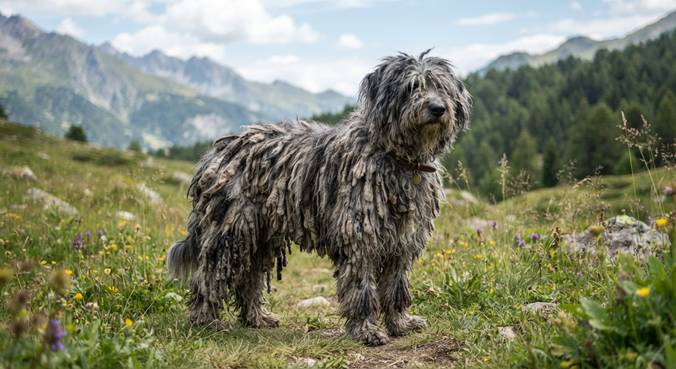
No breed in the Herding Group looks quite like the Bergamasco Shepherd. Its coat doesn’t grow in cords like a Puli’s or a Komondor’s – it felts, on its own, into large, irregular mats called flocchi, a process that happens exactly once in the dog’s life. Underneath that famously dramatic exterior is a genuinely ancient working breed, descended from shepherds who migrated out of the Persian plateau and into the Italian Alps above Bergamo centuries ago, and one of the AKC’s newest Herding Group members, recognized only in 2015. This guide explains exactly how that coat actually works, corrects a common misconception about how much exercise this breed needs, and gives an honest look at what living with a Bergamasco Shepherd really involves.
Bergamasco Shepherd Quick Facts
The Bergamasco Shepherd was first registered in Italy’s national stud-book in 1891, recognized by the FCI in 1956, and only formally recognized by the AKC in 2015 – making it one of the newest breeds in the Herding Group despite its ancient working history.
| Attribute | Detail |
| AKC Group | Herding Group (recognized 2015) |
| FCI Group | Group 1, Section 1 (Sheepdogs) |
| Country of Origin | Italy |
| Height | 21-25 in (ideal: 23.5 in males, 22 in females) |
| Weight | 57-84 lb |
| Lifespan | 13-15 years |
| Coat | Felted “flocchi” formed from three distinct hair types |
| Colors | Solid gray, merle gray, black, or a mix of shades |
| Temperament | Intelligent, independent, watchful, gentle with family |
What Is a Bergamasco Shepherd?
From the Persian Plateau to the Italian Alps
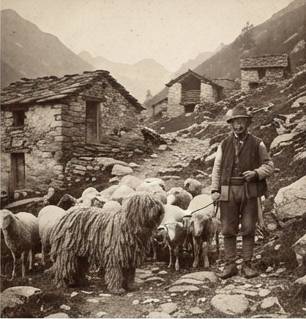
The Bergamasco’s history stretches back thousands of years to shepherds working the harsh mountain climates of what is now Iran. As these shepherds gradually migrated west, some eventually settled in the Italian Alps, and the herding dogs they brought along became the foundation of the breed we know today. The name itself comes from the alpine valleys and high pastures above the city of Bergamo, in the Lombardy region of northern Italy, where the breed was developed and worked for centuries as both a drover and a guardian of sheep flocks moving through difficult mountain terrain. Unlike Italy’s other well-known livestock guardian, the [Maremma Sheepdog], which mainly stands watch over flocks from within them, the Bergamasco actively drives and repositions the herd, a role that shaped its independent, decision-making temperament as much as its physical build.
Italian Recognition and the Road to the AKC
The Bergamasco was first entered into the Libro Origini Italiano, Italy’s national stud-book for dogs, in 1891. The breed gained formal national recognition from the Ente Nazionale della Cinofilia Italiana in 1956, and the FCI accepted the standard that same year, placing the breed in Group 1, Section 1, alongside other European sheepdogs. American recognition came far later: the AKC did not officially add the Bergamasco Sheepdog to its Herding Group until 2015, making it one of the newest breeds in that group despite a working history that predates most of its AKC Herding Group peers by centuries.
The Famous Flocchi: Understanding the Bergamasco’s Felted Coat

Three Kinds of Hair
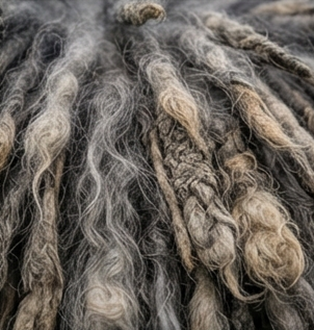
Unlike the Puli or the Komondor, which grow corded coats that owners actively separate and maintain throughout the dog’s life, the Bergamasco’s coat felts on its own, using three genuinely distinct types of hair working together. A short, dense, oily undercoat forms a waterproof base layer close to the skin. Over that grows a straight, long, roughly-textured layer often called “goat hair.” Finally, a woolly outer coat mixes with the goat hair, and it’s this woolly layer that does most of the actual felting work, binding everything into the breed’s signature mats.
The Felting Process
Bergamasco puppies are born with soft, short coats that show no felting tendency at all, and early grooming is straightforward – a steel-toothed or pin brush used weekly is generally sufficient through the first several months. Around 10 to 12 months of age, the woolly outer hair becomes noticeably more dominant across the trunk, flanks, and rear legs, and true felting typically begins, sometimes as early as 7 months in individual dogs. Once the undercoat fills in, usually around a year old, the mats need to be manually “ripped” apart by the owner into individual flocchi – a process that can take several hours but, notably, only needs to happen once in the dog’s entire life. After that initial separation, the flocchi essentially maintain themselves, though owners still need to check underneath the mats periodically for skin issues.
Bergamasco vs. Puli vs. Komondor

All three of these breeds get lumped together as “matted dogs,” but their coats work in genuinely different ways, and it’s worth being precise about the difference against the [Puli] and the [Komondor].
| Attribute | Bergamasco Shepherd | Puli | Komondor |
| Coat Type | Felted flocchi (three hair types, felts naturally once) | Corded (single coat type, cords maintained continuously) | Corded (single coat type, cords maintained continuously) |
| Origin | Italian Alps, Bergamo region | Hungary | Hungary |
| Distinguishing Trait | Flat, irregular felted mats; coat requires almost no ongoing separation after year one | Tight, rope-like cords requiring lifelong separation and maintenance | Larger, heavier rope-like cords, typically white |
The practical takeaway is that a Bergamasco’s coat is genuinely lower-maintenance in the long run than a Puli’s or Komondor’s corded coat, once the initial felting process is complete, even though it looks just as dramatic. The [Old English Sheepdog] gets mistaken for all three occasionally because of its own shaggy profile, but its coat is a single continuously-growing type that requires regular brushing rather than felting or cording at all.
Temperament
Bergamasco Shepherds are intelligent, independent thinkers, bred originally to make herding and guarding decisions on their own out on the mountainside without constant direction from a shepherd. That independence shows up at home as a calm, watchful, gentle dog with its own family, though the breed tends to be genuinely wary of strangers until it has time to warm up. The Bergamasco’s learning ability, patience, and psychological balance were specifically selected for in its working role, and those same traits make it an unusually even-tempered companion once properly socialized.
Is a Bergamasco Shepherd Right for You?
Families and Children
Bergamascos tend to be gentle and patient with children in their own household, but their size, strength, and strong herding instinct mean supervision matters, especially with very young children – an unsupervised Bergamasco may attempt to herd small kids the way it would herd livestock. With early socialization and consistent household rules, the breed generally does well in active families.
First-Time Owners
This breed’s independence can genuinely surprise first-time owners expecting the more overtly biddable temperament of some other herding breeds. A Bergamasco that decides a command isn’t necessary in the moment may simply not comply, which calls for an owner comfortable with patient, consistent training rather than one expecting instant obedience. The coat-care commitment, while eventually low-maintenance, also requires a real understanding of the felting timeline before bringing a puppy home.
Training
Bergamasco Shepherds are intelligent and genuinely capable learners, but their independent working heritage means they respond best to patient, motivation-based training rather than repetitive drilling or forceful correction. Early socialization is particularly important given the breed’s natural wariness toward unfamiliar people, and consistency matters more with this breed than with more eager-to-please herding breeds.
Exercise Needs

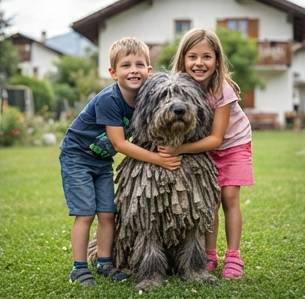
| Key Fact Despite being a herding breed, the Bergamasco does not need an unusually high volume of daily exercise compared to many of its Herding Group peers – a daily walk and companionship time generally cover its physical needs well. |
Here’s a genuine surprise for a lot of readers: despite being a herding breed, the Bergamasco does not need an unusually high volume of daily exercise compared to many of its Herding Group peers. A daily walk, some off-leash time in a secure area, and general companionship time cover most of this breed’s physical needs reasonably well. That said, Bergamascos strongly prefer being near their people over being left alone in a yard, so the quality and companionship of the activity matters more than its sheer duration.
Grooming and Coat Care

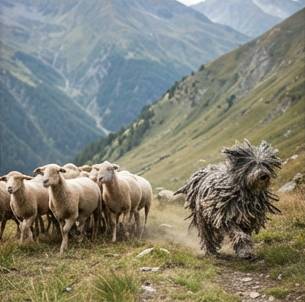
Coat care for a Bergamasco Shepherd follows two very different phases. During puppyhood and adolescence, before felting begins, weekly brushing with a pin or steel-toothed brush keeps the soft coat manageable and free of debris. Once felting begins around 10 to 12 months and the flocchi have been separated, ongoing maintenance drops dramatically – occasional checking underneath the mats for skin problems, along with keeping the coat reasonably clean, is generally sufficient for the rest of the dog’s life. Bathing a fully felted Bergamasco is a genuinely lengthy process, since the dense mats take a long time to dry thoroughly, and owners typically bathe far less often than they would with most other breeds.
Health and Lifespan

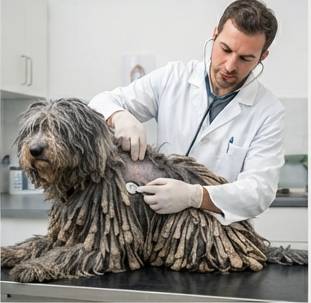
Bergamasco Shepherds are considered a comparatively healthy breed with a notably high life expectancy for a dog of this size, typically living 13 to 15 years.
| Condition | What It Is | What Owners Should Watch For |
| Hip dysplasia | Abnormal hip joint development leading to joint laxity and arthritis over time | Difficulty rising, reluctance to jump, altered gait |
| Bloat (gastric dilatation-volvulus) | A rare but life-threatening stomach distension and twisting, more common in deep-chested breeds | Restlessness, unproductive retching, distended abdomen |
The breed has no widely documented breed-specific genetic illnesses beyond these two concerns, but [hip dysplasia] screening is still a reasonable, standard question to ask any breeder, and understanding the warning signs of [bloat] is worth doing before bringing home any deep-chested breed.
Nutrition
A high-quality diet appropriate for a medium-to-large, moderately active breed suits the Bergamasco well. Because bloat risk is a consideration for deep-chested breeds generally, many owners use slow-feed bowls and avoid vigorous exercise immediately before or after meals as a simple precaution.
Cost and Adoption

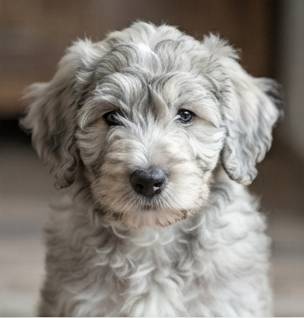
Bergamasco Shepherd puppies typically cost around one thousand to thirteen hundred dollars from a reputable breeder, though the breed’s genuinely limited gene pool and rarity in the United States mean waiting lists are common and health-tested puppies from verified pedigrees are worth the wait. The Bergamasco Sheepdog Club of America maintains breeder referral information, and given how uncommon the breed remains, prospective owners should expect to travel or wait significantly longer than they would for a more common herding breed.
Frequently Asked Questions
What is a Bergamasco Shepherd?
The Bergamasco Shepherd is an ancient Italian herding breed known for its unique felted “flocchi” coat, formed from three distinct hair types that mat together naturally around one year of age.
Why does a Bergamasco Shepherd have matted fur?
Its coat contains three hair types – an oily undercoat, rough “goat hair,” and a woolly outer coat – that felt together naturally starting around 10 to 12 months of age, forming permanent mats called flocchi.
Is a Bergamasco Shepherd the same as a Puli?
No – both look matted, but the Bergamasco’s coat felts naturally once and needs little ongoing separation, while the Puli’s corded coat requires continuous, lifelong maintenance.
Are Bergamasco Shepherds good with kids?
Generally yes, with supervision, given the breed’s strong herding instinct and size; early socialization and consistent household rules matter with young children.
Do Bergamasco Shepherds need a lot of exercise?
Less than most people expect for a herding breed – daily walks and companionship time generally cover this breed’s exercise needs well.
What health problems do Bergamasco Shepherds have?
The breed is comparatively healthy, with hip dysplasia and, rarely, bloat as the main documented concerns.
How much does a Bergamasco Shepherd cost?
Puppies typically range from around one thousand to thirteen hundred dollars, though the breed’s rarity often means longer waiting lists than more common herding breeds.
Conclusion
The Bergamasco Shepherd’s felted coat is genuinely one of a kind in the dog world, but the breed underneath it – an ancient, independent-minded working dog from the Italian Alps, only recently recognized by the AKC – deserves just as much attention as its famous flocchi. Understanding the felting timeline, the breed’s surprisingly moderate exercise needs, and its independent temperament gives prospective owners the clearest possible picture of what this distinctive, low-key mountain herder actually needs from a home.