

French Bulldog: The Complete Guide to America’s Most Popular Breed
The breed most people assume is quintessentially French actually began life as an English lace worker’s dog. In the 1850s, a smaller “Toy Bulldog” became genuinely popular with artisans in the Nottingham lace-making industry, and when the Industrial Revolution wiped out those jobs, the workers carried their little dogs across the Channel to Normandy. What happened next turned an English workingman’s companion into France’s most fashionable dog and, eventually, America’s most popular breed — but that popularity now comes with real health, cost, and even legal questions every prospective owner needs answered honestly. This guide covers the breed’s surprising history, its affectionate temperament, and the statistically grounded health and buying guidance the current Frenchie boom demands.

French Bulldog Quick Facts
The French Bulldog is a small, muscular companion breed with a distinctive bat-ear profile — and, for three consecutive years now, the most popular AKC-registered breed in the United States.
| Attribute | Detail |
| AKC Group | Non-Sporting Group |
| Country of Origin | England (developed further in France) |
| Height | 11–13 in |
| Weight | 16–28 lb |
| Lifespan | 10–12 years typical range; 2024 UK Dogs Trust study found a 9.8-year median |
| Coat | Short, smooth |
| Recognized colors | Brindle, fawn, white, cream, and combinations (pied) |
| Temperament | Affectionate, playful, alert, adaptable |
History: From Nottingham Lace to Paris to America
By the 1850s, a smaller version of the Bulldog, known as the Toy Bulldog, had become popular among artisans in England’s Nottingham lace-making industry, weighing a compact 12 to 25 pounds. When the Industrial Revolution eliminated much of that industry’s workforce, displaced lace workers emigrated to Normandy in northern France and brought their beloved little dogs with them. The breed’s charm spread quickly from Normandy to Paris, where English breeders soon found a lively export trade, and the French began calling the dogs Bouledogues Français, crossbreeding them with local Parisian ratters along the way.
Here’s the detail that reverses most people’s assumptions about who shaped the breed. Many early French Bulldogs still carried the older “rose” ear inherited from their Bulldog ancestors, while others displayed the now-iconic upright “bat ear.” It wasn’t French breeders who settled the debate — American fanciers, smitten with the distinctive bat-ear look, founded the world’s first French Bulldog club and formally standardized the upright bat ear as the breed’s defining trait. The dog most people call “quintessentially French” owes its signature look to American breed enthusiasts.
French Bulldog vs. Bulldog vs. Pug vs. Boston Terrier
The French Bulldog descends directly from the Bulldog and shares a flat-faced companion role with the Pug and its American cousin the Boston Terrier. Comparing all four clarifies how closely related brachycephalic breeds developed distinct identities — useful context if you’re weighing a Frenchie against a relative with a lower price tag or a milder airway profile.
| Attribute | French Bulldog | Bulldog | Pug | Boston Terrier |
| Origin | England (developed in France) | England | China | United States |
| Size | Small (16–28 lb) | Medium (40–50 lb) | Small (14–18 lb) | Small (12–25 lb) |
| Ears | Erect “bat ears” | Rose-shaped, folded | Small, folded | Erect or button |
| Brachycephaly severity | Moderate–severe | Severe | Moderate | Mild–moderate |
| Historical purpose | Companion (miniaturized Bulldog) | Bull-baiting, later companion | Companion to Chinese royalty | Companion (US-developed) |
For scale, the Labrador Retriever held the AKC’s #1 spot for 31 consecutive years before the French Bulldog ended that streak — a useful reminder of how fast breed popularity can shift, and how much scrutiny comes with the top spot.
Appearance and the Merle/Lilac Color Controversy
The French Bulldog is a compact, muscular dog with a flat face, a short smooth coat, and its signature erect bat ears set high and wide on a square head. The AKC standard recognizes brindle, fawn, white, and cream, plus the pied pattern — a sturdy, low-slung build that reflects the breed’s Bulldog ancestry.
What the standard does not recognize is where most of the buyer confusion — and some real ethical problems — begins. “Fad colors” like merle and lilac have become fashionable and command steep markups, but neither is natural to the purebred French Bulldog gene pool. Merle coloring only appears in a Frenchie because a breeder crossed in another breed, typically a Chihuahua, at some point in the line — the AKC does not recognize merle, and reputable breed clubs actively discourage it. The health stakes are real: a single merle gene can raise the risk of eye and ear abnormalities, and breeding two merle-carrying dogs together produces “double merle” puppies with dramatically elevated odds of deafness, blindness, or both. Lilac and Isabella colors stack multiple dilution genes, which increases the risk of skin and coat problems and is linked to lasting eye sensitivity.
None of this means a merle or lilac Frenchie can’t make a wonderful pet — many are happy, healthy dogs. It means the premium price tag attached to these colors reflects rarity and hype, not health or breed purity, and buyers should ask pointedly about the actual ancestry and health testing behind any unusually colored puppy before paying extra for it.

Temperament and Family Life
The French Bulldog is genuinely affectionate and playful, often described as a comedic, people-oriented companion that thrives on close contact with its family. Alert and adaptable, the breed tends to suit a wide range of households, from active families to quieter apartment dwellers. French Bulldogs are typically gentle and playful with children, and their compact size and modest exercise needs make them well suited to apartment living.
Popularity, Legislation, and What 2026 Buyers Should Know
French Bulldogs are a breed where prospective owners need to separate hype from honest planning. As America’s most popular AKC-registered breed for three consecutive years running — ending the Labrador Retriever’s 31-year reign at the top — French Bulldogs are in extremely high demand, and that popularity drives both puppy prices and impulse purchases upward, sometimes at the expense of buyers doing the health research this breed genuinely requires.
That demand is now colliding with a genuine international policy shift, and it’s worth knowing about even if you’re buying in the US. The Netherlands has moved to ban breeding dogs with extreme brachycephalic traits — snouts shorter than a third of skull length — and the Dutch Kennel Club has already stopped registering litters from a list of a dozen flat-faced breeds that includes the French Bulldog. European pet insurers are following a similar logic: several now refuse to cover French and English Bulldogs outright, and others that do accept them routinely exclude BOAS treatment, soft-palate surgery, and skin-fold dermatitis from coverage. Airlines have moved the same direction for years — most major carriers, including Air France, refuse to transport brachycephalic breeds in the cargo hold at all, citing elevated in-flight death risk.
None of this makes Frenchie ownership illegal or irresponsible in the US today. But it’s a clear signal from veterinarians and regulators in multiple countries that this breed’s flat-faced conformation carries welfare costs serious enough to reshape policy — and it’s exactly the kind of information a responsible buyer should weigh before joining a three-year waiting-list boom.
The UK has moved more cautiously than the Netherlands so far, with the British Veterinary Association running a “Breed to Breathe” campaign urging buyers to prioritize airway health over facial flatness, rather than pursuing an outright breeding ban. Several UK insurers now price brachycephalic breeds separately and exclude BOAS-related claims by default. US regulation hasn’t followed either model yet, but American veterinary groups have issued similar advisories, and some US-based insurers have begun adding comparable exclusions to new policies. The practical takeaway for a 2026 buyer: read any pet insurance policy’s exclusions list closely before you need it, not after.
Training
French Bulldogs are intelligent and generally eager to please, though a stubborn streak occasionally surfaces, which means training benefits from patience, consistency, and short, positive sessions. Most respond well to food-motivated, reward-based methods, and early socialization helps this breed’s naturally people-oriented personality flourish.
Exercise Needs
French Bulldogs need only moderate daily exercise — generally short walks and indoor play — reflecting both their compact build and their limited heat and exertion tolerance as a brachycephalic breed. Avoid exercising a French Bulldog in heat or humidity, and watch closely for labored breathing at all times; the breed’s summer heat safety guide is worth reviewing before any warm-weather outing.
Grooming
The French Bulldog’s short, smooth coat is genuinely low-maintenance, needing only occasional brushing to manage shedding. Facial wrinkle cleaning is a real necessity, however, since trapped moisture and debris can lead to skin infections. Add routine ear checks, nail trims, and dental care to the regular rotation.


Health and Lifespan
French Bulldogs have a median lifespan of 9.8 years according to a 2024 UK Dogs Trust study — meaningfully shorter than the 12.5-year average across all dog breeds. The breed carries a serious, well-documented list of health risks tied directly to its flat-faced anatomy that every prospective owner should understand honestly before buying.
| Condition | What it is | What owners should watch for |
| Brachycephalic obstructive airway syndrome (BOAS) | Airway abnormalities restricting breathing; estimated in ~50% of French Bulldogs | Loud/labored breathing, exercise intolerance, overheating, bluish gums |
| Hip dysplasia | Skeletal disorder affecting hip joint development | Reluctance to jump, altered gait, stiffness |
| Intervertebral disc disease (IVDD) | Spinal disc degeneration, notably common in short-legged breeds | Back pain, reluctance to jump, hind-leg weakness or paralysis |
| Allergies | Skin and environmental sensitivities common in the breed | Itching, redness, ear infections, paw licking |
| Heatstroke | Reduced ability to cool via panting due to airway restriction | Excessive panting, drooling, collapse in heat |
An estimated 50% of French Bulldogs show clinically significant signs of BOAS, a condition that restricts normal breathing through narrowed nostrils and an elongated soft palate. Among dogs with extreme brachycephalic conformation, upper respiratory disorders account for 17% of deaths, compared to essentially 0% in non-brachycephalic breeds. This anatomical burden is reflected directly in longevity: extreme brachycephalic breeds average just 8.6 years of life compared to 12.7 years for other breeds. Reputable breeders now use functional breathing/airway grading schemes to screen breeding stock — ask directly whether a litter’s parents have been airway-graded.
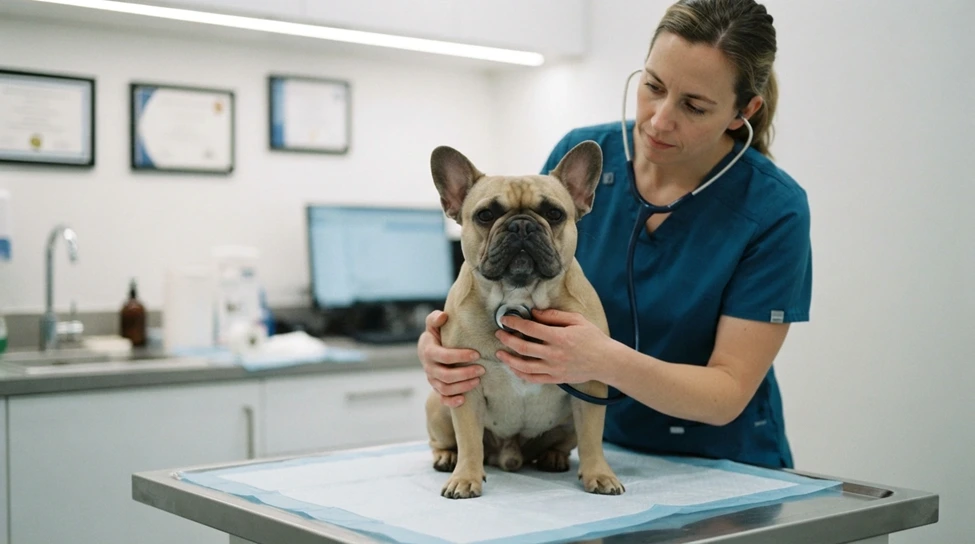
These grading schemes typically walk a dog through a short exercise tolerance test and a stethoscope assessment, then assign a grade from clear to severely affected. A dog graded in the more severe categories is generally excluded from further breeding under responsible-breeder guidelines, since the trait is heritable and grading is one of the few tools available to gradually improve airway health across the breed. If a breeder can’t produce grading documentation, or waves off the question, treat that as a serious warning sign rather than an oversight.
Cost: Purchase, BOAS Surgery, and Lifetime Ownership
French Bulldog puppies from reputable breeders typically range from $2,000 to $4,500 or more — a price reflecting both genuine breeding costs, since many French Bulldogs require artificial insemination and C-section delivery, and the breed’s extreme current demand.
| Cost item | Estimated range |
| Puppy (reputable breeder) | $2,000–$4,500+ |
| “Fad color” (merle/lilac) markup | Often $2,000–$6,000+ premium, unrelated to health |
| Annual routine ownership (food, vet, grooming) | $2,000–$3,000 |
| BOAS corrective surgery (if needed) | $1,500–$8,000, depending on severity and region |
| Pet insurance (US, brachycephalic-inclusive plans) | $50–$90/month, often with BOAS-related exclusions |
The French Bull Dog Club of America (FBDCA) maintains breeder referral resources. Before committing to a puppy, ask directly about airway health screening and any family history of BOAS or IVDD in a litter’s parent dogs.
[FUTURE LINK: BOAS surgery guide]
[FUTURE LINK: pet insurance for brachycephalic breeds]
Common Buyer Mistakes
- Buying on looks alone. A flatter face and heavier wrinkling look appealing in photos and correlate with worse breathing function.
- Paying a premium for merle or lilac without asking why. The markup reflects trend demand, not health or purity — and merle specifically signals an outcross.
- Skipping airway/breathing questions with the breeder. A reputable breeder welcomes questions about BOAS grading; a hesitant answer is a red flag.
- Underestimating lifetime cost. Routine care plus a realistic chance of BOAS surgery can push lifetime cost well past $15,000.
- Ignoring the breed’s heat limits. Heatstroke is a leading preventable cause of emergency vet visits in this breed.
Is a French Bulldog Right for You?
Good fit if you: want an affectionate, low-exercise companion suited to apartment life; can budget for above-average veterinary costs, including a real possibility of BOAS surgery; will prioritize a breeder who screens for airway health over one offering a rare color at a discount; live somewhere with reliable air conditioning and can avoid hot-weather exertion.
Reconsider if you: need a dog for hiking, running, or hot climates; want the lowest-maintenance health profile available; are drawn primarily to a merle or lilac coat rather than the breed’s temperament; can’t absorb an unplanned four-figure vet bill.
Frequently Asked Questions
Are French Bulldogs actually French?
Not originally. The breed began as a Toy Bulldog developed in 1850s Nottingham, England, and only became associated with France after lace workers emigrated to Normandy during the Industrial Revolution.
Who standardized the French Bulldog’s bat ears?
American fanciers, who founded the world’s first French Bulldog club and formally standardized the now-iconic upright bat ear.
Why are French Bulldogs so popular?
The breed’s compact size, affectionate temperament, and adaptability to apartment living have made it America’s most popular AKC-registered breed for three consecutive years, ending the Labrador Retriever’s 31-year reign at the top.
Why are French Bulldogs so expensive?
High demand combined with genuine breeding costs, including frequent artificial insemination and C-section delivery, drives puppy prices upward — and “fad colors” like merle add a further markup unrelated to health.
What is a merle French Bulldog, and is it a real color?
Merle isn’t part of the purebred French Bulldog gene pool. It appears only after a breeder crosses in another breed, usually a Chihuahua. The AKC doesn’t recognize it, and it carries real deafness and blindness risk in double-merle breedings.
Are French Bulldogs being banned?
Not in the US. The Netherlands has banned breeding dogs with extreme brachycephalic traits, including French Bulldogs, and several European insurers now exclude or refuse to cover the breed. US ownership remains unaffected, but the trend reflects growing welfare scrutiny.
How long do French Bulldogs live?
A 2024 UK study found a median life expectancy of 9.8 years, shorter than the 12.5-year average across all dog breeds.
Are French Bulldogs good apartment dogs?
Generally yes — their compact size and moderate exercise needs make them well suited to apartment living.
How much exercise does a French Bulldog need?
Moderate daily exercise, generally short walks and indoor play, with careful attention to heat and exertion limits given the breed’s breathing anatomy.
Conclusion
The French Bulldog’s documented history — an English lace worker’s dog that became France’s most fashionable companion and, decades later, America’s most popular breed — gives it a genuinely surprising backstory most owners never learn. Prospective owners who look past the current hype, screen for BOAS and IVDD, understand what’s really behind a merle or lilac price tag, and budget honestly for this breed’s real health needs tend to find the French Bulldog an exceptionally affectionate and adaptable companion.