
Belgian Malinois: The Complete Guide to the World’s Most Famous Working Dog
Belgian Malinois
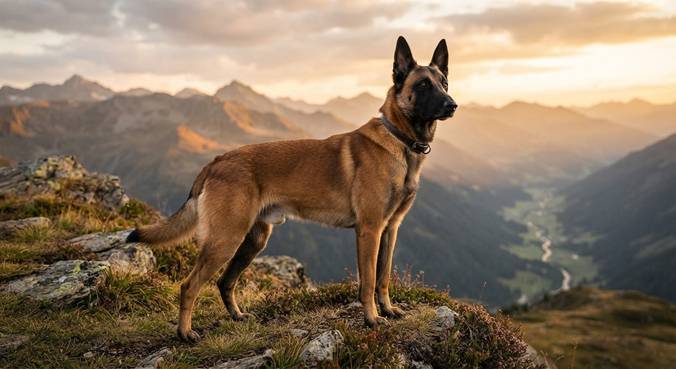
The Belgian Malinois is, by now, one of the most recognizable dog breeds on the planet – the official breed of the U.S. Secret Service, a fixture of military and police K9 units worldwide, and the breed behind two of the most famous war dogs in recent history. That fame has driven a genuine surge in demand from ordinary households, and it’s exactly why this guide leads with honesty rather than hype: the same extreme drive that makes a Belgian Malinois a legendary working partner is precisely what makes it a poor fit for most homes. This guide covers the breed’s real Belgian origins, its documented military service, how it actually differs from the German Shepherd, and a genuinely honest look at whether this breed belongs in your household.
Belgian Malinois Quick Facts
The AKC recognized the Belgian Malinois as a separate breed in 1959, placing it in the Herding Group, while the FCI classifies it as one of four varieties of a single breed under Standard No. 15, Group 1, Section 1.
| Attribute | Detail |
| AKC Group | Herding Group (recognized as separate breed in 1959) |
| FCI Group | Group 1, Section 1, Standard No. 15 (variety of Belgian Shepherd Dog) |
| Country of Origin | Belgium |
| Height | 24-26 in (males), 22-24 in (females) |
| Weight | 60-80 lb (males), 40-60 lb (females) |
| Lifespan | 12-14 years |
| Coat | Short, straight, weather-resistant double coat |
| Colors | Fawn to mahogany with black overlay and black mask |
| Temperament | Highly intelligent, driven, alert, handler-focused, protective |
What Is a Belgian Malinois?
Belgian Origins and the Four Belgian Shepherd Varieties
The Belgian Malinois takes its name from the city of Malines (Mechelen) in Belgium, where the breed was developed as one of four regional herding varieties collectively known in French as the Chien de Berger Belge, or Belgian Shepherd Dog. The other three varieties are the Groenendael, known in the AKC system as the Belgian Sheepdog [Internal Link] (long-haired black), the Tervuren (long-haired fawn), and the Laekenois (wire-haired) – all developed from the same regional shepherd-dog stock but distinguished by coat type and color. The Malinois is the short-haired, fawn-with-black-overlay variety, and it’s the one that eventually became the most widely used for police, military, and protection work.
Military and Police Service: Cairo, Conan, and Beyond
Documented Service: Cairo, a Belgian Malinois handled by Navy SEAL Will Chesney, was part of the May 2011 raid on Osama bin Laden’s compound. Conan, a Belgian Malinois serving with Delta Force, participated in the October 2019 raid that led to the death of ISIS leader Abu Bakr al-Baghdadi. The Belgian Malinois is also the official breed of the U.S. Secret Service.
No discussion of this breed is complete without its documented service record, which goes well beyond generic “military dog” framing. Beyond Cairo and Conan, the Belgian Malinois remains one of the most heavily used breeds across U.S. military and police K9 programs today.
AKC and FCI Status
Here’s a genuinely useful piece of classification context that most articles skip: the AKC recognized the Belgian Malinois as a fully separate breed in 1959, placing it in the Herding Group where it competes independently of the Belgian Sheepdog and Belgian Tervuren. The FCI, by contrast, classifies all four Belgian Shepherd varieties – Groenendael, Tervuren, Malinois, and Laekenois – as a single breed under Standard No. 15, Group 1, Section 1, judged separately by variety rather than as fully independent breeds. Both systems agree on what the dog looks like; they simply organize the paperwork differently.
Belgian Malinois vs. German Shepherd vs. Belgian Tervuren

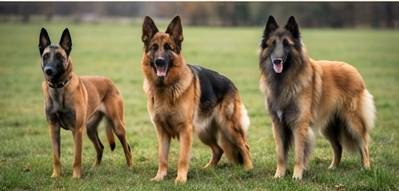
These three breeds are frequently confused, especially by people encountering working dogs for the first time. Here’s how the Belgian Malinois compares to the German Shepherd Dog [Internal Link] and the Belgian Tervuren [Internal Link].
| Attribute | Belgian Malinois | German Shepherd Dog | Belgian Tervuren |
| Origin | Belgium | Germany | Belgium |
| Size | 22-26 in, 40-80 lb | 22-26 in, 50-90 lb | 22-26 in, 45-75 lb |
| Distinguishing Trait | Short fawn coat with black mask, leaner build | Longer body, distinctive sloped topline, denser coat | Long fawn coat with black overlay, same build as Malinois |
The Belgian Malinois and Belgian Tervuren are essentially the same dog in different coats – short versus long-haired variants of the same Belgian Shepherd type – while the German Shepherd is a genuinely separate breed with a different body structure, most notably its more sloped topline and heavier build.
Appearance

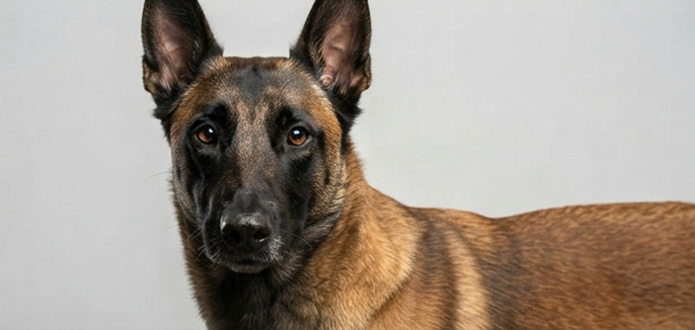
The Belgian Malinois has a square, athletic build with a short, straight double coat in fawn to mahogany shades, always with a black overlay and a distinctive black mask across the muzzle. The overall impression is alert, elegant, and unmistakably purposeful – a dog built for sustained, demanding work rather than a relaxed companion silhouette.
Temperament
The Belgian Malinois is exceptionally intelligent, driven, and handler-focused, traits that make it extraordinarily effective in working roles and genuinely challenging in an ordinary household without a real job to do. This is not a breed that idles well; the same alertness and drive that make it excel in police and military work will, without a productive outlet, often turn into destructive or anxious behavior at home.
Is a Belgian Malinois Right for You? (Read This Honestly)

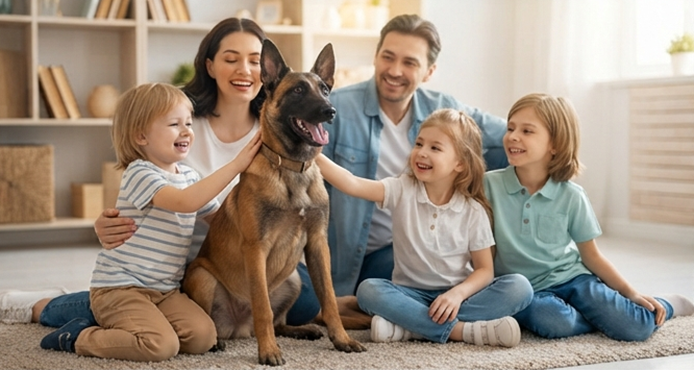
Families and Children
A well-trained, well-socialized Belgian Malinois can do well in an active family, but this requires real, ongoing commitment – daily structured exercise, mental work, and experienced handling – not just good intentions. Families expecting a dog that will settle easily into a typical suburban routine are usually disappointed.
Why So Many Malinois End Up in Rescue
This is worth stating plainly: Belgian Malinois-specific rescue organizations report a well-documented pattern of owners surrendering dogs they acquired because of the breed’s military and police fame without understanding what that drive actually requires day to day. A dog bred for sustained working intensity, placed in a home without a genuine outlet for that drive, frequently develops behavioral problems that lead directly to rehoming. This isn’t a flaw in the breed – it’s a predictable mismatch between a working dog’s needs and an average household’s capacity to meet them.
First-Time Owners
This breed is generally not recommended for first-time dog owners. The combination of extreme drive, size, intelligence, and protective instinct calls for genuinely experienced handling from day one.
Training
Belgian Malinois are remarkably intelligent and trainable, which is exactly why they excel in demanding working roles – but that same trainability requires an experienced, consistent handler who can provide real structure. Early, extensive socialization is essential, and this breed thrives with a job: obedience competition, protection sports, scent work, or genuine working roles rather than casual pet-training alone.
Exercise Needs

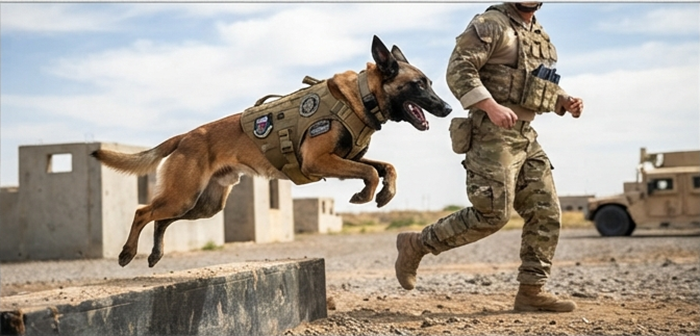
The Belgian Malinois has genuinely extreme exercise needs – this is arguably one of the most demanding breeds in terms of both physical exercise and mental stimulation in the entire Herding Group. Multiple hours of vigorous activity per day, combined with structured mental work, are a realistic baseline rather than an exaggeration, and falling short of that consistently tends to produce serious behavioral problems.
Grooming
The Belgian Malinois’s short double coat is relatively low-maintenance, needing weekly brushing with heavier shedding during seasonal coat blowouts. This is a genuinely easy breed to groom compared to nearly every other aspect of ownership.
Health and Lifespan

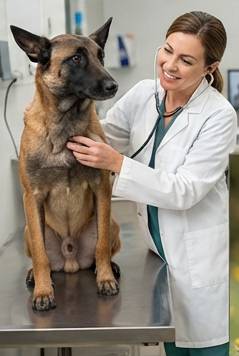
Belgian Malinois typically live 12 to 14 years and are a generally robust, athletic breed, though several conditions are well-documented and worth understanding before bringing one home.
| Condition | What It Is | What Owners Should Watch For |
| Hip dysplasia | Abnormal hip joint development leading to laxity and arthritis over time | Difficulty rising, reluctance to jump, altered gait |
| Elbow dysplasia | Abnormal elbow joint development, a common structural issue in active breeds | Front-leg lameness, stiffness after exercise |
| Epilepsy | A hereditary seizure disorder documented in the breed | Episodes of disorientation, collapse, or convulsions |
| Bloat (GDV) | A life-threatening twisting of a gas-distended stomach | Distended abdomen, unproductive retching – emergency vet care needed |
Hip dysplasia [Internal Link] and elbow dysplasia [Internal Link] screening (via OFA or PennHIP evaluation) are standard, reasonable things to ask a breeder about, and given the breed’s documented risk, asking about epilepsy [Internal Link] history in the puppy’s line is worthwhile too.
Nutrition
A high-quality diet formulated for large, active working breeds suits the Belgian Malinois well, with portions genuinely calibrated to its high activity level rather than a sedentary baseline.
Cost and Adoption
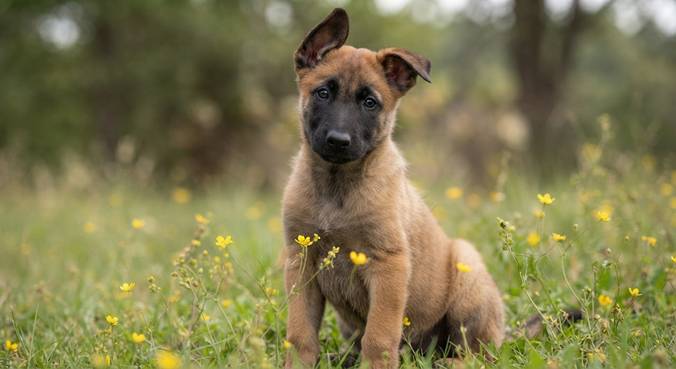
Belgian Malinois puppies from health-tested breeders typically range from around a thousand to several thousand dollars, with working-line dogs bred specifically for police, military, or sport homes often priced and vetted differently than companion-line puppies. Given the documented rescue-surrender pattern tied to this breed’s fame, adopting from a Belgian Malinois-specific rescue is a genuinely responsible option worth serious consideration – and rescue organizations are typically very direct about assessing whether a given home can meet the breed’s real needs.
Frequently Asked Questions
What is a Belgian Malinois?
The Belgian Malinois is a Belgian herding breed, one of four Belgian Shepherd varieties, known today primarily for its extensive use in military, police, and protection work.
Is a Belgian Malinois the same as a German Shepherd?
No – the two are separate breeds with different origins (Belgium versus Germany) and different builds, though both are commonly used in similar working roles.
Why are Belgian Malinois used by the military and police?
Their combination of extreme intelligence, drive, athleticism, and trainability makes them exceptionally effective for demanding working roles, including as the official breed of the U.S. Secret Service.
Are Belgian Malinois good family dogs?
Only for households prepared to meet their extreme exercise and mental stimulation needs; without that, the breed frequently develops behavioral problems.
Why do so many Belgian Malinois end up in rescue?
The breed’s military and police fame has driven demand from owners who underestimate its real working drive, a well-documented factor in Malinois-specific rescue intake.
What health problems do Belgian Malinois have?
Common concerns include hip dysplasia, elbow dysplasia, epilepsy, and bloat (GDV).
How much does a Belgian Malinois cost?
Puppies from health-tested breeders typically range from around a thousand to several thousand dollars; given documented rescue-surrender patterns, adoption is also a genuinely strong option.
Conclusion
The Belgian Malinois earned its fame honestly – this is a genuinely extraordinary working dog, and its record in military and police service reflects real capability rather than marketing. But that same fame has created a documented mismatch problem, and the most responsible thing this guide can offer is a clear-eyed answer: unless you can genuinely meet this breed’s extreme working drive with structured daily outlets, a Belgian Malinois is very likely not the right dog for your household, however impressive the breed’s reputation may be.