
Belgian Sheepdog: The Complete Guide to the Elegant “Living Statue”
Belgian Sheepdog
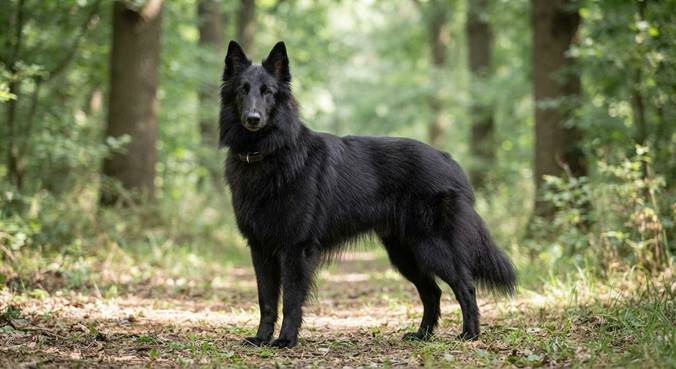
Solid black from nose to tail, moving with a striking, almost sculptural grace, the Belgian Sheepdog earned its show-ring nickname – “the living statue” – honestly. It is also one of the most frequently confused breeds in the Herding Group, regularly mistaken for its far more famous relative, the Belgian Malinois. They are related, but they are not the same dog, and understanding what actually separates them matters if you are researching this breed specifically. This guide covers the Belgian Sheepdog’s real Belgian origins, its distinct World War I service history, exactly how it differs from the Malinois and Tervuren, and an honest look at what living with this striking, driven breed involves.
Belgian Sheepdog Quick Facts
The AKC first recognized the Belgian Sheepdog in 1912 and separated it into its own independent breed in 1959, placing it in the Herding Group, while the FCI classifies it as one of four varieties of a single breed under Standard No. 15.
| Attribute | Detail |
| AKC Group | Herding Group (recognized 1912, separate breed since 1959) |
| FCI Group | Group 1, Section 1, Standard No. 15 (variety of Belgian Shepherd Dog) |
| Country of Origin | Belgium |
| Height | 24-26 in (males), 22-24 in (females) |
| Weight | 55-75 lb |
| Lifespan | 12-14 years |
| Coat | Long, straight, abundant black double coat |
| Colors | Solid black (small white markings permitted in limited areas) |
| Temperament | Intelligent, watchful, loyal, alert, reserved with strangers |
What Is a Belgian Sheepdog?
Nicolas Rose and the Chateau de Groenendael
The Belgian Sheepdog is known internationally as the Groenendael, a name it owes directly to breeder Nicolas Rose, who developed the variety at his estate, the Chateau de Groenendael, in Belgium. Rose’s breeding program focused specifically on producing dogs with the long, solid black coat that remains the breed’s defining feature today, distinguishing it from its fawn-coated relatives, the Tervuren and the Malinois. The name “Groenendael” is still used as the breed’s primary identifier in most of the world outside the United States. Rose’s original breeding stock came from the same general Belgian herding-dog population that produced the Malinois and Tervuren, but his specific, deliberate focus on the black long-coated type is what gave the Groenendael its own identity within just a couple of generations.
A World War I Messenger and Ambulance Dog
Long before Belgian Shepherd varieties became associated with modern military and police work through the Malinois, the Groenendael had already proven itself in genuine wartime service. During World War I, Belgian Sheepdogs worked as messenger dogs, carrying communications across dangerous ground, and as ambulance dogs, helping locate wounded soldiers. This distinct historical chapter belongs specifically to this variety’s early 20th-century service record, separate from the Belgian Malinois’s more recent, widely publicized military fame. The breed’s intelligence and stamina made it well-suited to the unpredictable, high-stress conditions of trench warfare, and surviving accounts from the period describe the dogs as remarkably steady under fire – a trait that carried directly into the breed’s later reputation for watchfulness and reliability.
AKC and FCI Status
The AKC first recognized the Belgian Sheepdog in 1912, initially registering it alongside the other Belgian varieties under one heading. In 1959, the AKC split the four varieties into fully independent breeds, and the Groenendael became what American records call the “Belgian Sheepdog,” placed in the Herding Group. The FCI takes a different approach, classifying all four varieties – Groenendael, Tervuren, Malinois, and Laekenois – as a single breed under Standard No. 15, Group 1, Section 1, judged separately within that single breed structure.
Belgian Sheepdog vs. Belgian Malinois vs. Belgian Tervuren

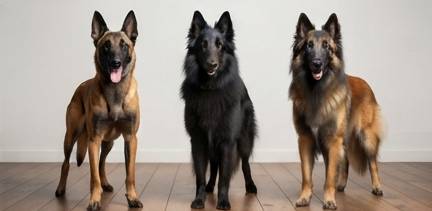
This is easily the most common point of confusion for this breed, so here is a direct answer. Here is how the Belgian Sheepdog compares to the [Belgian Malinois] and the [Belgian Tervuren].
| Attribute | Belgian Sheepdog (Groenendael) | Belgian Malinois | Belgian Tervuren |
| Coat | Long, solid black | Short, fawn with black mask | Long, fawn with black overlay |
| Origin Note | Named for Nicolas Rose’s Chateau de Groenendael | Named for the city of Malines | Named for the village of Tervuren |
| Distinguishing Trait | Only solid-black long-coated variety | Most widely used in police/military work | Long coat, fawn like the Malinois but longer-haired |
All three are genuinely the same underlying Belgian Shepherd type, separated by coat length and color rather than fundamentally different builds or origins – the coat is, quite literally, the easiest way to tell them apart at a glance. The [German Shepherd Dog] is a separate breed entirely, sharing a general herding-dog resemblance and similar working roles but with distinct German origins and a different body structure, most notably its sloped topline.
Appearance

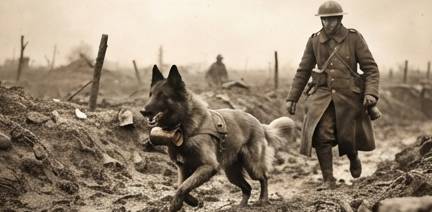
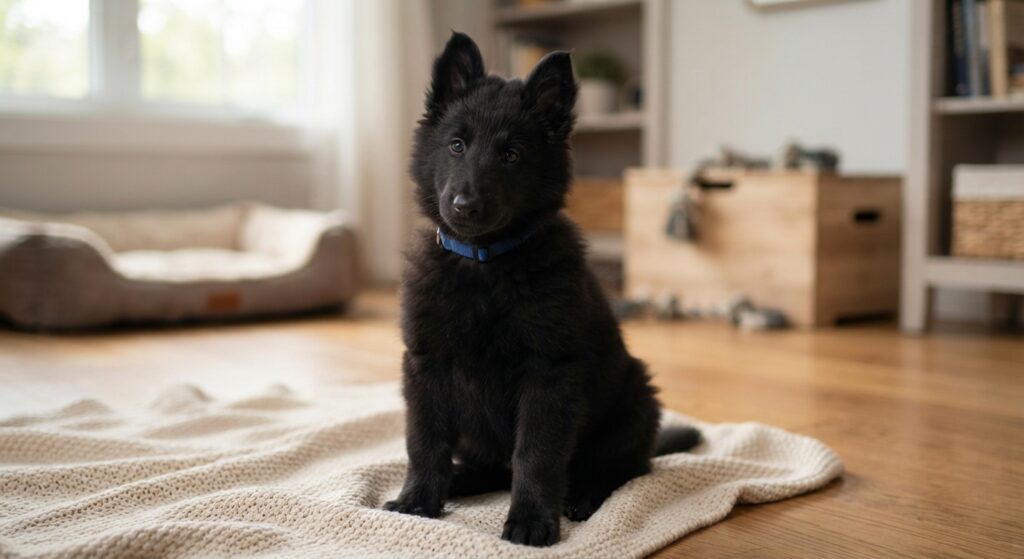
The Belgian Sheepdog is elegant and athletic, with a long, abundant, solid black double coat that gives it the striking, sculptural silhouette behind its “living statue” nickname. Small white markings are permitted in limited areas, but the overwhelming impression is one of uniform, glossy black from head to tail.
Temperament
Belgian Sheepdogs are highly intelligent, watchful, and deeply loyal to their families, generally more reserved with strangers than overtly friendly. Show-line Belgian Sheepdogs tend to carry a somewhat calmer overall temperament than working-line Malinois, though the underlying herding-dog intelligence and independence are very much still present.
Is a Belgian Sheepdog Right for You?

Families and Children
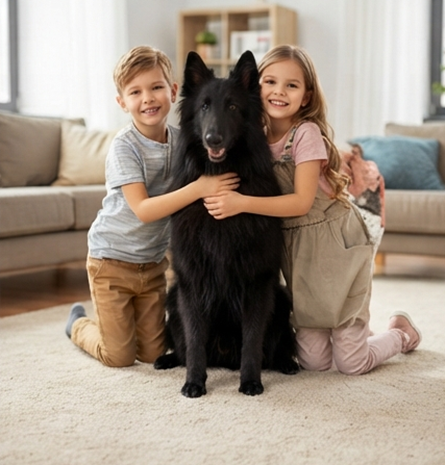
Belgian Sheepdogs can do well in active families that provide consistent structure, exercise, and socialization; the breed’s watchfulness makes it naturally protective of its own household, though early socialization matters for a well-rounded temperament around visitors and other pets.
First-Time Owners
This breed is better suited to owners with at least some prior experience with intelligent, driven dogs. The combination of herding instinct, watchfulness, and genuine exercise needs calls for real commitment rather than a casual approach to training. A first-time owner who is nonetheless prepared to invest seriously in structured training and daily activity can still succeed with this breed, but going in with clear eyes about the commitment matters more here than with many companion-oriented breeds.
Training
Belgian Sheepdogs are highly trainable and generally eager to work with their people, but their intelligence means training needs to stay engaging and varied – repetitive drilling tends to bore this breed quickly. Early socialization is particularly important given the breed’s natural reserve around unfamiliar people.
Exercise Needs
Belgian Sheepdogs need substantial daily exercise, including both physical activity and mental engagement – herding trials, obedience work, or structured play all suit the breed’s genuine working heritage far better than a simple daily walk alone. A bored, under-exercised Belgian Sheepdog often finds its own outlets, which tend to look like excessive barking, digging, or a fixation on chasing anything that moves, from cars to joggers.
Grooming (Managing the Long Black Coat)

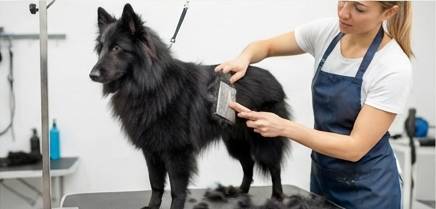
The Belgian Sheepdog’s long, abundant coat needs thorough brushing multiple times a week to prevent matting, with noticeably heavier shedding during seasonal coat blowouts. One practical detail worth knowing: because the coat is solid black, dust, debris, and loose undercoat show up visibly against it in a way lighter-coated breeds don’t reveal as readily, which tends to make regular brushing feel more immediately necessary to owners.
Health and Lifespan

Belgian Sheepdogs typically live 12 to 14 years and are considered a generally healthy breed, though several conditions are well-documented and worth understanding before bringing one home.
| Condition | What It Is | What Owners Should Watch For |
| Hip dysplasia | Abnormal hip joint development leading to laxity and arthritis over time | Difficulty rising, reluctance to jump, altered gait |
| Elbow dysplasia | Abnormal elbow joint development, a structural issue in active breeds | Front-leg lameness, stiffness after exercise |
| Epilepsy | A hereditary seizure disorder documented in the breed | Episodes of disorientation, collapse, or convulsions |
| Progressive retinal atrophy | A degenerative eye condition leading to gradual vision loss | Night blindness, reluctance to move in dim light |
[Hip dysplasia] and [progressive retinal atrophy] screening are both standard, reasonable things to ask a breeder about, and [epilepsy] history in the puppy’s line is worth asking about given how well-documented the condition is across Belgian Shepherd varieties.
Nutrition
A high-quality diet formulated for active, medium-to-large herding breeds suits the Belgian Sheepdog well, with portions calibrated to match its genuinely high activity level.
Cost and Adoption

| Key Fact The Belgian Sheepdog Club of America’s breeder referral resources are often a more efficient path to a puppy or rescue than a general online search, given how small this breeding community is relative to the Belgian Malinois. |
Belgian Sheepdog puppies from health-tested breeders typically range from around a thousand to two thousand dollars, and prospective owners should ask specifically about hip, eye, and epilepsy history in the puppy’s parents. Because the breed is less common than the Belgian Malinois, Belgian Sheepdog-specific rescue organizations exist but may take some patience to find an available dog through. Working directly with the Belgian Sheepdog Club of America’s breeder referral resources is often a more efficient path than a general online search, given how much smaller this breeding community is compared to more mainstream breeds.
Frequently Asked Questions
What is a Belgian Sheepdog?
The Belgian Sheepdog, known internationally as the Groenendael, is a solid-black, long-coated Belgian herding breed developed by Nicolas Rose at his Chateau de Groenendael estate.
Is a Belgian Sheepdog the same as a Belgian Malinois?
No – they are closely related Belgian Shepherd varieties, but the Belgian Sheepdog has a long, solid black coat while the Malinois has a short, fawn coat with a black mask; the AKC treats them as separate breeds.
Why is a Belgian Sheepdog all black?
Nicolas Rose specifically bred for the solid black, long coat that defines this variety, distinguishing it from the fawn-coated Tervuren and Malinois.
Are Belgian Sheepdogs good with kids?
Generally yes, in active families that provide consistent structure and socialization, though the breed’s natural reserve with strangers means early socialization matters.
How much grooming does a Belgian Sheepdog need?
Multiple thorough brushings per week are needed to manage the long coat and prevent matting, with heavier grooming demands during seasonal shedding.
What health problems do Belgian Sheepdogs have?
Common concerns include hip dysplasia, elbow dysplasia, epilepsy, and progressive retinal atrophy.
How much does a Belgian Sheepdog cost?
Puppies from health-tested breeders typically range from around a thousand to two thousand dollars; breed-specific rescues exist but may require some patience given the breed’s relative rarity.
Conclusion
The Belgian Sheepdog deserves to be understood on its own terms rather than as a footnote to the Belgian Malinois’s fame – a genuinely striking, historically significant breed with its own founding story and its own record of wartime service. Understanding the real grooming and exercise commitment this breed requires, and giving it the structure and socialization it needs, is the clearest path to a good match with this elegant “living statue.”