Siberian Husky: The Complete Breed Guide
Striking blue or multicolored eyes, a wolf-like coat, and an endurance built for hundreds of miles of frozen trail — the Siberian Husky looks every bit the Arctic athlete it was bred to be. It’s also one of the most frequently misunderstood breeds among new owners, many of whom underestimate just how much energy, independence, and fencing this breed actually requires.
This guide covers what any current or prospective Husky owner needs to know: history, physical traits, temperament, training, exercise, grooming, health, and the real costs of ownership.
Siberian Husky at a Glance
| Trait | Details |
| Group | Working Group (AKC), Group 5 (FCI) |
| Origin | Northeast Asia (developed by the Chukchi people of Siberia) |
| Height | Males 21–23.5 in; Females 20–22 in |
| Weight | Males 45–60 lb; Females 35–50 lb |
| Coat | Medium-length double coat, soft dense undercoat |
| Colors | All colors from black to pure white, often with striking head markings |
| Lifespan | 12–14 years |
| Temperament | Friendly, gentle, outgoing, independent |
| Exercise Needs | 1–2 hours of vigorous daily activity |
| Grooming | Moderate year-round; heavy seasonal shedding |
| Trainability | Intelligent but independent; needs patient, consistent handling |
| Good With Kids | Yes, typically gentle and playful with family |
History and Origin
The Siberian Husky originated in the Russian Far East, where the Chukchi people developed the breed over centuries as an endurance sled dog capable of covering long distances efficiently on minimal food — a necessity in one of the harshest inhabited climates on earth. Beyond hauling sleds, the breed also served as a close companion, often sleeping alongside family members for warmth.
Huskies were brought to Alaska in the early 20th century for sled dog racing and gained national attention in 1925 during the famous serum run to Nome, when sled dog teams relayed diphtheria antitoxin nearly 700 miles through a blizzard to stop an outbreak. The American Kennel Club recognized the Siberian Husky in 1930, and the breed standard, first published in 1932, has changed little since.
Physical Characteristics
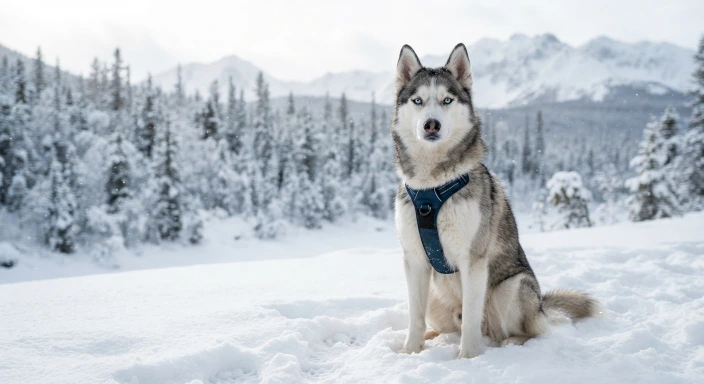
Built for efficient, ground-covering movement rather than raw pulling power, the Siberian Husky is a medium-sized, well-muscled breed. Males stand 21 to 23.5 inches at the shoulder and weigh 45 to 60 pounds; females are slightly smaller, standing 20 to 22 inches and weighing 35 to 50 pounds.
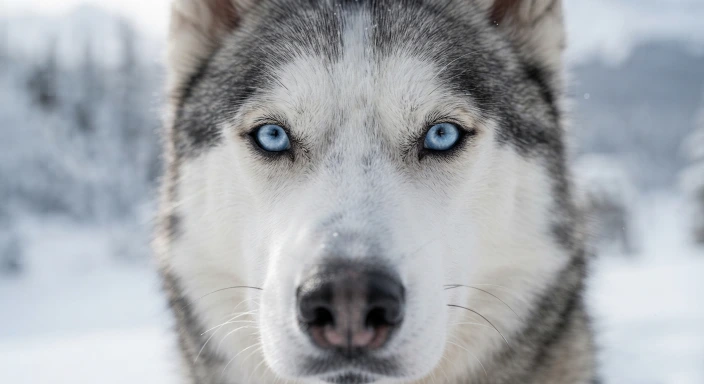
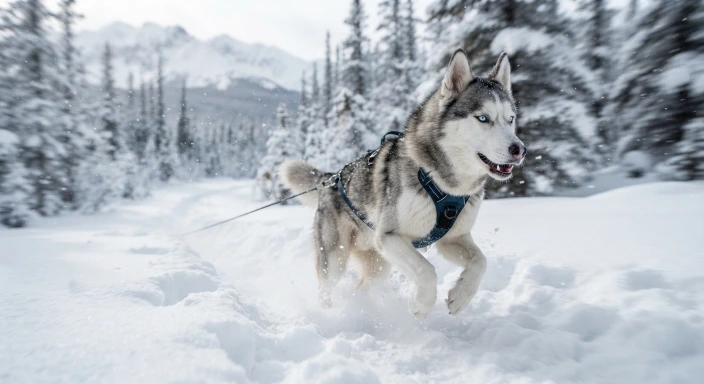
The double coat is medium in length, with a soft, dense undercoat and straight, smooth-lying guard hairs — full enough to withstand extreme cold without ever looking shaggy or unkempt. Coat colors span the full range from black to pure white, and the breed is known for striking, highly individual facial markings. Eye color varies widely as well, including brown, blue, and sometimes one of each — a trait that adds to the breed’s instantly recognizable look.
Temperament and Personality
The AKC breed standard describes the Siberian Husky’s temperament as friendly and gentle, alert and outgoing — explicitly noting that the breed does not display the possessive guarding instincts of many working breeds, nor excessive suspicion of strangers. This is not, in other words, a natural watchdog: a Husky is generally as happy to greet an intruder as a friend.
That friendliness comes paired with a strong independent streak and a working dog’s drive to move. Huskies are intelligent and eager, but their intelligence is often self-directed rather than eager-to-please in the way some breeds are, which shapes nearly every aspect of living with one — from training to containment.
Living With a Siberian Husky
Families and children:
Huskies are generally gentle and playful with children and tend to be affectionate, sociable family members. Their high energy means play with very young children benefits from supervision, simply due to enthusiasm rather than any aggressive tendency.
Other pets:
With socialization, Huskies typically do well with other dogs, often thriving in multi-dog households given their pack-oriented sled dog heritage. Their strong prey drive means small animals such as cats or rabbits may not be safe without careful, gradual introduction.
Living space and containment:
Huskies are legendary escape artists, capable of jumping, climbing, or digging under standard fencing with little effort. A secure yard for this breed typically means a fence at least six feet tall with a buried dig barrier at the base — a detail every prospective owner should plan for before bringing a Husky home, not after the first escape.
Training and Socialization
Consistent, patient training built around positive reinforcement works best with this independent-minded breed. Huskies are smart enough to learn commands quickly but are also notorious for deciding, situationally, whether following them is worth their while — traits bred into the breed by generations of sled dogs who needed to make their own judgment calls on the trail.
Recall training deserves particular attention and patience, since a Husky’s instinct to run combined with its independence makes off-leash reliability the exception rather than the rule for most dogs of this breed. Early socialization and structured obedience classes help considerably, and mental engagement — not just repetition — keeps a Husky interested in training long enough for it to stick.
Exercise and Mental Stimulation
Few popular breeds need more daily exercise than the Siberian Husky. Plan on one to two hours of vigorous activity a day — long walks, runs, hikes, or structured activities like skijoring or canicross that tap directly into the breed’s sled dog heritage.
Mental stimulation matters just as much as physical output. Varying walking routes, incorporating scent games, and giving a Husky an actual job — even something as simple as a weighted pack on a walk — helps satisfy the working drive this breed was purpose-built for. A bored, under-exercised Husky is prone to digging, howling, and determined escape attempts.
Grooming and Coat Care
The Husky’s dense double coat needs regular brushing — three to five times a week with a pin brush during most of the year — to manage ongoing shedding and keep the coat healthy. Twice a year, the breed “blows” its undercoat in a dramatic seasonal shed, during which daily brushing with an undercoat rake is close to essential.
Beyond coat care, a complete grooming routine should also include:
- Nail trims every three to four weeks
- Regular ear checks and cleaning
- Routine dental care, including brushing several times a week
- Minimal bathing — the coat is naturally weather- and dirt-resistant, and over-bathing can strip its protective oils
Nutrition and Feeding
Huskies evolved to run efficiently on relatively modest food intake, and many owners find the breed needs somewhat less food than its size and activity level might suggest — overfeeding is a more common risk than underfeeding. A high-quality diet suited to active working breeds, with portions adjusted to actual exercise level, works well for most dogs.
Huskies and other Arctic breeds are also prone to difficulty absorbing zinc from standard commercial diets, which can lead to skin and coat problems, including hair loss around the feet, elbows, and face. Dogs showing these symptoms often respond well to veterinary-guided zinc supplementation.
Health and Lifespan
The Siberian Husky is a generally hardy breed with an average lifespan of 12 to 14 years. Even so, prospective owners should be aware of several hereditary conditions the breed is predisposed to.
| Condition | What It Is | What Owners Should Watch For |
| Hereditary cataracts | A juvenile form typically appearing between 6 and 12 months of age | Cloudiness in the eye, worsening vision or clumsiness |
| Progressive retinal atrophy (PRA) | Gradual, inherited deterioration of the retina | Night blindness progressing to full vision loss |
| Hip dysplasia | Abnormal formation of the hip socket; affects roughly 5% of the breed | Reluctance to rise or climb stairs, an altered gait |
| Zinc-responsive dermatosis | Impaired zinc absorption common in Arctic breeds | Hair loss and skin crusting around the face, feet, and elbows |
| Hypothyroidism | Underactive thyroid affecting metabolism | Weight gain, lethargy, coat changes |
Responsible breeders screen for hip health and eye disease before breeding, and prospective buyers should ask to see current health clearances. Routine eye exams are particularly important given how early juvenile cataracts can appear in this breed.
Cost of Owning a Siberian Husky
| Expense | Typical Range |
| Puppy from a reputable breeder | $600–$1,500 (rare colors or champion lines: up to $6,000) |
| Rescue or shelter adoption | $150–$500 |
| First-year setup and veterinary costs | $1,500–$3,000 |
| Ongoing annual costs (food, routine vet care, grooming) | $900–$2,300 |
| Lifetime cost of ownership | $15,000–$28,000+ |
Fencing is a real, often underestimated cost for this breed: a secure six-foot yard with a buried dig barrier can run well into the hundreds or low thousands of dollars, but is essentially a required expense given the breed’s escape tendencies.
Finding a Siberian Husky: Breeders and Rescue
Anyone looking for a Husky puppy should seek out a breeder who screens for hip and eye health, raises puppies in the home, and is candid about the breed’s exercise needs and escape tendencies. The Siberian Husky Club of America maintains breeder referral resources and is a solid starting point.
Rescue is also a strong option — Huskies are relinquished more often than many breeds precisely because their exercise and containment needs catch new owners off guard. Breed-specific Husky rescues regularly place adult dogs, often already past the most demanding early training stage. [Internal Link — Siberian Husky Rescue Guide]
Frequently Asked Questions
Are Siberian Huskies good guard dogs?
No. The AKC breed standard specifically notes the Husky lacks the possessive, suspicious traits typical of guard breeds — most are friendly toward strangers.
Why do Huskies escape so often?
Their independent, high-drive temperament combined with strong jumping and digging ability makes standard fencing insufficient; most owners need a secure fence at least six feet tall with a buried dig barrier.
How much exercise does a Husky need?
One to two hours of vigorous daily activity — this is one of the higher-energy breeds commonly kept as pets.
How long do Siberian Huskies live?
The typical lifespan is 12 to 14 years.
Do Huskies shed a lot?
Yes, especially during their twice-yearly seasonal coat blow, when daily brushing is close to necessary to manage the volume of loose undercoat.
How much does a Siberian Husky cost?
Puppies from reputable breeders typically run $600 to $1,500, while rescue adoption generally costs $150 to $500.
What health problems are Siberian Huskies prone to?
Common concerns include hereditary cataracts, progressive retinal atrophy, hip dysplasia, zinc-responsive skin conditions, and hypothyroidism.
Conclusion
The Siberian Husky rewards owners who understand exactly what they’re taking on: a high-energy, independent-minded athlete built for distance, not a low-key companion built for the couch. Given secure containment, real daily exercise, and patient, consistent training, the Husky’s friendly, mischievous personality makes it a genuinely rewarding companion. Anyone drawn to the breed’s striking looks should weigh those looks honestly against the exercise, fencing, and grooming commitment involved — this is a dog that needs an active life, not just an admiring one.