Havanese Guide: Temperament, Grooming & Health Facts
Quick Facts
| Attribute | Detail |
| AKC Group | Toy |
| Height | 8.5–11.5 inches |
| Weight | 7–13 lb |
| Lifespan | 14–16 years |
| Coat | Long, silky, double coat, low-shedding |
| Colors | Any color or pattern |
| Temperament | Affectionate, playful, intelligent |
The Havanese is Cuba’s national dog, a small, silky-coated companion breed built almost entirely around one purpose: being close to its people. That affectionate, deeply people-attached temperament is the breed’s defining trait, and it’s a genuine strength for owners who want a constant companion. It also comes with a real, well-documented tendency toward separation anxiety that deserves honest discussion rather than a passing mention, alongside a distinctive coat that offers owners a genuine choice between two very different grooming paths.
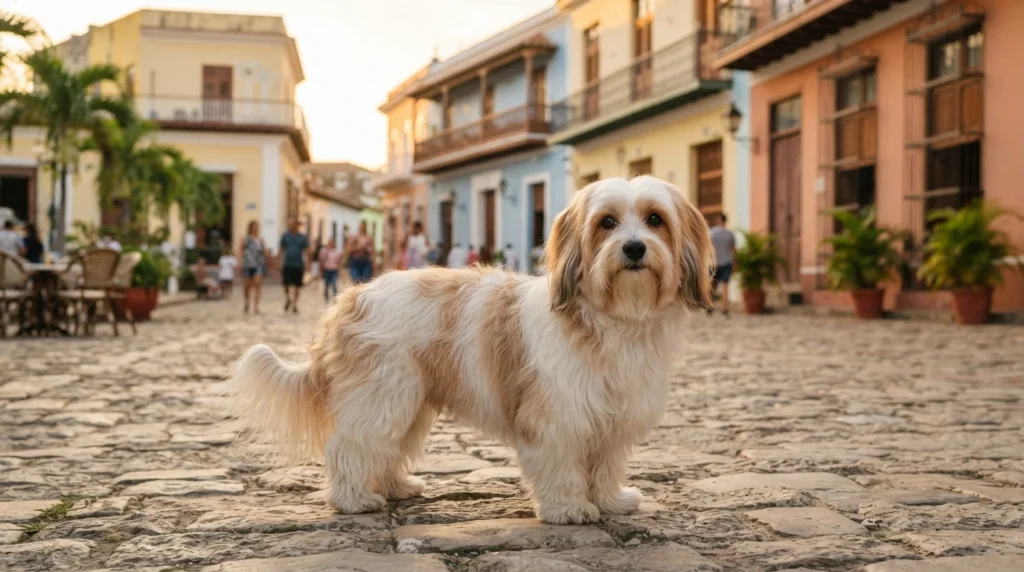
History: Cuba’s National Dog
The Havanese descends from Bichon-type dogs brought to Cuba by Spanish colonists in the 1500s and 1600s, small companion breeds that were, over subsequent generations, refined on the island into a distinct type suited to Cuba’s climate and to the households of the Cuban elite who kept them. The breed was historically known outside Cuba as the “Havana silk dog,” a name that directly references its signature coat texture and remains in occasional use among breed historians today.
The Havanese’s modern history includes a genuinely dramatic near-disappearance. Following the Cuban Revolution in 1959, many wealthy Cuban families who had kept the breed left the island, and the population of Havanese remaining in Cuba dropped sharply as the social conditions that had supported organized breeding largely collapsed. The breed’s survival into the modern era is credited substantially to a small number of dogs that emigrated with Cuban families to the United States, where dedicated breed enthusiasts worked from that narrow founding stock to reestablish and standardize the Havanese over the following decades. The American Kennel Club recognized the breed in 1996, a relatively recent addition to the Toy Group given how much older the breed’s Cuban roots actually are.
That reestablishment from such a small emigre population is part of what makes the modern Havanese’s steady rise in popularity a notable continuity story, not unlike the near-loss-and-recovery narratives seen in a handful of other breeds whose survival hinged on a small circle of committed owners during a period of serious disruption.
The breed’s name itself reflects its Cuban roots directly, derived from Havana, the capital city most closely associated with the aristocratic households that kept and refined the type over the centuries before the revolution reshaped the island’s social structure. Cuban breed clubs and, later, the American-based Havanese Club of America worked to document and formalize a breed standard that preserved the essential characteristics of the original Cuban dogs as closely as the surviving founding population allowed. That documentation effort matters historically because it means the modern Havanese, despite its relatively recent 1996 AKC recognition, represents a genuinely continuous lineage rather than a reconstructed approximation, a distinction breed historians consider meaningful when evaluating how faithfully a modern breed reflects its historical form.
Havanese vs. Bichon Frise: Shared Bichon-Type Ancestry
The Havanese belongs to a broader family of small companion breeds descended from the same general Bichon-type stock, a group that also includes the Bichon Frise, the Maltese, and the Bolognese. All of these breeds share a documented historical connection to companion dogs spread across Mediterranean Europe centuries ago, later diverging along separate geographic and breeding paths, France for the Bichon Frise, Malta for the Maltese, Italy for the Bolognese, and Cuba for the Havanese. It’s worth being direct about what this shared ancestry does and doesn’t mean: while the Havanese and Bichon Frise share some coat and temperament similarities as a result of that common root, more than a century of separate, purposeful breeding on different continents has produced meaningfully different modern breeds, distinct in coat texture, size proportions, and some behavioral tendencies. Understanding the shared lineage helps explain the family resemblance without implying the breeds are interchangeable. The Maltese [FUTURE LINK: Maltese breed guide] is another member of this same Bichon-type family worth knowing about for buyers comparing small white or light-coated companion breeds, and while its coat and size overlap with the Havanese in some respects, it developed along an entirely separate Mediterranean path with its own distinct standard.
Havanese vs. Poodle vs. Bichon Frise: Small Companion Breed Comparison
| Attribute | Havanese | Toy/Miniature Poodle | Bichon Frise |
| Origin | Cuba | Germany/France | France |
| Weight | 7–13 lb | 4–15 lb (varies by size class) | 12–18 lb |
| Coat | Long, silky, double coat | Dense, curly, hypoallergenic | Curly, low-shedding |
| Grooming | High (especially full coat) | High | High |
| Temperament | Affectionate, people-attached | Alert, highly trainable | Cheerful, affectionate |
Buyers comparing these three small, low-shedding companion breeds will find real overlap in grooming demands and general suitability for allergy-sensitive households, though the Poodle and Biewer Terrier offer useful additional reference points on coat texture and size-class variation for anyone still narrowing down which small companion breed fits their household. The Shih Tzu [FUTURE LINK: Shih Tzu breed guide] is another frequently cross-shopped small, silky-coated companion breed, though its more brachycephalic structure and different temperament profile set it apart from the Havanese in ways that matter for buyers prioritizing exercise tolerance and breathing health.
Appearance
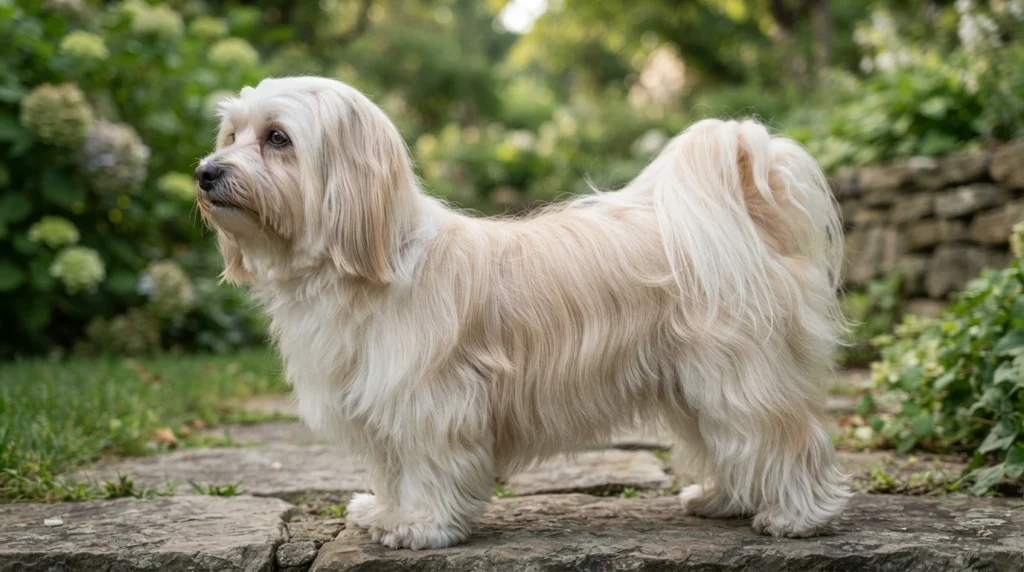
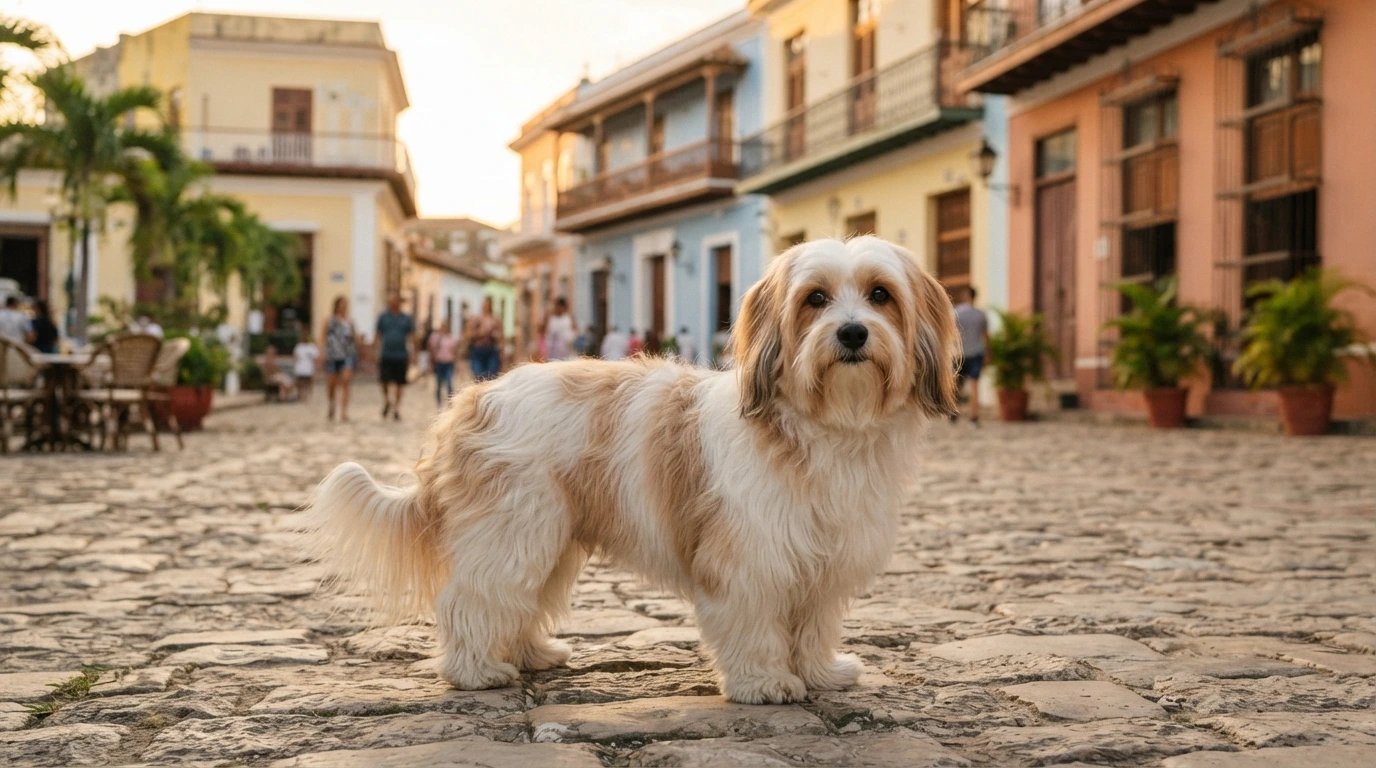
The Havanese is a small, sturdy dog with a long, silky double coat that can be straight or lightly curled, coming in any color or pattern. Its most recognizable feature besides the coat is its plumed tail, carried curled up and over the back, giving the breed a lively, animated silhouette in motion. Expressive dark eyes and a slightly springy, bouncing gait, often described by breed fans as distinctive to the Havanese, round out its overall look.
Temperament
Havanese are affectionate, playful, and notably intelligent, and their defining behavioral trait is just how attached they become to their people. This isn’t exaggeration: the breed has earned a genuine “Velcro dog” reputation among owners and breed clubs alike, generally preferring to be in the same room as their household rather than off exploring independently. That devotion makes for a wonderfully engaged companion, but it’s also the direct root of the separation-related challenges discussed below, and prospective owners should understand both sides of that trait before bringing one home.
Is a Havanese Right for You?
This is where the Havanese’s temperament requires the most honest discussion. The breed’s intense person-attachment translates into a real, well-documented tendency toward separation anxiety, meaning Havanese left alone for long stretches without preparation can develop genuine distress, including destructive behavior, excessive vocalization, or house-soiling that isn’t a training failure so much as a symptom of real anxiety. This doesn’t mean the breed is unsuitable for working owners, but it does mean owners away from home for long, unpredictable hours should plan proactively: early and gradual alone-time conditioning, a consistent routine, doggy daycare or a dog walker for long days, or a second dog for company are all practical mitigations worth considering before, not after, problems develop. [FUTURE LINK: canine separation-anxiety guide] For owners who work from home, have flexible schedules, or can otherwise provide consistent companionship, the Havanese is an outstanding, deeply rewarding match.
It’s worth adding a practical note here: separation-anxiety severity varies considerably between individual dogs, and a Havanese raised with thoughtful, gradual independence training from puppyhood often adapts far better to reasonable periods alone than one that was never given the chance to build that tolerance. Buyers evaluating a puppy or young adult should ask breeders directly about the individual dog’s temperament and any early conditioning already in place, since that history can meaningfully shape how much additional work a new owner will need to do.
Training
Havanese are intelligent and eager to please, which generally makes positive-reinforcement training effective and enjoyable for both dog and owner. Early, gradual crate and alone-time conditioning deserves particular emphasis given the breed’s separation-anxiety tendency, ideally started well before it becomes a coping mechanism rather than a preventive habit.
Exercise Needs
Modest exercise needs suit most Havanese owners: short walks and indoor play are generally sufficient to keep the breed content, though mental engagement matters as much as physical activity for this notably intelligent breed.
Grooming: Corded Coat vs. Puppy Cut

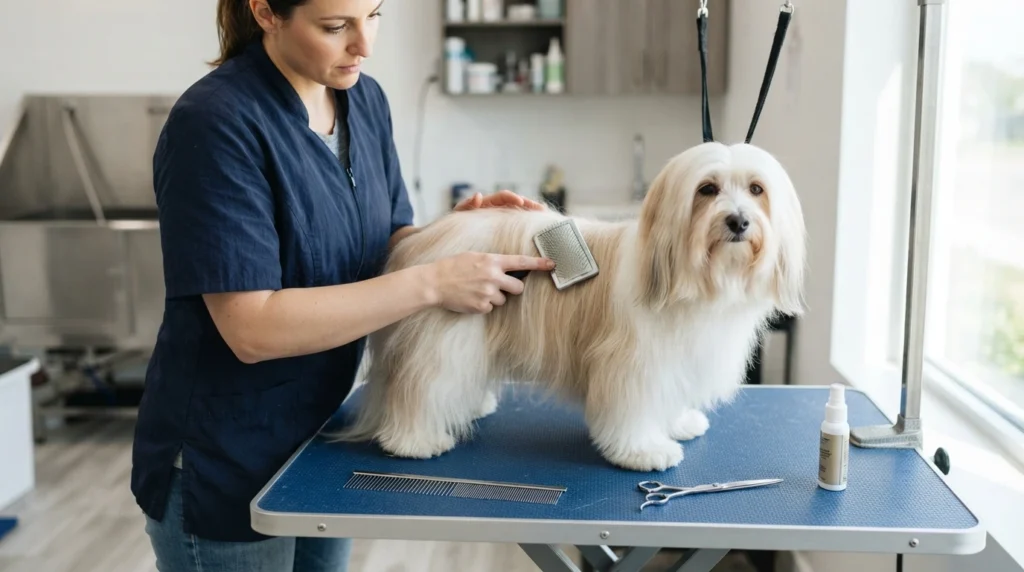
The Havanese coat presents owners with a genuine choice rarely explained in useful detail elsewhere: the traditional corded coat, called “cordón” in Spanish, where the long fur is deliberately separated and maintained in rope-like cords similar to a Puli’s, versus the far more common short clipped “puppy cut” that the large majority of pet owners choose for practicality. The corded coat is historically significant and strikingly distinctive, but it requires serious ongoing time investment to separate and maintain the cords properly and isn’t a realistic choice for most households. The puppy cut, by contrast, is low-maintenance relative to the coat’s full natural length, needing regular brushing but far less specialized upkeep. Regardless of style chosen, the coat’s low-shedding nature is a real practical advantage, though as with any breed, “hypoallergenic” is a matter of degree rather than an absolute guarantee for allergy sufferers. Most professional groomers recommend a full grooming appointment every four to six weeks for pet owners maintaining the clipped style, alongside brushing at home two to three times a week to prevent the mats and tangles that can otherwise form quickly in a coat this long and fine-textured.
Health and Lifespan: Joints and Heart Deserve Attention
Legg-Calvé-Perthes disease, a condition in which the blood supply to the head of the femur is disrupted, causing the bone to weaken and eventually collapse, affects small breeds including the Havanese at a meaningful rate, typically appearing in dogs under a year old. Early symptoms include limping, reduced activity, or muscle wasting in one hind leg, and any of these signs in a young Havanese warrant prompt veterinary evaluation, since early diagnosis meaningfully improves treatment outcomes, which can range from conservative management to surgical correction in more severe cases.
Mitral valve disease also deserves ongoing monitoring in this breed, as it does in most small breeds prone to progressive heart-valve degeneration with age; regular veterinary auscultation for early heart murmurs is the most practical, actionable screening tool available to owners. Patellar luxation, a kneecap that slips from its normal groove, appears at a meaningful rate in the breed as well, ranging in severity from a minor occasional issue to one requiring surgical correction. Chondrodysplasia, a form of disproportionate limb development, is also a breed-relevant consideration worth knowing about, though it’s generally less clinically significant than the joint and heart conditions above. With attentive care across these known risk areas, Havanese commonly live 14 to 16 years, one of the longer lifespans among companion breeds.
Dental crowding is another consideration worth planning for, as it is in most small toy breeds, since the Havanese’s compact jaw can predispose it to tartar buildup and periodontal disease without regular brushing and professional cleanings. Cataracts and other age-related eye conditions also appear in the breed at a rate worth monitoring through routine veterinary exams as the dog ages, particularly past age eight or nine. None of these considerations should be read as unusually alarming for a toy breed; they’re simply the specific, breed-relevant areas where attentive, informed owners can meaningfully improve long-term outcomes through early detection rather than waiting for visible symptoms to appear.
Nutrition
Standard toy-breed feeding guidance applies, with portion control mattering given how easily excess weight accumulates on a small frame and adds unnecessary strain to joints already at some risk for the conditions described above.
Cost and Adoption
A Havanese puppy from a reputable, health-tested breeder typically costs $1,500 to $3,000. Annual costs, including food, routine veterinary care, and grooming, generally run $1,200 to $2,200, with professional grooming representing one of the more consistent recurring expenses given the coat’s maintenance needs regardless of style chosen. Buyers should budget realistically for grooming from the outset, and factor in the potential cost of daycare or a dog walker if their work schedule involves long hours away from home, given the breed’s separation-anxiety tendency.
Common Buyer Mistakes
- Underestimating separation-anxiety risk. The breed’s intense person-attachment means owners away from home for long, unpredictable hours need a real plan in place before problems develop, not after.
- Underestimating grooming time for the full coat. Whether corded or clipped, this is not a wash-and-go breed; regular brushing is a genuine ongoing time commitment.
- Skipping early alone-time conditioning. Gradual, positive crate and alone-time training started early meaningfully reduces separation-anxiety risk later.
- Confusing Havanese with Bichon Frise or Maltese when researching breeders. These are related but distinct breeds with different standards; buyers should confirm they’re getting accurate, breed-specific information.
- Skipping dental care. The breed’s compact jaw predisposes it to tartar buildup, and owners who wait until problems are visible often face a more involved dental cleaning than one that started with routine home brushing.
FAQ
Are Havanese hypoallergenic?
No dog is fully hypoallergenic, but the Havanese’s low-shedding coat produces less loose hair and dander in the environment than many breeds, which is why it’s often recommended for allergy-sensitive households.
Do Havanese have separation anxiety?
Many do, given the breed’s intense person-attachment. It’s a real, well-documented tendency rather than a training failure, and it’s best managed proactively with early alone-time conditioning and a realistic plan for long workdays.
Havanese vs Bichon Frise — what’s the difference?
Both descend from the same broader Bichon-type ancestry and share some coat and temperament similarities, but they’re distinct breeds with different standards, coat textures, and geographic origins, France for the Bichon Frise and Cuba for the Havanese.
How much grooming does a Havanese need?
Regular brushing several times a week is standard for the common clipped “puppy cut.” The traditional corded coat requires significantly more ongoing maintenance and isn’t practical for most owners.
Are Havanese good with kids?
Generally yes, thanks to their playful, affectionate temperament, though their small size calls for supervision with very young children.
What health problems are Havanese prone to?
The main areas of concern are Legg-Calvé-Perthes disease, mitral valve heart disease, patellar luxation, and chondrodysplasia. Regular veterinary checkups help catch these early.
How long do Havanese live?
With attentive care, Havanese commonly live 14 to 16 years, one of the longer lifespans among companion breeds.
Conclusion
The Havanese earns its status as Cuba’s national dog honestly: it’s an affectionate, playful, deeply people-oriented companion with a genuinely dramatic survival story behind its modern popularity. Its intense attachment to its people is both its greatest strength and its most important practical consideration, driving a real separation-anxiety tendency that deserves proactive planning rather than being ignored. For owners who can provide consistent companionship, or who plan ahead for the times they can’t, the Havanese offers one of the most devoted, engaging companionships available in a small, low-shedding package.