Beagle: The Complete Guide to America’s Merry Scent Hound
The Beagle leads a genuine double life. In millions of American living rooms, it’s the cheerful, food-obsessed family dog immortalized by Snoopy. At 88 major U.S. airports, it’s a working professional: a member of the USDA’s Beagle Brigade, trained to sniff out prohibited fruit and meat in travelers’ luggage. Both identities trace back to the same trait – one of the most capable noses in the dog world, developed over centuries of English rabbit and hare hunting. This guide covers the Beagle’s history, its precise AKC size classification, its working detector-dog role, and an honest look at what living with this breed’s famous food drive and vocal habits actually involves.
Beagle Quick Facts
The Beagle has been AKC-recognized since 1885 and is classified under the Hound Group in the US and FCI Group 6, Section 1.3 (Small-sized Scent Hounds), Standard No. 161, internationally.
| Attribute | Detail |
| AKC Group | Hound Group (recognized 1885) |
| FCI Group | Group 6, Section 1.3, Standard No. 161 |
| Country of Origin | England |
| Height | Two varieties: not exceeding 13 in, and 13-15 in (over 15 in disqualified) |
| Weight | 20-30 lb, varying with height variety |
| Lifespan | 12-15 years |
| Coat | Short, dense, medium-length, weather-resistant |
| Colors | Any recognized hound color; merle and brindle disqualified |
| Temperament | Merry, friendly, curious, food-motivated, vocal |
What Is a Beagle?
History and English Origins
Small pack-hounds bred to hunt rabbit and hare existed in England well before the Roman conquest, and modern Beagles are generally traced to the Talbot Hound, a scenting breed brought to Britain by William the Conqueror in the 11th century. The name Beagle shows up in English literature as early as 1475, appearing in the works of both Chaucer and Shakespeare. Queen Elizabeth I reportedly kept pocket beagles standing just nine inches tall. The modern Beagle owes its structure largely to Reverend Phillip Honeywood, who established a hunting pack in Essex in the 1830s bred specifically for scenting ability, and to General Richard Rowett, whose imported English Beagles became foundational to the first American breed standard. In 1885, a Beagle named Blunder became the first of the breed registered with the American Kennel Club.
The Two AKC Size Varieties
Most people assume Beagle size is a single range, but the AKC standard actually defines two distinct varieties: the Thirteen Inch variety, for hounds not exceeding 13 inches at the shoulder, and the Fifteen Inch variety, for hounds standing over 13 but not exceeding 15 inches. Any Beagle measuring more than 15 inches is disqualified from conformation showing entirely. The distinction traces back to organized rabbit-hunting packs and field trials, where dogs of similar size and stride length work together more effectively – a practical hunting-pack origin still built directly into the modern show standard.
The Nose That Works: Beagles as Detector Dogs
Key Fact: A Beagle’s nose carries an estimated 220 million scent receptors. The USDA’s Beagle Brigade, established in 1984 at Los Angeles International Airport, now deploys roughly 120 Beagles across about 88 major US airports, trained to detect apples, citrus, beef, pork, and mango, intercepting an average of about 75,000 prohibited agricultural items every year.
The breed’s combination of scenting power, compact size, food drive, and gentle public temperament made it the natural choice when the USDA needed a detector dog that could work comfortably around crowds of international travelers. Many of the dogs are themselves adopted from shelters before training, and a typical Beagle Brigade career spans six to ten years.
Beagle vs. Harrier vs. Basset Hound
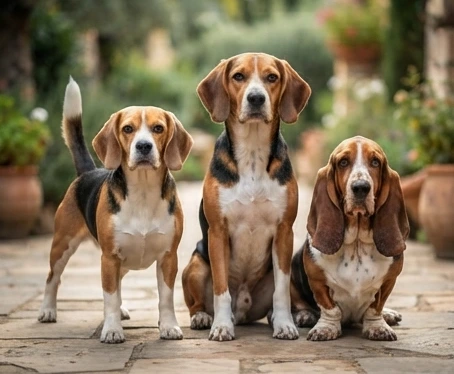
These three English-associated scent hounds get confused fairly often. Here’s how the Beagle compares to the Harrier [Internal Link] and the Basset Hound [Internal Link].
| Attribute | Beagle | Harrier | Basset Hound |
| Origin | England | England | France |
| Size | 13-15 in, 20-30 lb | Larger, 19-21 in | Shorter-legged, heavier-boned |
| Primary Use | Rabbit/hare hunting on foot | Hare hunting, historically on horseback | Slow-trailing ground scent work |
The Harrier is essentially a larger, faster relative built for hunting alongside mounted riders, while the Basset Hound shares the Beagle’s scenting purpose but was bred with drastically shorter legs to keep pace with hunters on foot at a much slower speed. The English Foxhound [Internal Link], a taller relative bred for mounted fox hunting, rounds out the trio of English scent hounds most often confused with the Beagle.
Appearance

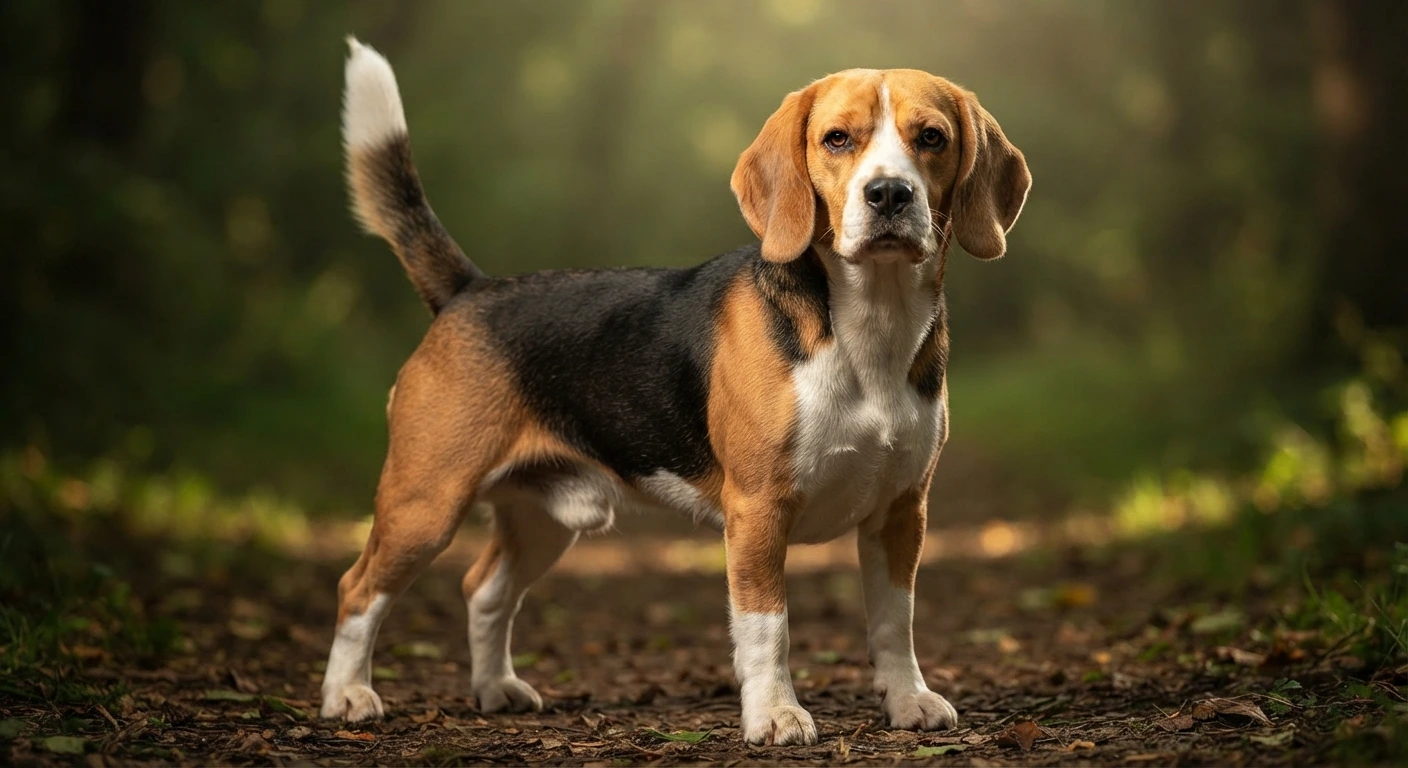
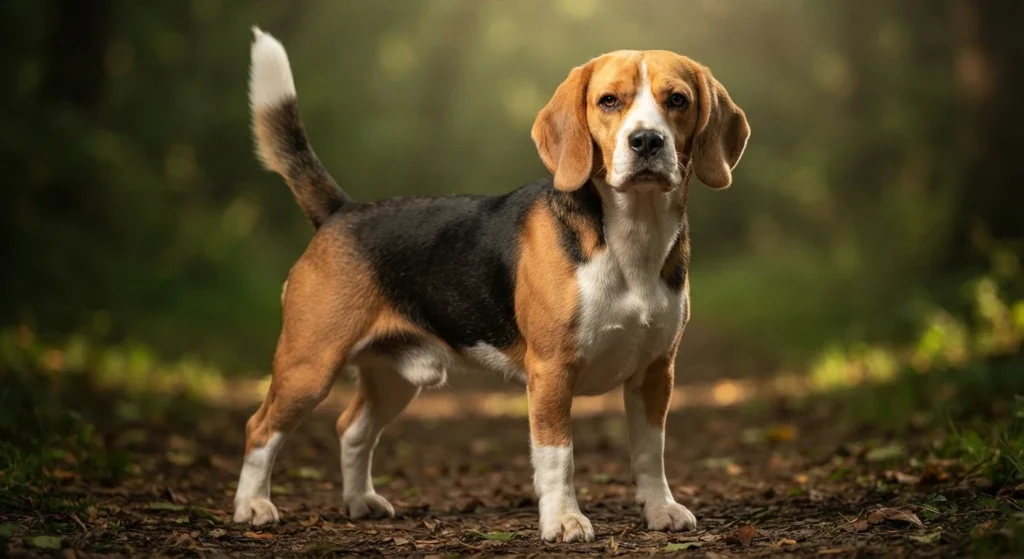
The Beagle is compact and sturdily built – the AKC standard describes it as a miniature Foxhound, solid and big for his inches. The skull is fairly long and slightly domed, with long, low-set ears that reach nearly to the nose tip when drawn forward. The coat is short, dense, and close-lying, and the tail is carried high and jaunty but should never curl over the back.
Temperament
Beagles are famously merry – friendly, curious, and rarely aggressive toward people or other dogs, a legacy of centuries spent working in hunting packs rather than alone. That same pack history explains two of the breed’s most talked-about traits: a strong independent streak (a Beagle following an interesting scent trail can become genuinely deaf to recall) and a distinctive vocal range that includes barking, howling, and a unique hunting call known as baying. None of this makes the Beagle difficult exactly, but it does mean the breed’s personality is shaped more by its working instincts than by an eagerness to please for its own sake.
Is a Beagle Right for You?

Families and Children
Beagles are widely considered excellent family dogs. Their sturdy build, playful energy, and general tolerance make them well-suited to households with children, and their pack heritage generally makes them sociable with other dogs.
First-Time Owners
Beagles can work well for first-time owners who are prepared for a genuinely food-motivated, occasionally stubborn dog and who commit to consistent training and secure fencing – this breed’s nose can override recall instructions with little warning.
Apartment Living
Beagles can adapt to apartment life, but prospective owners should weigh the breed’s vocal tendencies seriously. A Beagle that bays or howls when bored or left alone can become a genuine issue for close neighbors.
Training
Beagles are intelligent but scent-driven, which means training sessions compete directly with one of the strongest instincts in the dog world. Positive reinforcement built around the breed’s famous food motivation tends to work far better than corrections, and training in low-distraction environments before adding scent-rich outdoor settings helps build reliable recall. Consistency matters more with Beagles than with more naturally biddable breeds, since a single successful chase after an interesting smell can undo weeks of recall training.
Exercise Needs
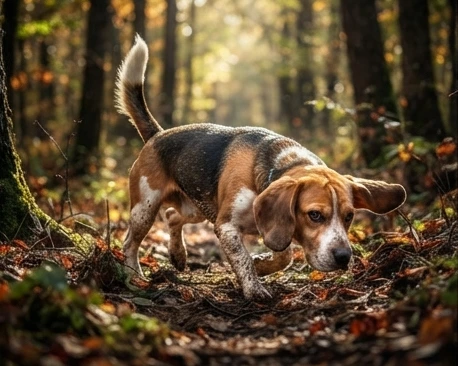
Beagles need a moderate to high amount of daily exercise – at least 30 to 60 minutes of purposeful activity, ideally including scent-based enrichment like nose work games or scent trails, not just leash walks. A securely fenced yard is strongly recommended, since an off-leash Beagle that catches an interesting scent will often follow it regardless of calls.
Grooming
The Beagle’s short, dense coat is low-maintenance, needing weekly brushing to manage a moderate, fairly constant shed. The breed’s long, low-set drop ears trap moisture and reduce airflow, so regular ear checks and cleaning are an important, non-optional part of the grooming routine.
Health and Lifespan

Beagles typically live 12 to 15 years and are a generally hardy breed, though several conditions are well-documented and worth understanding before bringing one home.
| Condition | What It Is | What Owners Should Watch For |
| Idiopathic epilepsy | A hereditary seizure disorder, onset typically age 6 months-5 years | Episodes of disorientation, collapse, or convulsions |
| Hypothyroidism | An underactive thyroid gland, easily managed with daily medication | Weight gain despite normal eating, lethargy, hair loss |
| Obesity | Excess weight, driven directly by the breed’s strong food motivation | Rapid weight gain, reduced activity, difficulty feeling ribs |
| IVDD | Spinal disc degeneration or herniation | Back pain, reluctance to jump, wobbly gait, or paralysis |
| Cherry eye | Prolapse of the third eyelid gland | Visible red/pink mass in the corner of the eye |
Obesity deserves particular attention in this breed specifically because it isn’t a generic risk – it’s a direct, well-documented consequence of the same food drive that makes Beagles so trainable and so effective as detector dogs. Epilepsy [Internal Link] and hypothyroidism [Internal Link] screening are both reasonable things to ask a breeder about, given how well-documented both conditions are in the breed.
Nutrition
Because Beagles are so consistently food-motivated, measured portions and scheduled meals matter far more for this breed than free-feeding ever could. Using a portion of the dog’s daily kibble allowance for training treats, rather than adding extra food on top, helps keep the famous Beagle appetite from turning into the breed’s most common health problem. Consistent weight management [Internal Link] practices, including regular weigh-ins, are worth building into the routine early rather than after weight gain becomes noticeable.
Cost and Adoption
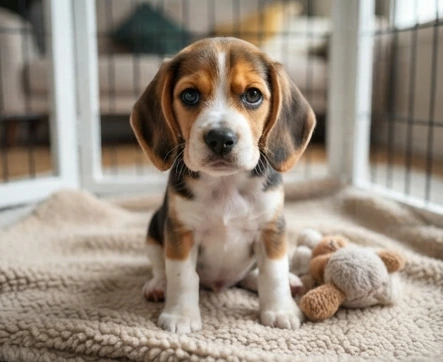
Beagle puppies from health-tested breeders typically range from several hundred to over a thousand dollars, and prospective owners should ask specifically about epilepsy and thyroid history in the puppy’s parents. Because Beagles are so popular and their vocal, food-driven traits sometimes surprise unprepared owners, Beagle-specific rescue organizations are relatively active and well-organized compared to rescues for less common breeds, making adoption a genuinely strong option for this particular breed.
Frequently Asked Questions
What is a Beagle?
The Beagle is a small English scent hound developed for rabbit and hare hunting, recognized by the AKC since 1885 and known for its friendly temperament and exceptional nose.
Why do Beagles howl or bay?
Baying and howling are inherited hunting behaviors, originally used to signal a hunter that the pack had found or was following a scent trail.
How big do Beagles get?
The AKC recognizes two varieties: one not exceeding 13 inches at the shoulder, and one standing 13 to 15 inches; anything over 15 inches is disqualified from conformation showing.
Are Beagles good with kids?
Yes – Beagles are generally considered excellent family dogs thanks to their sturdy build, playful temperament, and pack-bred sociability.
Why are Beagles used at airports?
The USDA’s Beagle Brigade uses Beagles as detector dogs because of their strong scenting ability, compact non-threatening size, high food drive, and calm public temperament.
What health problems do Beagles have?
Common concerns include idiopathic epilepsy, hypothyroidism, obesity, intervertebral disc disease, and cherry eye.
How much does a Beagle cost?
Puppies from health-tested breeders typically range from several hundred to over a thousand dollars; Beagle-specific rescues also offer a strong adoption option.
Conclusion
The Beagle’s enduring popularity isn’t an accident of cuteness – it’s the direct result of a nose and temperament shaped by centuries of purposeful breeding, the same qualities that make this dog equally at home on a family couch and on duty at a US airport. Understanding the breed’s food motivation, vocal habits, and genuine exercise needs before bringing one home is the clearest path to a good match on both sides.