Australian Terrier: The Complete Guide to Australia’s First Native Breed
Australian Terrier
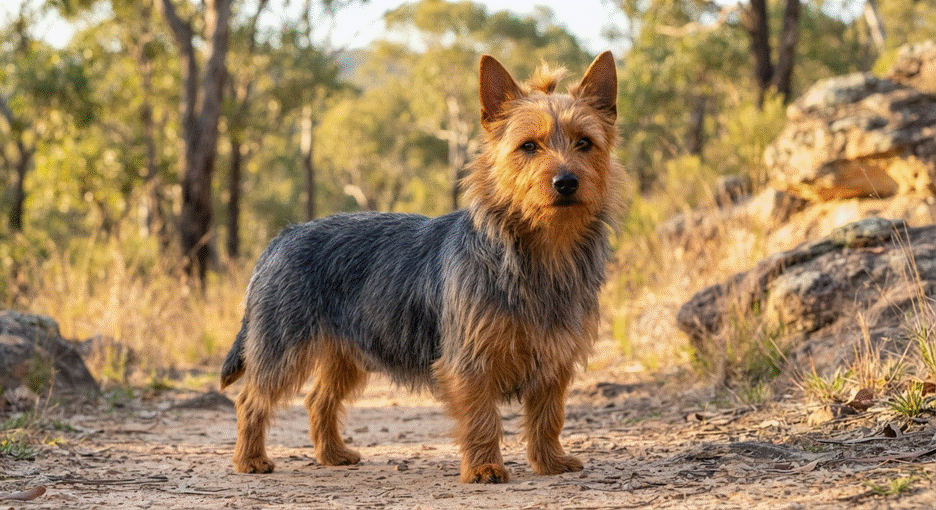
The Australian Terrier holds a title most owners don’t know about: it’s widely credited as the first breed developed in Australia to achieve formal recognition, with roots tracing back to British terriers brought to the continent in the early 19th century. Small, spunky, and genuinely self-assured, this low-to-the-ground terrier packs a lot of personality — and a lot of bark — into a compact frame. This guide covers the breed’s sourced history, temperament, and health, along with a clear distinction from the similarly named Australian Silky Terrier that trips up a lot of searches.
Australian Terrier Quick Facts
The Australian Terrier belongs to the AKC and FCI Terrier Group [Internal Link], a category built around small, tenacious dogs originally bred to hunt vermin.
| Attribute | Detail |
| AKC Group | Terrier Group; recognized 1960 |
| FCI Group | Group 3, Section 2 (Small-sized Terriers) |
| Country of Origin | Australia |
| Height | 10–11 in at the shoulder |
| Weight | 15–20 lb |
| Lifespan | 11–15 years |
| Coat | Harsh, straight, weatherproof outer coat with soft undercoat |
| Colors | Blue and tan, solid sandy, or solid red |
| Temperament | Self-assured, confident, playful, alert |
What Is an Australian Terrier?
British Roots, Australian Development
The Australian Terrier descends from rough-coated terriers brought from Great Britain to Australia in the early 19th century, sharing ancestry with the Cairn Terrier [Internal Link], the Skye Terrier, and the Dandie Dinmont Terrier, with the Yorkshire Terrier [Internal Link] and Irish Terrier crossed in as the breed developed further. Breeders in Australia began shaping the breed around 1820, working with the practical needs of the Australian bush and homestead in mind — a small, hardy terrier capable of controlling vermin and serving as an alert companion on isolated properties. That combination of jobs mattered enormously in rural 19th-century Australia, where isolated homesteads needed a dog that could handle rats and snakes around the property while also raising the alarm if something approached in the night, all in a package small enough to travel easily and eat modestly compared to a larger farm dog.
Recognition Timeline
The breed was first known as the “Rough Coated Terrier” and received official recognition in 1850, making it — by most accounts — the first breed developed in Australia to achieve that kind of formal standing. It was renamed the Australian Terrier in 1892, a name that finally matched the breed’s true origins rather than just its coat texture. The AKC recognized the breed considerably later, in 1960, and the FCI classifies it under Group 3, Section 2, among the small-sized terriers.
Australian Terrier vs. Australian Silky Terrier
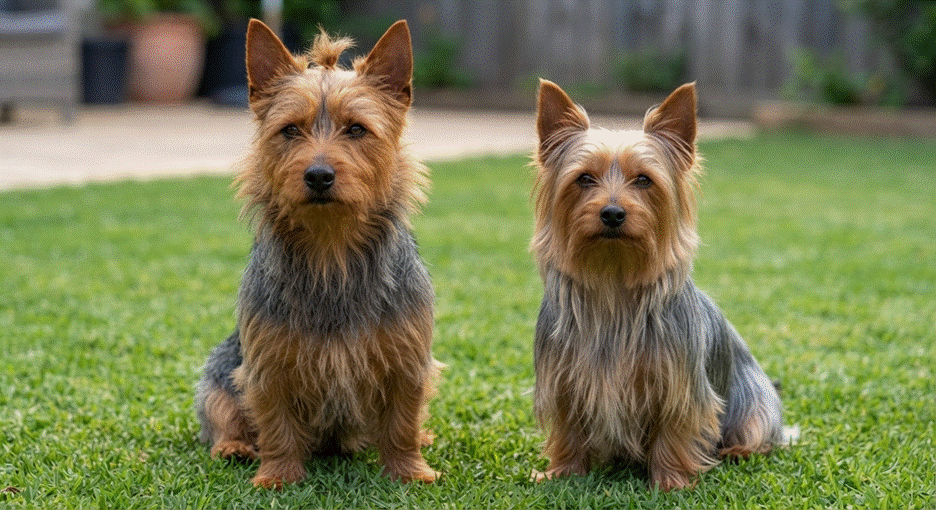
These two breeds share overlapping ancestry and a very similar name, which causes real confusion in searches and casual conversation alike. Here’s how the Australian Terrier compares to the Australian Silky Terrier [Internal Link].
| Attribute | Australian Terrier | Australian Silky Terrier |
| Coat | Harsh, straight, weatherproof double coat | Fine, silky, glossy single coat |
| Size | 15–20 lb, 10–11 in | Smaller and finer-boned, typically under 10 lb |
| Purpose | Developed as a hardy working terrier for vermin control | Developed later, partly from Australian Terrier stock, more companion-focused |
If you’re picturing a wiry, weatherproof little terrier, you’re thinking of the Australian Terrier described in this guide. If the dog in mind has a sleek, silky coat more reminiscent of a small Yorkshire Terrier, that’s the Australian Silky Terrier — a related but genuinely distinct breed.
Appearance
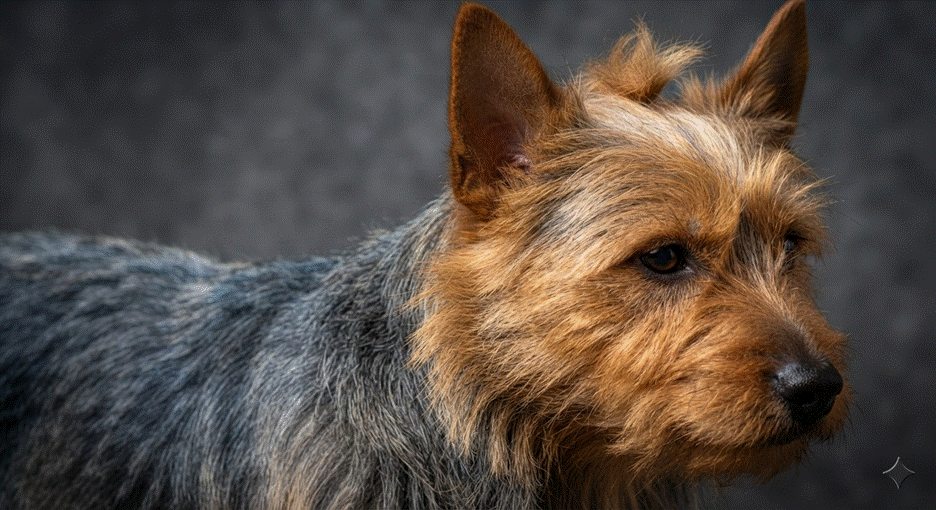
The Australian Terrier has a distinctive low-to-the-ground, long-bodied build, not unlike a small Corgi or Dachshund in overall proportion, though clearly terrier in character. The coat is harsh, straight, and weatherproof on the outside with a soft undercoat beneath, and it comes in blue and tan, solid sandy, or solid red.
Temperament
Australian Terriers are self-assured, confident, and genuinely spunky, true to their terrier heritage. They’re playful and highly energetic, and highly loyal to their people — loyal enough that they tend to demand real attention rather than settling quietly into the background. True to their working origins as alert companions on isolated homesteads, Australian Terriers are naturally watchful and won’t hesitate to bark at a stranger or an unfamiliar noise, a trait that makes them genuinely good watchdogs but also means barking is a real, practical consideration for prospective owners. Despite that big personality, most Australian Terriers are also genuinely affectionate once they know someone, and the same alertness that makes them vocal with strangers tends to translate into real devotion toward their own family.
Is an Australian Terrier Right for You?
Australian Terriers are typically playful and affectionate with their families, and their small size and sturdy build generally make them a good match for households with children, with the standard supervision any small, energetic dog benefits from during play.
Other Pets
Like many terriers, the Australian Terrier carries a real prey drive rooted in its vermin-hunting history, which is worth keeping in mind around small pets like rodents or birds. Socialization from puppyhood generally helps the breed coexist well with other dogs.
Apartment and Watchdog Considerations
Practical Note: Because Australian Terriers are naturally alert and vocal, their tendency to bark at strangers or unfamiliar sounds is worth factoring in for apartment living or households with close neighbors. This isn’t a flaw so much as the direct expression of what the breed was originally bred to do — but it’s a real consideration, not a minor footnote.
Training
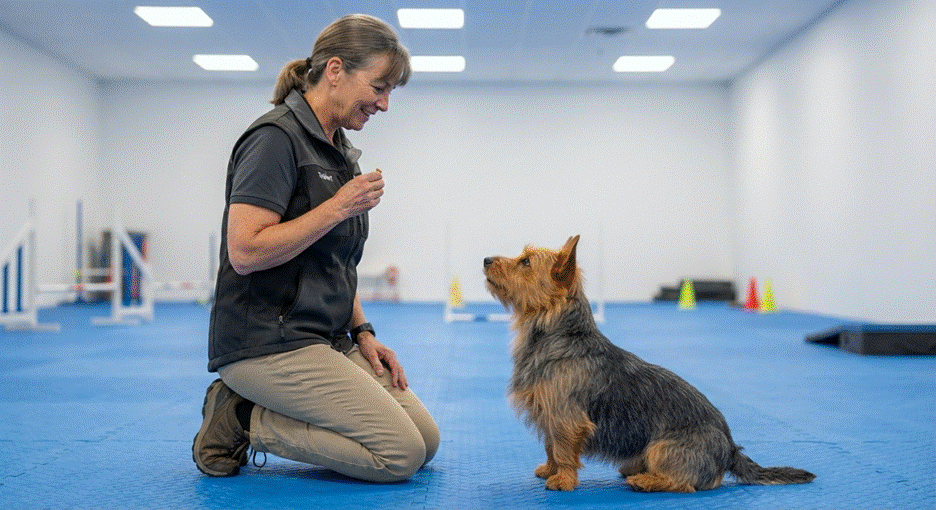
Australian Terriers are intelligent and generally trainable, though like many terriers they carry a streak of independence that rewards consistent, patient methods over repetition alone. Early socialization is particularly useful for helping the breed’s natural alertness translate into appropriate watchdog behavior rather than excessive or indiscriminate barking.
Exercise Needs
Australian Terriers need a moderate but real amount of daily exercise — veterinary sources generally recommend at least 30 minutes of vigorous activity per day, whether that’s walks, active play, or mental stimulation games. This is a manageable exercise commitment compared to higher-drive working breeds, but it’s not a dog that thrives on being sedentary either. Mental stimulation matters just as much as physical exercise for this breed — puzzle toys, short training sessions, and supervised exploration of new environments all help satisfy the curious, alert mind that made the breed such a capable homestead watchdog in the first place.
Grooming
The harsh, weatherproof coat needs regular brushing to stay in good condition and prevent matting. Show-quality coats are traditionally maintained through hand-stripping, while a simple clip is generally fine for pet Australian Terriers not being shown competitively. Standard nail trims, ear checks, and dental care round out the routine, and the breed’s low-to-the-ground build means paw and belly checks after outdoor time are a worthwhile habit too, since this dog spends a lot of its life close to the undergrowth its ancestors were bred to hunt through.
Health and Lifespan
Most Australian Terriers live between 11 and 15 years and are generally considered a healthy breed overall. Still, a couple of conditions are worth knowing about.
| Condition | What It Is | What Owners Should Watch For |
| Luxating patella | Kneecap slips out of its normal position, common in small breeds | Skipping or hopping gait, intermittent limping |
| Diabetes mellitus | Pancreas fails to produce adequate insulin | Increased thirst and urination, weight loss despite normal appetite |
Luxating patella [Internal Link] is common enough across small breeds generally that many veterinarians check for it as a routine part of wellness exams, and catching it early makes management considerably easier. Watching for changes in thirst, urination, and appetite over time is a simple, low-effort way to catch early signs of diabetes as well.
Nutrition
A high-quality, small-breed active-dog formula is a solid foundation for an Australian Terrier. Careful portion control matters given the breed’s small size and the diabetes risk noted by veterinary sources, since maintaining a healthy weight is a meaningful, controllable factor in long-term health.
Cost and Adoption

Australian Terriers are less common than many mainstream terrier breeds, so prospective owners may need to search a bit further afield than with more popular breeds, and pricing varies by breeder, region, and lineage. When working with a breeder, asking about health testing for luxating patella and general breeding practices is a reasonable, standard part of choosing a responsible breeding [Internal Link] program. Breed-specific rescue exists but is limited given the breed’s relative rarity, so patience is often part of the process either way, and joining an owner community or breed club can be a genuinely useful way to hear about upcoming litters before they’re publicly listed.
Frequently Asked Questions
What is an Australian Terrier?
The Australian Terrier is a small, low-to-the-ground terrier breed developed in Australia beginning around 1820, widely credited as the first breed native to Australia to achieve formal recognition, in 1850.
Is the Australian Terrier really the first breed from Australia?
Yes, it’s widely credited as the first breed developed in Australia to gain official recognition, originally under the name “Rough Coated Terrier” in 1850, later renamed Australian Terrier in 1892.
What’s the difference between an Australian Terrier and an Australian Silky Terrier?
The Australian Terrier has a harsh, weatherproof double coat and was developed as a working vermin-hunting terrier. The Australian Silky Terrier has a fine, silky single coat, is generally smaller, and was developed later as a more companion-focused breed, partly from Australian Terrier stock.
Are Australian Terriers good family dogs?
Yes, generally — they’re playful and affectionate with their families and typically do well with children given standard supervision.
Do Australian Terriers bark a lot?
They can. The breed is naturally alert and was bred to watch over homesteads, so barking at strangers or unfamiliar noises is a genuine, expected trait worth considering for apartment living.
What health problems do Australian Terriers have?
The breed is generally healthy, though luxating patella and diabetes mellitus are conditions worth knowing about.
How much does an Australian Terrier cost?
Pricing varies by breeder, region, and lineage. Because the breed is less common than many terriers, prospective owners may need to search more broadly than for a mainstream breed.
Conclusion
The Australian Terrier carries more history in its small frame than its size suggests: the first breed developed in Australia to achieve formal recognition, built from hardy British terrier stock into a genuinely capable homestead companion. That working heritage shows up today in a confident, loyal, alert little dog that makes a great family companion for owners who appreciate — and can accommodate — a genuine watchdog personality.