Basset Hound: The Complete Guide to This Iconic Short-Legged Hound
Basset Hound
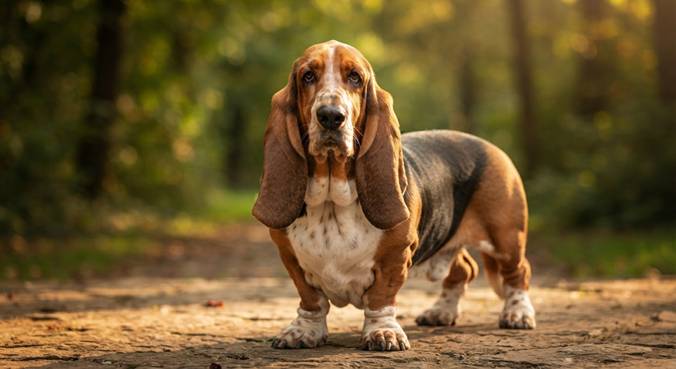
The Basset Hound is one of the most instantly recognizable dogs in the world: dramatically long, low-set ears, a notably short-legged build, and a droopy-eyed, mournful expression that has made it a fixture of popular culture for well over a century. Descended from the ancient St. Hubert Hound lineage and developed into its modern form in 19th-century England from French foundation stock, the breed reached AKC recognition in 1885. This guide covers the genetic reason behind that unmistakable silhouette, how it connects directly to the breed’s most common health concerns, and how the Basset Hound compares to two close relatives: the Bloodhound and the Basset Fauve de Bretagne.
Basset Hound Quick Facts
The Basset Hound belongs to the AKC Hound Group [Internal Link], recognized in 1885, and the FCI Group 6, Section 1.3 (Small-sized Scent Hounds), Standard No. 163.
| Attribute | Detail |
| AKC Group | Hound Group; recognized 1885 |
| FCI Group | Group 6, Section 1.3 (Small-sized Scent Hounds), Standard No. 163 |
| Country of Origin | France (ancestry); developed in Great Britain |
| Height | Up to 14 in at the shoulder |
| Weight | 40–65 lb |
| Lifespan | 12–13 years |
| Coat | Short, smooth, dense |
| Colors | Tricolor, bicolor (typically lemon and white or red and white) |
| Temperament | Friendly, laid-back, affectionate, determined |
What Is a Basset Hound?
French Roots, English Development
The Basset Hound’s ancestry traces back to the St. Hubert Hound, a lineage that also produced the Bloodhound, with roots at the Abbey of St. Hubert in the Ardennes region of France dating back roughly to the 8th century. Many authorities believe the Basset’s short-legged, low-set form resulted from a genetic mutation within this strain, producing a slower-moving hound uniquely well-suited to hunters on foot tracking small game like rabbit and hare through dense cover. While the breed’s ancestry is French, it was developed into its modern form in England, where Sir Everett Millais imported and showed a Basset in 1875, kicking off the selective breeding that produced the breed recognized today. Millais is widely credited as a central figure in popularizing the breed in England, working from French imports to refine the type that would eventually become the standardized Basset Hound familiar today.
AKC and FCI Recognition
The Kennel Club (England) recognized the Basset Hound in 1880, and the AKC followed in 1885. The FCI classifies the breed under Group 6, Section 1.3, among small-sized scent hounds, Standard No. 163, reflecting France’s role as the breed’s country of origin even though its modern standard was substantially shaped in England.
Why Are Basset Hound Legs So Short?
Key Fact: The Basset Hound’s short legs are the result of achondroplasia, a form of dwarfism that affects bone growth. This is the specific genetic trait that defines the breed’s entire silhouette — and it is also directly connected to the joint and back strain the breed is prone to later in life.
Other achondroplastic breeds, like the Dachshund and Corgi, share some of the same joint and spine considerations for exactly the same underlying genetic reason, which is worth knowing if you’re comparing several short-legged breeds at once.
Basset Hound vs. Bloodhound vs. Basset Fauve de Bretagne
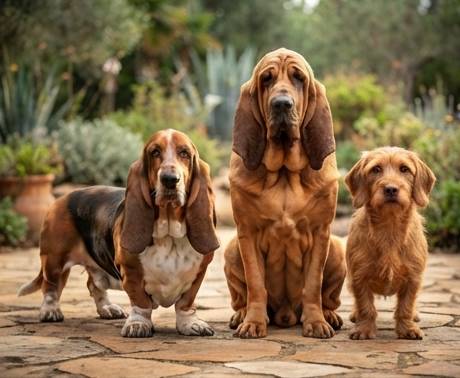
These three hounds share ancestry or a name root, causing real confusion in casual searches. Here’s how the Basset Hound compares to the Bloodhound [Internal Link] and the Basset Fauve de Bretagne [Internal Link].
| Attribute | Basset Hound | Bloodhound | Basset Fauve de Bretagne |
| Coat | Short, smooth, dense | Short, dense | Coarse, wiry |
| Ears | Very long, low-set, pendulous | Long, pendulous, less dramatically low-set | Medium, set high |
| Build | Long body, notably short legs (achondroplasia) | Tall, large, standard leg proportions | Compact, moderate leg length |
The Bloodhound shares the Basset Hound’s ancestry and long ears but stands considerably taller with standard leg proportions, while the Basset Fauve de Bretagne is a smaller, wiry-coated relative with a more moderate build overall.
Appearance
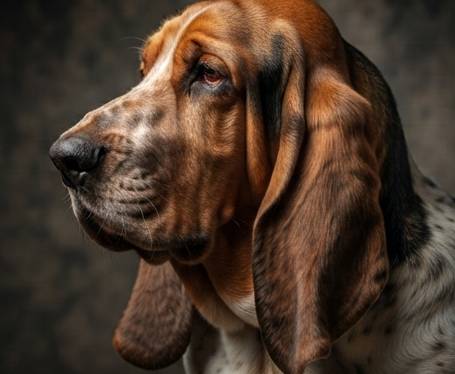
The Basset Hound has a long body, a deep chest, and dramatically long, low-set ears that help funnel scent up toward the nose while tracking — a genuinely functional trait, not just a distinctive look. The short, smooth coat typically appears in tricolor or bicolor combinations, most commonly lemon and white or red and white.
Temperament
The Basset Hound is friendly, laid-back, and deeply affectionate, with a temperament that’s mild without being timid. These dogs are famously tolerant companions, generally loyal and devoted to their families, and known for a calm, easygoing presence at home. Once that famous nose picks up an interesting scent, though, Basset Hounds can become surprisingly single-minded and determined, a trait rooted directly in their scent-hound heritage — some sources rank the breed’s sense of smell as second only to the Bloodhound’s among all dog breeds. That combination of a mild, easygoing house presence and an intensely focused working nose in the field is part of what has made the breed such an enduring favorite for well over a century.
Is a Basset Hound Right for You?

Families and Children
Basset Hounds are widely regarded as excellent family dogs, generally tolerant and gentle with children and well-suited to households wanting a calm, affectionate companion rather than a high-energy playmate.
Other Pets
The breed’s laid-back, sociable nature generally extends to other household pets, and Basset Hounds often do well in multi-dog households given their historical role as pack hunters.
First-Time Owners
The Basset Hound’s gentle, easygoing temperament makes it a reasonable choice for first-time owners, though the breed’s stubborn streak when following a scent and its specific health-monitoring needs (ears, weight, joints) are worth understanding before committing.
Training
Basset Hounds are intelligent but can be genuinely stubborn, particularly once their nose engages with an interesting scent trail. Patient, consistent, reward-based training works better than repetition alone, and reliable recall is worth prioritizing given the breed’s tendency to follow its nose regardless of instructions.
Exercise Needs
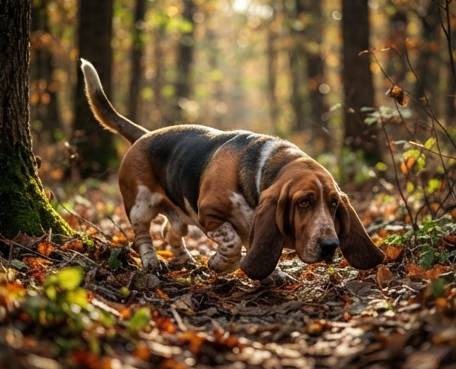
Despite their laid-back reputation, Basset Hounds need regular daily exercise to maintain a healthy weight — a genuinely important consideration given how directly excess weight strains the breed’s already achondroplasia-affected joints and back. Moderate daily walks and scent-based activities that engage the breed’s natural tracking instincts work well without over-stressing the joints the way high-impact activities like jumping can.
Grooming and Ear Care
The short, smooth coat is low-maintenance and needs only occasional brushing. Ear care, however, deserves real attention: the Basset Hound’s long, pendulous ears restrict airflow to the ear canal, making ear infections [Internal Link] considerably more common in this breed than in dogs with upright ears. Regular ear checks and cleaning — many owners find a weekly routine helpful — combined with prompt attention to odor, redness, or head-shaking, meaningfully reduces the risk of chronic infection.
Health and Lifespan
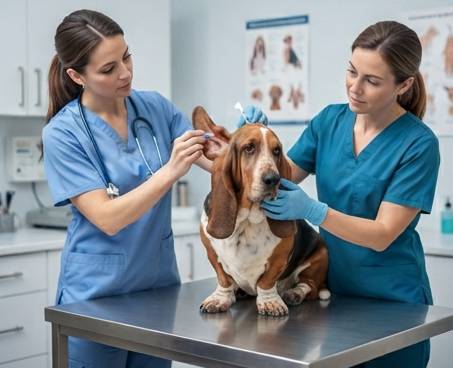
Most Basset Hounds live between 12 and 13 years. The breed’s achondroplasia-driven build creates a few specific, well-documented health considerations.
| Condition | What It Is | What Owners Should Watch For |
| Ear infections (otitis externa) | Inflammation of the ear canal, common given the breed’s long, low ears | Odor, redness, head shaking, scratching at ears |
| Elbow dysplasia | Joint malformation linked to the breed’s achondroplastic build | Front-leg lameness, reluctance to move |
| Intervertebral disc disease | Spinal disc degeneration, more common in long-backed breeds | Reluctance to move, back pain, weakness in the hind legs |
| Glaucoma | Increased pressure within the eye | Eye redness, cloudiness, apparent vision changes |
Intervertebral disc disease [Internal Link] is a particularly important consideration given the Basset Hound’s long back and achondroplasia-affected frame; keeping the dog at a healthy weight and avoiding activities like jumping on and off furniture meaningfully reduces the strain on the spine.
Nutrition
A high-quality, calorie-controlled formula suited to a low-activity, achondroplastic breed works well for the Basset Hound, since this breed is genuinely prone to weight gain and excess weight directly worsens both joint and back strain. Portion control matters more for this breed than for many others precisely because of that connection.
Cost and Adoption
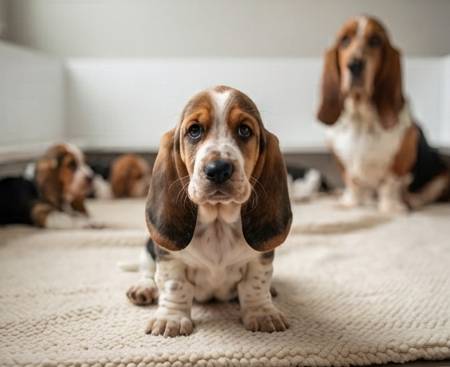
Basset Hound puppies are widely available through breeders across the US given the breed’s long-standing popularity, though prospective owners should prioritize breeders who screen for elbow dysplasia and back issues as part of a genuinely responsible breeding [Internal Link] program. Basset Hound rescue organizations are active and well-established across the country, making adoption a realistic option for owners open to an adult dog, and rescue groups can often speak directly to an individual dog’s health history and temperament, which is genuinely useful information for a breed with the specific health considerations this guide covers.
Frequently Asked Questions
What is a Basset Hound?
The Basset Hound is a short-legged French-English scent hound known for its long ears and mournful expression, recognized by the AKC’s Hound Group in 1885.
Why are Basset Hound legs so short?
Achondroplasia, a form of dwarfism affecting bone growth, produces the breed’s characteristic short legs and long body.
How good is a Basset Hound’s sense of smell?
Excellent — some sources rank it second only to the Bloodhound among all dog breeds.
Are Basset Hounds good family dogs?
Yes, generally — they’re friendly, tolerant, and affectionate, making them a strong match for families.
Why do Basset Hounds get ear infections so often?
Their long, low-set ears restrict airflow to the ear canal, creating conditions that favor infection without regular cleaning and monitoring.
How much exercise do Basset Hounds need?
Regular daily walks and moderate activity, important both for general health and for managing weight given the strain excess pounds place on achondroplasia-affected joints.
How much does a Basset Hound cost?
Pricing varies by breeder and region, but the breed’s popularity generally means good availability compared to rarer Hound Group breeds.
Conclusion
The Basset Hound’s unmistakable silhouette — those famously long ears, that low-slung body — comes from the same genetic trait, achondroplasia, that also shapes the breed’s specific health needs. Understanding that connection is the real key to responsible Basset Hound ownership: manage the ears, watch the weight, protect the back, and this famously friendly, laid-back breed makes a deeply affectionate companion for the right household.