Canaan Dog: The Complete Breed Guide
Alert, watchful, and fiercely loyal to its own people, the Canaan Dog is Israel’s national breed and one of the oldest continuously existing dog types in the world. Unlike breeds engineered for a specific look, the Canaan was shaped almost entirely by survival in the desert — which is why it still behaves like a dog that trusts its own judgment first and its owner’s second.
This guide covers what any current or prospective Canaan Dog owner needs to know: history, physical traits, temperament, training, exercise, grooming, health, and the real costs of ownership.
Canaan Dog at a Glance
| Trait | Details |
| Group | Herding Group (AKC), Group 5 (FCI) |
| Origin | Israel (Land of Canaan) |
| Height | Males 20–24 in; Females 19–23 in |
| Weight | Males 45–55 lb; Females 35–45 lb |
| Coat | Double coat with harsh, straight outer coat |
| Colors | White, black, brown, red, liver, sandy — solid or with white markings |
| Lifespan | 12–13 years |
| Temperament | Alert, watchful, devoted to family, aloof with strangers |
| Exercise Needs | 60–90 minutes daily |
| Grooming | Moderate; heavy seasonal shedding |
| Trainability | High intelligence; needs patient, consistent handling |
| Good With Kids | Yes, especially when raised with them; wary of unfamiliar children |
History and Origin
The Canaan Dog is one of the AKC’s oldest breeds and the national dog of Israel, descended from semi-wild pariah dogs that had lived in the region since biblical times. Rather than being bred by humans from the start, the Canaan largely bred itself for thousands of years, surviving in the desert on its own instincts, adaptability, and problem-solving ability.
In the 1930s, animal behaviorist Rudolphina Menzel began capturing, taming, and breeding a select group of these semi-wild dogs, finding them remarkably adaptable and easy to domesticate. Her breeding program supplied working dogs to the Israeli military for tasks such as mine detection and messenger work. The United Kennel Club recognized the breed in 1992, followed by full AKC recognition in 1997.
Physical Characteristics
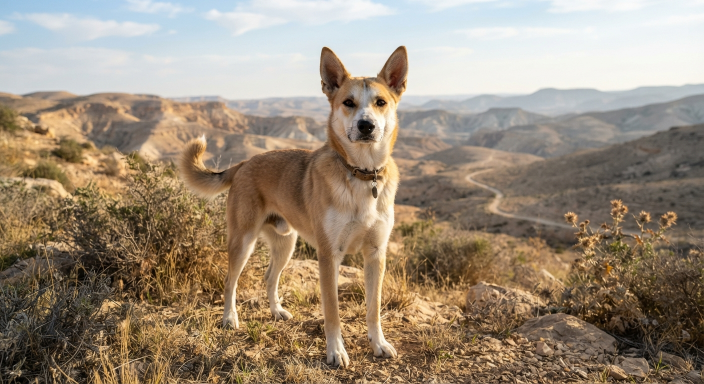
The Canaan Dog is a medium-sized, square-proportioned breed built for endurance rather than raw power — a body shaped by surviving in harsh, arid terrain rather than by a show-ring blueprint. Males stand 20 to 24 inches at the shoulder and weigh 45 to 55 pounds; females are somewhat smaller, standing 19 to 23 inches and weighing 35 to 45 pounds.
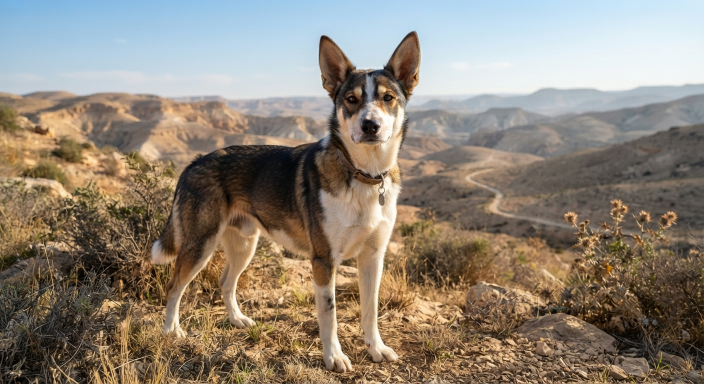
The double coat combines a harsh, straight outer layer with a softer undercoat that thickens seasonally. Coat colors span a wide range — white, black, brown, red, liver, and sandy — appearing as solid colors, predominantly white with a colored mask, or with white trim on the chest, belly, feet, legs, and tail tip. The pricked, erect ears and alert, upright carriage give the breed its characteristically watchful expression.
Temperament and Personality
The AKC breed standard describes the Canaan as alert, vigilant, devoted, and docile with family, but reserved and aloof with strangers — a temperament that reflects thousands of years of self-reliant survival rather than selective breeding for friendliness. This is a dog that forms deep bonds with its own household while remaining naturally suspicious of anyone or anything unfamiliar.
Canaans are highly territorial and make natural, responsive guardians without any specific training for the role. They are also notably vocal — quick to bark at anything out of the ordinary — and persistent once they decide something is worth their attention. Owners who want a dog that greets every visitor warmly should look elsewhere; owners who want a watchful, devoted companion will find the Canaan hard to beat.
Living With a Canaan Dog
Families and children:
Canaan Dogs generally do well with children they’re raised alongside and can be gentle, attentive family companions. Because of their wariness toward unfamiliar people, introductions to visiting children or friends should be handled gradually and on the dog’s terms.
Other pets:
With early socialization, Canaans can live comfortably with other household pets, though their herding and territorial instincts mean introductions to unfamiliar animals should be supervised. Some individuals retain a strong prey drive toward small animals.
Living space:
The breed adapts well to a range of living situations, from houses with yards to apartments, provided its exercise and mental stimulation needs are met. A secure, well-fenced yard matters more than square footage — Canaans are agile, alert to anything unusual, and capable of finding gaps in inadequate fencing.
Training and Socialization
Canaan Dogs are highly intelligent and quick learners, but their independent streak means training requires patience and consistency rather than repetition or force. Harsh corrections tend to backfire with this sensitive, self-directed breed, while positive reinforcement methods such as clicker training work well.
Early and extensive socialization is arguably more important for the Canaan than for most breeds, given its deep-seated wariness of strangers and new situations. Consistent, varied exposure to people, animals, and environments during puppyhood helps prevent that natural caution from hardening into fearfulness or excessive territorial behavior later on. Because Canaans can grow bored with repetitive drilling, short sessions that introduce new challenges keep them engaged far better than routine obedience repetition.
Exercise and Mental Stimulation
Adult Canaan Dogs need 60 to 90 minutes of vigorous exercise daily, ideally split between morning and afternoon sessions and combined with supervised playtime in a secure outdoor space. Puppies need more limited, controlled activity to protect developing joints.
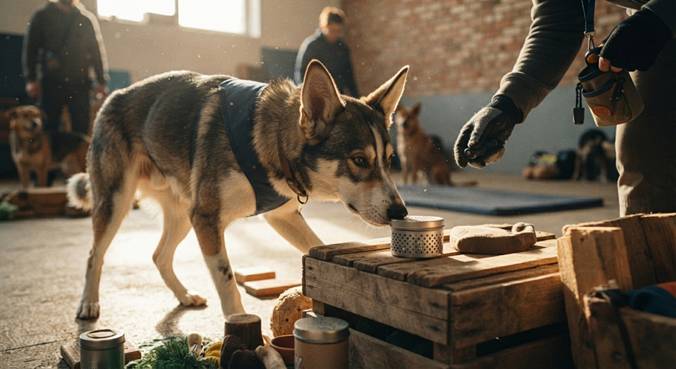
This is a breed that thinks constantly, and mental stimulation — problem-solving games, scent work, and novel training challenges — is just as important as physical exercise for keeping a Canaan settled and out of trouble. A Canaan without enough to think about will find its own projects, usually involving the yard, the fence line, or anything unattended.
Grooming and Coat Care
The Canaan’s double coat needs moderate, regular attention. A thorough weekly brushing handles most of the year, but during the breed’s one or two annual shedding seasons — when the undercoat blows out heavily — daily brushing is typically necessary to keep shedding under control.
A complete grooming routine should also include:
- Nail trims every three to four weeks
- Regular ear checks, particularly given the breed’s large, erect ears
- Routine dental care, including brushing several times a week
- Bathing only as needed, since the coat is naturally weather- and dirt-resistant
Nutrition and Feeding
A high-quality diet formulated for medium-sized, active breeds suits most Canaan Dogs, with portions adjusted for age, weight, and activity level. Because the breed evolved surviving on limited, irregular food sources, some individuals are efficient eaters prone to weight gain if overfed, so portion control matters even though the Canaan is not typically a bloat-prone body type.
Puppies benefit from a controlled growth-formula diet to support healthy joint development, particularly given the breed’s susceptibility to hip and elbow dysplasia. Fresh water and a consistent feeding schedule round out a straightforward nutritional routine.
Health and Lifespan
The Canaan Dog is widely regarded as one of the healthier purebred dogs, a legacy of its natural-selection origins, with an average lifespan of 12 to 13 years. Even so, the breed is not free of hereditary conditions that prospective owners should understand.
| Condition | What It Is | What Owners Should Watch For |
| Hip dysplasia | Malformation of the hip joint leading to a loose-fitting joint | Reluctance to jump or climb stairs, stiffness after rest, an altered gait |
| Elbow dysplasia | Similar joint malformation affecting the elbow | Front-leg lameness, especially after exercise |
| Epilepsy | An inherited seizure disorder, typically appearing between 6 months and 3 years | Sudden seizures, disorientation, or collapse |
| Hypothyroidism | Underactive thyroid gland affecting metabolism | Weight gain, lethargy, coat thinning or dullness |
| Progressive retinal atrophy (PRA) | Gradual, inherited deterioration of the retina | Night blindness progressing to full vision loss |
| Luxating patella | Kneecap that slips out of its normal position | Intermittent skipping or hopping gait in a rear leg |
The national breed club recommends hip, elbow, patella, thyroid, and ophthalmologist evaluations for all breeding stock. Prospective buyers should ask to see current health clearances, and owners of adult Canaans should watch for any new gait changes, seizure activity, or vision changes and report them promptly to a veterinarian.
Cost of Owning a Canaan Dog
| Expense | Typical Range |
| Puppy from a reputable breeder | $800–$1,200 |
| Rescue or shelter adoption | $50–$400 |
| First-year setup and veterinary costs | $1,200–$2,500 |
| Ongoing annual costs (food, routine vet care, grooming) | $900–$1,800 |
| Lifetime cost of ownership | $15,000–$28,000+ |
Because the breed is relatively rare outside Israel, prospective owners in some regions may need to budget for travel to reach a reputable breeder, and should factor in secure fencing given the Canaan’s territorial instincts and escape-mindedness when under-stimulated.
Finding a Canaan Dog: Breeders and Rescue
Because Canaan Dogs remain uncommon compared to most AKC breeds, finding a reputable breeder may take patience and, in some cases, travel. Look for a breeder who health-tests parent dogs, raises puppies with early socialization in mind, and is candid about the breed’s wariness of strangers and territorial nature. The Canaan Dog Club of America is a useful starting point for breeder referrals.
Rescue is a smaller but real option for this breed, with breed-specific and general rescue groups occasionally placing adult Canaans. Because of the breed’s need for confident, consistent handling, rescues typically screen adopters carefully for experience with independent-minded dogs. [Internal Link — Canaan Dog Rescue Guide]
Frequently Asked Questions
Are Canaan Dogs good with strangers?
Not typically. The breed standard describes Canaans as reserved and aloof with strangers by nature — a trait rooted in their origin as self-reliant, semi-wild dogs rather than a training issue.
Are Canaan Dogs good with kids?
Yes, especially children they’re raised alongside. Introductions to unfamiliar children should be handled gradually given the breed’s general wariness of strangers.
How much exercise does a Canaan Dog need?
Adults need 60 to 90 minutes of vigorous daily exercise, along with regular mental stimulation such as training or problem-solving games.
How long do Canaan Dogs live?
The typical lifespan is 12 to 13 years, and the breed is considered one of the healthier purebreds overall.
Do Canaan Dogs shed a lot?
They shed moderately most of the year but blow their undercoat heavily once or twice a year, requiring daily brushing during those periods.
How much does a Canaan Dog cost?
Puppies typically cost $800 to $1,200 from a reputable breeder, while rescue adoption generally runs $50 to $400.
What health problems are Canaan Dogs prone to?
Common concerns include hip and elbow dysplasia, epilepsy, hypothyroidism, progressive retinal atrophy, and luxating patella.
Conclusion
The Canaan Dog is a breed shaped by survival rather than a show ring, and that history shows in nearly everything it does: watchful instincts, deep loyalty to its own people, and a healthy dose of independence. Given early socialization, consistent handling, and enough physical and mental exercise, the Canaan makes an exceptionally devoted and naturally protective companion. Anyone drawn to the breed should go in understanding that this is not a dog bred to please strangers — it’s a dog bred to endure, adapt, and watch over the people it considers its own.