Boston Terrier Guide: Temperament, Health & History
Quick Facts
| Attribute | Detail |
| AKC Group | Non-Sporting |
| Height | 15–17 inches |
| Weight | 12–25 lb (lightweight, middleweight, heavyweight classes) |
| Lifespan | 11–13 years |
| Coat | Short, smooth, low-shedding |
| Colors | Black, brindle, or seal, always with white “tuxedo” markings |
| Temperament | Friendly, alert, amusing, adaptable |
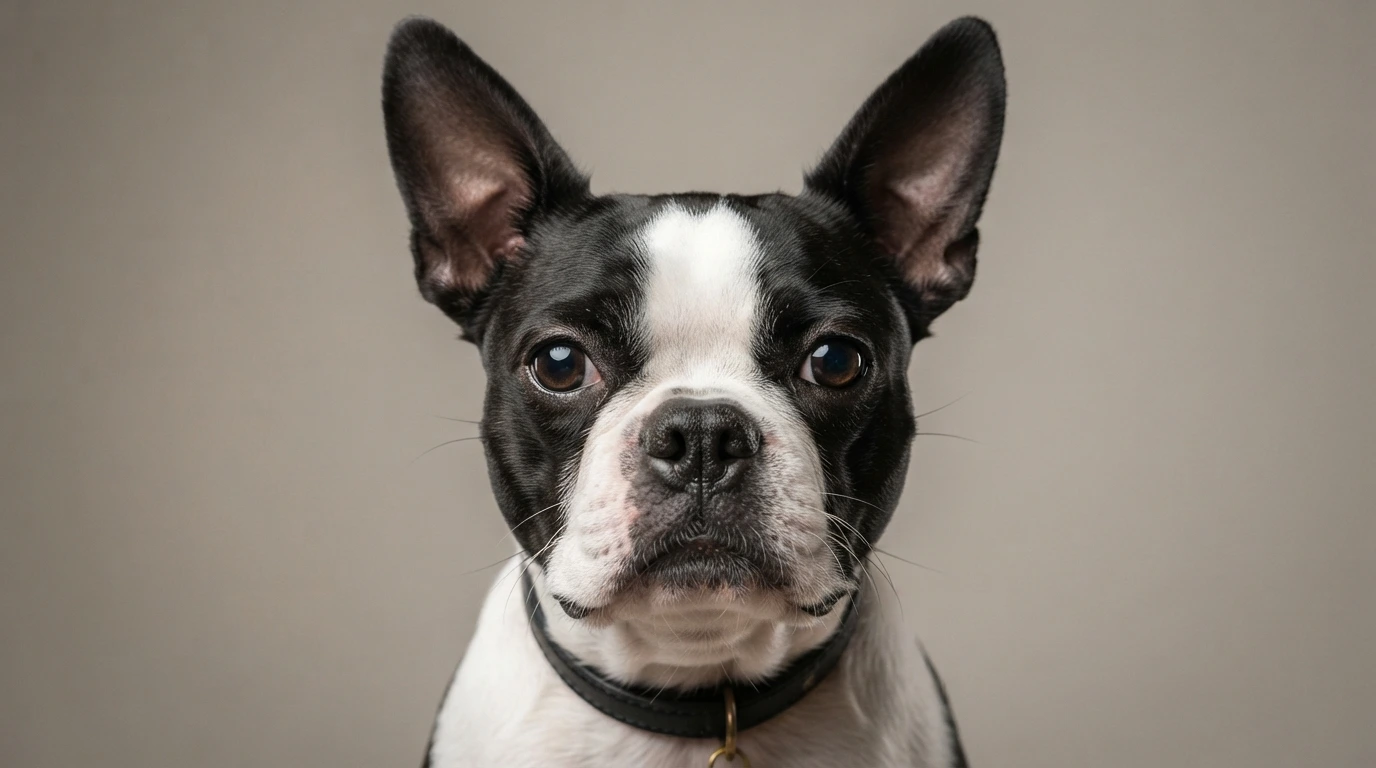
The Boston Terrier is one of the few breeds developed entirely in the United States, and it carries that distinction with a personality to match: alert, sociable, and just self-assured enough to have earned the nickname “the American Gentleman.” Compact, low-shedding, and well-suited to apartment life, it has become one of the most popular companion breeds in the country. But its brachycephalic structure and prominent eyes come with real health considerations that deserve honest, specific attention rather than a passing mention.
History: The American Gentleman
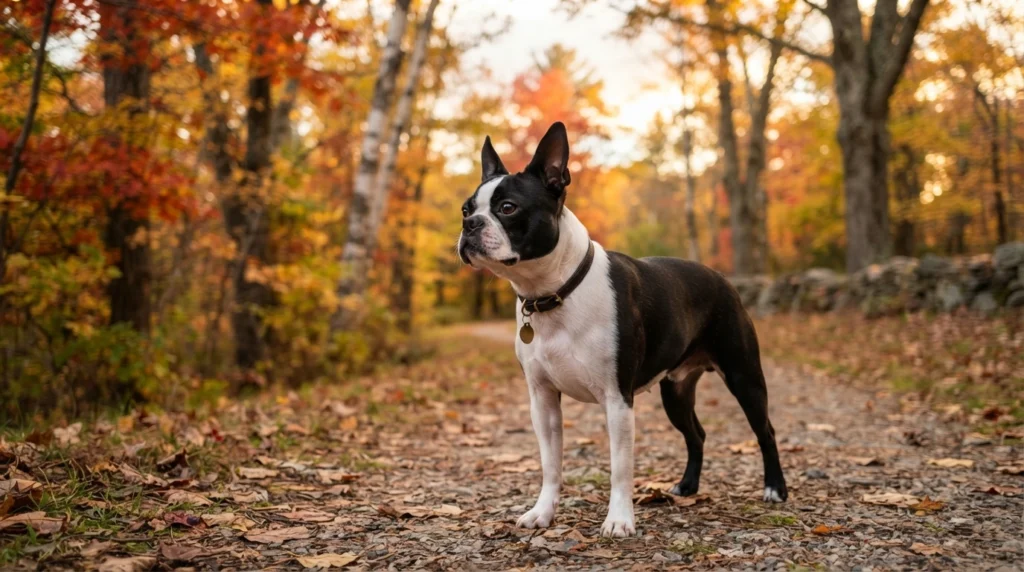
The Boston Terrier’s origin story is unusually well documented for a breed this old, and unusually American. In the 1870s, a Boston coachman named Robert C. Hooper acquired a dog of bull-and-terrier ancestry, a cross between a Bulldog and a now-extinct type of white English Terrier. That dog, originally named Hooper’s Judge, became the foundation of the entire modern breed. Judge was bred to a smaller, mostly white female, and their descendants were selectively refined over the following decades, gradually shifting away from the heavier, more pit-fighting-oriented build of their bull-and-terrier ancestors toward a smaller, squarer, more companionable dog.
Breeders in the Boston area organized around this new type in the 1880s, originally calling the dog the “round head” or “Boston bull terrier” before settling on the name Boston Terrier, a nod to the city where the breed took shape. The American Kennel Club recognized the breed in 1893, making it one of the first American-developed breeds admitted to the registry and the first non-sporting breed of American origin to earn that recognition. That early, purposeful refinement toward temperament and companionability, rather than working ability, is part of why the Boston Terrier reads as such a naturally sociable, people-oriented breed today.
The breed’s popularity grew steadily through the 20th century, and in 1979 Massachusetts made it the official state dog, cementing a regional identity that traces directly back to Judge and the small circle of Boston breeders who standardized the type. Few American companion breeds can point to a single, named foundation dog with this much documentation, and that continuity is part of what makes the Boston Terrier’s history genuinely worth knowing rather than treating as trivia.
The breed standard itself evolved alongside this refinement process. Early Boston Terriers varied considerably in size and structure, and it took until the early 20th century for the Boston Terrier Club of America to formalize the weight classes, tuxedo-pattern requirements, and proportions still used today. That formalization mattered for health as much as appearance: by standardizing toward a moderate, less extreme muzzle length than some other brachycephalic breeds of the era, early Boston Terrier breeders inadvertently built in a degree of structural moderation that continues to distinguish the breed’s brachycephalic severity from more exaggerated flat-faced types.
Boston Terrier vs. French Bulldog: The Two “American Companion” Breeds
The Boston Terrier and the French Bulldog are frequently confused, and the confusion is understandable: both are small, brachycephalic, low-shedding companion breeds with similar temperaments and comparable size ranges. But the differences matter, especially for health planning. The Boston Terrier has a proportionally longer muzzle than the French Bulldog, which generally translates to a somewhat less severe degree of brachycephalic airway obstruction syndrome, though both breeds require real heat-exertion caution. The Boston Terrier’s ears are naturally erect and bat-like without any cropping, while the French Bulldog’s are wider-set and more rounded. Coat pattern is another clear differentiator: the Boston Terrier’s tuxedo marking is part of its breed standard, while French Bulldogs come in a wider range of solid and patterned colors. Buyers researching brachycephalic companion breeds broadly should also be aware that the Pug [FUTURE LINK: Pug breed guide] sits further along the flat-faced severity spectrum than either the Boston Terrier or the French Bulldog, and the English Bulldog [FUTURE LINK: Bulldog breed guide] further still, which is useful context for anyone comparing breeds primarily on brachycephalic-risk grounds.
| Attribute | Boston Terrier | French Bulldog |
| Origin | United States (Boston, MA) | France |
| Weight | 12–25 lb | 16–28 lb |
| Muzzle structure | Brachycephalic (moderate) | Brachycephalic (severe) |
| Ears | Naturally erect, bat-like | Wide-set, rounded “bat ears” |
| Coat | Short, smooth, tuxedo pattern required | Short, smooth, wide color range |
| Exercise tolerance | Moderate | Lower, more heat-sensitive |
Ancestry Cluster: Bull-and-Terrier Relatives
The Boston Terrier’s bull-and-terrier ancestry connects it, at a genetic and historical level, to a broader family of breeds developed from similar 19th-century Bulldog-and-terrier crosses, including the American Staffordshire Terrier and the American Pit Bull Terrier. It’s worth being direct about what this shared ancestry does and doesn’t mean: these are three fully distinct modern breeds with very different builds, sizes, temperaments, and breed standards, and more than a century of separate, purposeful breeding lies between them and their common bull-and-terrier root. The Boston Terrier was refined specifically toward a smaller, companionable type almost from the start, which is a meaningfully different path than the one taken by its more athletic terrier relatives. Understanding this shared lineage helps explain some superficial resemblances in head shape and build among the three breeds, without implying that they behave or perform the same way.
Appearance
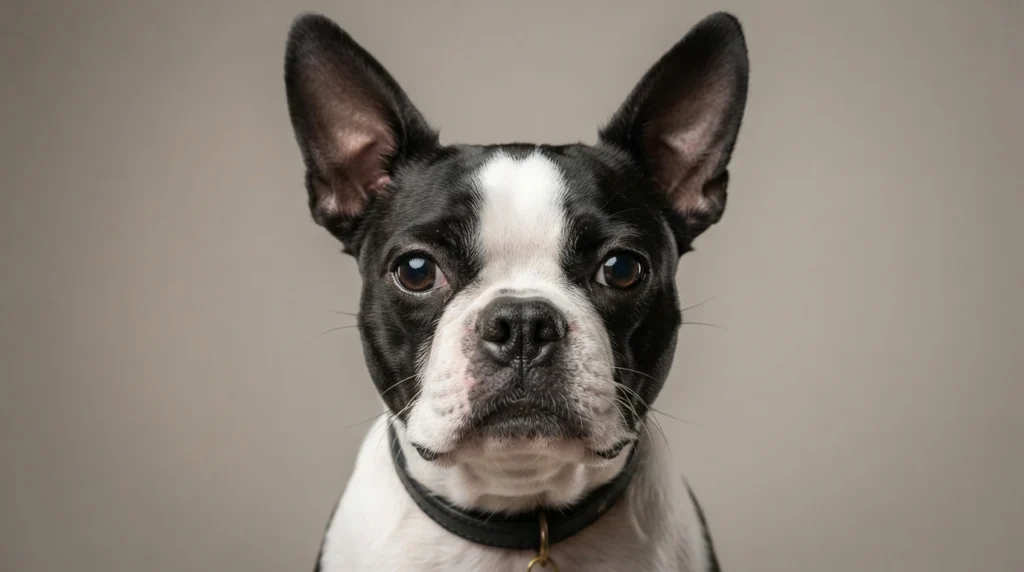
The Boston Terrier is a compact, square-built dog with a short, smooth, low-shedding coat and the signature tuxedo pattern that gives the breed its polished, dressed-up look: black, brindle, or seal, always broken up by white markings on the chest, muzzle, and legs. The head is proportionally square with a short muzzle, and the large, round, dark eyes set well apart give the breed its famously expressive, almost human-like face. Ears are naturally erect and bat-like, carried without cropping. The overall build is sturdy and balanced rather than delicate, and a well-conditioned Boston Terrier should look athletic, not exaggerated.
Temperament
Boston Terriers are friendly, alert, and genuinely amusing companions, often described by owners as having a natural sense of comic timing. They tend to be highly people-oriented, forming close bonds with their households and generally greeting strangers with curiosity rather than suspicion. A streak of mild stubbornness shows up in some individuals, but most Boston Terriers are eager to please and respond well to consistent, positive training. The breed’s adaptable energy level and modest space needs make it well-suited to apartment living, though it still benefits from a household willing to provide regular mental and physical engagement.
Is a Boston Terrier Right for You?
The Boston Terrier adapts well to apartment living and makes an excellent companion for owners who want an engaged, people-focused dog without demanding acreage or hours of daily exercise. Because of its brachycephalic structure, discussed in more detail below, owners should exercise real caution during hot or humid weather and avoid strenuous exertion in the heat. As with other small breeds, the Boston Terrier’s compact size and prominent eyes make it somewhat fragile around very young children who can’t yet be trusted to handle a small dog gently. For owners who want an affectionate, moderately active, low-shedding companion and can commit to sensible heat precautions, the Boston Terrier is an excellent match.
Training
Boston Terriers are intelligent and generally food-motivated, which makes positive-reinforcement training an effective, straightforward approach. Early socialization matters, as it does for most breeds, and helps channel the dog’s natural friendliness into confident, well-mannered adult behavior. Housebreaking can take a bit more patience with this breed than with some others, and consistency in the early months pays off considerably.
Exercise Needs
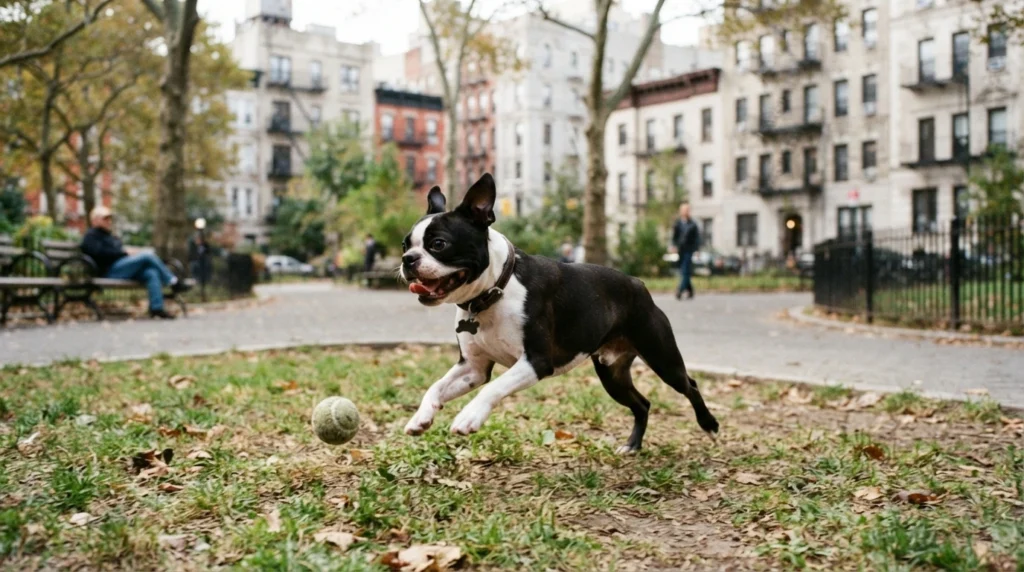
Moderate exercise needs suit most households: a couple of short-to-medium walks a day, along with some indoor or backyard play, are generally sufficient to keep a Boston Terrier content. Heat and exertion require real caution given the breed’s airway structure, and strenuous exercise should be avoided during hot or humid conditions in favor of shorter, cooler-weather activity.
Grooming
The Boston Terrier’s short, smooth coat is low-maintenance, generally needing just weekly brushing to control shedding and keep the coat glossy. Regular ear cleaning and facial-wrinkle checks help prevent irritation, and routine nail trims round out the basic grooming routine. This is one of the more grooming-friendly breeds in the companion-dog category, a real practical advantage for owners weighing time commitment.
Health and Lifespan: Breathing and Eyes Deserve Real Attention

The Boston Terrier is a brachycephalic breed, though its muzzle structure is moderate rather than extreme, sitting closer to the middle of the flat-faced spectrum than breeds like the Pug or English Bulldog. That said, brachycephalic airway obstruction syndrome, or BOAS, still affects the breed to a meaningful degree, causing narrowed nostrils, an elongated soft palate, and labored breathing that worsens with heat, excitement, or exertion. [FUTURE LINK: canine BOAS/brachycephalic health guide] Severity varies between individual dogs depending on muzzle length and nostril conformation, and the most actionable step an owner can take is managing heat and exercise intensity proactively rather than waiting for a breathing crisis; a Boston Terrier should never be left in a hot car or exercised heavily during warm weather. Recognizing early distress signs at home matters too: excessive panting that doesn’t subside with rest, gagging or retching sounds, blue or grayish gum color, and visible struggle to catch a breath all warrant immediate cooling measures and, if symptoms don’t resolve quickly, an emergency veterinary visit.
The breed’s large, prominent eyes are its second major health consideration. That expressive look carries real injury risk: corneal ulcers, scratches to the surface of the eye, occur more easily in breeds with this much eye prominence, and in severe trauma cases, proptosis, where the eye partially or fully dislocates from its socket, is a genuine veterinary emergency in prominent-eyed breeds. Practical prevention includes avoiding rough, face-first play with other dogs, being mindful of low branches or furniture edges during play, and treating any redness, squinting, or visible cloudiness in the eye as a reason for prompt veterinary evaluation rather than a wait-and-see approach. Cherry eye, a prolapse of the third eyelid gland, also appears in the breed at a meaningful rate and is generally correctable with veterinary treatment.
Beyond breathing and eyes, patellar luxation, a kneecap that slips out of its normal groove, is common in small breeds including the Boston Terrier, and can range from a minor, occasional issue to one requiring surgical correction in more severe cases. With attentive care around these known risk areas, Boston Terriers commonly live 11 to 13 years, a solid lifespan for a breed of this size and structure.
One additional, less commonly discussed consideration: the tuxedo coat pattern itself, driven by piebald spotting genetics, has been associated in some brachycephalic and piebald breeds with a modestly elevated rate of congenital deafness in individual dogs, particularly those with extensive white head markings. This isn’t a defining breed-wide health issue the way BOAS or eye injury is, but it’s worth a mention to breeders and buyers evaluating puppies with unusually large areas of white on the head, and a simple hearing check by a veterinarian can resolve any uncertainty early. Dental crowding is another small-breed reality worth planning for, since the Boston Terrier’s compact jaw can predispose it to tartar buildup and periodontal disease without regular brushing and professional cleanings.
Nutrition
Standard small-breed feeding guidance applies, with portion control mattering given how easily excess weight accumulates on a compact frame. Maintaining a lean body condition is especially important for this breed, since extra weight adds strain to both an already brachycephalic airway and joints prone to patellar luxation.
Cost and Adoption
A Boston Terrier puppy from a reputable, health-tested breeder typically costs $1,000 to $2,500. Annual costs, including food, routine veterinary care, and grooming, generally run $1,000 to $1,800, with eye-care checkups and dental cleanings representing two of the more consistent recurring expenses given the breed’s known risk areas. Buyers should budget realistically for veterinary care from the outset, since this breed’s brachycephalic and eye-related health considerations tend to generate more frequent checkups than a structurally average breed.
Common Buyer Mistakes
- Underestimating heat sensitivity. Even moderate brachycephalic structure means real risk during hot or humid weather; exercise and outdoor time need to be planned around temperature, not habit.
- Allowing rough, face-first play. The breed’s prominent eyes are more vulnerable to injury than a typical dog’s, making supervised, gentle play important.
- Skipping early socialization. A naturally friendly breed still benefits substantially from structured early exposure to people, dogs, and new environments.
- Confusing Boston Terrier with French Bulldog when researching breeders. The two breeds have different standards, different brachycephalic severity, and different exercise tolerance; buyers should confirm they’re getting accurate breed-specific information rather than generic “flat-faced dog” advice.
- Skipping dental care. The breed’s compact jaw predisposes it to tartar buildup, and owners who wait until problems are visible often face a more involved, more expensive dental cleaning than one that started with routine brushing.
FAQ
Are Boston Terriers hypoallergenic?
No dog is fully hypoallergenic, but the Boston Terrier’s short, low-shedding coat produces less loose hair in the environment than many breeds, which is part of why it’s often recommended for allergy-sensitive households.
Why does my Boston Terrier snore?
Snoring is common in the Boston Terrier due to its brachycephalic airway structure, including narrowed nostrils and an elongated soft palate. Occasional snoring is normal, but labored breathing, gagging, or blue-tinged gums warrant a veterinary visit.
Boston Terrier vs French Bulldog — which is right for me?
Both make excellent low-shedding companions, but the Boston Terrier generally has a longer muzzle and somewhat milder brachycephalic severity, while the French Bulldog tends to have a more pronounced flat-faced structure. Owners especially concerned about breathing risk may find the Boston Terrier a somewhat easier fit, though both breeds require heat-exertion caution.
How much exercise does a Boston Terrier need?
Moderate exercise, generally a couple of short-to-medium walks plus some play, is sufficient. Strenuous exercise should be avoided in hot or humid weather given the breed’s airway structure.
Are Boston Terriers good with kids?
Generally yes, thanks to their friendly, people-oriented temperament, though their compact size and prominent eyes call for supervision with very young children who may not yet handle a small dog gently.
What health problems are Boston Terriers prone to?
The main areas of concern are brachycephalic airway obstruction syndrome (moderate severity), corneal ulcers and eye injury given the breed’s prominent eyes, cherry eye, patellar luxation, and dental crowding. Regular veterinary checkups, along with attentive eye and dental care at home, help catch most of these issues early enough to manage them well.
How long do Boston Terriers live?
With attentive care, Boston Terriers commonly live 11 to 13 years.
Conclusion
The Boston Terrier earned its “American Gentleman” nickname honestly: it’s a sociable, adaptable companion breed with a genuinely unusual, well-documented history tracing back to a single foundation dog in 1870s Boston. Its moderate brachycephalic structure and prominent eyes deserve real, specific attention rather than being treated as minor quirks, but with sensible heat precautions and attentive eye care, the Boston Terrier remains one of the more manageable brachycephalic companion breeds. For owners willing to plan around those known risk areas, it offers an affectionate, low-shedding, apartment-friendly companion with genuine personality to spare.