Bearded Collie: The Complete Guide to Scotland’s Shaggy Herding Dog
Bearded Collie
Underneath the Bearded Collie’s famous shaggy coat is a dog whose entire modern existence traces back to a case of mistaken identity. In 1944, a woman who wanted a Shetland Sheepdog puppy accidentally ended up with a Bearded Collie instead – and fell so thoroughly in love with the breed that she single-handedly launched its modern revival. Combine that origin story with a much older, half-legendary tale involving Scottish shepherds and a shipload of Polish sheepdogs, and you have one of the more genuinely interesting backstories in the Herding Group. This guide covers the Bearded Collie’s history, its distinctive appearance and temperament, how it differs from the similarly shaggy Old English Sheepdog, and an honest look at the grooming commitment this breed actually requires.
Bearded Collie Quick Facts
The Bearded Collie has been AKC-recognized since 1976 and is classified under the Herding Group in the US and FCI Group 1, Section 1 (Sheepdogs), Standard No. 271, internationally.
| Attribute | Detail |
| AKC Group | Herding Group (recognized 1976) |
| FCI Group | Group 1, Section 1, Standard No. 271 |
| Country of Origin | Scotland |
| Height | 21-22 in (dogs), 20-21 in (bitches) at the withers |
| Lifespan | 12-14 years |
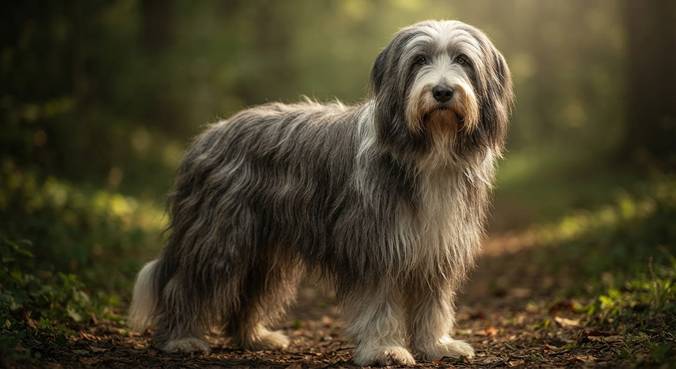
| Coat | Double coat: harsh, shaggy outer coat over a soft, furry undercoat |
| Colors | Slate grey, black, blue, all shades of brown, sandy, and fawn; often fading with age |
| Temperament | Exuberant, bouncy, intelligent, independent, vocal |
What Is a Bearded Collie?
A Legendary Scottish Origin
The Bearded Collie’s exact origins are more legend than documented fact, but the most commonly repeated story dates to 1514: a Polish merchant named Kazimierz Grabski reportedly traded a shipment of grain for Scottish sheep and brought several Polish Lowland Sheepdogs along to help move his new flock. A Scottish shepherd was so impressed by the dogs’ herding ability that he traded some of his own dogs for a breeding pair, and their descendants are believed to have interbred with native Scottish herding stock over the following centuries. It’s worth being clear that this account is treated as folklore rather than verified history by most breed historians, but the physical resemblance between the Bearded Collie and the Polish Lowland Sheepdog today lends the story real plausibility.
The Accidental Founding of the Modern Breed
Key Story: In 1944, Mrs. G. Olive Willison intended to purchase a Shetland Sheepdog puppy but instead ended up with a brown Bearded Collie bitch, later named Jeannie of Bothkennar. She later found a mate, a grey dog named Bailie of Bothkennar. Jeannie and Bailie are now considered the foundation dogs of the modern show Bearded Collie.
The Bearded Collie nearly disappeared as a distinct type by the early 20th century, and its modern revival is credited almost entirely to one woman and one mistake. Willison became so taken with the breed that she began searching for a mate, and reportedly found one by chance while walking along a beach and meeting a man emigrating from Scotland with his grey Bearded Collie. Nearly every Bearded Collie alive today traces back to Willison’s accidental purchase – a genuinely unusual origin story among purpose-bred dogs, most of which trace back to deliberate breeding programs rather than a single case of mistaken identity at a puppy sale.
AKC and FCI Status
The Bearded Collie was formally recognized by the American Kennel Club in 1976, placing it within the Herding Group. The FCI classifies the breed under Standard No. 271, Group 1, Section 1, among sheepdogs.
Bearded Collie vs. Old English Sheepdog vs. Polish Lowland Sheepdog
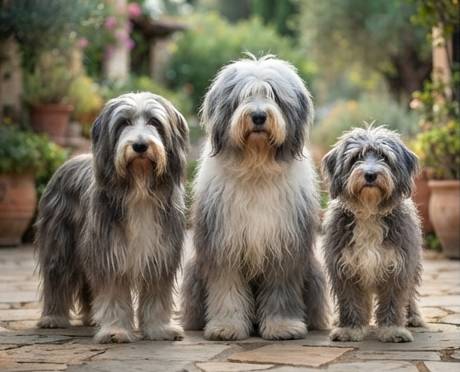
These three shaggy herding breeds are frequently mistaken for one another. Here’s how the Bearded Collie compares to the Old English Sheepdog [Internal Link] and the Polish Lowland Sheepdog [Internal Link].
| Attribute | Bearded Collie | Old English Sheepdog | Polish Lowland Sheepdog |
| Origin | Scotland | England | Poland |
| Size | 20-22 in at the withers | Larger, more heavily boned, 21-22 in+ | Smaller, 17-20 in |
| Coat/Build | Leaner build, longer tail, shaggy but less profuse coat | Denser, more profuse coat, bear-like gait, bobbed tail traditionally | Long, thick, shaggy coat, compact and low-set build |
The Old English Sheepdog is noticeably larger and heavier-coated with a distinctive rolling gait, while the Polish Lowland Sheepdog – the Bearded Collie’s likely distant ancestor – is smaller and more compact, closer in size to a large Beardie puppy than an adult. The smooth-coated Collie [Internal Link] made famous by Lassie is a more distant relative still, sharing the same general herding-dog family tree but with an entirely different coat type and build.
Appearance
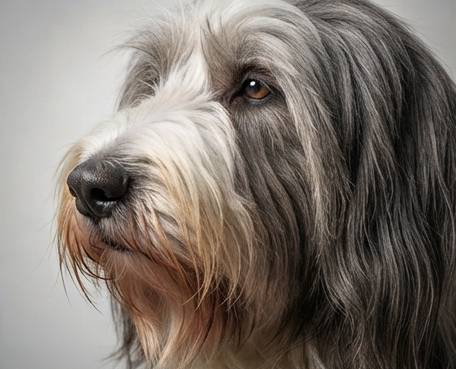
The Bearded Collie has a lean, athletic build under all that coat, with a long tail carried low and a bright, inquisitive expression framed by hair falling forward over the eyes. The signature double coat – a harsh, shaggy outer layer over a soft undercoat – comes in slate grey, black, blue, brown, sandy, or fawn, and often lightens noticeably as the dog matures.
Temperament
Bearded Collies are famous for their exuberant, bouncy energy – this is a breed that greets life, and most visitors, with genuine enthusiasm. That same enthusiasm comes paired with real intelligence and a working-dog independent streak inherited directly from centuries of herding without constant direct supervision. Beardies also tend to be vocal, using bark and a range of other sounds to express opinions freely, a trait that surprises owners expecting a quieter companion based on looks alone.
Is a Bearded Collie Right for You?
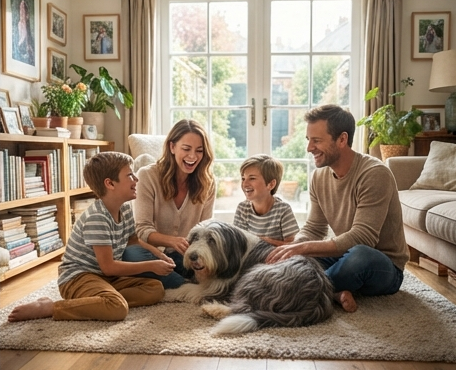
Families and Children
Bearded Collies generally do well with children, bringing playful energy and a sturdy build that holds up to active family life, though their size and enthusiasm mean supervision with very young children is wise.
First-Time Owners
Bearded Collies can suit first-time owners who are genuinely prepared for the grooming workload and the breed’s independent, occasionally stubborn streak; this is not a low-maintenance breed in either coat care or exercise needs.
The Grooming Commitment (Read This First)
This is the single most important practical fact in this guide: the Bearded Collie’s coat requires near-daily brushing to prevent painful matting, and skipping more than a few days at a time on a growing dog’s coat can mean hours of detangling work later, or a full shave-down as a last resort. Anyone drawn to this breed primarily for its looks should weigh that reality carefully before committing.
Training
Bearded Collies are intelligent and generally eager to engage, but their herding-bred independent streak means they respond far better to positive, engaging methods than to repetitive drilling. Early socialization and consistent, varied training sessions help channel the breed’s natural enthusiasm productively rather than into stubbornness.
Exercise Needs
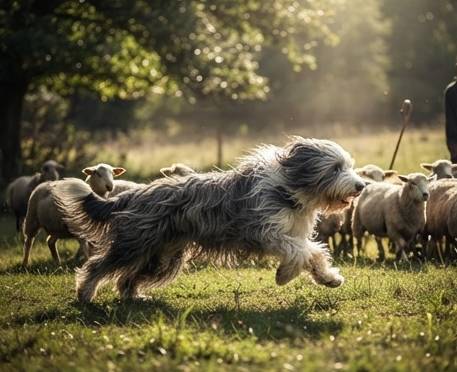
Bearded Collies are a genuinely high-energy breed bred for a full day of active herding work, and they need substantial daily exercise – long walks, off-leash play in secure areas, and mentally engaging activities like herding trials or agility. An under-exercised Beardie often channels that unused energy into unwanted behaviors like excessive barking or destructiveness. Herding-instinct activities in particular tend to satisfy this breed more deeply than plain physical exertion alone, since the underlying drive is as much mental as physical.
Grooming
The Bearded Collie’s coat is, without question, one of the most demanding in the Herding Group. Near-daily brushing down to the skin is necessary to prevent matting, particularly around the ears, armpits, and hindquarters where friction is highest. Regular bathing helps manage the coat’s texture, and many pet owners opt for a shorter, more manageable trim rather than maintaining full show-length coat at home. Learning proper double-coat grooming [Internal Link] technique early – brushing in layers down to the skin rather than just skimming the surface – makes a real difference in how much time the routine ultimately takes.
Health and Lifespan
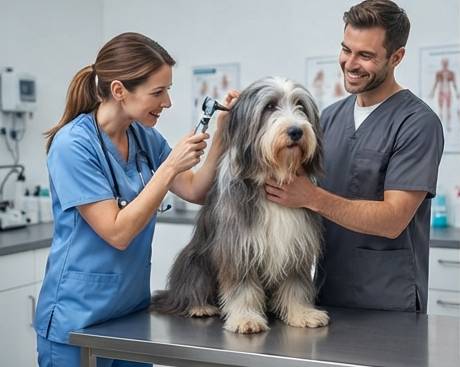
Bearded Collies typically live 12 to 14 years and are considered a generally healthy breed, though several conditions are well-documented and worth understanding before bringing one home.
| Condition | What It Is | What Owners Should Watch For |
| Hip dysplasia | Abnormal hip joint development leading to laxity and arthritis over time | Difficulty rising, reluctance to jump, altered gait |
| Hypothyroidism | An underactive thyroid gland, easily managed with daily medication | Weight gain despite normal eating, lethargy, skin problems |
| Addison’s disease | A hormonal disorder affecting adrenal gland function | Lethargy, vomiting, poor appetite, difficulty with stress |
| Eye conditions | Various inherited eye issues documented in the breed | Cloudiness, vision changes, excessive tearing |
Hip dysplasia [Internal Link] and thyroid screening are both standard, reasonable things to ask a breeder about, and hypothyroidism [Internal Link] testing in particular is worth discussing given how well-documented the condition is in the breed.
Nutrition
A high-quality diet formulated for active, medium-to-large breeds suits the Bearded Collie well, with portions adjusted to match its genuinely high activity level rather than a sedentary baseline.
Cost and Adoption
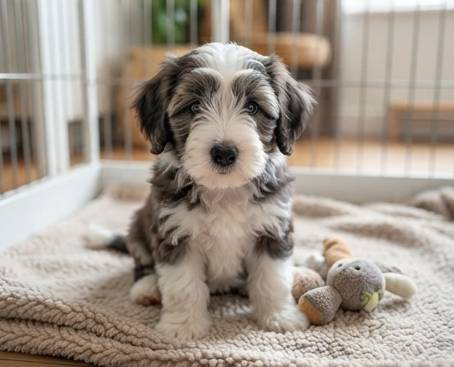
Bearded Collie puppies from health-tested breeders typically range from around a thousand to over two thousand dollars, and prospective owners should ask specifically about hip, thyroid, and Addison’s disease history in the puppy’s parents. Because the breed’s grooming and exercise demands sometimes surprise owners who fell for the look rather than the lifestyle, Bearded Collie-specific rescue organizations exist and are worth considering as a genuinely responsible adoption path. Meeting the puppy’s parents in person, when possible, also gives a realistic preview of adult coat texture and energy level that photos alone rarely capture.
Frequently Asked Questions
What is a Bearded Collie?
The Bearded Collie is a Scottish herding breed known for its shaggy double coat, exuberant temperament, and a modern history that traces back to a single accidental litter in 1944.
Is a Bearded Collie the same as an Old English Sheepdog?
No – the Bearded Collie is leaner, has a longer tail, and originates from Scotland, while the Old English Sheepdog is larger, more heavily coated, and originates from England.
How much grooming does a Bearded Collie need?
Near-daily brushing is required to prevent matting; this is one of the more grooming-intensive breeds in the Herding Group.
Are Bearded Collies good with kids?
Generally yes – Bearded Collies are playful and sturdy with children, though supervision is wise given their size and enthusiasm.
Do Bearded Collies shed?
Bearded Collies shed moderately but are prone to matting if not brushed regularly, which is a bigger practical concern than shedding volume alone.
What health problems do Bearded Collies have?
Common concerns include hip dysplasia, hypothyroidism, Addison’s disease, and various inherited eye conditions.
How much does a Bearded Collie cost?
Puppies from health-tested breeders typically range from around a thousand to over two thousand dollars; breed-specific rescues also offer a responsible adoption path.
Conclusion
The Bearded Collie’s story is a reminder that some of the most beloved dog breeds survive by accident as much as by design – this one exists in its modern form because one woman fell in love with a puppy she never meant to buy. Understanding the real grooming commitment, the exercise needs, and the breed’s bouncy, independent temperament before bringing one home is the clearest path to honoring that unlikely legacy well.