Bichon Frise: The Complete Guide to France’s Resilient Royal Companion
Bichon Frise
Few small companion breeds have a history as genuinely dramatic as the Bichon Frise’s: a Mediterranean lapdog that rose to become King Henry III of France’s constant companion, carried in a basket suspended from his neck, then lost everything when the French Revolution sent its noble owners to prison and the guillotine – only to reinvent itself as a beloved circus performer before returning to favor a century later. This guide gives that full story its due, alongside an honest, precise answer to one of the most-asked questions about this breed: is it actually hypoallergenic?
Bichon Frise Quick Facts
The Bichon Frise descends from the Barbet, was a fixture of the French royal court by the 13th century, and wasn’t granted full AKC recognition until 1973 after a centuries-long journey from palace to street to show ring.
| Attribute | Detail |
| AKC Group | Non-Sporting Group (recognized 1973) |
| FCI Group | Group 9, Section 1, Standard No. 215 |
| Country of Origin | France/Belgium (Mediterranean ancestry) |
| Height | 9.5-11.5 in |
| Weight | 12-18 lb |
| Lifespan | 12.5-15 years |
| Coat | Curly, single-layer, continuously growing |
| Colors | White |
| Temperament | Cheerful, affectionate, people-oriented, playful |
What Is a Bichon Frise?
From the Barbet to the Royal Courts of Europe
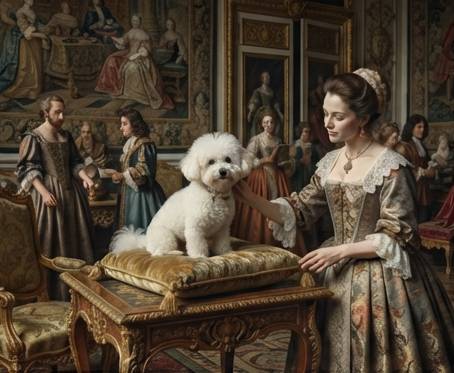
The Bichon Frise descends from the Barbet, a water dog whose name gave rise to “Barbichon,” later shortened simply to “Bichon.” Small dogs of this general type were traded around the Mediterranean basin for centuries, with much of the breed’s early modern development believed to have taken place on Tenerife, in Spain’s Canary Islands. By the 13th century, the breed had become closely associated with European nobility, and its most famous royal devotee was King Henry III of France, who reigned from 1574 to 1589. Henry was reportedly so attached to his Bichons that he carried them everywhere in a basket suspended from his neck by ribbons, a detail that captures just how thoroughly this breed had embedded itself in court life.
A Fall From Grace: The French Revolution and the Circus Years
The French Revolution, beginning in 1789, ended the Bichon Frise’s aristocratic golden age abruptly and permanently. As the breed’s noble owners were imprisoned or executed one by one, their Bichons lost their place in the great houses and palaces of France almost overnight. Rather than disappearing, though, the breed found new work: street entertainers and organ grinders took in these bright, agile dogs and trained them to walk on their hind legs, turn somersaults, and perform tricks for coins. Throughout the 19th century, the Bichon Frise became a familiar sight in European circuses and city streets, its trainability and charm keeping it employed even after high society had moved on to other breeds.
Postwar Revival and AKC Recognition
Interest in the Bichon Frise as a formal breed began to recover after World War I, when a small number of dedicated fanciers in France and Belgium started organized breeding programs using the dogs that remained from the circus and street-dog era. The breed’s establishment in the United States came decades later, in 1956, when Helene and Francois Picault brought six Bichons from Dieppe, France, and went on to produce the first American-bred litter. The AKC placed the breed in its Miscellaneous class in 1971, then granted full recognition in the Non-Sporting Group in April 1973 – closing out a journey from royal lapdog to street performer to recognized breed that took the better part of two centuries.
Bichon Frise vs. Poodle vs. Maltese
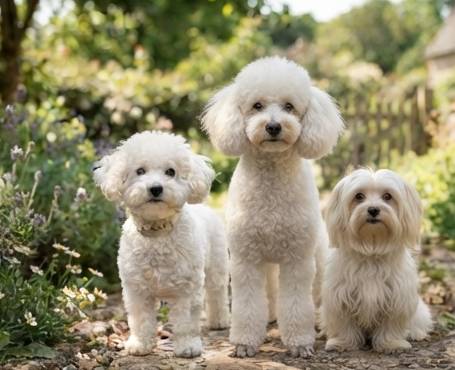
Small, white, and curly-coated dogs get confused with each other constantly, so here’s a direct comparison against the [Poodle] and the [Maltese].
| Attribute | Bichon Frise | Poodle (Toy/Mini) | Maltese |
| Coat | Curly, single layer, continuously growing | Curly or corded, single layer, continuously growing | Long, straight, silky, single layer |
| Size | 12-18 lb | Toy: 4-6 lb, Mini: 10-15 lb | 4-7 lb |
| Distinguishing Trait | Rounded, powder-puff groomed look; always white | Wide range of colors and clip styles | Straight silky coat, not curly |
The Bichon Frise and Poodle share a lot in coat mechanics, which is part of why both are commonly described as relatively allergy-friendly, but the Bichon is exclusively white while Poodles come in a wide range of colors. The Maltese looks superficially similar at a glance thanks to its small size and white coat, but its hair is straight and silky rather than curly, which is usually the fastest way to tell the two apart. The [Coton de Tulear], a close genetic relative developed from similar Barbichon-type stock, shares a comparably fluffy white coat but with a softer, more cotton-like texture.
Appearance
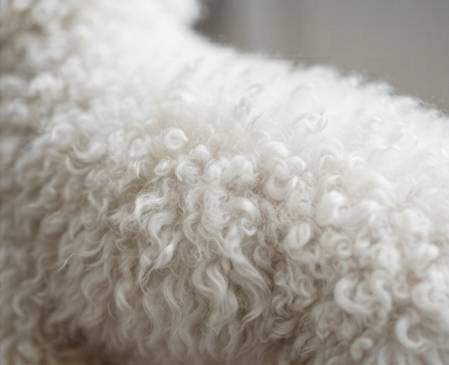
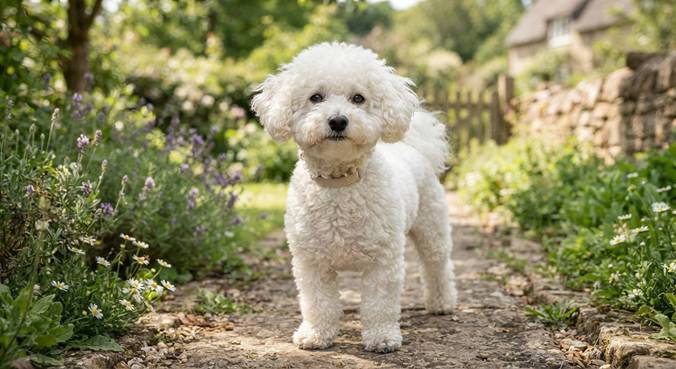
The Bichon Frise is a small, sturdy dog with a distinctive powder-puff appearance, thanks to its curly, continuously growing white coat, which groomers typically trim into a rounded silhouette. Dark, round eyes and a black nose stand out against the white coat, giving the breed its characteristically cheerful, alert expression.
Is a Bichon Frise Hypoallergenic? The Honest Answer
| Key Fact No dog is genuinely 100% hypoallergenic – allergens come from skin dander, saliva, and urine, not just hair – but the Bichon Frise’s curly, continuously growing coat sheds far less dander than typical double-coated breeds. |
No dog breed is genuinely 100% hypoallergenic, and the Bichon Frise is no exception, but it’s a reasonable choice for many allergy-sensitive households for real, specific reasons. Dog allergens come primarily from proteins in skin dander, saliva, and urine, not from hair itself, so shedding isn’t the whole picture. That said, the Bichon’s curly, continuously growing single-layer coat sheds far less loose hair and dander into the environment than a typical double-coated shedding breed, which is why many allergy sufferers tolerate Bichons better than other dogs. Anyone with significant allergies should still spend meaningful time around an individual Bichon Frise before committing, since allergic reactions vary considerably from person to person regardless of breed.
Temperament
Bichon Frises are cheerful, affectionate, and genuinely people-oriented, thriving on close daily interaction with their families. Their playful energy shows up in what owners affectionately call the “Bichon Blitz” – sudden, joyful bursts of zoomies around the house or yard. That same people-focused nature means Bichons can struggle with long stretches of isolation, and this breed generally does best in households where someone is around for meaningful chunks of the day.
Is a Bichon Frise Right for You?
Families and Children
Bichon Frises are widely considered excellent family dogs, getting along well with children and other pets thanks to their playful, easygoing nature. Their small size means supervision matters with very young children, more to protect the dog than the other way around, but temperament-wise this breed is a genuinely good match for active households.
First-Time Owners
Bichon Frises are frequently recommended for first-time dog owners, since their intelligence, eagerness to please, and responsiveness to positive training make the learning curve gentler than with many other breeds. The one thing first-time owners consistently underestimate is the grooming commitment, which is genuinely substantial and worth planning for realistically before bringing a puppy home.
Training
Bichon Frises are intelligent and eager to please, generally responding well to positive, reward-based training methods. Early socialization helps this naturally friendly breed reach its full potential, and consistent house-training routines matter, since small breeds in general can be more prone to house-training setbacks than larger dogs.
Exercise Needs
Bichon Frises don’t require a large amount of exercise given their small size, but they do need regular activity to stay balanced and happy. A couple of short, brisk daily walks, along with playtime that lets a Bichon indulge its natural “Bichon Blitz” energy bursts, generally covers this breed’s physical needs well. Many Bichons also enjoy agility training, which suits their intelligence and enthusiasm for new games.
Grooming
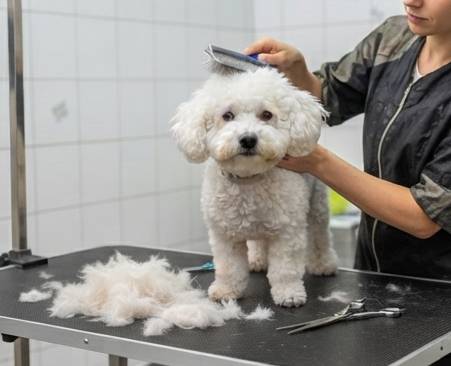
Grooming is genuinely the most demanding part of Bichon Frise ownership, and it’s worth being direct about that upfront. The curly coat needs brushing several times a week, ideally daily, to prevent tangles and matting close to the skin. Most owners schedule professional grooming every four to six weeks to maintain the breed’s signature rounded look, and that ongoing cost, often several hundred to over a thousand dollars a year, catches many new owners off guard if they haven’t budgeted for it in advance.
Health and Lifespan

Bichon Frises typically live between 12.5 and 15 years, a genuinely long lifespan for a dog of any size, though several conditions are documented closely enough in the breed to be worth understanding.
| Condition | What It Is | What Owners Should Watch For |
| Bladder stones | Mineral deposits that form in the urinary tract, more common in this breed than many others | Straining to urinate, blood in urine, frequent attempts |
| Dental disease | Plaque and tartar buildup leading to gum disease, a common issue in small breeds | Bad breath, red or swollen gums, difficulty eating |
| Diabetes | A metabolic condition affecting blood sugar regulation | Increased thirst and urination, unexplained weight loss |
| Heart disease | A leading cause of death in senior Bichon Frises | Coughing, reduced stamina, labored breathing |
[Bladder stones] and [dental disease] are common enough in this breed that regular veterinary checkups genuinely matter, and screening for [diabetes] becomes more important as a Bichon enters its senior years, when heart disease also becomes the more pressing concern.
Nutrition
A high-quality diet appropriate for a small breed suits the Bichon Frise well, with portion control mattering more than it might seem given how easily excess weight accumulates on a dog this size, and how much added strain that weight places on joints and organs over a long lifespan.
Cost and Adoption

Bichon Frise puppies from reputable breeders typically cost between one thousand and thirty-five hundred dollars, while adoption through breed rescues generally runs considerably less, often a few hundred dollars including basic veterinary care. Prospective owners should factor the ongoing grooming cost into their long-term budget alongside the upfront purchase or adoption price, since it’s a genuinely significant recurring expense for the life of the dog.
Frequently Asked Questions
What is a Bichon Frise?
The Bichon Frise is a small, cheerful French/Belgian companion breed descended from the Barbet, known for its curly white coat and long history as a royal court favorite.
Is a Bichon Frise hypoallergenic?
Not completely – no dog is 100% hypoallergenic – but its curly, continuously growing single-layer coat sheds far less dander than typical double-coated breeds, making it a reasonable option for many allergy-sensitive households.
Is a Bichon Frise the same as a Poodle or Maltese?
No – the Bichon Frise shares curly-coat mechanics with the Poodle but is always white, while the Maltese has straight, silky hair rather than a curly coat.
Are Bichon Frises good with kids?
Yes, generally, thanks to their playful, easygoing temperament, though supervision matters with very young children given the breed’s small size.
How much grooming does a Bichon Frise need?
A significant amount – brushing several times a week plus professional grooming every four to six weeks, which is often the most underestimated part of owning this breed.
What health problems do Bichon Frises have?
Bladder stones, dental disease, diabetes, and heart disease (the leading cause of death in seniors) are the most commonly documented concerns.
How much does a Bichon Frise cost?
Puppies from reputable breeders typically range from one thousand to thirty-five hundred dollars, with adoption generally costing considerably less.
Conclusion
The Bichon Frise’s history, from royal lapdog to street performer to beloved family companion, reflects a resilience that doesn’t always come through in its cheerful, powder-puff appearance. Understanding the real grooming commitment, the honest truth about its hypoallergenic reputation, and its genuine need for close companionship gives prospective owners the clearest picture of what this affectionate, surprisingly tough little dog actually needs from a home.