American Foxhound: The Complete Guide to This Historic American Scent Hound
American Foxhound
Long before there was an American Kennel Club, there was the American Foxhound — a lean, tireless scent hound with deep roots in colonial Virginia and a direct connection to George Washington’s own hunting kennels. Friendly and gentle at home, relentlessly driven by its nose outdoors, this breed has never quite shaken its working origins, even after more than a century as one of the AKC’s founding members. This guide covers what that combination means for everyday life with an American Foxhound, including the exercise and containment commitment that catches a lot of new owners off guard.
American Foxhound Quick Facts
| Attribute | Detail |
| AKC Group | Hound Group |
| FCI Group | Group 6, Section 1.1 (Large-sized hounds), Standard No. 303 |
| Country of Origin | United States (Virginia) |
| Height | 21–25 in at the shoulder |
| Weight | 60–70 lb |
| Lifespan | 11–13 years |
| Coat | Short, hard, low-maintenance |
| Colors | Any hound color; tricolor common |
| Temperament | Friendly, gentle, independent, high-energy |
What Is an American Foxhound?
Colonial Virginia Origins
The American Foxhound’s story begins with English hounds imported to the Virginia colonies as early as the 1650s. Over the following century, colonial breeders worked to develop a hound faster and more suited to the terrain and climate of the American South than its English ancestors, eventually crossing in French hound bloodlines contributed by the Marquis de Lafayette, the French general famous for his role in the American Revolution.
George Washington’s Hunting Packs
Few historical figures are as closely tied to a dog breed as George Washington is to the American Foxhound. An avid fox hunter, Washington kept detailed breeding and kennel records at Mount Vernon, importing English hounds and later incorporating Lafayette’s French hounds into his own breeding program — work that directly shaped the foundation of the modern breed.
That deep American pedigree carried the breed well beyond Mount Vernon. Foxhound packs became a fixture of organized fox hunts throughout the 18th and 19th centuries in Virginia and neighboring states, cementing the breed’s identity as a genuinely American creation rather than an imported one. That homegrown pedigree helped make the American Foxhound one of the very first breeds the American Kennel Club recognized, in 1886, placing it in the Hound Group [Internal Link] alongside relatives like the Beagle [Internal Link].
American Foxhound vs. English Foxhound
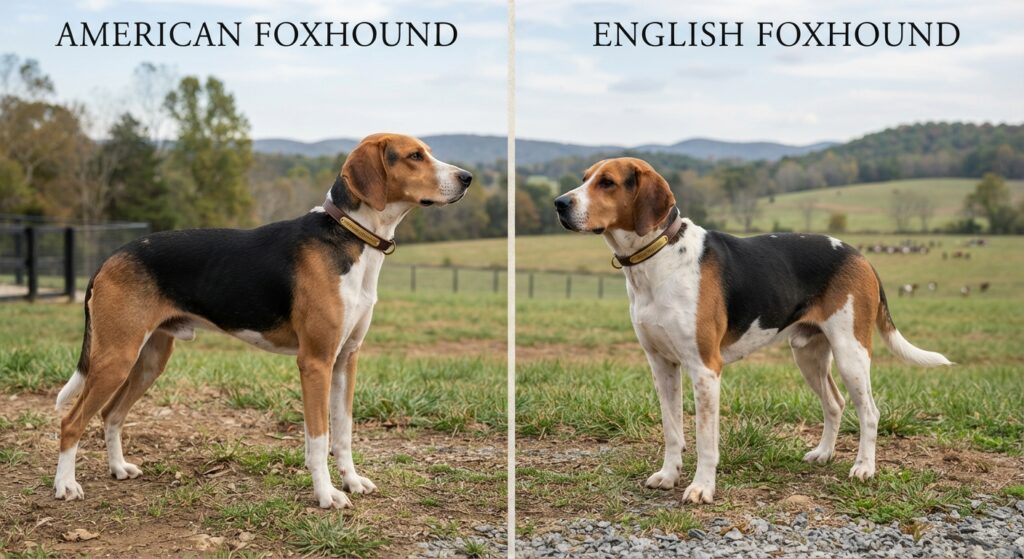
Despite sharing a name and ancestry, these are genuinely distinct breeds, and the difference trips up a lot of people searching for information on either one.
| Attribute | American Foxhound | English Foxhound |
| Build | Leaner, longer-legged, built for speed | Stockier, more heavily boned |
| Height | 21–25 in | 23–27 in |
| Popularity in US | Much more common; one of AKC’s founding breeds (1886) | Rare in the US; far more common in the UK |
| Origin | Developed in colonial Virginia from English and French hound stock | Developed in England for traditional fox hunts |
If you’re researching a foxhound in the US, there’s a good chance you’re looking at the American type described in this guide, since it’s the far more common of the two here. For a closer look at the English Foxhound [Internal Link] itself, see the related breed guide.
Appearance & Coat
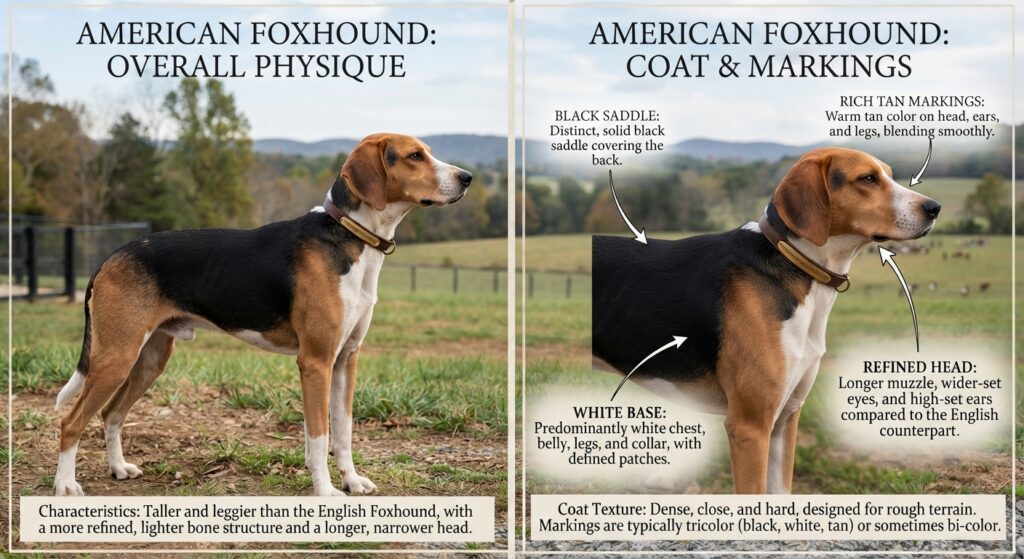
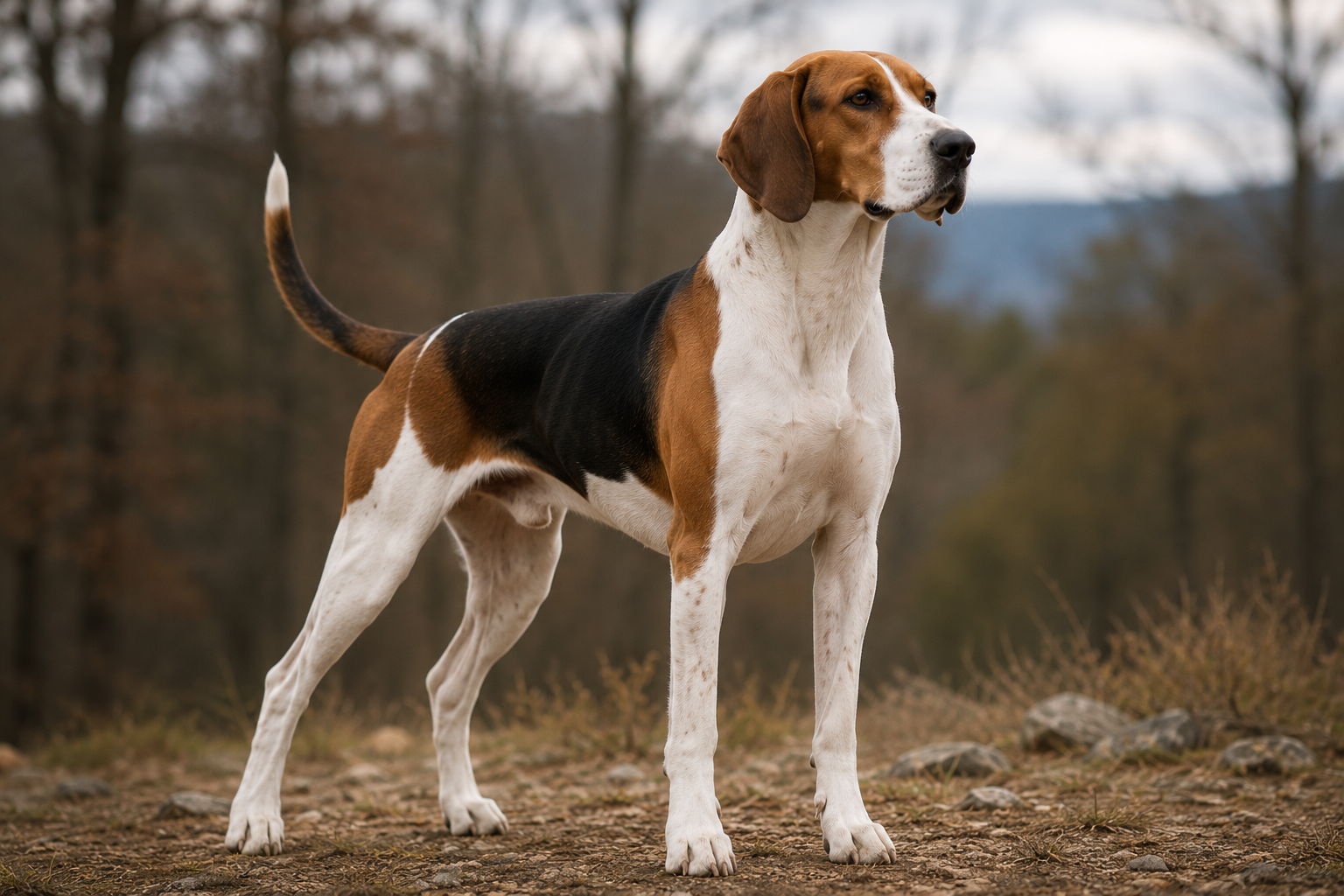
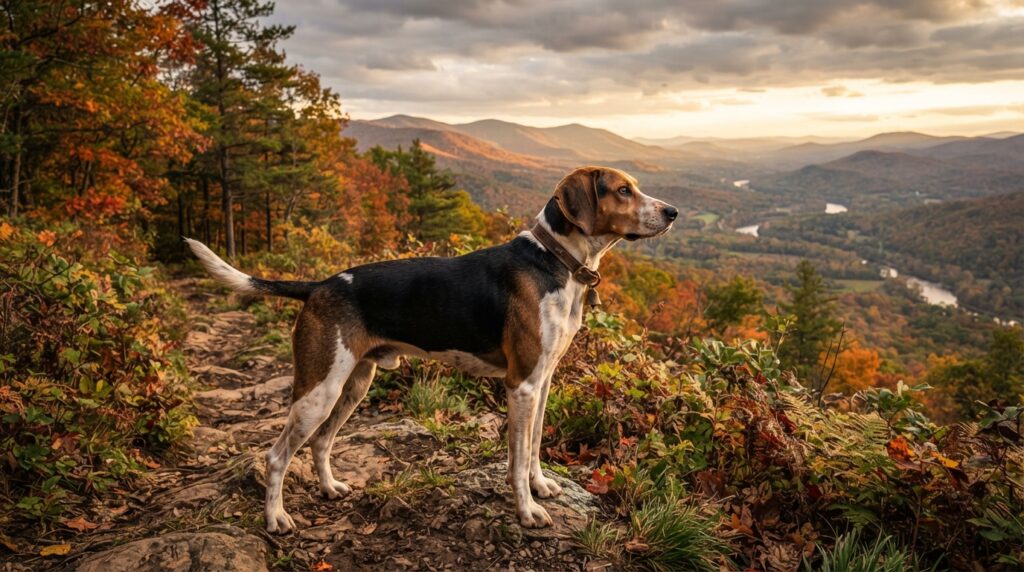
The American Foxhound has a notably leaner, more streamlined build than many other large hounds, reflecting its breeding for speed and stamina over hours of pursuit rather than raw power. The coat is short, hard, and low-maintenance, and while any hound color is acceptable under the breed standard, the classic black, tan, and white tricolor pattern is the most commonly seen.
Temperament and Personality
At home, the American Foxhound is genuinely sweet-natured: friendly, gentle, and affectionate without being clingy or demanding constant attention. Many owners describe a dog that’s happy to be near the family, join in whatever’s happening, and then settle down quietly once its energy has been spent.
That easygoing house-dog personality can shift noticeably outdoors, where centuries of breeding for independent scent work take over. A casual walk can turn into a determined tracking mission the moment an interesting scent crosses the trail, and the same dog that ignored a squirrel indoors may become singularly focused the second its nose picks something up outside.
This isn’t a quirk to train away so much as a core piece of what the breed was built to do. Owners who accept and plan around that duality — relaxed companion at home, single-minded tracker in the field — tend to have a much easier time than those who expect one personality to carry over into the other setting.
Is an American Foxhound Right for You?
First-Time Owners
This breed is a moderate challenge for first-time owners, mainly because of its independent, scent-driven streak rather than any issue with temperament. Owners who go in prepared for real training patience and non-negotiable containment measures tend to do well; those expecting an easily biddable dog often find the independence frustrating.
Families and Children
American Foxhounds are typically excellent with children, drawing on the same gentle, easygoing nature that defines the breed at home, though their size and energy call for supervision with very young kids during play.
Other Dogs
Given a long history as a pack-hunting breed, American Foxhounds are generally very sociable with other dogs and often do best with canine company, whether that’s another dog in the household or regular social opportunities. A solo Foxhound left without any canine interaction can grow noticeably more anxious or vocal than one with a regular playmate.
Space and Containment Needs
This is the area that catches the most new owners by surprise. An American Foxhound’s scent drive makes off-leash reliability genuinely difficult to achieve, and a securely fenced yard isn’t optional — it’s a baseline requirement. Invisible fencing alone is often insufficient once a dog is fully absorbed in a scent trail.
Training an American Foxhound
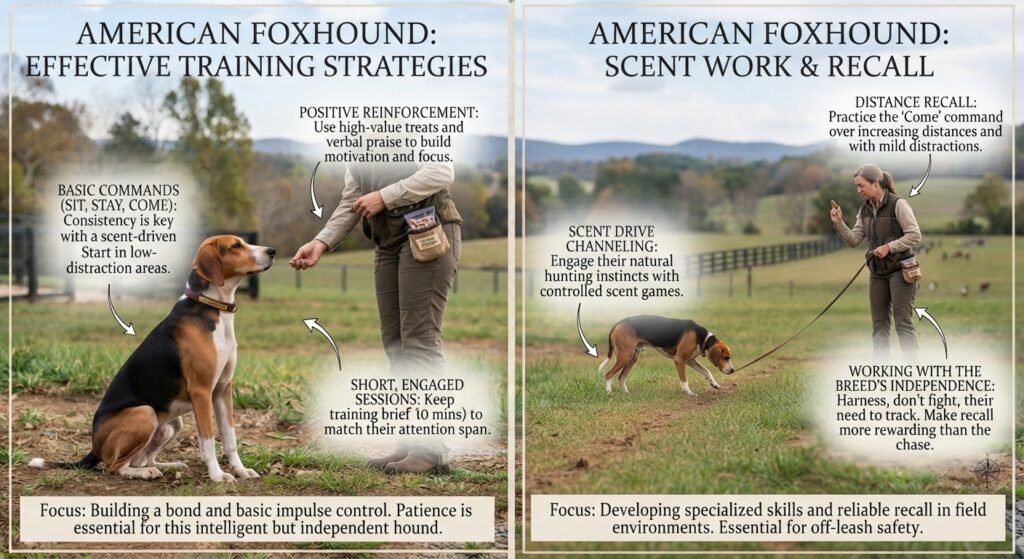
American Foxhounds are intelligent, but that intelligence was shaped by generations of breeding for independent decision-making in the field, not eager deference to a handler. Recall in particular tends to be a genuine weak point: once a Foxhound locks onto a scent, the pull to follow it can override even well-practiced commands.
Patient, consistent training with high-value rewards works better than repetition alone, and starting early with a strong foundation in basic obedience pays off later. Most experienced owners treat secure leashes and fully fenced areas as a permanent part of the routine rather than a training stage to eventually outgrow.
Crate training and structured house routines tend to work well for the breed, and early socialization helps an American Foxhound puppy grow into a confident adult that’s comfortable around new people, dogs, and environments. Group training classes can be particularly useful given the breed’s naturally sociable streak toward other dogs — a Foxhound is often more motivated to work well in a class setting with canine company nearby than in an isolated one-on-one session.
Exercise Needs
American Foxhounds have serious energy reserves that need a real outlet: plan on one to two hours of exercise daily, and a quick walk around the block generally won’t cut it. Long walks, runs, hikes, and active field time all suit the breed’s stamina far better than a short, low-intensity outing.
Containment Note: All of that exercise needs to happen on a secure leash or inside a fully fenced area. Given the breed’s strong scent drive and documented recall challenges, off-leash exercise in unsecured spaces carries real risk of the dog simply following a trail out of sight and earshot.
Grooming
The American Foxhound’s short, hard coat is refreshingly low-maintenance — weekly brushing with a rubber curry brush or grooming mitt is generally enough to keep shedding manageable, remove loose hair, and keep the coat healthy, and the breed sheds at a fairly consistent, moderate level year-round rather than blowing coat seasonally like double-coated breeds.
The more important grooming task is ear care [Internal Link]: the breed’s long, low-set ears are predisposed to infection because they trap moisture and limit airflow, so regular checking and cleaning, ideally on a vet-recommended schedule, helps catch problems early. Routine nail trims and dental care round out the basic grooming routine, and given the breed’s active outdoor lifestyle, a quick check for burrs, ticks, and minor scrapes after field time is a good habit to build.
Health and Lifespan
Most American Foxhounds live between 11 and 13 years and are generally considered a healthy, hardy breed. Still, a handful of conditions are worth watching for.
| Condition | What It Is | What Owners Should Watch For |
| Hip dysplasia | Abnormally formed hip joint | Limping, stiffness, reluctance to jump |
| Ear infections | Common in long, low-set-eared breeds due to reduced airflow | Head shaking, odor, redness, scratching at ears |
| Thrombocytopathy | A platelet function disorder more documented in this breed than most | Excessive bruising or bleeding after minor injury |
| Bloat (GDV) | Life-threatening stomach distension/twisting | Restlessness, distended abdomen, unproductive retching — emergency care |
| Obesity | Weight gain if exercise needs go unmet | Reduced activity tolerance, joint strain |
Hip dysplasia [Internal Link] and ear infections are the two most commonly monitored conditions in the breed, though the platelet disorder thrombocytopathy is documented more often in American Foxhounds than in most other breeds and is worth discussing with a breeder or vet.
Nutrition
A high-quality, active-dog formula suited to a large, high-energy breed is a solid nutritional foundation for an American Foxhound. Because obesity becomes a real risk if the breed’s substantial exercise needs aren’t consistently met, portion control matters — a Foxhound that isn’t getting its daily hour or two of activity needs its food intake adjusted accordingly rather than left on autopilot.
Working or actively hunting Foxhounds may need a higher-calorie formula to match their energy output, while a companion Foxhound living a more typical pet lifestyle should be fed according to its actual activity level rather than the breed’s reputation for high energy. A veterinarian or canine nutritionist can help calibrate portions if weight starts creeping up despite regular exercise.
Cost and Adoption
Reliable, consistent pricing data for American Foxhound puppies is harder to find than for more commonly bred companion breeds, largely because the breed is still bred primarily by hunting kennels and small specialty breeders rather than high-volume operations. Prices vary widely by breeder, region, and whether a puppy comes from show or working lines — prospective owners should expect a broad range and confirm current pricing directly with breeders rather than relying on a single published figure.
Because the breed has a long history of being kept in hunting packs, and because hunting kennels periodically rehome hounds that don’t work out for field use, breed-specific rescue [Internal Link] and shelter adoption is a relatively common and often more affordable path to ownership than buying a puppy. Rescue groups familiar with the breed can also be a valuable resource for understanding whether a specific dog’s temperament and energy level are a good match for your household.
Frequently Asked Questions
What is an American Foxhound?
The American Foxhound is a large, friendly scent hound developed in colonial Virginia, one of the first breeds recognized by the AKC in 1886, with deep historical ties to George Washington’s hunting kennels.
What’s the difference between an American and English Foxhound?
The American Foxhound is leaner and more built for speed, while the English Foxhound is stockier and more heavily boned. The American type is far more common in the US; the English type is more common in the UK.
Are American Foxhounds good family dogs?
Yes, they’re typically gentle and affectionate with children, though their size, energy, and strong scent drive call for supervision and secure containment during outdoor time.
How much exercise does an American Foxhound need?
Plan on one to two hours of daily exercise. This is a high-stamina working breed that needs real physical activity, not just a short walk.
Are American Foxhounds easy to train?
They’re intelligent but independently minded, especially around scent work, which makes recall a genuine training challenge. Patient, consistent training and secure containment are essential.
What health problems do American Foxhounds have?
Common concerns include hip dysplasia, ear infections, thrombocytopathy, bloat, and obesity if exercise needs aren’t met.
How much does an American Foxhound cost?
Puppy pricing data is inconsistent across sources, so costs vary widely; breed-specific rescue and adoption is a common and often more affordable alternative.
Conclusion
The American Foxhound carries more American history in its pedigree than almost any other breed, tracing directly back to George Washington’s own hunting kennels and standing among the AKC’s founding breeds. That history comes with real practical demands today: a genuine daily exercise commitment, secure fencing that isn’t optional, and a training approach that respects the breed’s independent, scent-driven nature rather than fighting it. For owners ready to meet those needs, the reward is a gentle, sociable companion with more stamina and history than its friendly house-dog demeanor might suggest.