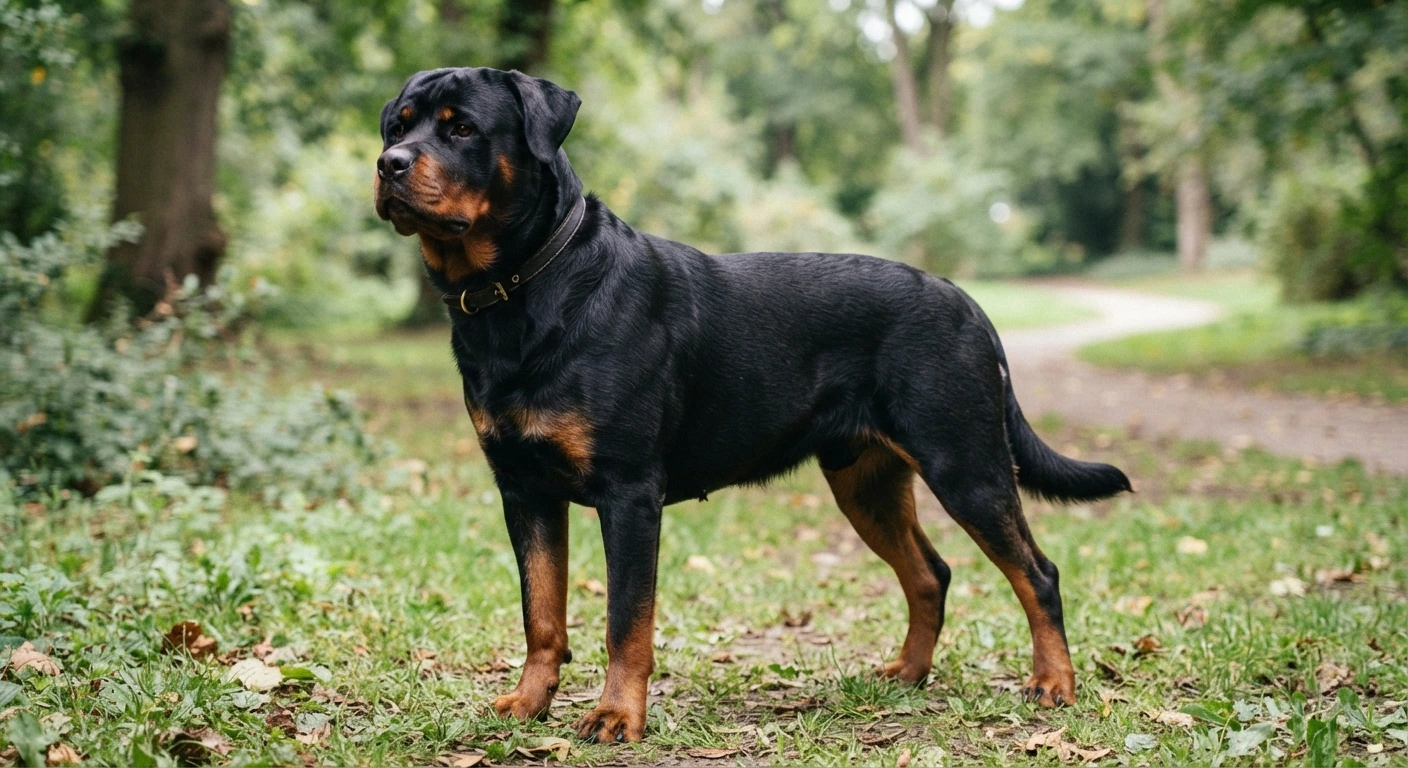
Rottweiler: The Complete Breed Guide
Confident, powerful, and quietly devoted, the Rottweiler is one of the most recognizable working breeds in the world — and one of the most misunderstood. Behind the muscular frame and watchful expression is a dog that, with the right upbringing, is affectionate with family, patient with children, and eager to work alongside the people it loves.
This guide covers everything a current or prospective Rottweiler owner needs to know: history, physical traits, temperament, training, exercise, grooming, health, and the real costs of ownership.
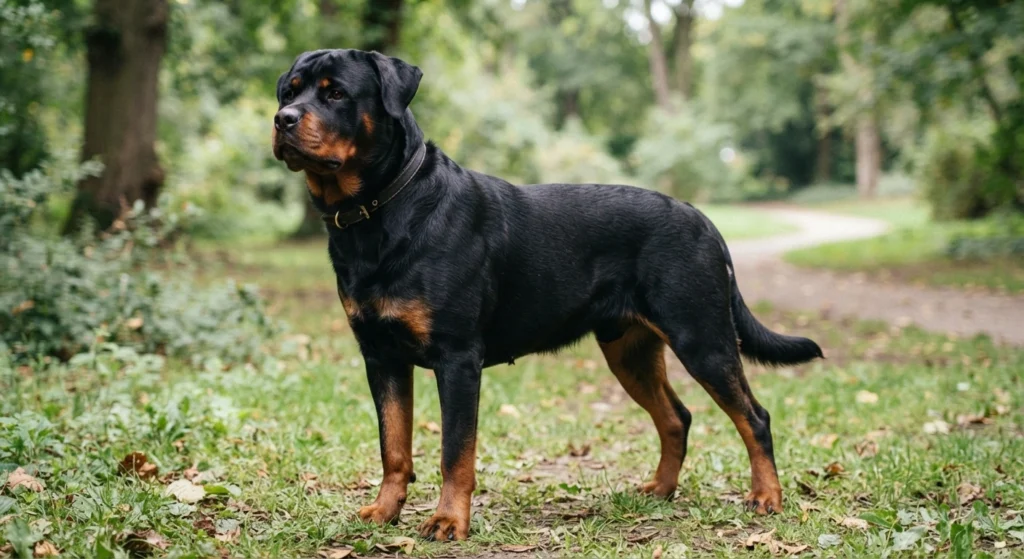
Rottweiler at a Glance
| Trait | Details |
| Group | Working Group (AKC), Group 2 (FCI) |
| Origin | Germany (city of Rottweil) |
| Height | Males 24–27 in; Females 22–25 in |
| Weight | Males 95–135 lb; Females 80–100 lb |
| Coat | Straight, coarse, dense double coat |
| Colors | Black with rust to mahogany markings |
| Lifespan | 8–10 years |
| Temperament | Confident, calm, protective, loyal |
| Exercise Needs | 60–90 minutes daily |
| Grooming | Low-maintenance; moderate shedder |
| Trainability | High; responds best to positive reinforcement |
| Good With Kids | Yes, with proper socialization and supervision |
History and Origin
The Rottweiler’s roots trace back to the drover dogs of the Roman legions, which accompanied soldiers through the Alps and helped herd cattle for food along the march. When the Romans settled in what is now the German town of Rottweil, these dogs mixed with local breeds and took on a new job: driving livestock to market and guarding the proceeds. Butchers in the region tied purses of money around their dogs’ necks, and the breed became known as “Rottweiler Metzgerhund,” or Rottweil butcher’s dog.
As rail transport replaced cattle drives in the 19th century, demand for the breed collapsed, and the Rottweiler nearly disappeared. It was revived in the early 20th century as a police and military dog, prized for its strength, intelligence, and trainability. The American Kennel Club recognized the Rottweiler in 1931, and today it consistently ranks among the AKC’s most popular breeds.
Physical Characteristics
Rottweilers are built for endurance and power rather than speed. Males stand 24 to 27 inches at the shoulder and typically weigh 95 to 135 pounds; females run smaller, standing 22 to 25 inches and weighing 80 to 100 pounds. The breed standard calls for a compact, muscular body with a broad chest, a level back, and a confident, deliberate gait.
The double coat has a straight, coarse, dense outer layer and a softer undercoat that thickens in cold climates. Coat color is always black with clearly defined rust-to-mahogany markings above each eye, on the cheeks and muzzle, on the chest, and down the legs. Rust markings should never exceed roughly ten percent of the body color — a detail breed judges look for at conformation shows.
Temperament and Personality
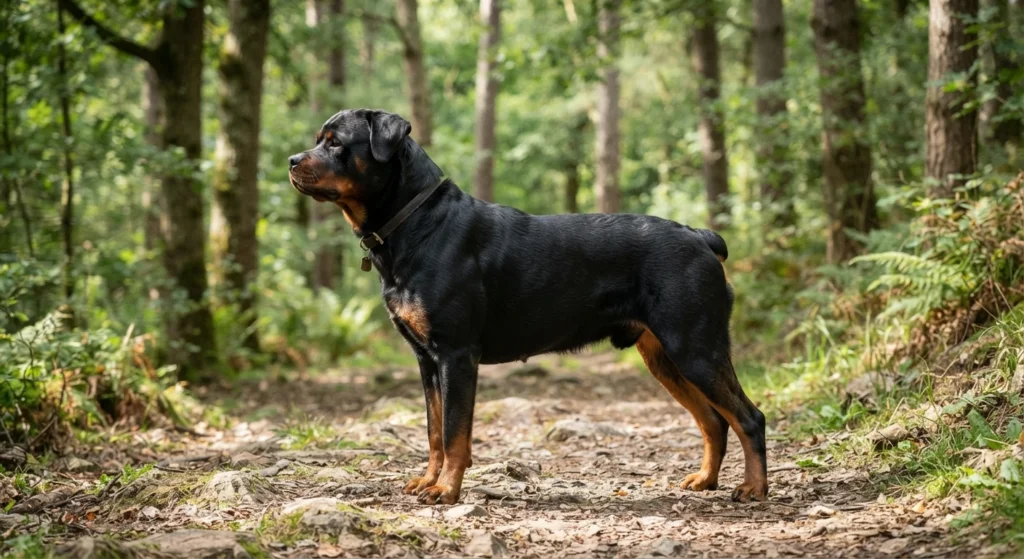
A well-bred, well-socialized Rottweiler is calm and self-assured rather than aggressive. The breed standard describes an ideal temperament as “basically calm, confident, and courageous,” with a natural aloofness toward strangers that should never tip into shyness or unprovoked aggression.
Within the family, Rottweilers tend to be affectionate to the point of comedy — many will attempt to sit in an owner’s lap well into adulthood. They bond closely with their people and are often described as “velcro dogs” that want to be wherever the family is. That same loyalty is what makes them effective watchdogs: a Rottweiler is naturally protective of home and family without needing to be trained for it.
The breed’s reputation for aggression is largely a product of poor breeding, inadequate socialization, and irresponsible ownership rather than inherent temperament. Early, consistent socialization and structured training are what separate a stable, trustworthy Rottweiler from a problem dog.
Living With a Rottweiler
Families and children:

Rottweilers can be excellent family dogs and are generally patient with children they’re raised alongside. Because of their size and strength, interactions between young children and any large dog should be supervised, and kids should be taught how to approach and handle the dog respectfully.
Other pets:
With early exposure, Rottweilers can live peacefully with cats and other dogs. Same-sex dog aggression can appear in some lines, so introductions should be gradual and supervised, particularly with unfamiliar animals.
Living space:
The breed adapts well to houses with yards but can also do fine in larger apartments if given sufficient daily exercise. What it cannot tolerate well is prolonged isolation — a bored, under-exercised Rottweiler is prone to destructive behavior.
Training and Socialization
Rottweilers are highly intelligent and rank among the more trainable working breeds, but that intelligence cuts both ways: an under-trained Rottweiler will find its own — often inconvenient — ways to entertain itself.
Positive reinforcement is the most effective and safest training approach. Short, consistent sessions of 10 to 15 minutes, built around treats, praise, and play, produce better long-term results than harsh corrections, which can damage trust with this breed. Socialization should begin in puppyhood, ideally between three and fourteen weeks of age, and should include controlled exposure to new people, animals, sounds, and environments. Because Rottweilers can develop strong protective instincts, early socialization is not optional — it’s the single most important investment an owner can make.
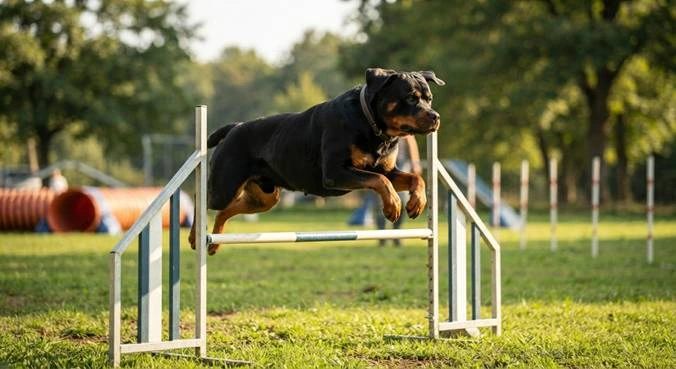
Given their size, strength, and working heritage, most Rottweilers benefit from formal obedience classes, and many owners go on to compete in AKC sports such as obedience, tracking, herding, and weight pulling.
Exercise and Mental Stimulation
As a working breed, the Rottweiler needs real physical activity, not just a short walk around the block. Plan on 60 to 90 minutes of exercise a day, split across multiple sessions — brisk walks, jogging, structured play, and swimming are all good options.
Mental stimulation matters just as much as physical exercise. Puzzle toys, scent work, and short training sessions help prevent the boredom that often shows up as chewing, digging, or excessive barking. Rottweilers that get both physical and mental outlets tend to be calmer and easier to live with indoors.
Grooming and Coat Care
The Rottweiler’s short double coat is relatively low-maintenance. Weekly brushing is enough most of the year to remove loose hair and distribute natural oils, but shedding increases noticeably during seasonal coat blows in spring and fall, when brushing two to three times a week helps manage the extra hair around the house.
Beyond coat care, a full grooming routine should include:
- Nail trims every three to four weeks
- Regular ear checks and cleaning to prevent infection
- Routine dental care, including brushing several times a week
- Occasional bathing — only as needed, since over-bathing can dry out the skin
Nutrition and Feeding
Rottweilers do best on a high-quality diet formulated for large or giant breeds, with portion sizes adjusted for the dog’s age, weight, and activity level. Because the breed is prone to obesity, careful portion control and limited table scraps are important — extra weight puts added strain on joints already at risk for dysplasia.
Feeding two smaller meals a day rather than one large meal is widely recommended, partly for weight management and partly because it may reduce the risk of bloat, a life-threatening condition discussed below. Large-breed puppies also benefit from carefully controlled growth-formula food to avoid developing too quickly, which can contribute to skeletal problems later in life.
Health and Lifespan
The average Rottweiler lives 8 to 10 years. Like most large, deep-chested breeds, Rottweilers are prone to a specific set of hereditary and structural health issues that prospective owners should understand before bringing one home.
| Condition | What It Is | What Owners Should Watch For |
| Hip dysplasia | Malformation of the hip joint; affects an estimated 20% of the breed | Reluctance to climb stairs, slower rising, stiffness after rest |
| Elbow dysplasia | Similar joint malformation affecting the elbow | Front-leg lameness, especially after exercise |
| Gastric dilatation-volvulus (bloat) | Stomach fills with gas and twists, cutting off blood flow; can be fatal within hours | Unproductive retching, distended or rigid abdomen, sudden restlessness |
| Osteosarcoma | An aggressive bone cancer more common in large breeds | Unexplained limping or swelling in a limb |
| Cardiac issues (including subaortic stenosis) | Structural heart abnormalities present in some lines | Fatigue, fainting, exercise intolerance |
| Eye conditions | Including entropion and progressive retinal atrophy | Squinting, vision changes, cloudiness |
Responsible breeders screen for hip and elbow dysplasia (via OFA or PennHIP evaluation) and cardiac disease before breeding. Prospective buyers should always ask to see these health clearances. Routine veterinary checkups, a healthy weight, and prompt attention to any change in gait or appetite go a long way toward catching problems early.
Cost of Owning a Rottweiler
| Expense | Typical Range |
| Puppy from a reputable breeder | $1,500–$3,000 (champion bloodlines: up to $8,000+) |
| Rescue or shelter adoption | $50–$500 |
| First-year setup and veterinary costs | $1,500–$3,000 |
| Ongoing annual costs (food, routine vet care, grooming) | $1,000–$2,500 |
| Lifetime cost of ownership | $15,000–$40,000+ |
Beyond the sticker price, prospective owners should budget for pet insurance or a health savings fund, given the breed’s predisposition to costly conditions like hip dysplasia and bloat.
Finding a Rottweiler: Breeders and Rescue
Anyone looking for a Rottweiler puppy should work with a breeder who health-tests both parents, raises puppies in the home rather than a kennel, and welcomes questions about temperament, lineage, and socialization practices. National and regional Rottweiler clubs typically maintain breeder referral lists and can be a useful starting point.
Rescue is also a strong option. Breed-specific Rottweiler rescues and shelters regularly place adult dogs — often already trained and past the demanding puppy stage — at a fraction of breeder prices. [Internal Link — Rottweiler Rescue Guide]
Frequently Asked Questions
Are Rottweilers naturally aggressive?
No. Rottweilers are naturally confident and protective, but aggression is not an inherent breed trait — it typically results from poor breeding, lack of socialization, or inadequate training.
Are Rottweilers good with kids?
Yes, when properly socialized and raised alongside them. Because of their size and strength, interactions with young children should still be supervised.
How much exercise does a Rottweiler need?
Most adult Rottweilers need 60 to 90 minutes of physical activity a day, combined with mental stimulation such as training or puzzle toys.
How long do Rottweilers live?
The typical Rottweiler lifespan is 8 to 10 years.
Do Rottweilers shed a lot?
They shed moderately year-round, with heavier shedding during seasonal coat blows in spring and fall.
How much does a Rottweiler cost?
Puppies from reputable breeders generally cost $1,500 to $3,000, while rescue adoption typically runs $50 to $500.
What health problems are Rottweilers prone to?
The most common concerns are hip and elbow dysplasia, bloat (GDV), certain cancers, and some cardiac and eye conditions.
Conclusion
The Rottweiler rewards owners who understand what the breed actually needs: early socialization, consistent positive training, real daily exercise, and attentive health care. Given that foundation, this powerful, historically significant working breed is capable of being one of the most loyal and level-headed companions a family can have. Anyone considering a Rottweiler should go in with realistic expectations about the time and responsibility involved — and, in return, can expect a devoted dog for the decade or so it’s around.