Ariégeois: The Complete Guide to This Rare French Scent Hound
Ariégeois
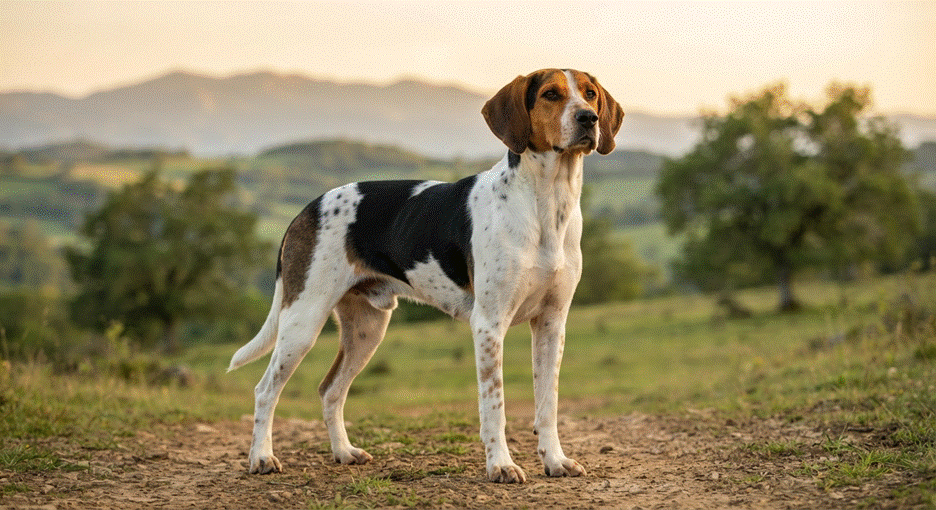
The Ariégeois is a rare, elegant medium-sized scent hound from the Ariège département in southern France, a breed with a genuinely dramatic history: it nearly disappeared during World War II and survives today only because of dedicated preservation efforts by French breeders. Officially recognized in France since 1912 and by the FCI since 1954, the Ariégeois remains almost unknown outside its home region. This guide covers the breed’s sourced history, temperament, and health, along with honest guidance on just how difficult it is to find one outside France.
Ariégeois Quick Facts
The Ariégeois belongs to the FCI Hound Group [Internal Link], a category built around dogs bred to track and pursue game by scent.
| Attribute | Detail |
| FCI Group | Group 6, Section 1.2 (Medium-sized Hounds, with working trial); recognized 1954 |
| AKC Status | Not recognized; recognized by the UKC |
| Country of Origin | France (Ariège département, Midi-Pyrénées) |
| Height | 19.5–23 in at the shoulder |
| Weight | Approximately 55–60 lb |
| Lifespan | 10–12 years |
| Coat | Short; white or mottled white with clear-edged black patches, tan facial markings |
| Temperament | Friendly, intelligent, sociable, eager to work |
What Is an Ariégeois?
Origins in the Ariège Region of France
The Ariégeois takes its name from the Ariège département in the Midi-Pyrénées region of southern France, where it was developed as a pack-hunting scent hound. Likely ancestors include larger pack-hunting hounds such as the Grand Bleu de Gascogne [Internal Link] or the Grand Gascon-Saintongeois, crossed with local Briquet-type hounds to produce a dog with the stamina and nose of the bigger hounds in a more moderate, versatile size.
Recognition Timeline and the WWII Near-Extinction
France officially recognized the Ariégeois in 1912, giving the breed formal standing well before most of the world had heard of it. What happened next is the breed’s most distinctive and least-told story: the Ariégeois nearly disappeared entirely during World War II, when wartime conditions devastated dog breeding programs across France. A small number of dedicated French fanciers preserved the breed through careful, deliberate breeding in the years that followed, and that recovery effort is directly why the Ariégeois still exists today. The Fédération Cynologique Internationale granted the breed full international recognition in 1954, a milestone that came only because of that postwar preservation work. The breed is not recognized by the AKC, though the UKC does recognize it. That gap between international standing and US recognition is a big part of why accurate English-language information about the Ariégeois is so hard to find — without an active AKC breed club driving awareness in the US, the breed simply hasn’t developed the same visibility as its more widely known French cousins.
Appearance
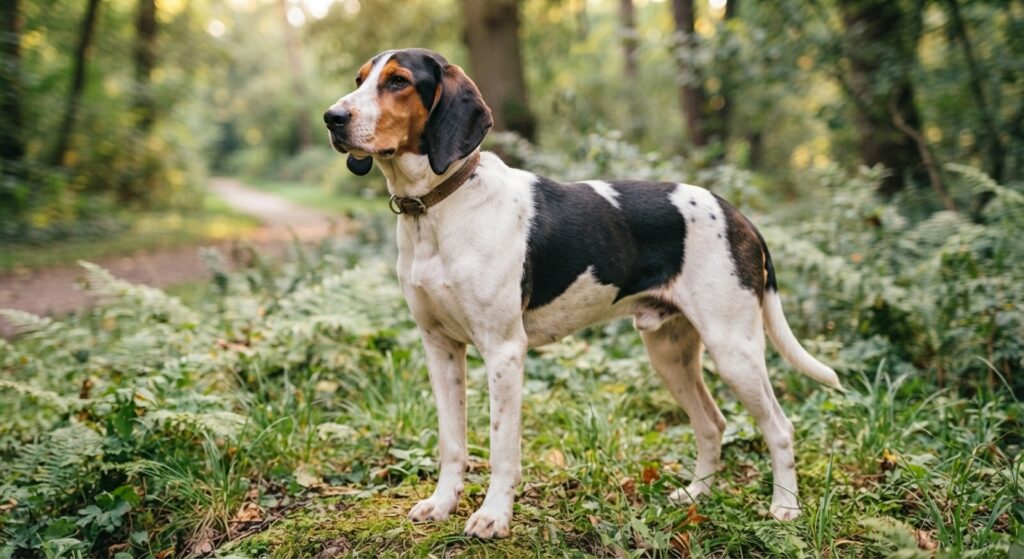
The Ariégeois is a medium-sized, elegant scent hound with a short coat that’s white or mottled white, marked with clear-edged black patches and distinctive tan markings on the face and above the eyes. The ears are soft and just long enough to reach the nose, a trait shared with many French scent hounds bred for tracking rather than raw speed. Compared to its larger ancestors, the overall silhouette is lighter and more refined, built for sustained cross-country work rather than raw size or power.
Temperament
Breed sources consistently describe the Ariégeois as friendly, intelligent, attentive, and genuinely eager to work. Its long history as a pack-hunting breed shows up clearly in its temperament: the Ariégeois typically gets along well with other dogs, showing little to no aggression toward its own kind, and tends to be sociable even with strangers rather than reserved or wary. That combination of intelligence and easygoing sociability makes it a genuinely appealing companion for owners who can meet its exercise needs. This isn’t a breed prone to the aloofness or wariness seen in some other hound and guardian types — the Ariégeois’s pack-hunting design specifically selected for dogs that work cooperatively alongside unfamiliar dogs and handlers, and that cooperative instinct carries directly into home life.
Is an Ariégeois Right for You?

Families and Children
The Ariégeois’s gentle, well-balanced temperament generally makes it a good family companion, and its friendly disposition toward people extends naturally to children with standard supervision during play.
Other Dogs
Given the breed’s deep pack-hunting heritage, the Ariégeois is typically an easy, sociable fit in multi-dog households, showing far less of the dog-selectivity seen in some other hound and guardian breeds.
Hunting Suitability
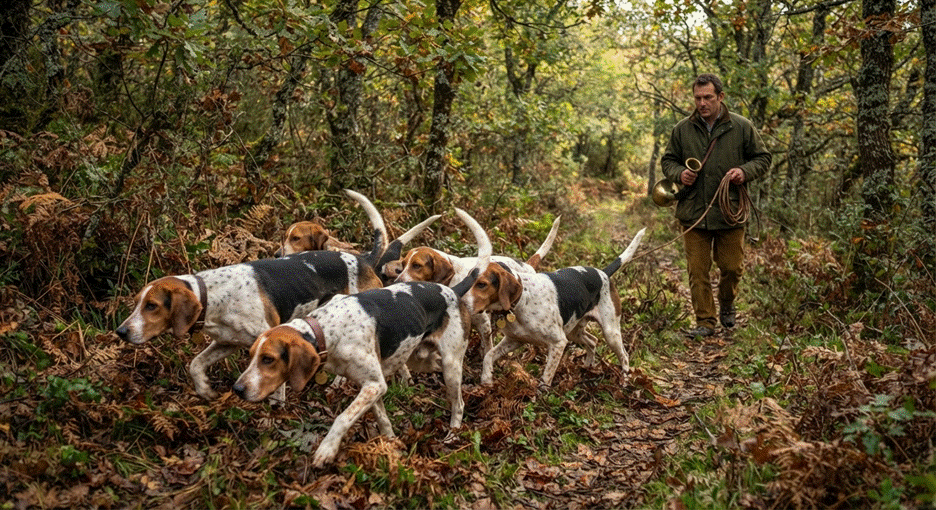
This is where the breed’s design genuinely shows. The Ariégeois hunts either alone or in a pack, working both as a courser that pursues game directly and as a driver that pushes game toward waiting hunters. It’s most successful hunting hares, though it’s also used for deer and boar. Owners drawn to the breed’s working heritage, much like those drawn to a Beagle [Internal Link] for similar scenting ability in a smaller package, tend to be the best match for the Ariégeois’s drive and nose.
Training

Ariégeois are intelligent and generally eager to work, which tends to make them responsive to consistent training, particularly when it engages their strong scenting instincts. Their pack-oriented nature means they often do well in group training settings, picking up cues from other dogs as readily as from direct instruction.
Exercise Needs
As a genuine working scent hound, the Ariégeois needs substantial daily exercise, and scenting or tracking activities suit its natural instincts particularly well. A simple walk around the block is unlikely to satisfy a breed built for hours of fieldwork, so owners should plan for real, engaging outdoor time.
Grooming
The short coat is low-maintenance: weekly brushing is generally enough to manage shedding and keep the coat healthy. Because the breed’s soft, drooping ears trap moisture and debris easily, regular ear checks and cleaning are especially important — this is the breed’s single most common health complaint, and it’s largely preventable with consistent care. Standard nail trims and dental care round out a routine that, aside from the ear-focused attention, is genuinely low-effort for owners.
Health and Lifespan

Most Ariégeois live between 10 and 12 years. A handful of conditions are worth understanding for this breed.
| Condition | What It Is | What Owners Should Watch For |
| Ear infections | The breed’s most common health issue, caused by long, drooping ears trapping moisture and debris | Head shaking, odor, redness, scratching at ears |
| Hip and elbow dysplasia | Abnormally formed joints | Limping, stiffness, reluctance to jump |
| Patellar luxation | Kneecap slips out of its normal position | Skipping or hopping gait, intermittent limping |
| Gastric dilatation-volvulus (bloat) | Life-threatening stomach distension and twisting | Restlessness, distended abdomen, unproductive retching — emergency care |
Because ear infections are so consistently the breed’s top health concern, working ear care into a regular routine does more for this breed’s long-term comfort than almost any other single habit. Responsible breeders also screen for hip dysplasia [Internal Link] and patellar luxation [Internal Link] before pairing dogs, and knowing the warning signs of gastric dilatation-volvulus [Internal Link] in advance is worth doing given how quickly the condition can become an emergency.
Nutrition
A high-quality, active-breed formula suited to a working scent hound is a solid foundation for an Ariégeois. Careful portion control supports joint health, which matters given the breed’s susceptibility to hip and elbow dysplasia.
Cost and Availability
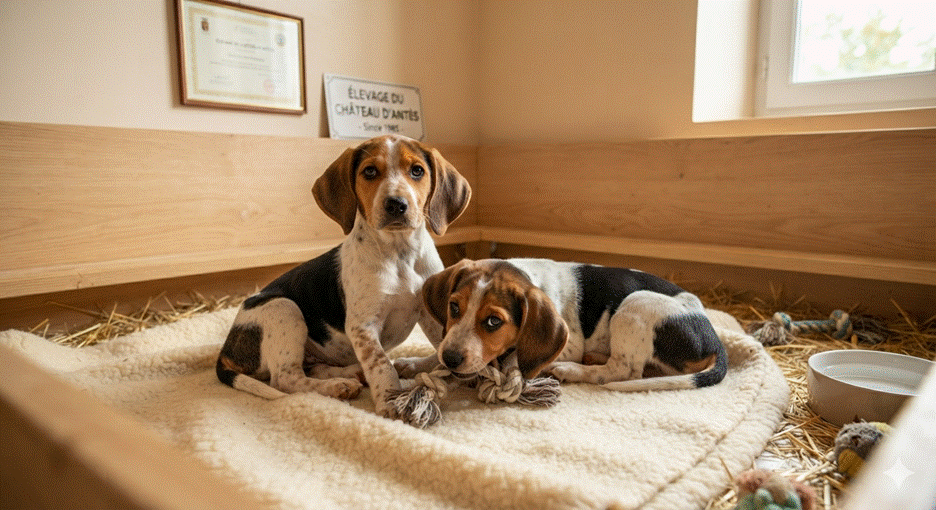
Here’s the most important practical fact for prospective owners outside France: the Ariégeois is genuinely, significantly rare beyond its home region, with very few breeders established outside France and essentially no reliable import pipeline into the US. Prospective owners should treat finding an Ariégeois as a long-term, patience-requiring project rather than a straightforward purchase, and should expect to research French breed clubs directly and potentially navigate international import logistics rather than finding a local breeder. Pricing in this scenario is difficult to generalize, since it depends heavily on the specific breeder, import costs, and travel or shipping arrangements rather than any standardized figure — budgeting well beyond a typical domestic puppy price is realistic for most import scenarios.
Frequently Asked Questions
What is an Ariégeois?
The Ariégeois is a rare, medium-sized French scent hound from the Ariège département, recognized in France since 1912 and by the FCI since 1954.
Is the Ariégeois a rare breed?
Yes, extremely — it’s uncommon even within France and very difficult to find outside the country.
Is the Ariégeois recognized by the AKC?
No, the AKC does not recognize the breed, though the UKC does.
What happened to the Ariégeois during World War II?
The breed nearly disappeared during the war, when wartime conditions devastated French dog breeding programs. A small group of dedicated fanciers preserved it through careful postwar breeding, directly enabling its 1954 FCI recognition.
Are Ariégeois good family dogs?
Yes, generally — they’re described as friendly, gentle, and sociable, making them good companions for families willing to meet their exercise needs.
What health problems do Ariégeois have?
Ear infections are the most common concern given the breed’s long, drooping ears, along with hip and elbow dysplasia, patellar luxation, and bloat risk.
How can I find an Ariégeois outside France?
It’s genuinely difficult. Very few breeders exist outside France, so prospective owners should expect to research French breed clubs directly and plan for a long search.
Conclusion
The Ariégeois is a breed defined by resilience: a genuinely elegant French scent hound that nearly vanished during World War II and survives today only because of dedicated postwar preservation work. That history, combined with a friendly, sociable temperament and real working ability, makes the Ariégeois a genuinely appealing breed — for the rare prospective owner outside France with the patience to actually find one.