
American Eskimo Dog: The Complete Guide to This Clever, All-White Spitz Breed
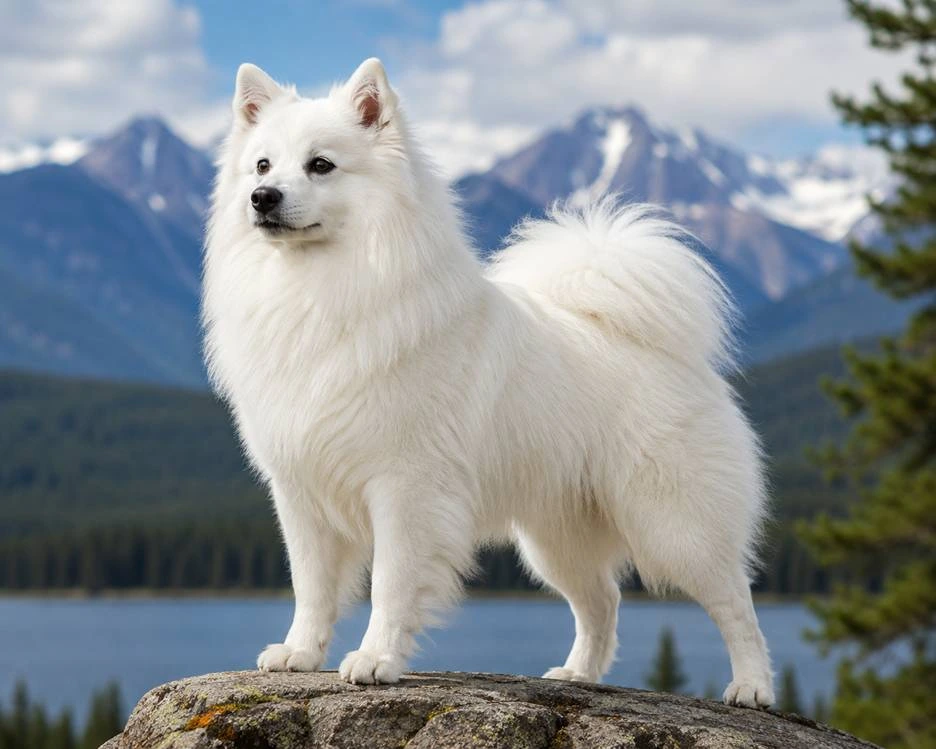
With its brilliant white coat, fox-like face, and near-constant expression of alert curiosity, the American Eskimo Dog is one of the most recognizable companion breeds in the country — and one of the most misleadingly named. Despite what the name suggests, this breed has no connection to Eskimo or Inuit culture at all; it’s a German Spitz relabeled during a period of American history when anything sounding German fell out of favor. This guide covers the real story behind the name, along with everything else worth knowing about living with an “Eskie,” including how to choose between its three official sizes.
American Eskimo Dog Quick Facts
| Attribute | Detail |
| AKC Group | Non-Sporting Group |
| FCI Status | No independent FCI standard; shown internationally under the German Spitz standard (FCI No. 97) |
| True Origin | Germany (Spitz lineage); name and identity developed in the United States |
| Sizes | Toy, Miniature, Standard |
| Lifespan | 13–15 years |
| Coat | Dense white double coat |
| Colors | White; white and biscuit |
| Temperament | Intelligent, alert, friendly, eager to please |
What Is an American Eskimo Dog?
A German Spitz Behind an American Name
The American Eskimo Dog’s ancestors are German Spitz dogs, close relatives of breeds like the Keeshond and Pomeranian. When anti-German sentiment swept the United States during World War I, breeders and owners of German-associated dogs — including Spitz varieties — began distancing their dogs from anything sounding German, and this breed emerged under a new, distinctly American name instead. The “Eskimo” label has never referred to any actual Inuit or Eskimo dog-breeding tradition; it was simply chosen because it sounded suitably non-German and evoked the breed’s snowy-white coat.
From Circus Star to Family Companion
The renamed breed found unexpected fame in the American entertainment world of the 1910s through 1930s, when small white Spitz dogs became popular circus performers. One dog, Stout’s Pal Pierre, was famous for walking a tightrope with the Barnum and Bailey Circus in the 1930s, and appearances with outfits like the Cooper Brothers’ Railroad Circus helped cement the breed’s visibility with the American public. The United Kennel Club recognized the breed as early as 1919, while the American Kennel Club followed much later, granting recognition in 1995 and placing it in the Non-Sporting Group [Internal Link].
Toy vs. Miniature vs. Standard: Choosing a Size

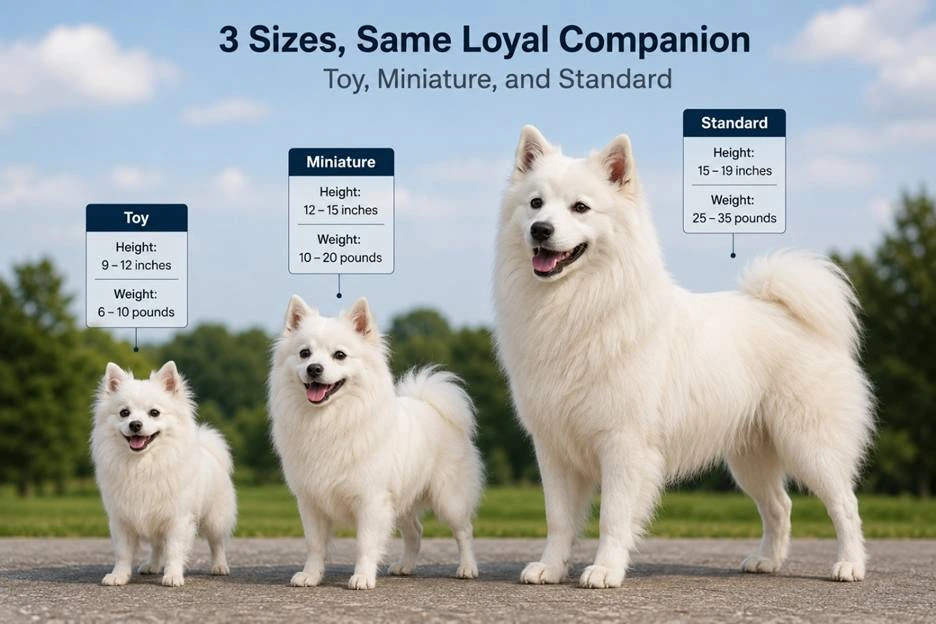
One of the American Eskimo Dog’s defining features is that it comes in three officially recognized sizes, all sharing the same temperament and appearance but suited to different households.
| Size | Height | Weight | Best Fit For |
| Toy | 9–12 in | 5–10 lb | Apartments, smaller living spaces, lap-sized companion |
| Miniature | 12–15 in | 10–20 lb | Most household types; a middle-ground choice for families |
| Standard | 15–20 in | 15–40 lb | Houses with yard space; owners wanting a more substantial dog |
All three sizes carry the same intelligence, coat-care needs, and barking tendency described below — size mainly affects living-space fit and handling, not temperament.
Appearance & Coat
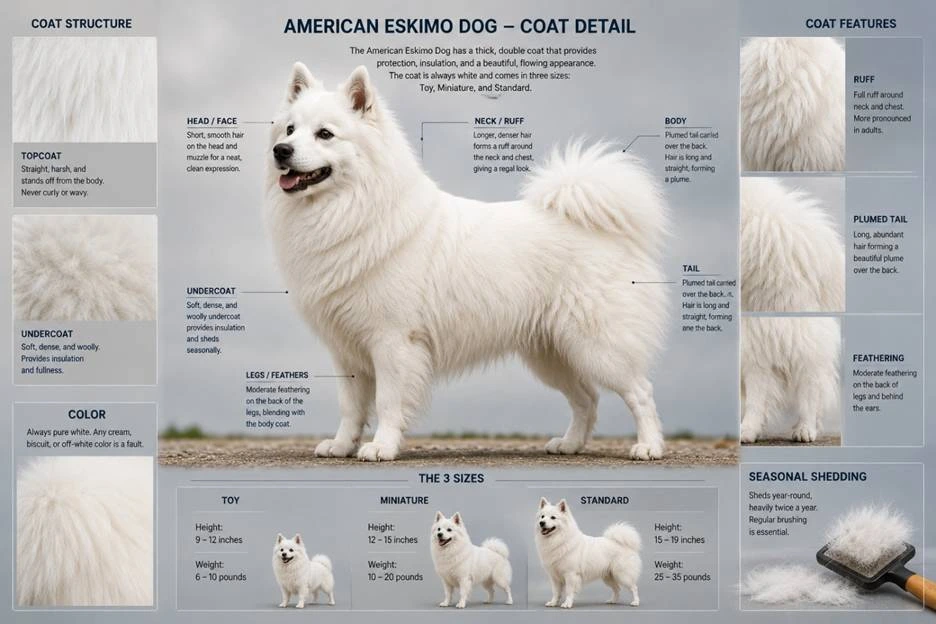
The American Eskimo Dog’s most distinctive feature is its dense, plush, all-white double coat, sometimes accepted with light biscuit-cream shading by the AKC standard. Dark eyes and a black nose stand out sharply against the white coat, giving the breed its characteristically alert, fox-like expression. Regardless of size, the build is compact and well-proportioned, with a plumed tail that typically curls over the back.
Temperament and Personality
American Eskimo Dogs are intelligent, alert, and genuinely friendly, though the AKC standard describes them as “slightly conservative” — meaning a well-bred, well-socialized Eskie shouldn’t be shy or aggressive, but it also won’t necessarily throw itself at every stranger it meets. At home, this alertness translates into a strong watchdog instinct, with the breed quick to sound a warning bark at anything unfamiliar.
That same alertness is a double-edged sword: Eskies are known for barking more than many other companion breeds, especially when bored or under-stimulated. Owners who keep the breed mentally and physically engaged, and who apply consistent barking management [Internal Link] techniques from puppyhood, generally see far less nuisance barking than those who don’t.
Is an American Eskimo Dog Right for You?


First-Time Owners
This breed is a reasonable choice for first-time owners, thanks to its high trainability and eagerness to please, provided the owner is prepared to commit to consistent training and daily engagement rather than expecting a low-maintenance companion.
Families and Children
American Eskimo Dogs are typically affectionate, playful, and loyal with their families, including children, making them a popular choice among the three sizes for households with kids — the Miniature and Standard sizes in particular tend to hold up well to typical family activity.
Apartment Living and Barking
The Toy size in particular suits apartment living well from a space perspective, but the breed’s barking tendency is the real factor to plan around in close-quarters living, regardless of size. Consistent training, adequate exercise, and mental stimulation are the most effective tools for keeping barking in check in any living situation.
Training an American Eskimo Dog
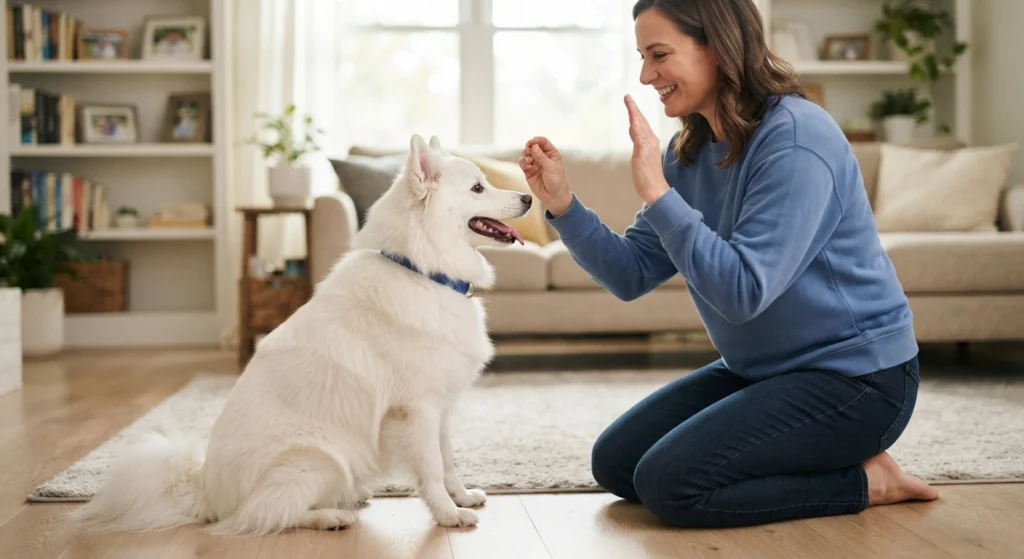
Eskies are highly trainable, combining sharp intelligence with a genuine eagerness to please that sets them apart from some other Spitz breeds known for more independent streaks. They tend to pick up obedience commands quickly and often excel in structured training environments like obedience or agility.
That same intelligence means boredom shows up quickly as unwanted behavior, often barking, so training sessions that stay varied and engaging tend to produce better long-term results than repetitive drilling. Starting early and staying consistent also helps directly manage the breed’s tendency toward excessive barking.
Exercise Needs
American Eskimo Dogs need a solid 60 to 90 minutes of activity daily, ideally mixing walks with more engaging options like scent games, short hikes, or supervised play with other dogs. This breed thrives on variety, and purely repetitive exercise tends to satisfy the body without fully addressing the mental stimulation it also needs.
Toy and Miniature Eskies still need this level of engagement despite their smaller size — don’t mistake a compact body for low energy. A bored Toy Eskie confined to short indoor potty breaks is just as likely to develop barking or destructive habits as an under-exercised Standard.
Grooming
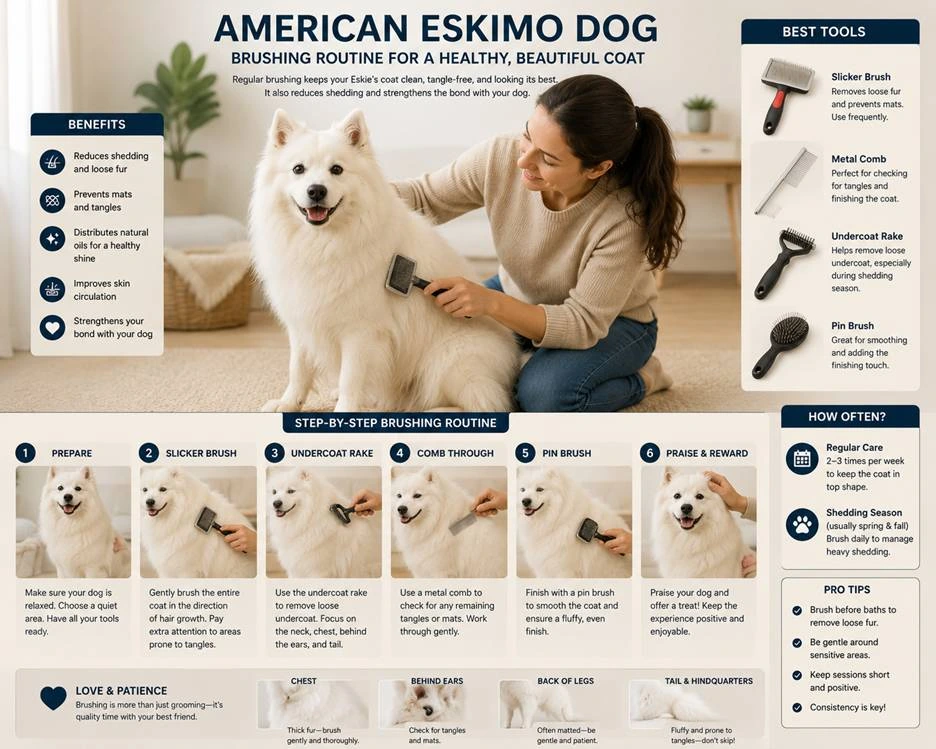
The Eskie’s dense double coat needs brushing two to three times a week using a slicker brush and steel comb to prevent matting and manage shedding, with more frequent brushing needed during the heavier seasonal sheds in spring and fall. Because the coat’s natural oils help repel dirt and keep it looking bright, bathing too often can actually work against you — every few months is generally plenty unless the dog gets visibly dirty.
Health and Lifespan

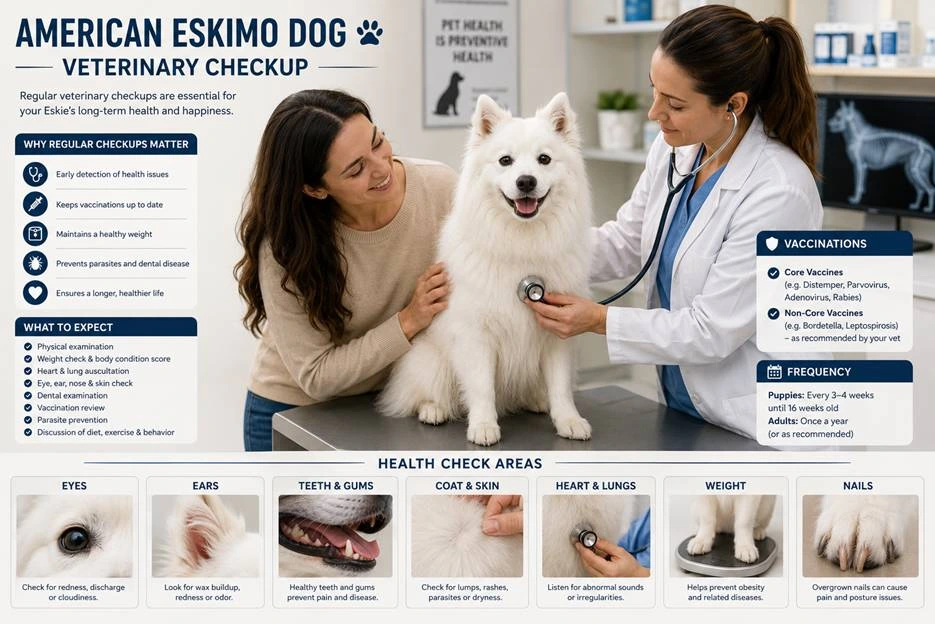
Most American Eskimo Dogs are generally healthy and live between 13 and 15 years, among the longer lifespans in the companion-breed category. Still, a handful of conditions are worth watching for.
| Condition | What It Is | What Owners Should Watch For |
| Dental disease | Common tooth and gum problems affecting most dogs by age two | Bad breath, visible tartar, reluctance to chew |
| Progressive retinal atrophy (PRA) | Inherited, gradual loss of vision, often starting with night blindness | Night vision loss beginning around 3–5 years of age |
| Hip dysplasia | Abnormally formed hip joint | Limping, stiffness, reluctance to jump |
| Patellar luxation | Kneecap slips out of place | Skipping, bunny-hopping, intermittent limping |
| Epilepsy | Higher-than-average risk of seizure disorders in this breed | Seizure episodes; requires veterinary management |
| Hypothyroidism | Underactive thyroid slowing metabolism | Dry skin, hair loss, weight gain, lethargy |
| Obesity | Excess weight, a common risk given the breed’s food motivation | Weight gain, reduced activity tolerance |
Dental disease deserves particular attention, since it’s the most common chronic health problem across dogs generally and can shorten a dog’s lifespan by one to three years if left unmanaged — regular brushing and professional cleanings make a real difference.
Nutrition
A high-quality formula sized appropriately to whichever variant you own — Toy, Miniature, or Standard — is generally the right nutritional foundation for an American Eskimo Dog. Because the breed carries some obesity risk, portion control and measured feeding (rather than free-feeding) help keep weight in a healthy range and reduce strain on joints already at some risk for patellar luxation.
Cost and Finding a Breeder
American Eskimo Dog puppies typically range from about $1,200 to $3,000 depending on breeder, lineage, and region, with pricing generally similar across all three sizes. Rescue adoption is a notably less expensive option, typically running $100 to $400 and including some prior veterinary care.
Given the breed’s known health risks, a reputable breeder [Internal Link] should be able to provide documentation of health testing for PRA, hip health, and thyroid function in the puppy’s parents. A breeder who’s transparent about testing results and willing to answer detailed questions is generally a strong sign of a responsible operation.
Related Breeds
The American Eskimo Dog belongs to the broader Spitz family, sharing ancestry and a general resemblance with several other breeds.
The German Spitz [Internal Link] is the Eskie’s closest relation and effectively its international counterpart — in fact, American Eskimo Dogs are shown under the German Spitz standard outside the US precisely because of this shared ancestry. The Pomeranian [Internal Link] and Keeshond are more distant Spitz relatives, both sharing the dense double coat and alert temperament, while the Samoyed offers a larger, all-white Spitz comparison point, though with different working origins.
Frequently Asked Questions
What is an American Eskimo Dog?
The American Eskimo Dog, or “Eskie,” is an intelligent, all-white Spitz breed that comes in three sizes — Toy, Miniature, and Standard — known for its trainability, alertness, and friendly but somewhat reserved temperament.
Why is it called an American Eskimo Dog?
Despite the name, the breed has no connection to Eskimo or Inuit culture. It descends from German Spitz dogs and was renamed during World War I, when anti-German sentiment led breeders to distance the dogs from their German origins.
Are American Eskimo Dogs good family dogs?
Yes, they’re typically affectionate, playful, and loyal with their families, including children, and their trainability makes them a solid choice for many households.
Do American Eskimo Dogs bark a lot?
They can. Eskies are alert watchdogs prone to excessive barking, especially when bored or under-stimulated, though consistent training and adequate exercise significantly reduce the tendency.
What’s the difference between Toy, Miniature, and Standard sizes?
All three share the same temperament and coat; they differ only in height and weight — Toy (9–12 in, 5–10 lb), Miniature (12–15 in, 10–20 lb), and Standard (15–20 in, 15–40 lb) — making size mainly a matter of living-space and handling preference.
What health problems do American Eskimo Dogs have?
Common concerns include dental disease, progressive retinal atrophy, hip dysplasia, patellar luxation, epilepsy, hypothyroidism, and obesity.
How much does an American Eskimo Dog cost?
Puppies typically range from about $1,200 to $3,000 depending on breeder and lineage, while rescue adoption usually runs $100 to $400.
Conclusion
The American Eskimo Dog is a breed whose real story is more interesting than its name lets on: a German Spitz rebranded during a wave of wartime sentiment, later turned circus star, now a genuinely trainable, intelligent family companion available in three sizes to suit different households. Anyone considering one should go in prepared for real grooming upkeep and a barking tendency that needs active management, but in return gets a loyal, alert, and remarkably teachable dog that’s been winning families over for more than a century, regardless of what its name actually means.