
How to Train a Black Russian Terrier: A Complete Guide to Socialization and Obedience
How to Train a Black Russian Terrier
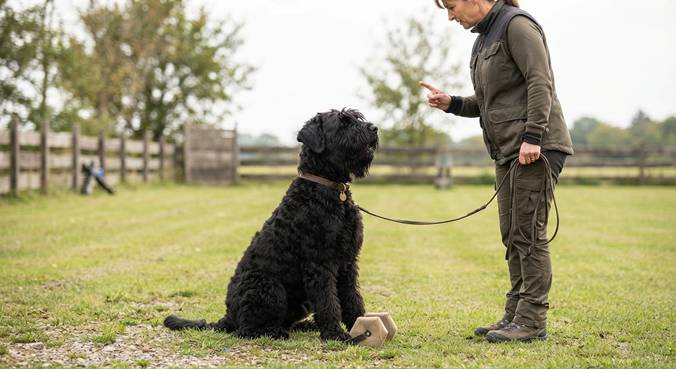
Training a Black Russian Terrier isn’t like training most family dogs. This breed was engineered specifically for guard work, which means the instincts you’re working with, wariness toward strangers, natural protectiveness, and genuine physical power, need deliberate, informed handling rather than generic obedience-class advice. This guide walks through exactly when to start, what a real socialization protocol looks like, and how to avoid the mistakes that turn a naturally capable guardian into an unpredictable liability.
Why Training a Black Russian Terrier Is Different
Most breeds tolerate a casual, inconsistent approach to training reasonably well. The Black Russian Terrier does not. This is a dog bred specifically to be wary of strangers and to act on that wariness, which means the stakes of getting socialization and training right are genuinely higher than with a breed that was never selected for protective instinct in the first place. Skipping or rushing the fundamentals doesn’t just produce a poorly mannered dog; it can produce a large, powerful dog with an underdeveloped sense of who and what actually constitutes a threat.
The Critical Socialization Window: 3 to 14 Weeks
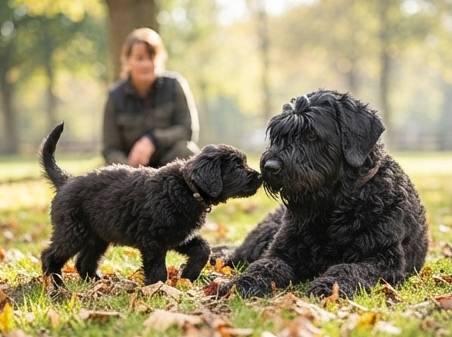
Every puppy, regardless of breed, goes through a critical socialization period roughly between 3 and 14 weeks of age, a window during which experiences shape lifelong behavioral responses far more powerfully than anything that happens later. For a Black Russian Terrier, this window matters more than it does for most breeds. A puppy that gets broad, positive exposure to people, environments, sounds, and other animals during these weeks tends to grow into an adult that can accurately distinguish real threats from ordinary daily life. A puppy that misses this window, spending it isolated or under-exposed, is at real risk of developing fear aggression, reacting to normal situations, unfamiliar visitors, new environments, routine handling, as though they were genuine threats. This isn’t a minor behavioral quirk to correct later; it’s a foundational gap that becomes significantly harder to address in an adult dog than it would have been to prevent in a puppy.
A Step-by-Step Socialization Protocol
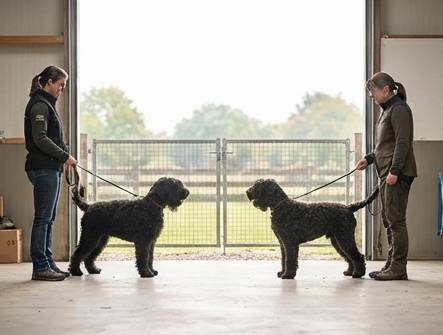
Effective socialization for this breed isn’t about exposure for its own sake; it’s about controlled, positive exposure that builds genuine confidence rather than overwhelming a young puppy.
| Stage | Focus | Example Activities |
| Weeks 3-8 (with breeder) | Broad sensory exposure | Varied sounds, surfaces, gentle handling, exposure to multiple people |
| Weeks 8-12 (new home) | Calm, controlled introductions | Meeting calm adults in neutral locations, short car rides, quiet public spaces |
| Weeks 12-16 | Expanding social circle | Structured meetings with children, other dogs, varied environments |
| Months 4-24 | Ongoing reinforcement | Continued exposure to new people, places, and situations at a manageable pace |
A few specific techniques make a real difference in how these introductions land. Start new-person introductions with calm adults who sit quietly rather than approaching or reaching for the puppy directly; a Black Russian Terrier puppy that gets to approach on its own terms builds confidence far faster than one that feels crowded. Favor neutral locations, a park, a quiet street, over introducing new people at home, since the breed’s natural territorial instinct means home turf introductions can carry more pressure than they need to. And consistently pair new experiences with something genuinely positive, treats, calm praise, a favorite toy, so the puppy’s takeaway from every new person or situation is that good things happen here, not that something needs to be monitored or guarded against.
Training Philosophy: Firm, Fair, Gentle, Consistent
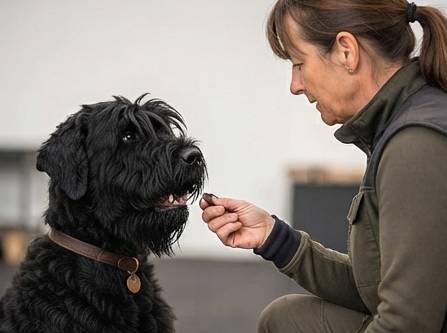
Black Russian Terriers do not respond well to heavy-handed correction or severe discipline, and owners who default to a forceful approach with this breed typically get worse results, not better. The training philosophy that actually works here is firm, fair, gentle, and consistent: clear expectations and boundaries, delivered without harshness, applied the same way every time. Positive reinforcement, treats, toys, affection, delivered through short, frequent training sessions builds genuine cooperation rather than compliance driven by fear, and a Black Russian Terrier that trusts its handler is dramatically easier to manage than one that’s simply been intimidated into temporary obedience.
Managing Protective Instincts Around Strangers
A well-socialized Black Russian Terrier is not aggressive by default, but the breed’s guarded wariness toward unfamiliar people is a genuine, largely permanent trait rather than something training eliminates entirely. The realistic goal isn’t to train this instinct away; it’s to make sure the dog has enough social experience and trust in its handler to read situations accurately and respond proportionately rather than reflexively. Owners can support this by managing greetings deliberately, giving the dog time to observe a new visitor calmly before close interaction, and by never forcing interaction the dog seems uncertain about, since forced contact tends to reinforce wariness rather than resolve it.
Giving Your BRT a Job: Obedience, Agility, and Purpose
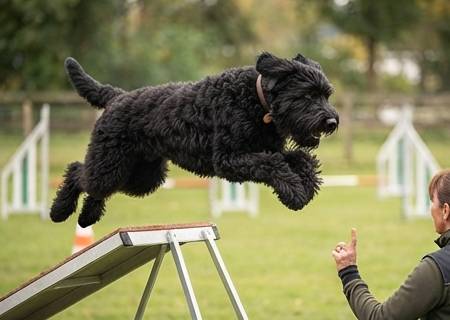
Black Russian Terriers were bred for purposeful work, and a dog without an outlet for that drive tends to develop problems: anxiety, obsessive behaviors, or protective responses that trigger too easily simply because the dog has excess energy and no productive channel for it. Structured activities like obedience training, agility, or tracking work give this breed exactly what it’s missing when left purely as a house pet, a job to focus on, physical and mental engagement, and a clear, positive relationship with its handler built around shared activity rather than just coexistence.
When to Bring In a Professional Trainer
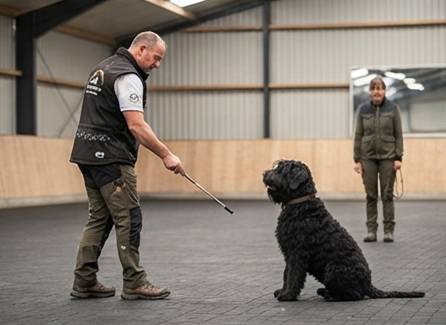
Not every trainer understands guardian breeds, and that distinction matters enormously with a dog this size and this naturally protective. A trainer with genuine experience handling guardian breeds specifically, rather than general obedience experience alone, will understand how to work with the Black Russian Terrier’s instincts rather than against them, and will recognize early warning signs of under-socialization or fear-based reactivity that a less experienced trainer might miss entirely. Bringing in professional guidance early, ideally starting in puppyhood rather than waiting for a problem to develop, is a genuinely worthwhile investment for this breed rather than an optional extra.
Common Training Mistakes to Avoid
The most common mistake owners make with this breed is underestimating how much deliberate, structured socialization it actually needs, treating the critical window as optional rather than foundational. A close second is defaulting to harsh correction when the dog doesn’t respond immediately, which tends to erode trust rather than build compliance. Skipping professional guidance entirely, especially for first-time owners of a guardian breed, is another frequent misstep, along with failing to give the dog a genuine outlet for its working drive and then being surprised when that unused energy turns into anxiety or over-alert behavior at home.
A less obvious but equally damaging mistake is inconsistency between family members. If one household member enforces boundaries firmly while another lets the same behavior slide, a Black Russian Terrier learns quickly that rules are negotiable, which undermines the very structure this breed needs to feel secure and well-behaved. Getting the whole household aligned on the same expectations from day one avoids a great deal of confusion and backsliding later.
Frequently Asked Questions
When should you start training a Black Russian Terrier?
Immediately, ideally starting with socialization during the critical 3-to-14-week window and continuing structured training and exposure well into adulthood.
Are Black Russian Terriers hard to train?
Not inherently, but they require consistent, firm-but-gentle handling and genuine socialization investment rather than casual, inconsistent training.
How do you socialize a Black Russian Terrier puppy?
Through controlled, positive exposure: calm introductions in neutral locations, gradual expansion of social experiences, and consistent pairing of new situations with treats and praise.
Do Black Russian Terriers need a professional trainer?
Strongly recommended, especially a trainer experienced specifically with guardian breeds, given the size, strength, and protective instincts involved.
How do you stop a Black Russian Terrier from being aggressive with strangers?
Thorough early socialization prevents most fear-based reactivity; for an adult dog already showing concerning behavior, professional guardian-breed-experienced training is the appropriate next step rather than home remedies.
Conclusion
Training a Black Russian Terrier well comes down to respecting what the breed actually is: a dog engineered for guard work that needs deliberate socialization, consistent and gentle handling, and a genuine outlet for its working drive. Owners who invest in that foundation, starting in the critical early weeks and continuing through adulthood, tend to end up with exactly what the breed was designed to be: a confident, trustworthy guardian rather than an unpredictable one. For the full picture on what to expect from this breed day to day, see the complete Black Russian Terrier guide.