The Majestic Alaskan Malamute: A Complete Guide to This Arctic Giant
The Majestic Alaskan Malamute
Introduction to the Malamute de l’Alaska
Few dog breeds capture the imagination quite like the Alaskan Malamute. With their wolf-like appearance, powerful build, and gentle temperament, these magnificent arctic dogs have been loyal companions to humans for thousands of years. Known in French-speaking regions as the “malamute de l’alaska” or “malamute d’alaska,” this breed represents one of the oldest sled dog varieties in existence.
The Alaskan Malamute isn’t just another large dog—it’s a living piece of history, a testament to the bond between humans and canines forged in the harshest conditions on Earth. Whether you’re captivated by the impressive malamute geant specimens or simply curious about what makes the malamut d’alaska so special, this comprehensive guide will explore everything you need to know about this remarkable breed.
History and Origins of the Malamute
The story of the Alaskan Malamute begins over 4,000 years ago with the Mahlemut tribe, an Inuit people who settled in the Norton Sound area of Alaska. These ingenious people bred dogs specifically suited to survive and work in the brutal Arctic environment. The resulting breed—what we now call the Alaskan Malamute—became an indispensable partner in their survival.
Ancient Arctic Companions
Unlike many modern dog breeds developed in the past few centuries, the malamute has remained remarkably unchanged for millennia. The Mahlemut people needed dogs that could:
- Pull heavy sleds across frozen tundra
- Hunt seals and polar bears
- Withstand temperatures dropping to -70°F (-56°C)
- Survive on minimal rations during harsh winters
- Live and work as part of a pack
These dogs weren’t mere tools; they were family members who shared the tribe’s food, shelter, and hardships. This close relationship with humans shaped the Alaskan Malamute’s temperament, creating a breed that, despite its imposing size, is remarkably affectionate and people-oriented.
Near Extinction and Revival
The California Gold Rush of 1896 nearly destroyed the breed. As prospectors flooded Alaska, they brought other dog breeds and crossbred them with native malamutes, diluting the bloodline. Many pure Alaskan Malamutes perished due to the harsh conditions and diseases introduced by the newcomers.
Fortunately, dedicated breeders worked to preserve the malamute d’alaska. In 1935, the American Kennel Club officially recognized the breed, helping to establish breeding standards and ensure its survival. Today, while still relatively rare compared to breeds like Labrador Retrievers, the Alaskan Malamute thrives worldwide.
Physical Characteristics: The Malamute Geant
Size and Build
When people encounter an Alaskan Malamute for the first time, they’re often struck by the dog’s substantial size. While not the tallest breed, malamutes are built like powerlifters—compact, muscular, and incredibly strong.
Standard Measurements:
- Male height: 25 inches (63.5 cm) at the shoulder
- Female height: 23 inches (58.4 cm) at the shoulder
- Male weight: 85 pounds (38.5 kg)
- Female weight: 75 pounds (34 kg)
However, these are conservative estimates. The malamute geant specimens—particularly those bred for show or from working lines—often exceed these standards considerably. It’s not uncommon to see males weighing 100-130 pounds (45-59 kg) or more, with some exceptional individuals reaching 140+ pounds (63+ kg).
The Malamute’s Distinctive Appearance
The Alaskan Malamute possesses several distinctive physical features:
Head and Face:
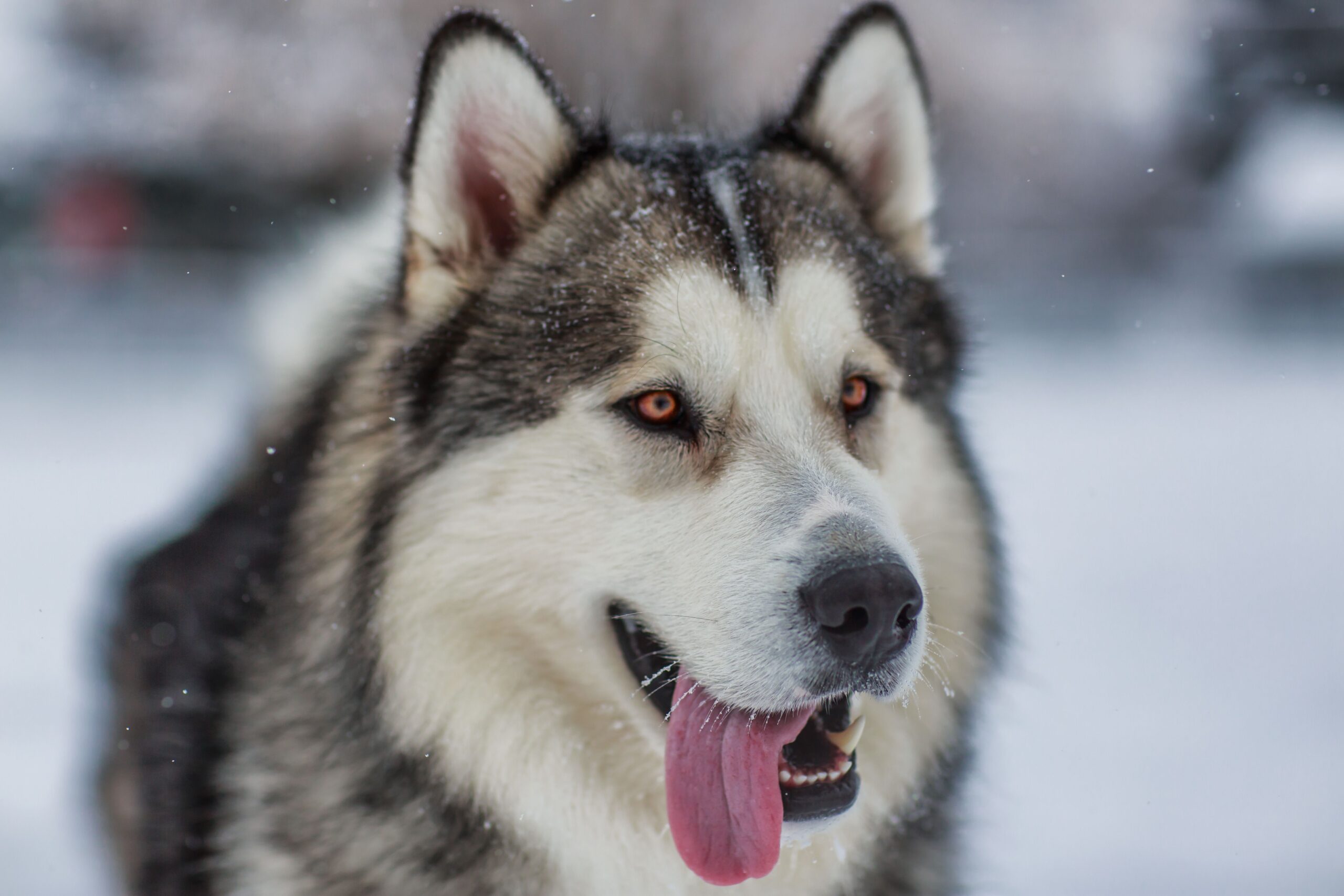
- Broad, powerful skull with a substantial muzzle
- Dark, almond-shaped eyes that convey intelligence and alertness (blue eyes are a disqualification in show standards)
- Triangular, erect ears that are small relative to head size
- Facial markings typically include a cap over the head and a mask-like pattern
Body Structure:
- Deep, powerful chest built for endurance
- Strong, muscular legs with large, snowshoe-like feet
- Level back and well-muscled hindquarters
- Tail carried over the back in a graceful plume when alert
Coat:
The malamute’s double coat is one of its most impressive features. The dense undercoat can be up to two inches thick and provides insulation against extreme cold. The outer coat consists of coarser guard hairs that repel water and ice. This combination allows the malamut d’alaska to sleep comfortably in snow at temperatures that would be fatal to most other breeds.
Color Variations:
Alaskan Malamutes come in various color combinations:
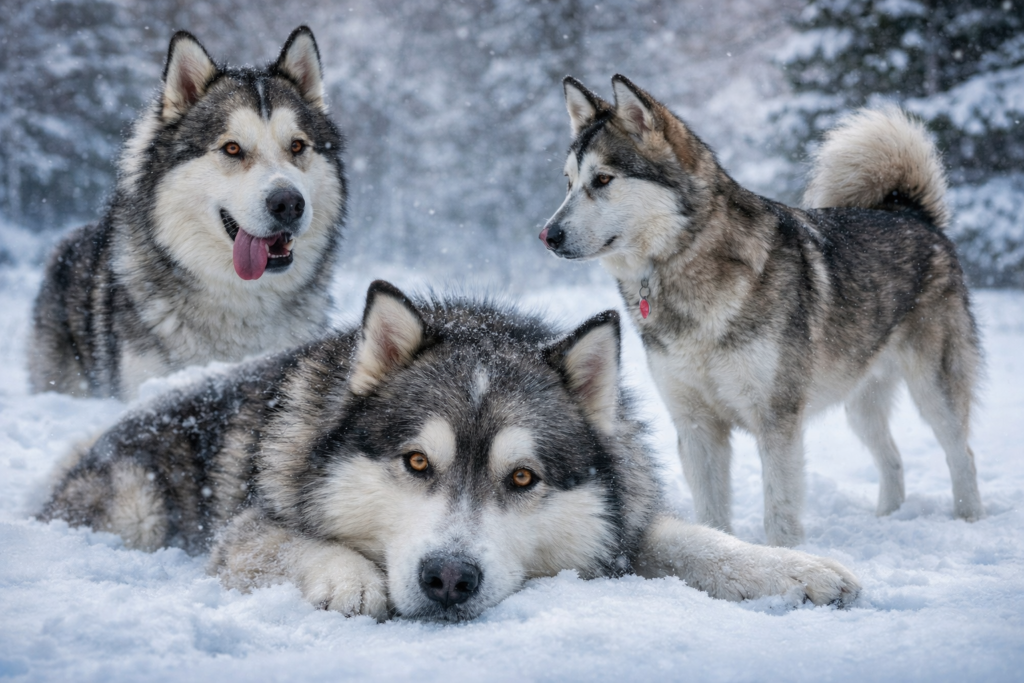
- Gray and white (most common)
- Black and white
- Red and white
- Seal and white
- Silver and white
- Solid white (the only solid color allowed)
Regardless of color, malamutes typically have white markings on the underbody, legs, feet, and face.
Temperament and Personality
Despite their imposing size and wolf-like appearance, Alaskan Malamutes are known for being gentle giants with remarkably friendly personalities.
The Affectionate Arctic Dog
The malamute de l’alaska forms deep bonds with family members and thrives on human companionship. These dogs were bred to live intimately with their human families, sharing homes and warmth during long Arctic winters. This heritage manifests in several ways:
With Family:
- Extremely affectionate and loving
- Often tries to be a “lap dog” despite their size
- Enjoys being involved in all family activities
- Gentle and patient with children when properly socialized
- Forms strong attachments and may experience separation anxiety
With Strangers:
Contrary to what their size might suggest, Alaskan Malamutes make terrible guard dogs. They’re typically friendly with everyone they meet, greeting strangers with tail wags rather than suspicion. This trait stems from their heritage—in the Arctic, encountering another human was rare and generally welcomed, not feared.
The Pack Mentality
As pack animals, malamutes have complex social needs and hierarchies. Understanding this aspect of their nature is crucial for potential owners:
Dominance and Leadership:
Alaskan Malamutes respect strong, consistent leadership but will test boundaries regularly. They need an owner who can establish themselves as the pack leader through calm, confident training—never through aggression or harsh punishment.
With Other Dogs:
The malamute’s relationship with other dogs can be complicated. While generally social, they may show:
- Dominance behaviors, especially same-sex aggression
- Play that’s too rough for smaller or more timid dogs
- Strong pack drive that requires proper socialization
Prey Drive:
One of the most challenging aspects of the malamute d’alaska temperament is their high prey drive. Centuries of hunting for survival created instincts that persist today. Malamutes may chase:
- Cats and small dogs
- Squirrels, rabbits, and other small animals
- Livestock if not properly trained
This trait means malamutes often cannot safely coexist with small pets and must be carefully supervised in areas with wildlife.
Intelligence and Stubbornness
Alaskan Malamutes are highly intelligent, which can be both a blessing and a challenge. They’re capable of learning complex commands and solving problems—sometimes problems you didn’t know existed, like opening latches or escaping fenced yards.
However, intelligence doesn’t equal obedience. Malamutes were bred to make independent decisions while pulling sleds across dangerous terrain. They had to think for themselves about route safety and ice stability. This independence manifests as stubbornness in a household setting.
A malamute might understand exactly what you want but choose not to comply if they don’t see the point. Training requires patience, consistency, and making the dog believe that obeying was their idea all along.
Vocalization: The Talkative Malamute
One endearing trait of the malamute geant is their vocal nature. These dogs rarely bark in the traditional sense, but they’re far from quiet. Instead, they:
- “Woo woo woo” to express excitement or greet family members
- Howl, sometimes in groups, echoing their wolf ancestry
- Grumble, mutter, and “talk” to communicate displeasure or wants
- Make sounds that range from amusing to oddly human-like
This vocal tendency means they’re not ideal for apartment living or situations where noise is a concern. However, many owners find their malamute’s “conversations” to be one of the breed’s most charming characteristics.
Care Requirements for Your Alaskan Malamute
Exercise Needs: Not for Couch Potatoes
The Alaskan Malamute was bred to pull heavy loads across vast distances in harsh conditions. This working heritage means they have substantial exercise requirements that potential owners must understand and commit to meeting.
Daily Exercise Minimum:
- 1-2 hours of vigorous activity
- Long walks or jogs (in cool weather)
- Activities that engage both body and mind
- Time to run in a securely fenced area
Important Considerations:
The malamut d’alaska overheats easily due to their thick double coat. Exercise during hot weather must be limited to early morning or late evening, with plenty of water breaks. Heat stroke is a serious risk for this breed in warm climates.
Mental Stimulation:
Physical exercise alone isn’t enough. These intelligent dogs need mental challenges:
- Puzzle toys and food-dispensing toys
- Training sessions that teach new commands or tricks
- Activities like weight pulling or skijoring (where dogs pull skiers)
- Hide-and-seek games or scent work
Without adequate physical and mental stimulation, Alaskan Malamutes become destructive. A bored malamute can demolish a couch, excavate a yard, or find creative ways to escape confinement—all in a single afternoon.
Grooming: Managing the Magnificent Coat
The malamute de l’alaska’s beautiful double coat requires significant maintenance, especially during shedding season.
Regular Grooming:
- Brush 2-3 times weekly during most of the year
- Daily brushing during spring and fall shedding seasons
- Professional grooming every 8-12 weeks for some owners
- Regular nail trimming (every 3-4 weeks)
- Dental care to prevent periodontal disease
The Infamous “Blowout”:
Twice yearly, Alaskan Malamutes experience what’s colorfully termed “blowing their coat.” During these 2-3 week periods, the dense undercoat sheds in enormous quantities. You’ll find enough fur to create another dog—literally. Daily brushing becomes essential, and even then, your home will be covered in fur.
Many owners invest in high-velocity dryers and specialized deshedding tools. Some take their malamutes to professional groomers who can properly blow out the dead undercoat.
Bathing:
Interestingly, malamutes don’t require frequent bathing. Their coat is relatively self-cleaning and odor-resistant. Bathing every 6-8 weeks is typically sufficient unless the dog gets particularly dirty. Over-bathing can strip natural oils and damage the coat’s protective properties.
Never Shave Your Malamute:
Despite living in hot climates, you should never shave an Alaskan Malamute. Their double coat insulates against both cold and heat. Shaving:
- Removes their temperature regulation system
- Exposes skin to sunburn
- Can permanently damage coat regrowth
- Doesn’t actually cool the dog effectively
Nutrition: Feeding the Arctic Athlete
The malamute’s nutritional needs evolved in an environment where food was scarce. Paradoxically, this means they’re often “easy keepers” who require less food than you might expect for their size.
Caloric Needs:
- Active adult malamute: 1,700-2,500 calories daily
- Working malamutes: 3,000-4,000 calories daily
- Puppies and elderly dogs: Adjusted based on activity and metabolism
Food Quality:
High-quality protein should form the foundation of a malamute’s diet:
- 25-30% protein for adults
- 28-32% protein for puppies
- Moderate fat content (15-18% for adults, 20% for working dogs)
- Limited carbohydrates and fillers
Weight Management:
Obesity is a common problem in Alaskan Malamutes, particularly those living as pets rather than working dogs. Their efficient metabolism, combined with reduced exercise in domestic settings, means they gain weight easily. Overweight malamutes face increased risks of:
- Joint problems and arthritis
- Heart disease
- Diabetes
- Reduced lifespan
Owners must monitor their malamute’s body condition carefully and adjust food portions based on activity level and body condition rather than feeding arbitrary amounts.
Housing Requirements
The Alaskan Malamute is not well-suited to apartment living for several reasons:
Space Needs:
- Large yard for exercise and play
- Secure fencing at least 6 feet tall (malamutes are excellent climbers and jumpers)
- Fencing buried or secured at ground level (they’re also accomplished diggers)
- Preferably suburban or rural settings with space to roam
Climate Considerations:
Malamutes thrive in cold climates and struggle in heat. Ideal climates have:
- Cool to cold temperatures most of the year
- Mild summers
- Access to air conditioning if temperatures regularly exceed 75°F (24°C)
Owners in warm climates must provide:
- Climate-controlled indoor space
- Limited outdoor time during heat
- Cooling mats or vests for exercise
- Constant access to fresh, cool water
- Sometimes even kiddie pools for cooling off
Training Your Malamute d’Alaska
Starting Early: Puppy Training Essentials
The most crucial period for shaping your Alaskan Malamute’s behavior is during puppyhood. These early months establish patterns that will last a lifetime.
Socialization (8-16 weeks):
This critical window determines how your malamute will interact with the world. Expose your puppy to:
- Various people (different ages, ethnicities, sizes)
- Other vaccinated, friendly dogs
- Different environments (parks, pet stores, urban settings)
- Novel experiences (car rides, grooming tools, household appliances)
Proper socialization reduces the likelihood of fear-based behaviors and helps manage the breed’s natural aloofness toward strangers.
Basic Obedience:
Start training the moment your puppy comes home:
- Sit, down, stay, and come commands
- Leash walking without pulling
- Crate training for safe confinement
- House training (malamutes are generally clean and learn quickly)
Bite Inhibition:
Malamute puppies are mouthy and playful. Teaching appropriate bite pressure is essential before they reach their considerable adult size.
The Challenges of Training an Independent Breed
Training an Alaskan Malamute differs significantly from training traditionally obedient breeds like Golden Retrievers or Border Collies.
Understanding Malamute Logic:
These dogs don’t automatically comply because you’re human. They need to understand “what’s in it for them.” This requires:
- High-value rewards (premium treats, favorite toys)
- Variable reinforcement schedules
- Making training sessions fun and engaging
- Keeping sessions short (10-15 minutes)
- Ending on a positive note
Consistency is Non-Negotiable:
Malamutes exploit inconsistency relentlessly. If a rule isn’t enforced every single time, they’ll test it constantly. All family members must:
- Use the same commands
- Enforce the same rules
- Provide consistent consequences
- Never allow behavior sometimes but punish it other times
Positive Reinforcement Methods:
Harsh corrections or dominance-based training backfires with this breed. Alaskan Malamutes respond poorly to:
- Physical corrections
- Yelling or aggressive tones
- Alpha rolls or confrontational techniques
- Electronic collars (shock collars)
Instead, effective training uses:
- Reward-based methods
- Clicker training
- Relationship-building activities
- Calm, confident leadership
- Patience and persistence
Recall Training: A Special Challenge
The malamute geant’s independent nature and high prey drive make reliable recall one of the most difficult commands to establish. Many malamute owners accept that their dogs can never be fully trusted off-leash in unfenced areas.
Improving Recall Success:
- Start training in low-distraction environments
- Use extremely high-value rewards
- Never call your dog for something negative
- Practice regularly with long training leads
- Accept that even trained malamutes may have selective hearing
- Always prioritize safety over off-leash freedom
Advanced Training and Activities
Beyond basic obedience, Alaskan Malamutes excel in activities that tap into their working heritage:
Weight Pulling:
This sport allows malamutes to demonstrate their incredible strength by pulling weighted carts or sleds. It provides mental and physical stimulation while honoring their traditional work.
Skijoring and Dog Sledding:
In appropriate climates, malamutes love pulling skiers or participating in sled dog teams. This taps directly into their genetic purpose and provides unparalleled satisfaction for the dogs.
Hiking and Backpacking:
Malamutes make excellent hiking companions in cool weather. They can even carry their own supplies in specially designed dog backpacks, which provides additional physical and mental benefits.
Obedience and Rally:
While not as naturally suited to precision obedience as some breeds, malamutes can compete successfully with patient training. The key is making it rewarding and fun rather than purely drill-based.
Health Considerations for the Malamute
Common Health Issues
Like all purebred dogs, the Alaskan Malamute has predispositions to certain health conditions. Responsible breeders test for these issues, but potential owners should be aware of them.
Hip Dysplasia:
This developmental condition affects the hip joints, causing:
- Pain and lameness
- Arthritis as the dog ages
- Reduced quality of life in severe cases
Prevention and management:
- Selecting puppies from health-tested parents
- Maintaining appropriate weight
- Moderate exercise during growth phases
- Joint supplements (glucosamine, chondroitin)
- Surgery in severe cases
Inherited Polyneuropathy:
This neurological condition affects the peripheral nerves and typically appears in young dogs (onset around 3-18 months). Symptoms include:
- Progressive weakness in hind legs
- Difficulty walking
- Loss of muscle mass
- Abnormal gait
Genetic testing is available, and responsible breeders screen for this condition.
Hypothyroidism:
An underactive thyroid gland is relatively common in malamutes, causing:
- Weight gain despite normal eating
- Lethargy and decreased activity
- Coat changes (dullness, thinning)
- Skin problems
Fortunately, hypothyroidism is easily managed with daily medication and regular monitoring.
Eye Conditions:
Alaskan Malamutes may develop:
- Progressive Retinal Atrophy (PRA) – gradual vision loss
- Cataracts – clouding of the eye lens
- Day blindness (hemeralopia) – difficulty seeing in bright light
Reputable breeders have their dogs’ eyes examined by veterinary ophthalmologists and tested for inheritable conditions.
Bloat (Gastric Dilatation-Volvulus):
This life-threatening emergency occurs when the stomach fills with gas and twists. Deep-chested breeds like malamutes face elevated risk. Warning signs include:
- Distended, hard abdomen
- Unproductive retching
- Restlessness and pacing
- Excessive drooling
- Rapid breathing and pale gums
Bloat requires immediate emergency veterinary care. Prevention strategies:
- Feed multiple smaller meals rather than one large meal
- Use slow-feed bowls
- Avoid vigorous exercise right before or after eating
- Consider preventive gastropexy surgery
Zinc Deficiency:
Some malamutes have difficulty absorbing zinc properly, leading to:
- Crusted, scaly skin lesions (particularly around face and paws)
- Hair loss
- Poor coat quality
This condition responds well to zinc supplementation under veterinary guidance.
Lifespan and Aging
The average Alaskan Malamute lives 10-14 years, which is reasonable for a large breed. Factors influencing longevity include:
- Genetics and breeding quality
- Weight management throughout life
- Exercise and mental stimulation
- Quality of veterinary care
- Diet quality
- Environmental factors
Senior Care (7+ years):
As malamutes age, their needs change:
- More frequent veterinary checkups (every 6 months)
- Joint support supplements
- Softer bedding for arthritic joints
- Adjusted exercise (gentler, shorter sessions)
- Diet modifications for senior dogs
- More patience with cognitive changes
Many malamutes remain active and engaged well into their senior years, particularly if kept at healthy weights and given appropriate exercise throughout life.
Preventive Health Care
Vaccinations:
Follow your veterinarian’s recommended vaccination schedule, typically including:
- Core vaccines (rabies, distemper, parvovirus, adenovirus)
- Non-core vaccines based on lifestyle and geographic risk
Parasite Prevention:
Year-round prevention for:
- Heartworm (potentially fatal; transmitted by mosquitoes)
- Fleas and ticks (which transmit various diseases)
- Intestinal parasites
Dental Care:
Dental disease affects overall health and longevity. Maintain dental health through:
- Regular brushing (ideally daily)
- Dental chews and toys
- Professional cleanings as recommended by your vet
Regular Veterinary Exams:
Annual wellness exams for adults, more frequent for puppies and seniors, help catch problems early when they’re most treatable.
Finding and Selecting an Alaskan Malamute
Breeder vs. Rescue
Potential owners have two primary paths to finding their malamute: reputable breeders or rescue organizations.
Reputable Breeders:
A responsible breeder:
- Health tests all breeding dogs for genetic conditions
- Provides health guarantees and contracts
- Screens potential buyers carefully
- Raises puppies in home environments with early socialization
- Offers lifetime support and guidance
- Won’t have puppies available year-round
- Charges premium prices ($1,500-$3,500+)
Red Flags for Irresponsible Breeders:
- Multiple litters available simultaneously
- No health testing of parents
- Won’t let you visit where puppies are raised
- Puppies available at very young ages (under 8 weeks)
- Unusually low prices
- Claims of “rare” colors or “giant” size as primary selling points
- Doesn’t ask you detailed questions about your lifestyle
Rescue Organizations:
Breed-specific rescues place malamutes who need new homes due to:
- Owner surrender (often due to underestimating breed needs)
- Strays found and not claimed
- Dogs from hoarding situations or puppy mills
Benefits of Rescue:
- Save a dog in need
- Lower adoption fees ($300-$600 typically)
- Adult dogs with known temperaments
- Often already house-trained and past destructive puppy phase
- Satisfaction of giving a second chance
Considerations:
- May have unknown health or behavioral history
- Might require extra patience during adjustment
- Selection is based on available dogs, not timing
- May have issues from previous poor treatment
Questions to Ask Breeders
When contacting breeders, ask:
- What health testing have you done on the parents?
- Can I see the health clearances?
- Can I meet at least the mother, preferably both parents?
- What is your health guarantee?
- Have any genetic conditions appeared in previous litters?
- What socialization do puppies receive?
- Will you take the dog back if circumstances change?
- Can I contact owners of previous puppies?
- How long have you been breeding?
- Are you involved in showing, working, or competing with your dogs?
Puppy Selection
When choosing your specific puppy:
Temperament Testing:
Observe puppies interacting:
- With littermates (looking for balanced play)
- With you (friendly without being fearful)
- With novel objects (curious but not excessively fearful)
- During handling (accepts touch, gentle on hands)
Physical Health:
Check for:
- Clear, bright eyes without discharge
- Clean ears without odor
- Healthy skin and coat
- Appropriate energy level
- Good body condition (not too thin or pot-bellied)
Matching Energy Levels:
Puppies vary in energy and confidence. Match your selection to your lifestyle:
- Dominant, high-energy puppies need very experienced, active owners
- Moderate puppies suit most homes with commitment to exercise
- Quieter puppies might better suit less active households (though all malamutes need substantial exercise)
Living with an Alaskan Malamute: Real-World Experiences
The First Year: What to Expect
Bringing home a malamute puppy is exciting but challenging. Understanding common experiences helps set realistic expectations.
Months 1-3:
- House training accidents (usually quick to learn with consistency)
- Constant supervision to prevent destructive chewing
- Frequent meals (3-4 times daily)
- Socialization outings and puppy classes
- Beginning vaccination series
- Lots of sleep interspersed with bursts of “puppy zoomies”
Months 4-6:
- Teething intensifies (provide appropriate chew toys)
- Growth spurts may cause temporary clumsiness
- Testing boundaries becomes more pronounced
- Leash pulling may become problematic without training
- First fear period (handle sensitively to prevent lasting impacts)
Months 7-12:
- Approach sexual maturity (discuss spaying/neutering timing with vet)
- May become more independent and challenging
- Physical size becomes imposing
- Training consistency is crucial to prevent bad habits from solidifying
Year 2:
- Mental maturity continues developing (malamutes aren’t fully mature until 2-3 years)
- May challenge established rules periodically
- Physical exercise needs peak
- Personality fully emerges
Daily Life with Your Malamute de l’Alaska
Morning Routine:
A typical morning might include:
- Early wake-up (malamutes are often early risers)
- Enthusiastic, vocal greeting
- Morning meal
- 30-45 minute walk or play session
- Fresh water and relaxation while you prepare for work
Home Alone:
Leaving a malamute alone requires preparation:
- Secure, comfortable space (many owners use large crates or dog-proofed rooms)
- Interactive toys to prevent boredom
- Climate-controlled environment
- Preferably no more than 4-6 hours initially
- Midday break for puppies or high-energy adults
Evening:
- Another substantial exercise session
- Training practice
- Dinner
- Family interaction time
- Grooming session several times weekly
- Settle down (often near family members, even in hot weather)
The Challenges Nobody Warns You About
Escape Artistry:
Alaskan Malamutes are Houdini-level escape artists. They can:
- Dig under fences in minutes
- Climb chain-link fencing
- Learn to open doors, gates, and latches
- Jump surprisingly high barriers
- Find every weakness in your containment system
Destructive Potential:
An under-exercised or bored malamute can destroy:
- Furniture (couches, chairs, mattresses)
- Walls and doors
- Carpet and flooring
- Entire yards (massive craters from digging)
- Irreplaceable personal items
One malamute owner came home to find their dog had demolished and eaten an entire couch—frame and all—in under four hours.
Counter Surfing:
With their size and intelligence, malamutes become expert food thieves. Nothing on counters or tables is safe. They’ve been known to:
- Steal entire dinners while you answer the door
- Open refrigerators
- Raid garbage cans despite barriers
- Work together with other dogs to access food
- Show absolutely no remorse afterward
Shedding Beyond Belief:
Even experienced dog owners are shocked by malamute shedding. During blowout season:
- You’ll vacuum daily and still find fur everywhere
- Fur tumbleweeds accumulate within hours of cleaning
- Wearing black becomes impractical
- Guests comment on the fur situation
- You question how the dog still has any coat left
The Unexpected Joys
Despite challenges, malamute owners are remarkably devoted to the breed. The rewards include:
Unconditional Affection:
Malamutes form deep bonds and show love demonstratively:
- Leaning their full weight against you
- Gentle head butts for attention
- “Talking” to share their day
- Following you from room to room
- Greeting you as if you’d been gone for years (even if just minutes)
Endless Entertainment:
Their personalities provide constant amusement:
- Dramatic reactions to minor inconveniences
- Silly play behaviors
- Hilarious vocalizations
- Stubborn determination that’s frustrating but impressive
- Expressions that seem remarkably human
Majestic Companions:
The sheer beauty of an Alaskan Malamute never gets old:
- Stunning appearance that turns heads everywhere
- Graceful movement despite their size
- Impressive presence
- Connection to wild nature and arctic heritage
Outdoor Adventure Partners:
For active owners, malamutes are unparalleled hiking, camping, and winter sports companions who enhance every outdoor experience.
Conversation Starters:
Walking a malamute means frequent interactions:
- Questions about whether it’s a wolf or husky
- Stories from people who’ve known malamutes
- Admiration from passersby
- Opportunities to educate about the breed
Malamutes vs. Similar Breeds
Alaskan Malamute vs. Siberian Husky
These breeds are frequently confused but have distinct differences:
Size:
- Malamutes: Larger, bulkier, heavier
- Huskies: Medium-sized, lighter, built for speed
Purpose:
- Malamutes: Freight haulers (heavy loads, slower pace)
- Huskies: Racing sled dogs (lighter loads, faster pace)
Temperament:
- Malamutes: More dominant, less dog-social
- Huskies: Generally more dog-friendly, less dominant
Energy Level:
- Malamutes: High but slightly less than huskies
- Huskies: Extremely high, almost hyperactive
Eyes:
- Malamutes: Always brown (blue is a disqualification)
- Huskies: Can be brown, blue, or one of each
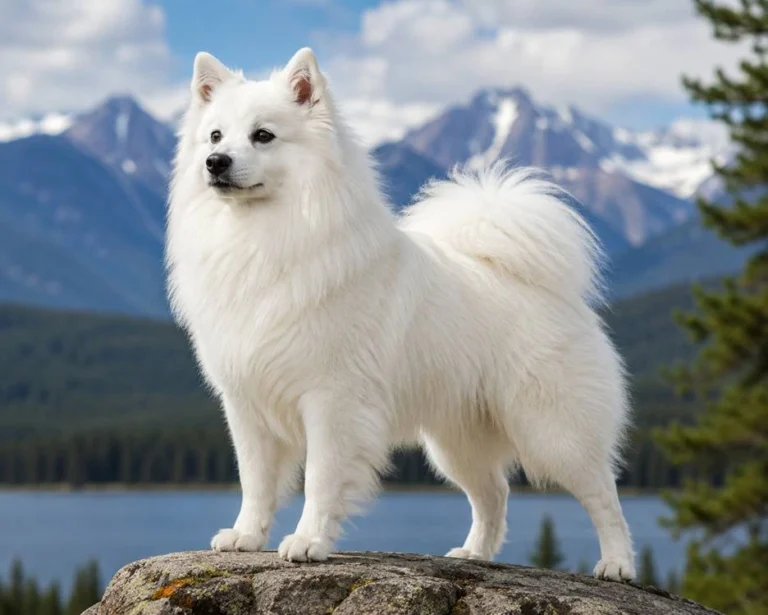
Alaskan Malamute vs. Samoyed
Both are arctic spitz breeds but differ significantly:
Appearance:
- Malamutes: Wolf-like, various colors
- Samoyeds: Pure white (usually), “smiling” expression
Temperament:
- Malamutes: More independent, reserved with strangers
- Samoyeds: More people-oriented, friendlier with everyone
Vocalization:
- Malamutes: Howl and “woo woo”
- Samoyeds: More prone to barking
Size:
- Malamutes: Larger and more substantial
- Samoyeds: Medium-large, more elegant build
Alaskan Malamute vs. Akita
Both are large, powerful breeds but from different origins:
Origin:
- Malamutes: Arctic working dogs (Alaska)
- Akitas: Japanese guard and hunting dogs
Temperament:
- Malamutes: Friendly with people, high prey drive for animals
- Akitas: More reserved/suspicious with strangers, guard-oriented
Training:
- Both are independent and challenging
- Akitas tend to be more dog-aggressive
Appearance:
- Malamutes: Wolf-like, arctic features
- Akitas: Bear-like head, curled tail, various colors including brindle
Special Considerations for Potential Owners
Are You Right for an Alaskan Malamute?
Before committing to this breed, honestly assess whether you can provide what a malamute needs:
Ideal Malamute Owner:
- Experienced with large, independent breeds
- Active lifestyle with time for 2+ hours of daily exercise
- Secure, large yard with proper fencing
- Lives in cool climate or has climate control
- Home environment (not apartment)
- Doesn’t mind extensive grooming and shedding
- Sense of humor about stubbornness
- Financial resources for food, vet care, and potential health issues
- Doesn’t expect perfect obedience
- Comfortable establishing and maintaining leadership
Poor Match:
- First-time dog owners
- Apartment dwellers
- Hot climates without AC
- Away from home 10+ hours daily
- Expect an obedient, easily trained dog
- Cannot tolerate shedding
- Limited exercise time/interest
- Small yards or no yard
- Households with cats or small pets
- Desire an effective guard dog
Financial Considerations
Owning an Alaskan Malamute involves significant expenses:
Initial Costs:
- Puppy purchase: $1,500-$3,500 (from reputable breeder)
- Initial veterinary care (vaccines, exam): $200-$300
- Spay/neuter: $300-$600
- Supplies (crate, bed, bowls, leash, collar): $300-$500
- Initial food supply: $75-$100
Annual Costs:
- Food: $600-$1,200 (quality large breed food)
- Routine veterinary care: $400-$600
- Heartworm and flea/tick prevention: $200-$300
- Grooming supplies or services: $200-$600
- Toys and supplies: $100-$300
- Training classes: $200-$500 (first year)
- Total: Approximately $1,700-$3,500 annually
Unexpected Costs:
- Emergency veterinary care: $1,000-$5,000+
- Treatment for health conditions: varies widely
- Property damage from destructive behavior: potentially substantial
- Fence reinforcement/escape prevention: $500-$2,000
Lifetime Cost:
Over a 12-year lifespan, expect to invest $25,000-$50,000+ in your malamute’s care.
Legal Considerations
In some areas, Alaskan Malamutes face legal restrictions:
Breed-Specific Legislation:
Some jurisdictions classify malamutes as “dangerous breeds” due to their size and wolf-like appearance, resulting in:
- Outright bans
- Special permit requirements
- Mandatory liability insurance
- Higher homeowner’s insurance premiums
Housing Restrictions:
Many rental properties and HOAs prohibit:
- Large breeds over certain weight limits
- “Wolf-like” breeds
- Multiple dogs
Always verify local regulations and housing rules before acquiring a malamute.
Conclusion: Is the Malamute d’Alaska Right for You?
The Alaskan Malamute is not a breed for everyone, and that’s perfectly fine. These magnificent dogs deserve owners who understand their needs, appreciate their quirks, and can provide appropriate care.
The Reality Check
This breed requires:
- Significant time investment
- Substantial financial resources
- Appropriate climate or climate control
- Secure containment
- Tolerance for shedding and grooming needs
- Patience with independent thinking
- Commitment to training and socialization
- Active lifestyle
If you cannot genuinely provide these requirements, a malamute will be unhappy, and so will you.
The Reward
For the right owner, an Alaskan Malamute offers:
- A deeply bonded, affectionate companion
- A majestic, beautiful dog that embodies wild nature
- An adventure partner for hiking and outdoor activities
- Endless entertainment and personality
- Connection to ancient history and arctic heritage
- A unique, unforgettable relationship
The malamute geant isn’t just a pet—it’s a lifestyle choice. These dogs demand respect, patience, and dedication. In return, they offer loyalty, affection, and companionship that’s truly special.
Final Thoughts
If you’ve read this guide and still feel drawn to the breed—if the challenges don’t deter you and you’re excited about the adventure—then an Alaskan Malamute might be your perfect match. Do your research, find a reputable breeder or rescue, and prepare thoroughly.
Welcome to the wonderful, frustrating, hilarious, rewarding world of living with a malamut d’alaska. Your life will never be quite the same—and most owners wouldn’t have it any other way.
The Alaskan Malamute: ancient, powerful, independent, affectionate, stubborn, loyal, challenging, and absolutely magnificent. For those who appreciate this unique combination, there’s simply no other breed quite like them.