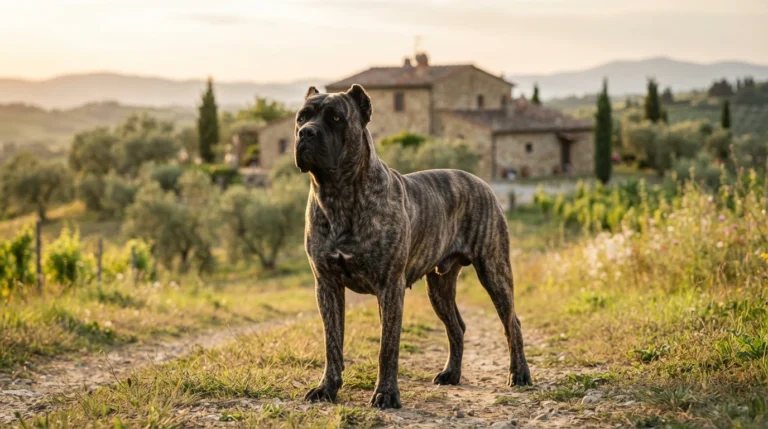

St. Bernard: The Complete Breed Guide
Few breeds carry a reputation quite as vivid as the St. Bernard’s — the barrel-chested mountain rescue dog, brandy cask and all, that has become shorthand for gentle giant everywhere. The image is more legend than literal history, but the temperament behind it is real: this is a massive breed with an unusually calm, patient, and devoted nature.
This guide covers what any current or prospective St. Bernard owner needs to know: history, physical traits, temperament, training, exercise, grooming, health, and the real costs of ownership.

St. Bernard at a Glance
| Trait | Details |
| Group | Working Group (AKC), Group 2 (FCI) |
| Origin | Swiss Alps |
| Height | Males 28–30 in; Females 26–28 in |
| Weight | 140–180 lb (some individuals over 200 lb) |
| Coat | Short-haired (smooth) or long-haired (rough); both types shed |
| Colors | Red and white, or brindle and white, with black shading on the face |
| Lifespan | 8–10 years |
| Temperament | Gentle, patient, friendly, watchful |
| Exercise Needs | 60–80 minutes daily, low-impact |
| Grooming | Moderate-to-heavy; daily brushing during seasonal shedding |
| Trainability | Eager to please but needs early, consistent training given its size |
| Good With Kids | Yes, famously gentle; supervise due to sheer size |
History and Origin
The St. Bernard’s history is tied inseparably to the Great St. Bernard Hospice, a refuge high in the Swiss Alps founded in the 11th century to shelter travelers crossing a notoriously dangerous mountain pass. Monks at the hospice began keeping large, powerful dogs by the 17th century, and by the 1700s these dogs were being used to locate travelers lost or buried in snow, thanks to their keen sense of smell and unusual ability to sense oncoming avalanches.
The most famous of these dogs, a St. Bernard named Barry, is credited with saving dozens of lives in the early 1800s and remains the breed’s most enduring symbol — including the small brandy cask often (and largely inaccurately) depicted around the neck of rescue St. Bernards in popular imagery. The breed was formally recognized under the name St. Bernard, and the American Kennel Club registered the breed in 1885. Long-haired St. Bernards were developed somewhat later than the original short-haired type, reportedly after crossbreeding with Newfoundlands in the 1830s to improve the breed’s coat for extreme cold — though the longer coat proved less practical for the original rescue work, since it collected ice.
Physical Characteristics
The St. Bernard is one of the largest breeds recognized by the AKC, with males standing 28 to 30 inches at the shoulder and typically weighing 140 to 180 pounds — some individuals exceed 200 pounds. Females are somewhat smaller, standing 26 to 28 inches. Despite the massive frame, the breed standard calls for a powerful, well-proportioned body rather than excessive bulk, with a broad head and a kind, thoughtful expression.
St. Bernards come in two coat varieties: the original short-haired (smooth) coat, dense and close-lying, and the long-haired (rough) coat, which is medium-length, plain to slightly wavy, with feathering on the legs and tail. Both coat types shed, and neither is considered low-maintenance. The classic color pattern is red with white markings or brindle with white, typically with a distinctive black mask and shading around the face.

Temperament and Personality
The AKC breed standard describes the ideal St. Bernard temperament as friendly and gentle when relaxed, alert and watchful when on duty — a fitting description for a breed literally bred to calmly locate and comfort distressed travelers in life-threatening conditions. Extreme timidity or aggressiveness are both considered serious faults.
In practice, most St. Bernards are famously patient, affectionate, and remarkably gentle with the people they know, often showing an almost instinctive tenderness around children. The breed is generally not aggressive, but its sheer size makes early training and socialization essential — a friendly, poorly trained St. Bernard can still be genuinely difficult to manage simply due to its weight and strength.
Living With a St. Bernard
Families and children:
St. Bernards are widely regarded as excellent, patient family dogs, often gentle enough for young children. Because of the breed’s enormous size, supervision during play matters more for preventing accidental knock-downs than for any concern about temperament.
Other pets:
With proper socialization, St. Bernards generally get along well with other dogs and household pets. Early exposure during puppyhood helps ensure the breed’s calm nature extends to interactions with smaller animals.
Living space:
This is not a breed suited to small apartments. St. Bernards need real space to move comfortably indoors and benefit from a house with a yard, ideally in a cooler climate given their heavy coat and susceptibility to overheating. A drool towel is a practical, if unofficial, piece of household equipment for this breed.
Training and Socialization
St. Bernards are generally eager to please and respond well to training, but given their eventual size, early and consistent obedience work is essential rather than optional. Leash training should start as early as possible, since an adult St. Bernard that pulls on a leash can be genuinely difficult for many owners to control physically.
Positive reinforcement methods work best, and puppy socialization classes help establish good manners before the dog reaches its full, substantial size. Because St. Bernards mature slowly both physically and mentally, patience during the (extended) puppy and adolescent stages pays off considerably once the dog reaches adulthood.
Exercise and Mental Stimulation
St. Bernards are a relatively laid-back breed that doesn’t require intense daily exercise, but they still benefit from a consistent routine — generally two walks a day totaling 60 to 80 minutes, combined with light play and basic training exercises for mental engagement.
Exercise should stay low-impact, particularly for puppies, whose rapid growth makes them vulnerable to joint stress from excessive or high-impact activity. St. Bernards are also prone to overheating given their size and heavy coat, so exercise during hot weather should be limited to cooler parts of the day.

Grooming and Coat Care
Both coat varieties benefit from weekly brushing to manage shedding and keep the coat healthy, with daily brushing recommended during the breed’s heavier seasonal shedding periods in spring and fall. The long-haired variety requires somewhat more attention to prevent matting, particularly around the feathering on the legs and tail.
A complete grooming routine should also include:
- Regular facial cleaning, since the breed’s loose jowls and skin folds are prone to trapping moisture and debris
- Nail trims every three to four weeks
- Regular ear checks and cleaning
- Routine dental care, including brushing several times a week
Nutrition and Feeding
St. Bernards need a diet formulated for large and giant breeds, with carefully controlled growth-formula food during puppyhood to reduce the risk of skeletal problems associated with rapid growth. Because the breed is deep-chested and prone to bloat, feeding two or three smaller meals a day rather than one large meal is strongly recommended.
Given the seriousness and frequency of bloat in giant breeds, many veterinarians recommend discussing a preventive gastropexy — a procedure that surgically secures the stomach in place — around six months of age, often performed alongside spaying or neutering.
Health and Lifespan
The average St. Bernard lives 8 to 10 years, a relatively short lifespan tied closely to the breed’s giant size. Prospective owners should understand the significant health conditions this breed is predisposed to before bringing one home.
| Condition | What It Is | What Owners Should Watch For |
| Gastric dilatation-volvulus (bloat) | Stomach fills with gas and twists, cutting off blood flow; can be fatal within hours | Unproductive retching, a distended or rigid abdomen, sudden restlessness |
| Hip and elbow dysplasia | Malformation of the hip or elbow joint | Reluctance to rise or climb stairs, an altered gait, stiffness after rest |
| Entropion and ectropion | Eyelids that roll inward or sag outward abnormally | Excessive tearing, squinting, visible irritation |
| Osteosarcoma (bone cancer) | An aggressive cancer common in large and giant breeds | Unexplained limping or swelling in a limb |
| Dilated cardiomyopathy | A disease of the heart muscle leading to an enlarged heart | Fatigue, coughing, labored breathing, fainting |
| Epilepsy | An inherited seizure disorder | Sudden seizures, disorientation, or collapse |
Because hip dysplasia and eye conditions are so common in this breed, responsible breeders screen breeding stock for both, and prospective buyers should ask to see current health clearances. Given the breed’s bloat risk, owners should have an emergency veterinary plan in place and know the signs well before they’re ever needed.
Cost of Owning a St. Bernard
| Expense | Typical Range |
| Puppy from a reputable breeder | $1,000–$2,500 |
| Rescue or shelter adoption | $100–$400 |
| First-year setup and veterinary costs | $3,000–$6,000 |
| Ongoing annual costs (food, routine vet care, grooming) | $1,500–$3,000 |
| Lifetime cost of ownership | $20,000–$35,000+ |
Feeding costs run significantly higher than average given the sheer volume of food a St. Bernard consumes, and larger-format equipment — beds, crates, vehicle restraints — carries a price premium. Because hip dysplasia management alone can run into the thousands over a dog’s lifetime, pet insurance is worth serious consideration for this breed.
Finding a St. Bernard: Breeders and Rescue
Anyone looking for a St. Bernard puppy should seek out a breeder who screens for hip and elbow health, cardiac disease, and eye conditions, raises puppies in the home, and can speak candidly about the demands of raising a giant breed. The St. Bernard Club of America maintains breeder referral resources and is a good starting point.
Rescue is also worth considering. St. Bernard rescues regularly place adult dogs — often already past the demanding, fast-growing puppy stage — and can offer valuable guidance on managing a dog of this size. [Internal Link — St. Bernard Rescue Guide]
Frequently Asked Questions
Did St. Bernards really carry brandy casks for rescues?
Not historically — the image comes from 19th-century paintings, not documented rescue practice. The breed’s real rescue history, centered on the Great St. Bernard Hospice, is well documented without the brandy cask.
Are St. Bernards good with kids?
Yes, they’re widely known for being patient and gentle with children. Supervision matters mainly because of the breed’s sheer size.
How much exercise does a St. Bernard need?
About 60 to 80 minutes of low-impact daily activity, generally split into two walks.
How long do St. Bernards live?
The typical lifespan is 8 to 10 years, relatively short due to the breed’s giant size.
Do St. Bernards shed a lot?
Yes, both coat varieties shed moderately year-round, with heavier shedding in spring and fall requiring daily brushing.
How much does a St. Bernard cost?
Puppies from reputable breeders typically run $1,000 to $2,500, while rescue adoption generally costs $100 to $400 — though first-year costs overall tend to run higher than average given the breed’s size.
What health problems are St. Bernards prone to?
Common concerns include bloat, hip and elbow dysplasia, entropion/ectropion eyelid conditions, bone cancer, cardiomyopathy, and epilepsy.
Conclusion
The St. Bernard earns its gentle giant reputation honestly, carrying centuries of rescue heritage into a modern temperament defined by patience, affection, and calm. That heritage comes with real practical demands: a shorter lifespan than most breeds, a serious risk of bloat, and the everyday realities of housing, feeding, and training a dog that can weigh as much as an adult human. Owners who go in prepared for those realities tend to find the St. Bernard’s devotion and steady temperament every bit as remarkable as its size.