Akita: The Complete Guide to This Dignified, Devoted Guardian Breed
Akita
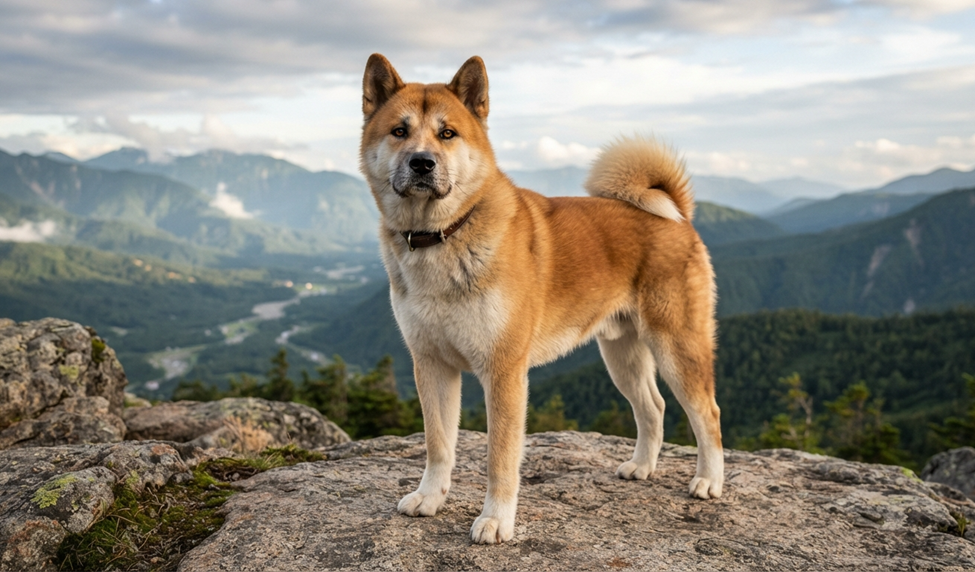
Few breeds carry themselves with the quiet gravity of the Akita. Large, powerfully built, and famously loyal, this Japanese breed has a presence that’s hard to miss and a devotion to its own family that has inspired real-world stories — most famously Hachikō, the Akita who kept returning to a Tokyo train station for years after his owner’s death. Behind that dignified exterior, though, is a strong-willed, independent dog that isn’t the right fit for every household. This guide covers what the breed is really like, including an honest look at the traits that make it best suited to experienced owners.
Akita Quick Facts
| Attribute | Detail |
| AKC Group | Working Group |
| FCI Group | Group 5, Section 5 (Asian Spitz and related breeds) |
| Country of Origin | Japan (Akita Prefecture, Tōhoku region) |
| Height | Males 26–28 in; females 24–26 in |
| Weight | Males 100–130 lb; females 70–100 lb |
| Lifespan | 10–14 years |
| Coat | Dense, weather-resistant double coat |
| Colors | All colors accepted (American Akita) |
| Temperament | Dignified, courageous, loyal, independent |
Note: this profile covers the American Akita, the type recognized by the AKC in the US. See “American Akita vs. Japanese Akita” below for how the two differ.
What Is an Akita?
A Hunting Dog from Japan’s Snow Country
The Akita traces its ancestry to the Matagi Inu, a hunting dog used by the Matagi — traditional hunters of Japan’s mountainous Tōhoku region — to track and hold large game like wild boar and Japanese black bear in harsh, snow-covered terrain. That original job demanded a dog with size, courage, and independence, qualities still central to the breed today. In 1931, the Japanese government designated the Akita a natural monument in recognition of its cultural significance.
From Natural Monument to American Family Icon
The breed’s reputation for loyalty crystallized around Hachikō, an Akita in 1920s Tokyo who continued waiting at a train station for his deceased owner’s return every day for nearly a decade — a story that remains one of the most famous examples of canine devotion. The American Kennel Club formally recognized the Akita in 1972, placing it in the Working Group [Internal Link], where it remains today. In 2020, the AKC officially split the breed into two: the American Akita and the Japanese Akita, recognizing meaningful differences that had developed between the lines.
American Akita vs. Japanese Akita
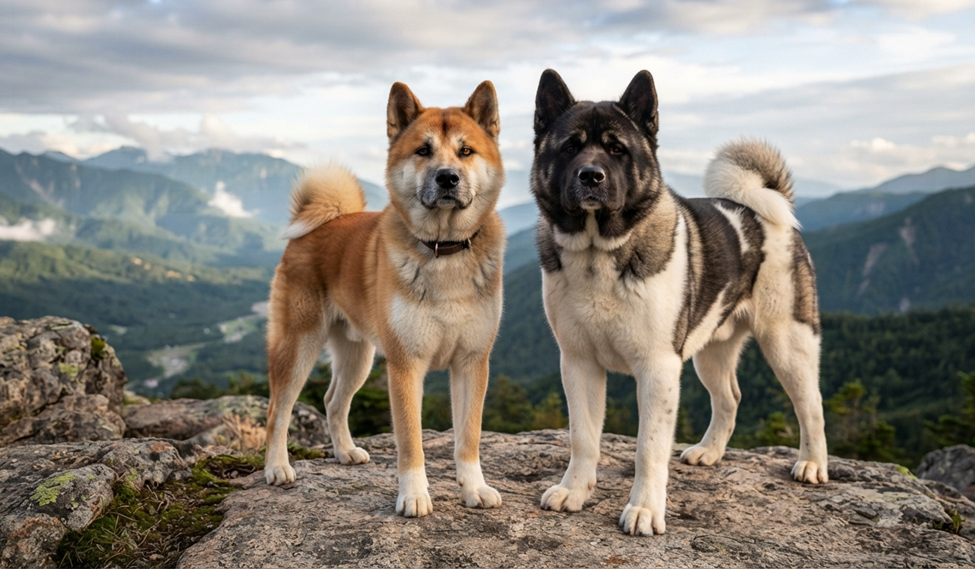
Because these two closely related breeds are frequently confused, it’s worth being precise about the differences before going further.
| Attribute | American Akita | Japanese Akita (Akita Inu) |
| FCI Standard | No. 344 | No. 255 |
| Size | Larger, heavier-boned; males up to 130 lb | Smaller, lighter-boned; males typically 70–100 lb |
| Head | More bear-like, substantial | More fox-like, finer featured |
| Accepted Colors | All colors, including black masks and pinto | Red, white, or brindle only |
| AKC Status | Recognized as “Akita” (separate breed since 2020) | Recognized as “Japanese Akita Inu” |
This guide focuses on the American Akita, since it’s the type most commonly meant by “Akita” in the US and the one recognized under that name by the AKC. For a closer look at the Japanese Akita or its smaller cousin the Shiba Inu [Internal Links], see the related breed guides.
Appearance & Coat
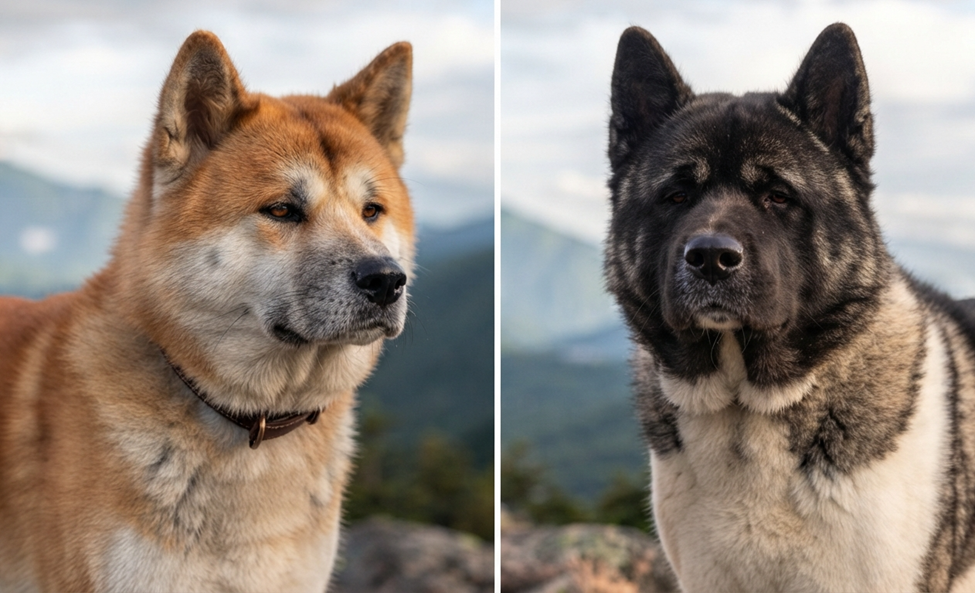
Size and Build
The American Akita is a genuinely large, powerfully built dog. Males typically stand 26 to 28 inches at the shoulder and weigh 100 to 130 pounds, while females run somewhat smaller at 24 to 26 inches and 70 to 100 pounds. The overall impression is substantial bone and muscle backing up a dignified, confident bearing.
Coat and Colors
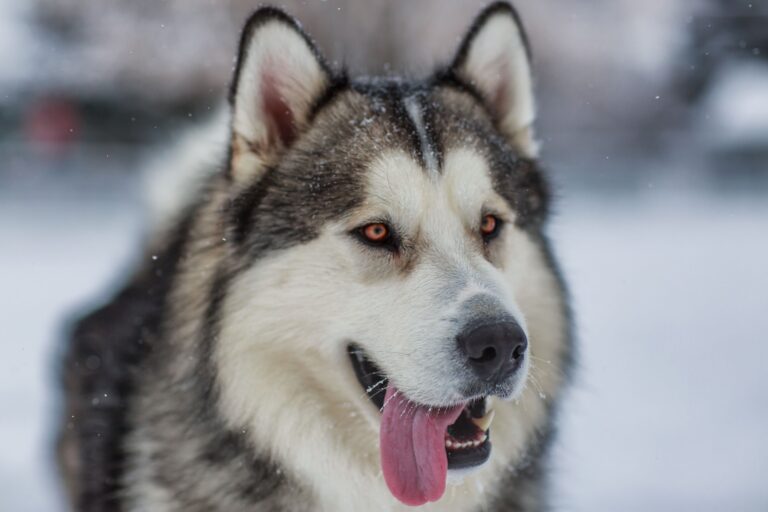
The Akita’s dense double coat is built for cold climates, with a soft, thick undercoat beneath a coarser outer layer that sheds water and insulates against harsh weather. The American Akita standard accepts all colors and patterns, including pinto markings and black facial masks — a notably wider range than the Japanese Akita allows.
Temperament and Personality
An Akita’s temperament is often summed up as dignified courage paired with deep, almost singular loyalty. This is typically a one-family dog: utterly devoted to the people it considers its own, but aloof and often outright suspicious of strangers until given a real reason to trust them.
That same independence and confidence that made the breed an effective big-game hunter also makes it strong-willed and, at times, dominant. Akitas frequently don’t get along well with other dogs, particularly of the same sex, and early, thorough socialization is essential to managing that tendency rather than eliminating it entirely.
Is an Akita Right for You?
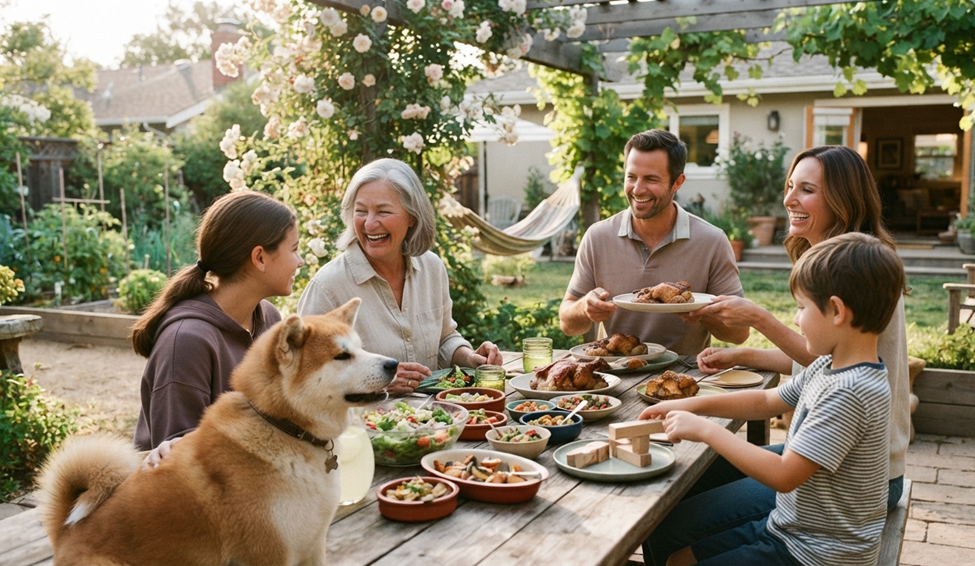
First-Time Owners
This is generally not a breed recommended for first-time dog owners. An Akita’s size, independence, and dominant streak call for a confident, experienced handler who understands how to set consistent boundaries without resorting to harsh corrections, which tend to backfire with this breed.
Families and Children
With proper socialization and training, Akitas can be remarkably gentle and protective with their own family’s children, drawing on the same deep loyalty that defines the breed. That devotion doesn’t automatically extend to unfamiliar children or visitors, so supervision and clear introductions matter.
Other Dogs and Pets
This is the area where new owners are most often caught off guard. Many Akitas simply don’t like other dogs, and same-sex aggression in particular is a well-documented breed tendency. Multi-dog households, dog parks, and off-leash areas with unfamiliar dogs all require real caution, and some Akitas never become fully reliable around other animals regardless of socialization effort.
Training an Akita
Akitas are intelligent and capable of learning quickly, but their independent streak means they don’t automatically defer to a handler the way some breeds do. Training works best when it comes from a confident, consistent owner who can hold the dog’s attention with meaningful positive reinforcement rather than repetition alone.
Early and extensive socialization — with people, environments, and, carefully, other dogs — is arguably more important for an Akita than for most breeds, given the temperament tendencies described above. Waiting until adulthood to start this work makes it considerably harder, since an adult Akita’s opinions about strangers and other dogs tend to be much more fixed than a puppy’s.
Crate training and structured routines also tend to suit the breed well, giving a naturally independent dog a predictable framework rather than leaving it to make its own decisions about house rules.
Exercise Needs

Akitas need real daily exercise: roughly 90 to 120 minutes of activity, combining brisk walks, off-leash play in a secure area, and general engagement. A fenced yard is a significant asset for this breed, giving it room to move without the leash-management complications that come with encountering unfamiliar dogs on a public walk.
Grooming: Managing the Seasonal Coat Blow
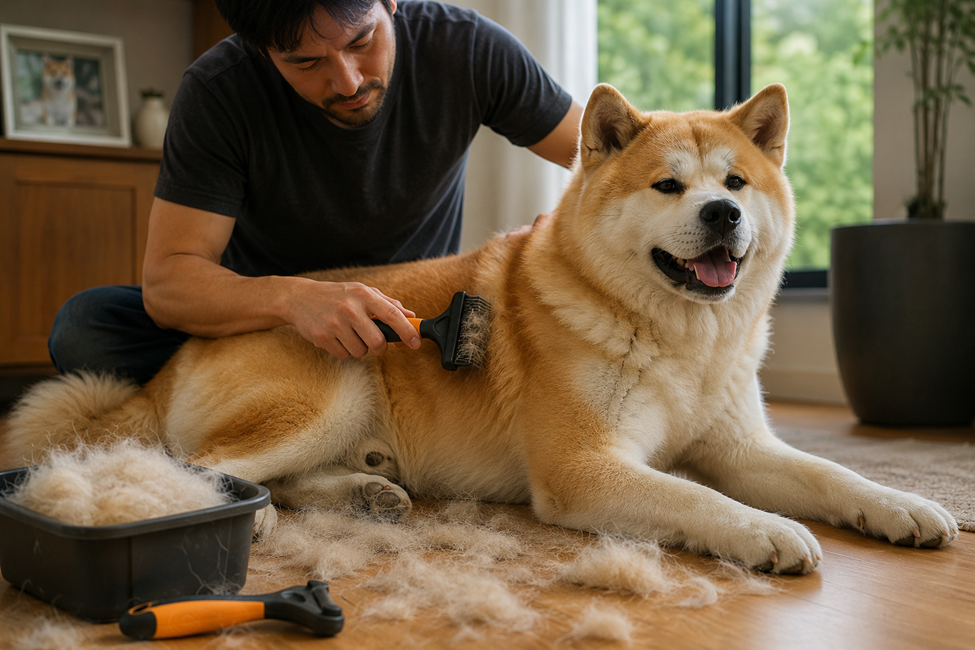
Akitas shed year-round at a moderate, manageable level, but twice a year — typically spring and fall — they “blow” their undercoat in a much heavier shedding period that calls for daily brushing to keep up with the loose hair. Outside of those seasonal blows, brushing every few days is generally sufficient to manage shedding and keep the coat healthy.
Grooming Tip: Some owners bring in a professional groomer three to four times a year to help manage the heaviest shedding periods, though a consistent home brushing routine covers most of what the breed needs. [Internal Link: professional groomer]
Health and Lifespan
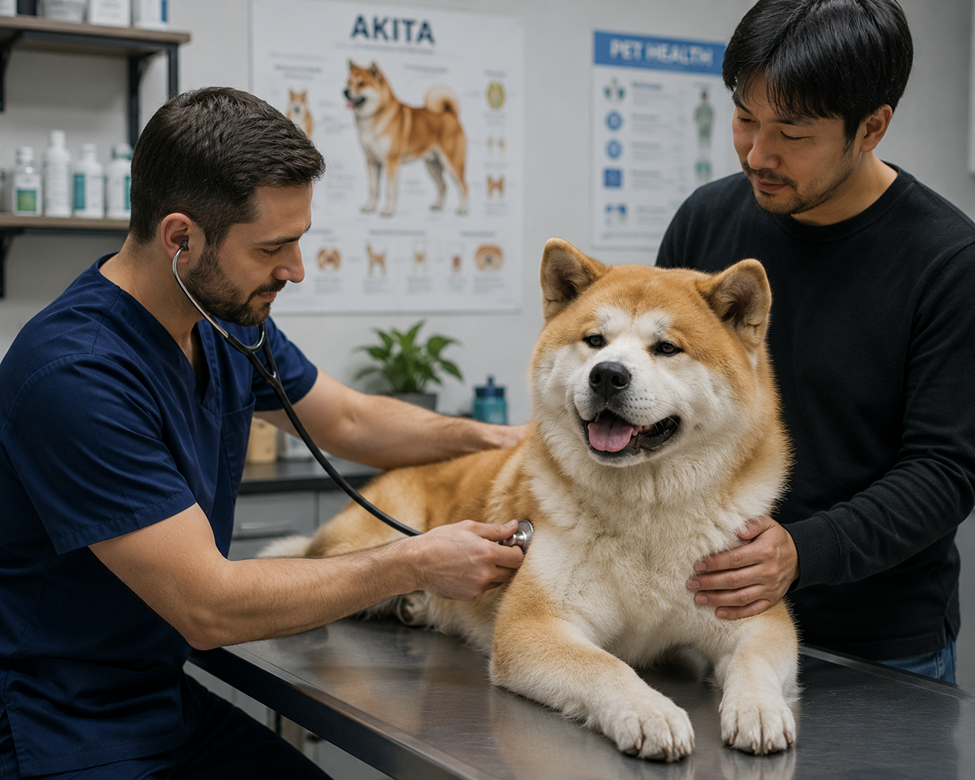
Most Akitas live between 10 and 14 years, with some reaching 15 with excellent care. As a large breed with a distinct genetic background, several conditions are worth understanding before ownership.
| Condition | What It Is | What Owners Should Watch For |
| Hip and elbow dysplasia | Abnormally formed joints common in large breeds | Limping, stiffness, reluctance to jump or climb stairs |
| Hypothyroidism | Underactive thyroid slowing metabolism | Weight gain, lethargy, hair loss, skin changes |
| Sebaceous adenitis | Immune condition affecting the skin’s oil glands, more common in Akitas than most breeds | Hair loss, scaly skin, dandruff, secondary skin infections |
| Bloat (GDV) | Life-threatening stomach distension/twisting | Restlessness, distended abdomen, unproductive retching — emergency care |
| Progressive retinal atrophy (PRA) | Inherited, gradual loss of vision | Night vision loss progressing over time |
| Renal dysplasia | Genetic kidney condition that can appear as early as puppyhood | Excessive thirst/urination, poor growth in puppies |
| Von Willebrand disease | Inherited blood-clotting disorder | Prolonged bleeding after injury or surgery |
Sebaceous adenitis [Internal Link] deserves particular attention, since it’s more common in Akitas than in most breeds, has no cure, and requires lifelong management once diagnosed — early veterinary involvement makes a real difference in quality of life.
Nutrition and Bloat Prevention
A high-quality large-breed formula suited to an active dog is a solid nutritional foundation for an Akita. Because the breed is a large, deep-chested dog at elevated bloat risk [Internal Link], feeding practices matter as much as food quality: avoid vigorous exercise immediately before and after meals, consider splitting food into two or more smaller portions rather than one large meal, and talk to a vet about slow-feeder options if your dog tends to eat quickly.
Cost and Finding a Breeder
Akita puppy prices in the US commonly range from about $1,000 to $3,000, with price influenced by bloodline, breeder reputation, and coloring; dogs from Japanese import lines tend to sit at the higher end of that range. Ongoing costs include food, grooming, and veterinary care, plus pet insurance many owners choose given the breed’s known health risks.
Given the temperament considerations described above, working with a reputable breeder [Internal Link] connected to the Akita Club of America is especially valuable — not just for health testing, but for guidance on temperament and socialization specific to this breed. A good breeder will ask about your experience level and household setup just as carefully as you ask about the puppy’s lineage.
Frequently Asked Questions
What is an Akita?
The Akita is a large, dignified dog breed from Japan’s Akita Prefecture, originally bred for big-game hunting and now known for its deep loyalty to family and independent, one-family temperament.
What’s the difference between an American Akita and a Japanese Akita?
The American Akita is larger, heavier-boned, and accepted in all colors, while the Japanese Akita (Akita Inu) is smaller, more finely built, and limited to red, white, or brindle coloring. The AKC has recognized them as separate breeds since 2020.
Are Akitas good family dogs?
They can be deeply loyal and protective with their own family when well-socialized, but they tend to be reserved with strangers and are generally not recommended for first-time owners.
Are Akitas aggressive?
Akitas aren’t inherently aggressive toward people, but many are dog-selective or dog-aggressive, particularly toward dogs of the same sex, and this tendency requires careful management throughout the dog’s life.
Do Akitas shed a lot?
Yes, especially during two seasonal coat blow periods each year when daily brushing is needed. Shedding is more moderate the rest of the year.
What health problems do Akitas have?
Common concerns include hip and elbow dysplasia, hypothyroidism, sebaceous adenitis, bloat, progressive retinal atrophy, renal dysplasia, and von Willebrand disease.
How much does an Akita cost?
Puppy prices typically range from about $1,000 to $3,000, with Japanese import lines often costing more.
Conclusion
The Akita is a breed built on genuine substance: a working hunting dog’s courage, a guardian’s watchfulness, and a loyalty famous enough to inspire one of the most well-known true stories about dogs. That same independence and dominance that makes the breed so effective as a protector also means it isn’t an easy fit for a first dog or a multi-dog household without careful management. For experienced owners ready to meet an Akita’s need for confident leadership, consistent socialization, and real exercise, the reward is a companion whose devotion to its family runs about as deep as any breed’s does.