Great Dane: The Complete Breed Guide
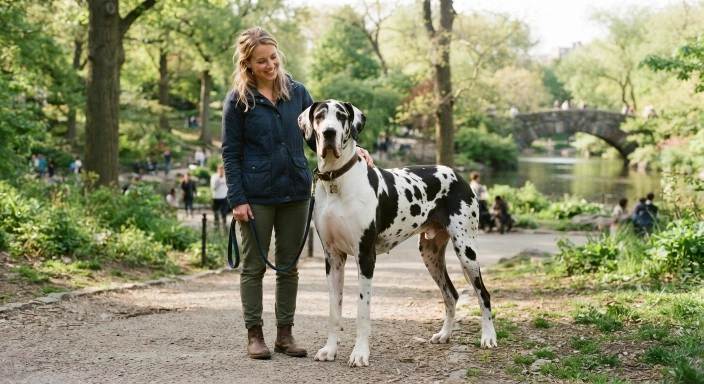
Few dogs make an entrance quite like the Great Dane. Standing eye-to-eye with an adult human on its hind legs, the breed carries a name — “the Apollo of dogs” — that captures both its size and its unusual grace. Despite the imposing frame, most Great Danes are famously gentle, and their temperament, not their height, is what tends to win owners over for life.
This guide covers what any current or prospective Great Dane owner needs to know: history, physical traits, temperament, training, exercise, grooming, health, and the real costs of ownership.
Great Dane at a Glance
| Trait | Details |
| Group | Working Group (AKC), Group 2 (FCI) |
| Origin | Germany |
| Height | Males 30–32+ in; Females 28–30 in |
| Weight | Males 140–175 lb; Females 110–140 lb |
| Coat | Short, thick, smooth, and glossy |
| Colors | Fawn, brindle, black, blue, harlequin, mantle, merle |
| Lifespan | 6–8 years on average, occasionally into double digits |
| Temperament | Spirited, courageous, friendly, dependable |
| Exercise Needs | 30–60 minutes daily, low-impact |
| Grooming | Low-maintenance coat; moderate-to-heavy shedder |
| Trainability | High; needs early training due to sheer size |
| Good With Kids | Yes, gentle giant reputation; supervise with very young children |
History and Origin
The Great Dane’s origins trace back at least 300 years to Germany, where the breed descended from mastiff-type dogs and was purpose-bred by German nobility to hunt formidable game such as wild boar and deer. That heritage required a dog with the size and courage to face large, dangerous prey, along with enough speed to keep pace with it.
In 1876, Germany declared the Great Dane — known there as the Deutsche Dogge — its national breed, celebrating its protective nature, endurance, and strength. The first formal breed standard was published in Germany in the early 1880s, and the American Kennel Club recognized the breed in 1887. Despite its fearsome hunting past, the modern Great Dane has been bred for generations primarily as a companion, and temperament testing has steadily favored friendliness over aggression.
Physical Characteristics
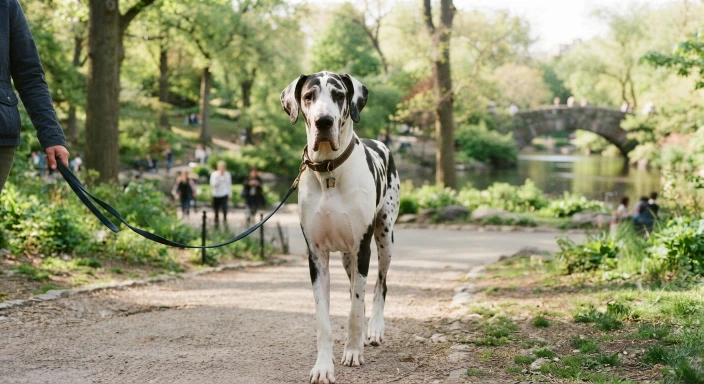
Few breed standards are as dominated by sheer scale as the Great Dane’s. Males should stand at least 30 inches at the shoulder, with 32 inches or more preferred provided the dog remains well-proportioned; they typically weigh 140 to 175 pounds. Females stand 28 to 30 inches and weigh 110 to 140 pounds. Despite this size, the breed standard calls for an elegant, well-balanced build — power without bulkiness, and a gait that should look effortless rather than lumbering.
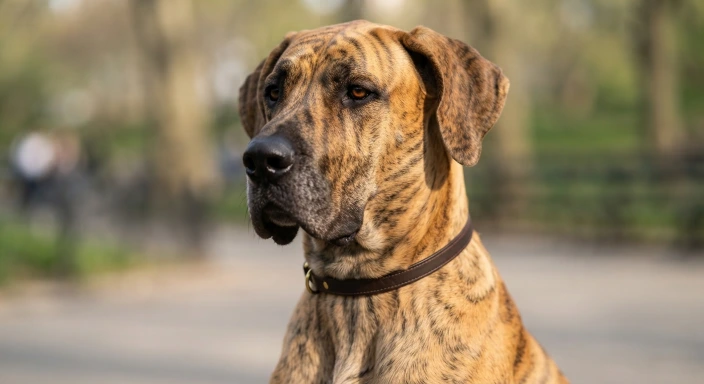
The coat is short, thick, and smooth, requiring far less maintenance than the dog’s size might suggest. The AKC standard recognizes seven official colors: fawn (yellow-gold with a black mask), brindle (yellow-gold with black cross stripes in a chevron pattern), black, blue, harlequin, mantle, and merle — each with specific marking requirements defined in the standard.
Temperament and Personality
The AKC breed standard is direct on this point: a Great Dane must be spirited and courageous, never timid, and always friendly and dependable. That combination of imposing presence and even temperament is exactly what earns the breed its “gentle giant” reputation and its old nickname, the Apollo of dogs.
Great Danes tend to be deeply affectionate with their families and often behave as though they have no idea how large they are — a habit that shows up as leaning against people, attempting to sit in laps, and generally wanting to be as close to their owners as physically possible. They’re typically good with familiar people and, with proper socialization, reasonably good with strangers as well, though their size alone makes them effective deterrents without any aggression required.
Living With a Great Dane
Families and children:
Great Danes are frequently excellent family dogs and are often remarkably gentle with children. That said, their size means an enthusiastic tail wag or an accidental bump can knock over a small child, so play between young kids and a Great Dane should always be supervised.
Other pets:
With appropriate socialization, Great Danes generally get along well with other dogs and household pets. Early exposure to a variety of animals during puppyhood helps ensure the breed’s size never becomes a liability around smaller pets.
Living space:
Despite their size, Great Danes can do reasonably well in apartments, since they’re not a particularly high-energy breed once past puppyhood — though the sheer footprint of the dog itself is a practical consideration for any living space. What matters most is company: Great Danes bond intensely with their families and don’t do well left alone for long stretches.
Training and Socialization
Given their eventual size, Great Danes need training and socialization to start early and continue consistently — a friendly but untrained 150-pound dog can still be difficult to manage. The breed is generally easier to train than many other giant breeds, responding well to positive reinforcement and food or praise-based rewards.
Basic obedience, leash manners, and polite greetings should be priorities from puppyhood onward, ideally reinforced through structured puppy classes and ongoing socialization throughout the dog’s life. Because Great Danes grow so quickly, owners should also be mindful of jumping and rough play habits that are manageable in a small puppy but become a real safety issue once the dog reaches full size.
Exercise and Mental Stimulation
Great Danes have more moderate exercise needs than their size might suggest — 30 to 60 minutes of daily activity, split into a couple of sessions, is generally sufficient for most adults. Exercise should be low-impact, particularly during the rapid growth period of puppyhood, when overexertion can stress developing joints and bones.
Mental stimulation through training, puzzle toys, and calm structured play helps keep a Great Dane content without requiring marathon exercise sessions. Given the breed’s susceptibility to bloat, vigorous exercise should always be avoided in the hour before and after meals.
Grooming and Coat Care
The Great Dane’s short coat is genuinely low-maintenance in terms of technique, though the sheer surface area of the dog means grooming still takes real time. Brushing two to three times a week manages loose hair and keeps shedding under control, with more frequent brushing needed during seasonal coat blows.
A complete grooming routine should also include:
- Nail trims every three to four weeks — especially important given the dog’s weight and its effect on joints
- Regular ear checks and cleaning
- Routine dental care, including brushing several times a week
- Periodic bathing as needed, with attention to skin folds and pressure points on elbows and hocks
Nutrition and Feeding
Great Danes need a diet formulated specifically for large and giant breeds, particularly during puppyhood, when controlled growth rates are essential to reducing the risk of skeletal problems. Overfeeding a growing Great Dane puppy to make it grow faster is one of the more common — and preventable — mistakes new owners make.
Because bloat is the single greatest health threat to this breed, feeding two or three smaller meals a day rather than one large meal is strongly recommended, along with avoiding vigorous exercise immediately before or after eating and using slow-feeder bowls for dogs that gulp their food.
Health and Lifespan
Great Danes have one of the shortest lifespans of any popular breed, averaging 6 to 8 years, though some individuals live into their early teens. That relatively short lifespan is closely tied to the serious health conditions the breed is prone to as a result of its extreme size.
| Condition | What It Is | What Owners Should Watch For |
| Gastric dilatation-volvulus (bloat) | Stomach fills with gas and twists, cutting off blood flow; affects an estimated 37% of Great Danes and is the breed’s leading cause of death | Unproductive retching, a distended or rigid abdomen, sudden restlessness or collapse |
| Dilated cardiomyopathy | A disease of the heart muscle that leads to an enlarged heart | Fatigue, coughing, labored breathing, fainting — though many dogs show no symptoms until the disease is advanced |
| Hip dysplasia | The head of the femur doesn’t fit properly into the hip socket | Reluctance to rise or climb stairs, an altered gait, stiffness |
| Osteosarcoma (bone cancer) | An aggressive cancer more common in large and giant breeds | Unexplained limping or swelling in a limb |
| Hypothyroidism | Underactive thyroid, often caused by autoimmune thyroiditis | Weight gain, lethargy, coat changes |
Because bloat is so common and so dangerous in this breed, many veterinarians recommend discussing a preventive gastropexy — a surgical procedure that tacks the stomach in place — particularly for dogs already undergoing another procedure such as spaying or neutering. Regular cardiac screening, including echocardiograms, is also recommended given how often heart disease goes unnoticed until it’s advanced.
Cost of Owning a Great Dane
| Expense | Typical Range |
| Puppy from a reputable breeder | $1,500–$3,500 |
| Rescue or shelter adoption | $100–$300 |
| First-year setup and veterinary costs | $4,000–$8,400 |
| Ongoing annual costs (food, routine vet care, grooming) | $1,600–$3,200 |
| Lifetime cost of ownership | $20,000–$35,000+ |
Feeding costs alone are significantly higher than for most breeds given the sheer volume of food a Great Dane eats, and larger-format equipment — beds, crates, car harnesses — carries a price premium as well. Given the breed’s predisposition to bloat and cardiac disease, pet insurance or a dedicated emergency fund is worth serious consideration.
Finding a Great Dane: Breeders and Rescue
Anyone looking for a Great Dane puppy should seek out a breeder who screens for hip health and cardiac disease, raises puppies in the home, and can speak candidly about bloat risk and the demands of raising a giant breed. The Great Dane Club of America maintains breeder referral resources and is a useful starting point.
Rescue is also a strong option for this breed. Great Dane rescues regularly place adult dogs — often already past the demanding, fast-growing puppy stage — and can offer valuable guidance on managing a dog this size. [Internal Link — Great Dane Rescue Guide]
Frequently Asked Questions
How long do Great Danes live?
The average lifespan is 6 to 8 years, with some individuals living into their early teens. It’s one of the shorter lifespans among popular breeds, largely due to the breed’s giant size.
Are Great Danes good with kids?
Generally yes — they have a well-earned gentle giant reputation. Their size still means play with young children should be supervised.
What is the biggest health risk for Great Danes?
Bloat (gastric dilatation-volvulus) is the breed’s leading cause of death, affecting an estimated 37% of Great Danes at some point in their lives.
How much exercise does a Great Dane need?
Around 30 to 60 minutes of low-impact daily activity is generally enough for most adults; puppies need controlled, limited exercise to protect developing joints.
Do Great Danes shed a lot?
Despite their short coat, they shed a moderate to heavy amount and benefit from brushing two to three times a week.
How much does a Great Dane cost?
Puppies from reputable breeders typically run $1,500 to $3,500, while rescue adoption generally costs $100 to $300 — though first-year costs overall tend to run higher than for most breeds given their size.
Do Great Danes need a lot of space?
They can adapt to apartments if exercised appropriately, but their sheer size means most owners find a house with room to move around more practical.
Conclusion
The Great Dane pairs one of the most imposing physical presences in the dog world with one of the gentlest temperaments — a combination that has made it a beloved family companion for well over a century. That combination comes with real responsibilities: a shorter lifespan than most breeds, a serious risk of bloat, and the practical realities of housing, feeding, and training a dog that can outweigh many adult humans. Owners who go in prepared for those realities tend to find the Great Dane’s affection, loyalty, and surprising gentleness well worth the extra care.