Appenzeller Sennenhund: The Complete Guide to Switzerland’s Alert Mountain Herder
Appenzeller Sennenhund
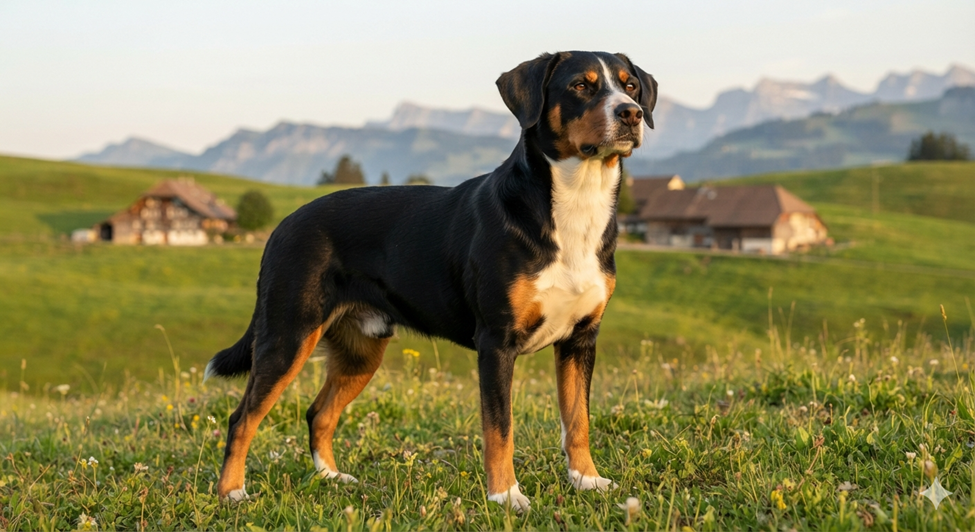
The Appenzeller Sennenhund is one of four closely related Swiss “Sennenhund” breeds — working dogs developed by Alpine cattle-herders and dairymen — and it’s frequently mistaken for its far more famous relative, the Bernese Mountain Dog. First formally described in 1853 and accepted by the FCI in 1954, the Appenzeller remains a genuinely alert, high-energy working breed rather than a laid-back companion. This guide covers the breed’s Swiss history, its still-developing US recognition status, and how it compares to the other three Sennenhund breeds.
Appenzeller Sennenhund Quick Facts
The Appenzeller Sennenhund is recorded in the AKC’s Foundation Stock Service (companion events only, not full Bernese Mountain Dog [Internal Link]-style conformation recognition), the UKC’s Guardian Dog Group since 1993, and the FCI Group 2, Section 3 (Swiss Mountain and Cattledogs), Standard No. 46.
| Attribute | Detail |
| AKC Status | Foundation Stock Service; companion events only |
| UKC Status | Guardian Dog Group; recognized 1993 |
| FCI Group | Group 2, Section 3 (Swiss Mountain and Cattledogs), Standard No. 46 |
| Country of Origin | Switzerland (Appenzell region) |
| Height | About 19–23 in at the shoulder |
| Weight | 48–70 lb |
| Lifespan | 12–15 years |
| Coat | Short, dense, double coat |
| Colors | Tricolor: black or Havana brown base with white and reddish-brown markings |
What Is an Appenzeller Sennenhund?
Origins in Appenzell, Switzerland
The Appenzeller Sennenhund is the traditional working dog of the Sennen — Alpine cattle-herders and dairymen — of the Appenzell region in northeastern Switzerland, used historically to herd and guard livestock and pull carts. The earliest known written description of the breed comes from Friedrich von Tschudi’s 1853 work on Alpine wildlife. Later in the 19th century, forester Max Sieber, who had observed the dogs at eastern Swiss cattle shows, petitioned Swiss cynological authorities for formal recognition, and a commission established with funding from the canton of St. Gallen recognized the breed in 1898. That formal recognition mattered because it standardized a working dog population that had otherwise developed somewhat regionally and informally across Alpine farms, giving breeders a shared reference point for the first time.
AKC, UKC, and FCI Recognition
Recognition status for this breed is genuinely split across organizations, which is worth understanding clearly. The AKC records the Appenzeller Sennenhund in its Foundation Stock Service program, meaning it can compete in AKC companion events but not in regular conformation breed classes. The UKC, by contrast, has fully recognized the breed since 1993, placing it in its Guardian Dog Group. The FCI accepted the breed in 1954, following the Appenzeller Sennenhunde Club’s founding in 1906 under cynologist Albert Heim, who drew up the first complete breed standard in 1914.
The Four Swiss Sennenhund Breeds: How They Compare
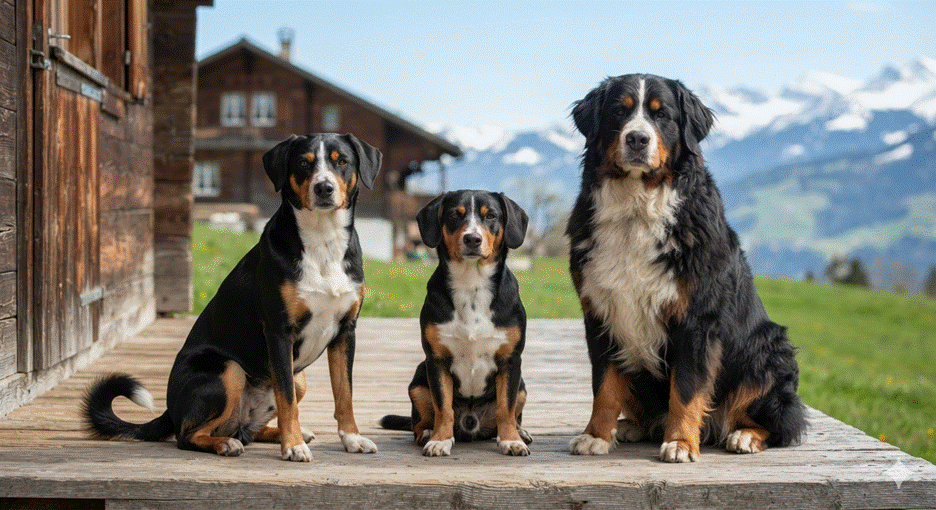
Switzerland produced four related Sennenhund breeds, and the Appenzeller is frequently confused with its relatives, especially the much more widely known Bernese Mountain Dog. Here’s how it compares to the Entlebucher Mountain Dog [Internal Link] and the Bernese Mountain Dog, with a note on the Greater Swiss Mountain Dog [Internal Link] as well.
| Attribute | Appenzeller Sennenhund | Entlebucher Mountain Dog | Bernese Mountain Dog |
| Size | Medium, 48–70 lb | Smallest of the four, 45–65 lb | Largest of the four, 80–115 lb |
| Coat | Short, dense double coat | Short, dense double coat | Long, silky tricolor coat |
| Temperament Note | Highly energetic, strong watchdog instinct | Energetic, agile, driven | Calmer, more laid-back for a working breed |
The Greater Swiss Mountain Dog is the largest and heaviest-boned of all four Sennenhund breeds, closer in size to the Bernese but with a shorter coat similar to the Appenzeller’s.
Appearance
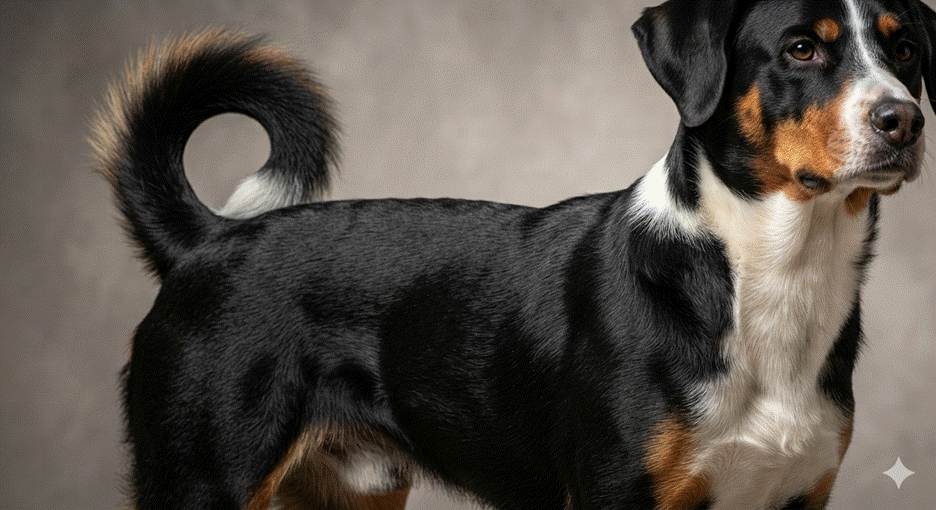
The Appenzeller Sennenhund has a compact, muscular, medium-sized build with a short, dense double coat, always tricolor: a black or Havana brown base with white markings on the chest, face, and feet, and reddish-brown accents between the base color and the white. The breed’s distinctive tail curls up and forward over the back, a trait that helps distinguish it from its Sennenhund relatives at a glance.
Temperament
The Appenzeller Sennenhund is spirited, intelligent, alert, and genuinely fearless, with an extremely high work drive that sets it apart from some of its calmer Sennenhund relatives. This is an energetic, athletic breed that thrives with owners who can offer real physical and mental challenge — a bored Appenzeller is a genuinely difficult dog to live with. The breed is also strongly predisposed to watchfulness and territorial barking, generally loyal and affectionate with family but reserved and suspicious of strangers without early, deliberate socialization. That combination of loyalty at home and wariness beyond it is a direct legacy of the breed’s original job guarding isolated Alpine farms, where distinguishing friend from stranger mattered in a very practical sense.
Is an Appenzeller Sennenhund Right for You?
Families and Children
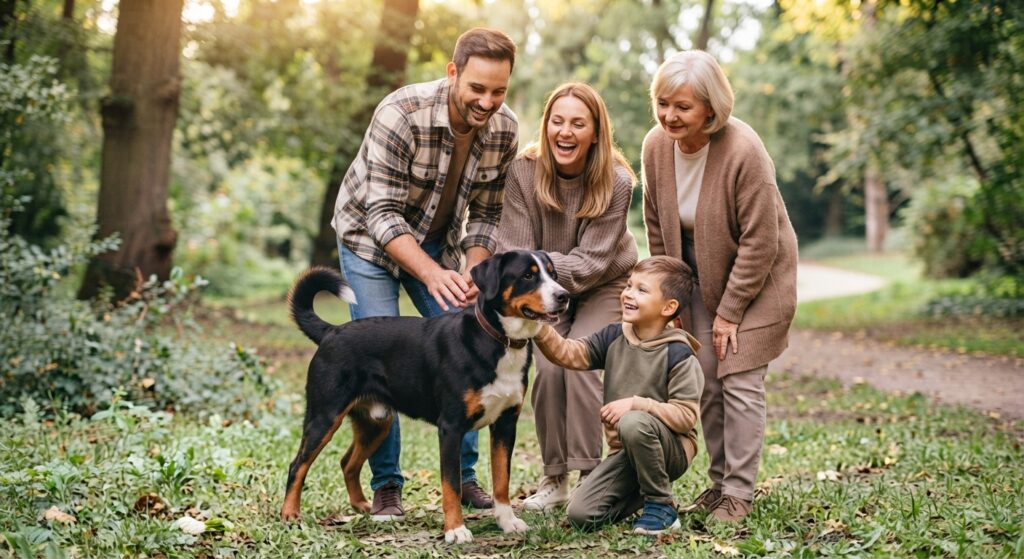
Appenzeller Sennenhunds can do well with children in active families that match their energy level, though their strong herding instincts mean some dogs may nip at heels during play, a trait worth managing through training.
Other Pets
With early socialization, the breed generally coexists well with other dogs, reflecting its working history alongside farm animals, though its strong prey drive can complicate introductions to small pets.
First-Time Owners
This is not typically recommended as a first dog. The combination of high energy, real guarding instincts, and a genuine need for structured work makes the Appenzeller better suited to owners with prior experience handling driven working breeds.
Training
Appenzeller Sennenhunds are intelligent and trainable but need real structure and consistency; without it, that intelligence and energy tend to go toward digging, barking, or other self-directed behaviors. Early socialization is particularly important given the breed’s natural wariness of strangers, and reward-based training generally works better than harsh correction with this alert, sensitive breed.
Exercise Needs
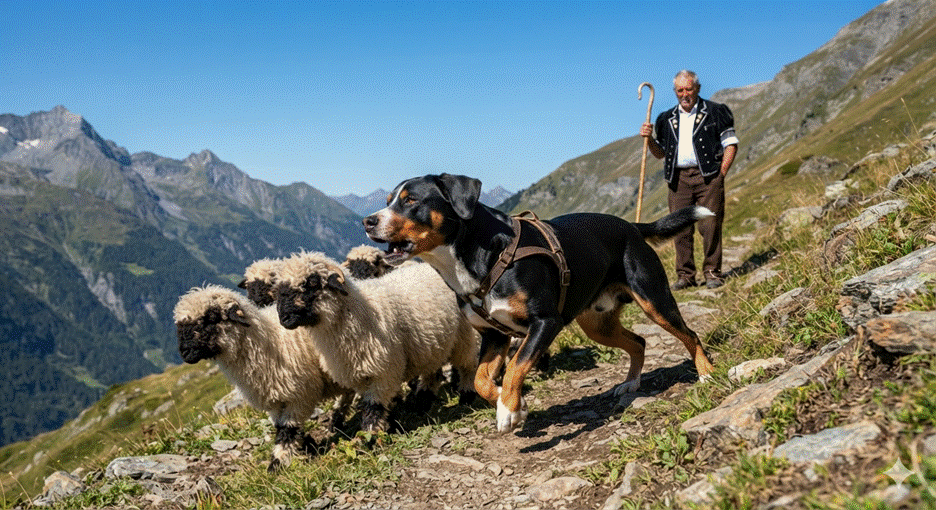
This is a genuinely high-energy breed that needs daily vigorous exercise plus structured mental tasks — long walks alone are unlikely to satisfy an Appenzeller. Activities like herding trials, agility, or cart-pulling that tap into the breed’s working heritage suit it especially well, and owners without the time or ability to provide that level of engagement should think carefully before choosing this breed. Many Appenzeller owners find that giving the dog an actual job — even something as simple as structured daily training sessions — makes a genuinely noticeable difference in the dog’s overall behavior at home.
Grooming
The short, dense double coat sheds seasonally and needs regular brushing, particularly during heavier shedding periods, to manage loose hair. Standard nail trims, ear checks, and dental care round out the routine.
Health and Lifespan
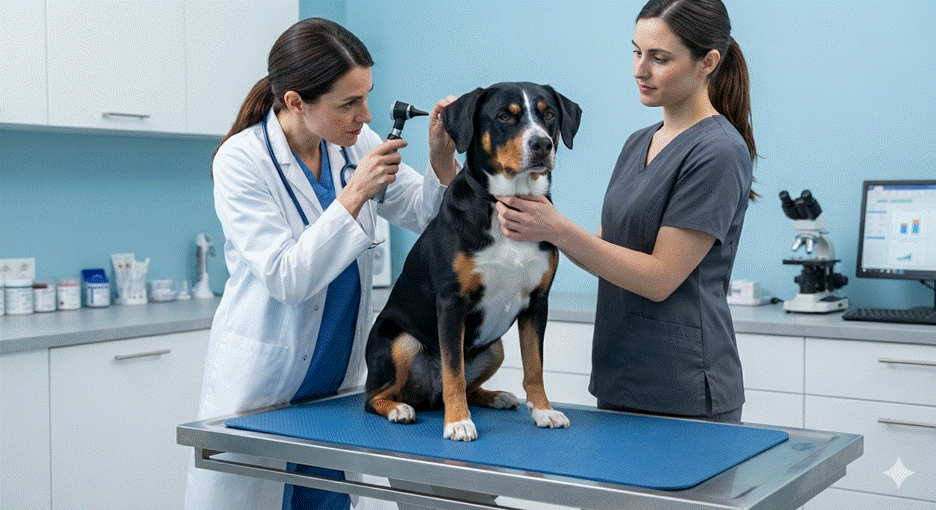
Most Appenzeller Sennenhunds live between 12 and 15 years and are generally considered a healthy breed. Still, a couple of conditions are worth knowing about.
| Condition | What It Is | What Owners Should Watch For |
| Hip dysplasia | Malformation of the hip joint | Difficulty rising, reluctance to jump, altered gait |
| Progressive retinal atrophy | Gradual, inherited vision loss | Night blindness progressing to full vision loss |
Hip dysplasia [Internal Link] screening is a standard, reasonable part of responsible breeding for this active working breed, and progressive retinal atrophy [Internal Link] screening is similarly worth asking breeders about given the condition’s genetic basis.
Nutrition
A high-quality, medium-to-large breed active-dog formula suits the Appenzeller Sennenhund well, reflecting the breed’s genuinely high energy needs. Portion control still matters, since even active working breeds can gain excess weight without adequate exercise to match their intake.
Cost and Adoption
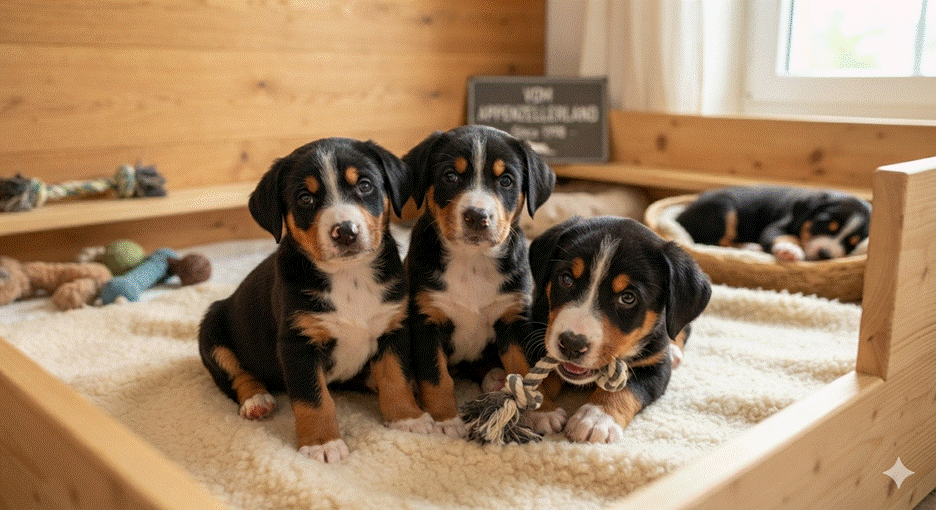
The Appenzeller Sennenhund remains genuinely uncommon in the US given its split AKC/UKC recognition status, so prospective owners should expect a real search and should expect to work with a small number of dedicated breeders. Asking about hip and eye testing is a standard, reasonable part of vetting a responsible breeding [Internal Link] program for this breed. Breed-specific rescue is limited given the population size, so most new owners will work directly with breeders through the Appenzeller Sennenhunde Club or similar organizations, and connecting with that community early is often the most reliable path to a well-matched, well-bred puppy.
Frequently Asked Questions
What is an Appenzeller Sennenhund?
The Appenzeller Sennenhund is a Swiss working breed developed by Alpine cattle-herders in the Appenzell region, one of four related Sennenhund breeds.
Is it the same as a Bernese Mountain Dog?
No — they’re related Sennenhund breeds, but the Appenzeller is smaller, has a short coat rather than the Bernese’s long silky coat, and is generally more energetic and higher-drive.
Is it AKC recognized?
It’s recorded in the AKC’s Foundation Stock Service program, eligible for companion events but not full conformation classes; the UKC has fully recognized the breed since 1993.
Are they good family dogs?
They can be, particularly in active families that match their energy level and commit to early socialization given their watchdog tendencies.
Do Appenzeller Sennenhunds bark a lot?
Yes, generally — they’re strongly predisposed to watchfulness and territorial barking, a genuine consideration for close-neighbor living situations.
How much exercise do they need?
A substantial amount — daily vigorous exercise plus structured mental tasks, not just casual walks.
How much does one cost?
Pricing varies, but given the breed’s continued rarity in the US, prospective owners should expect a limited, specialized search.
Conclusion
The Appenzeller Sennenhund is a genuinely distinct member of the Swiss Sennenhund family: smaller and considerably more energetic than its famous Bernese Mountain Dog cousin, with a real working drive that demands an active, experienced household. Understanding that distinction — and honestly assessing whether your lifestyle matches this breed’s genuine needs — matters more here than with almost any other Swiss Mountain Dog profile.