Dachshund Breed Guide: History, IVDD & Health Facts
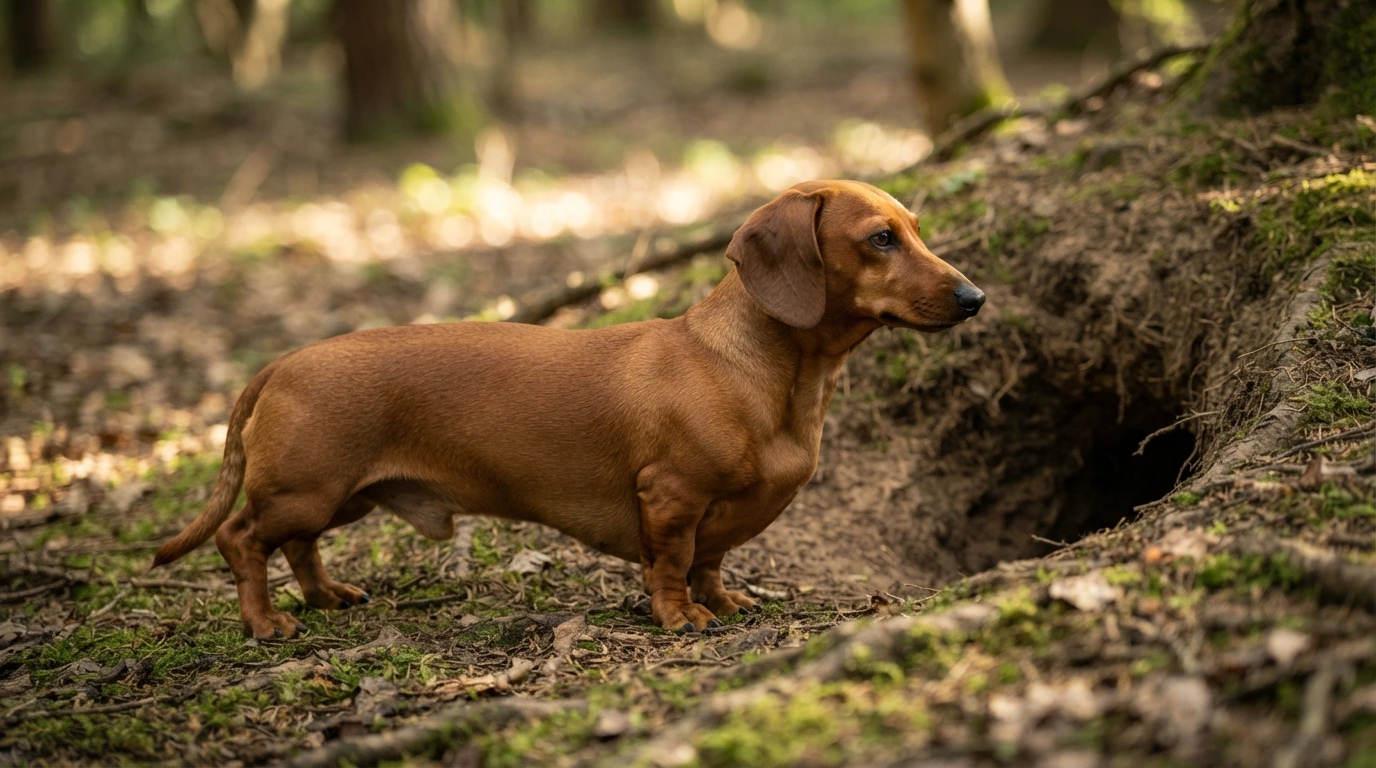
The Dachshund’s name is not a cute nickname; it is a literal job description. “Dachshund” is German for “badger dog,” built from “Dachs” (badger) and “Hund” (dog), and every distinctive feature of this breed’s unusual shape was deliberately engineered between the late 1600s and the 1700s for one dangerous task: entering a badger’s den and fighting or flushing the animal out. This guide covers that mechanical origin story, the size split that came later for a completely different quarry, the breed’s spirited and devoted temperament, and the honest, statistically grounded health guidance every prospective owner needs — including a back-health risk directly tied to the very anatomy that made this breed so effective, a coat-color genetics story most buyers never hear, and real numbers on what that back risk can cost.
Dachshund Quick Facts
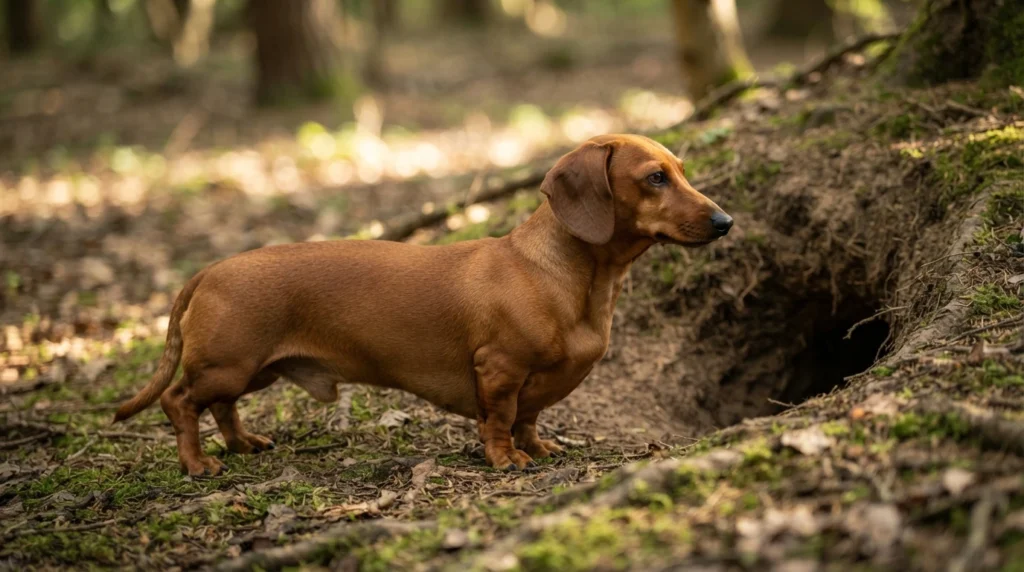
The Dachshund is a small, elongated hound breed developed in Germany specifically to hunt badgers and other burrowing animals underground.
| Attribute | Detail |
| AKC Group | Hound Group |
| Country of Origin | Germany |
| Height | 8–9 in (standard), 5–6 in (miniature) |
| Weight | 16–32 lb (standard), under 11 lb (miniature) |
| Lifespan | 12–16 years |
| Coat | Smooth, wirehaired, or longhaired |
| Colors | Red, black and tan, chocolate, dapple, and others |
| Temperament | Spirited, curious, devoted, stubborn |
History: A Name That Means Exactly What It Sounds Like
While Europeans had hunted badgers with dogs since the Middle Ages, the Dachshund as a distinct type began taking shape in the late 17th century, with German foresters and hunters breeding it consistently by the 18th century. Its name reflects its literal job: “Dachs” means badger, and “Hund” means dog, together describing exactly what this breed was built to do. German breeders crossed elements of German, French, and English hounds and terriers to create an effective, purpose-built badger hunter.
The breed’s prominent brow bone evolved to protect its eyes during underground combat, its strong, well-hinged jaw and large teeth allowed it to stand up to a badger’s powerful bite, and its short legs and deep, narrow chest let it tunnel efficiently through tight burrows that a longer-legged dog simply could not enter. This was not incidental small stature; it was deliberate anatomical engineering for a specific, dangerous job.
Germany produced more than one purpose-built hunting specialist during this era. The Bavarian Mountain Hound, developed for tracking wounded game over rough terrain, reflects the same national tradition of engineering a dog’s body around one specific job — though its long-legged, scent-driven design sits at the opposite end of the spectrum from the Dachshund’s low, burrow-ready build.
Standard vs. Miniature: Bred Down for Rabbits, Not Just Bred Small
Most people assume the Miniature Dachshund is simply a scaled-down pet version of the standard, bred smaller for cuteness. The real story is more practical. In the late 1800s, German hunters and farmers found their standard-sized badger dogs were too large to follow rabbits into their smaller burrows, and rabbit populations at the time were causing real agricultural problems. Breeders selectively bred the smallest dogs from standard litters, generation after generation, to create a dog purpose-built for rabbit-sized tunnels while keeping the same prey drive, athleticism, and personality as its badger-hunting ancestor.
Miniature Dachshunds arrived in the United States not long after, imported specifically for rabbit hunting rather than as a companion breed. Today, both sizes are registered as the same breed by the AKC — a Miniature Dachshund is not a separate breed, a “teacup” variant, or a health-compromised runt, but the product of the same deliberate, task-driven engineering that produced the standard size in the first place, just aimed at a different quarry.
Dachshund vs. Basset Hound vs. Pembroke Welsh Corgi
The Dachshund shares its distinctive short-legged, chondrodystrophic build with the Basset Hound and the Pembroke Welsh Corgi [FUTURE LINK: Pembroke Welsh Corgi breed guide], and comparing the three clarifies how the same genetic trait produced breeds developed for very different original purposes.
| Attribute | Dachshund | Basset Hound | Pembroke Welsh Corgi |
| Origin | Germany | France | Wales |
| Original purpose | Badger and burrow hunting | Scent-trailing small game | Cattle herding |
| Size | Small (16–32 lb) | Medium (40–65 lb) | Small-medium (24–30 lb) |
| Build | Elongated, short-legged, deep chest | Long-bodied, short-legged, heavy bone | Long-bodied, short-legged, compact |
Appearance
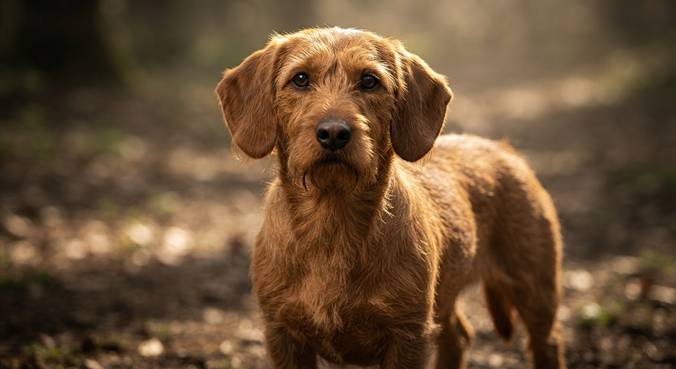
The Dachshund has a distinctively long, low body, short sturdy legs, a deep chest, and a coat that comes in three types — smooth, wirehaired, or longhaired — in colors ranging from red to black and tan to chocolate, plus the dapple pattern discussed below. Its expressive eyes and prominent brow reflect the breed’s original underground working purpose.
Coat Colors and the Dapple Controversy
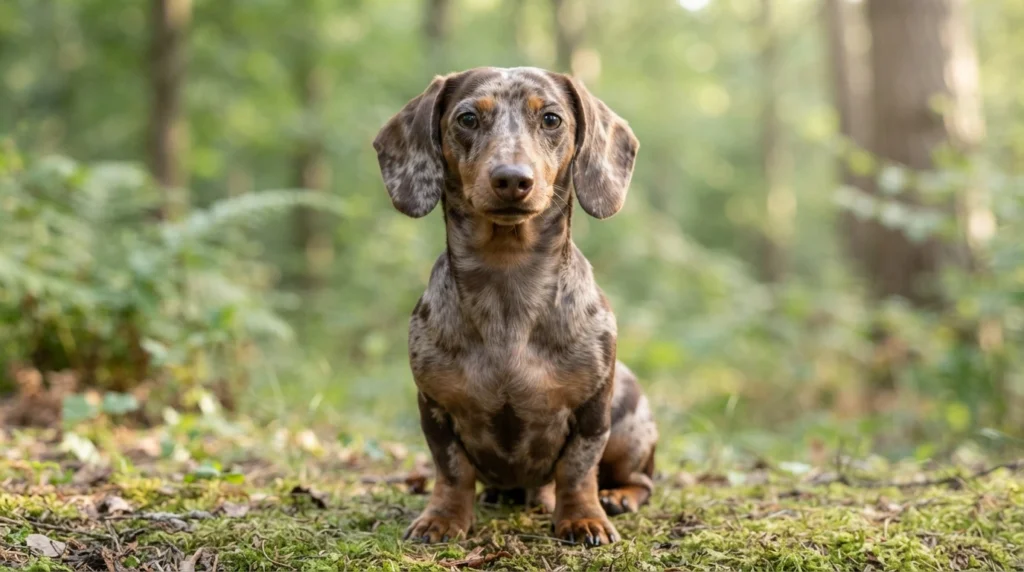
Dapple is one of the Dachshund world’s most striking coat patterns — a marbled mix of lighter patches scattered across a darker base coat — and it comes with a genetics story that every buyer should understand before falling for the look alone.
Dapple coloring comes from a single copy of the merle gene, and a single-copy (“single dapple”) Dachshund is healthy, standard, and carries no elevated health risk from the color itself. The real concern is what happens when two dapple dogs are bred together. A puppy that inherits two copies of the gene becomes a “double dapple,” and double dapples carry a meaningfully elevated risk of deafness, blindness, and microphthalmia (abnormally small or missing eyes) — the same genetic mechanism seen in double-merle breedings across other breeds. Both the AKC and the Dachshund Club of America explicitly advise breeders never to pair two dapple-patterned dogs for exactly this reason.
None of this means a single dapple Dachshund is unhealthy — it isn’t. It means buyers should ask a direct question before purchasing a dapple puppy: were both parents dapple, or only one? A “double dapple” or “dapple x dapple” litter is a red flag regardless of how striking the resulting coat looks, and a breeder who can’t or won’t answer that question clearly is one to walk away from.
Temperament
The Dachshund is spirited and curious, retaining real hunting-dog instincts alongside a fiercely devoted, sometimes stubborn personality. Bold well beyond its small size, the breed’s confident, tenacious character is a direct legacy of its badger-hunting origins.
Is a Dachshund Right for You?
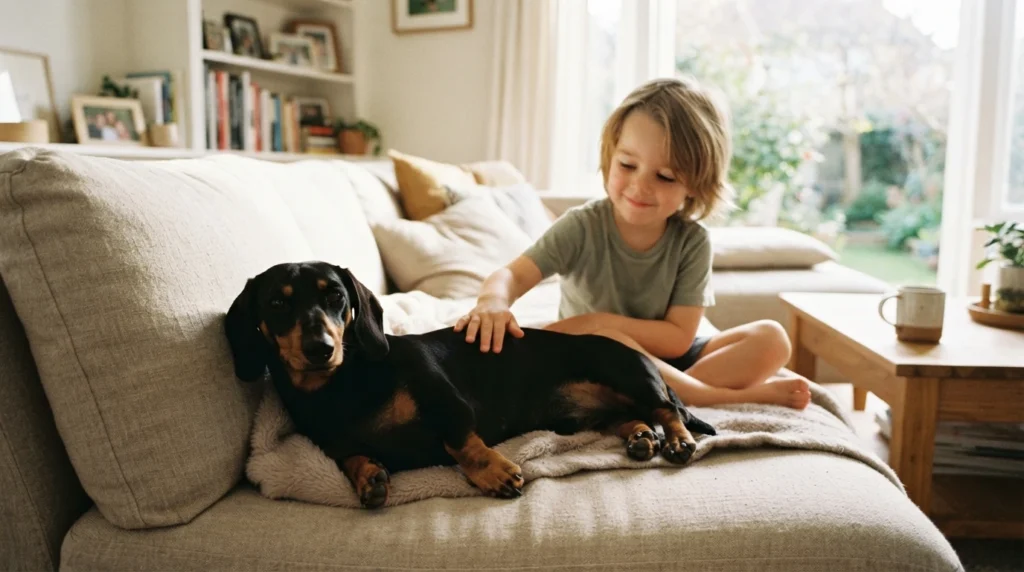
Dachshunds are typically affectionate and playful with their own families, though their small size and vulnerable back mean supervision matters, particularly with young children who might handle the dog roughly or encourage jumping. Early socialization helps this breed’s naturally bold personality develop into good household manners.
This is a breed where prospective owners need to understand a direct cause-and-effect relationship. The same short-legged, elongated build that let the Dachshund tunnel into badger dens is a genetic trait called chondrodystrophy, and that same trait is directly responsible for the breed’s single greatest health risk, making preventive care a real, ongoing responsibility rather than an afterthought.
Training
Dachshunds are intelligent but genuinely independent, a trait inherited directly from their solo badger-hunting heritage, which means training benefits from patience, consistency, and engaging, reward-based methods. Early socialization and positive reinforcement help this breed’s stubborn streak develop into good manners rather than willful resistance.
Exercise Needs
Dachshunds need moderate daily exercise, including walks and supervised play, but owners should avoid activities involving jumping, stairs, or rough handling, since these movements place real strain on the breed’s elongated spine. Controlled, low-impact exercise on flat ground is the safest approach for this breed’s back health. Ramps for furniture and cars, rather than letting a Dachshund jump on and off, are a small habit that meaningfully reduces spinal strain over a dog’s lifetime.
Grooming
Grooming needs vary by coat type: smooth Dachshunds need minimal brushing, while wirehaired and longhaired varieties benefit from more frequent brushing to prevent matting and manage shedding. Routine ear checks, nail trims, and dental care round out care for all three coat types.
Health and Lifespan: IVDD and the Cost of Chondrodystrophy
Dachshunds typically live 12 to 16 years, and while a generally hardy breed, they carry a serious, well-documented back-health risk directly tied to their signature body shape that every prospective owner should understand honestly.
| Condition | What it is | What owners should watch for |
| Intervertebral disc disease (IVDD) | Spinal disc disorder affecting an estimated 20–25% of Dachshunds in their lifetime; risk 10–12x higher than other breeds | Back pain, reluctance to move, hind-leg weakness or sudden paralysis |
| Obesity | Excess body weight, which meaningfully increases spinal strain and IVDD risk | Reduced mobility, visible weight gain, difficulty maintaining activity |
| Progressive retinal atrophy | Degenerative eye disease leading to gradual vision loss | Night blindness, dilated pupils, reluctance to move in dim light |
| Patellar luxation | Kneecap dislocation disorder common in small breeds | Skipping gait, intermittent limping, reluctance to jump |
Intervertebral disc disease affects an estimated 20 to 25% of Dachshunds during their lifetime, a relative risk 10 to 12 times higher than other breeds, and the condition is directly linked to chondrodystrophy, the same short-legged genetic trait that defines the breed’s body shape, specifically through a gene called the FGF4 retrogene, which is associated with premature disc calcification visible on radiographs. Prevalence varies meaningfully by coat variety, from 24.4% in Standard Smooth-Haired Dachshunds down to 7.1% in Standard Wire-Haired Dachshunds, and roughly 80% of IVDD cases occur between ages 3 and 7, which is why maintaining a lean body weight and avoiding jumping or stairs are genuinely important preventive steps throughout a Dachshund’s life.
The financial reality of IVDD deserves honest numbers, because it’s the single biggest budget risk of owning this breed. Surgical treatment (a hemilaminectomy) typically runs $2,000 to $5,000 for the procedure alone, but the full treatment package — diagnostic MRI or CT imaging ($1,500–$3,500), anesthesia, hospitalization, and rehabilitation — commonly brings the total to $5,000 to $10,000 or more. Pet insurance can offset this significantly, often reimbursing 70–90% of a covered claim, but most policies exclude IVDD as a pre-existing condition if symptoms appeared before the policy started, and many carry a spinal-specific waiting period of anywhere from two weeks to six months. The practical takeaway: insure a Dachshund puppy early, before any back symptoms appear, or budget a dedicated emergency fund from day one.
[FUTURE LINK: IVDD in dogs guide] [FUTURE LINK: pet insurance for breed-specific health risks]
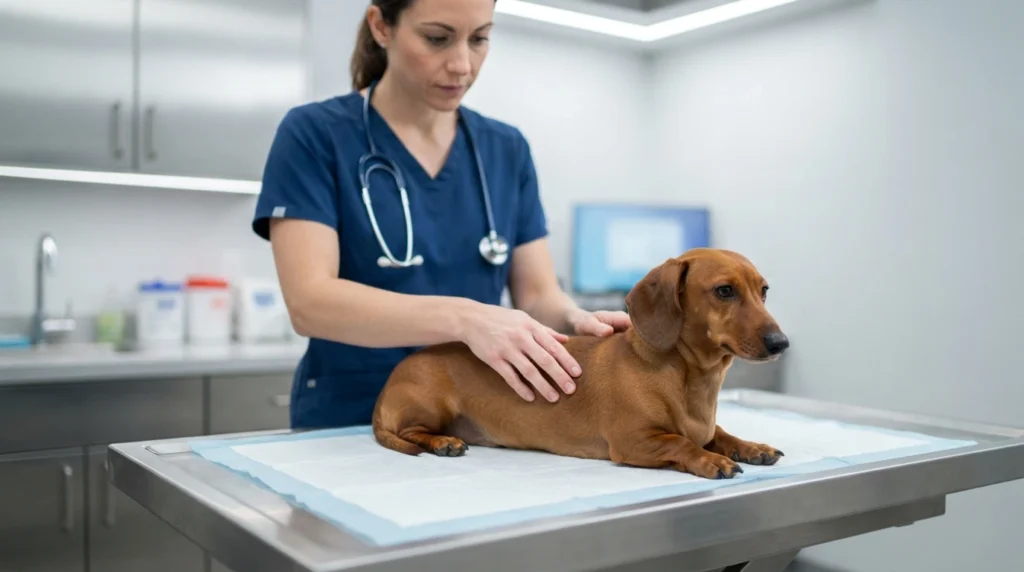
Recovery matters as much as the surgery bill. Dogs treated surgically within 24 to 48 hours of losing deep pain sensation have meaningfully better odds of walking again than those treated later, which is why sudden hind-leg weakness or paralysis in a Dachshund is always an emergency, not a wait-and-see situation. Post-surgical rehabilitation, including controlled leash walks, hydrotherapy, and strict activity restriction for 6 to 8 weeks, plays a real role in outcomes and is worth budgeting for alongside the surgery itself.
Nutrition
A high-quality diet formulated for small breeds suits the Dachshund well, with portion sizes controlled carefully, since maintaining a lean body weight meaningfully reduces the spinal strain that contributes to this breed’s elevated IVDD risk.
Cost and Adoption
Dachshund puppies from reputable breeders typically range from $800 to $2,000, with annual ownership costs, including food, routine veterinary care, and the back-health monitoring this breed benefits from, generally running $1,000 to $1,800. Given the IVDD figures above, factor pet insurance or a dedicated emergency fund into that budget from the start rather than treating it as optional. The Dachshund Club of America maintains breeder referral resources, and prospective owners should ask directly about back-health history and any prior IVDD cases in a litter’s parent dogs before committing to a puppy — and, if considering a dapple puppy, confirm that both parents were not themselves dapple.
Common Buyer Mistakes
- Letting a Dachshund jump on and off furniture. This single habit is one of the most preventable contributors to IVDD injury.
- Buying a dapple puppy without asking about both parents. A dapple-to-dapple breeding risks deafness, blindness, or microphthalmia in the puppies.
- Skipping pet insurance until symptoms appear. IVDD is frequently excluded as pre-existing once a dog shows back pain — insure early.
- Letting weight creep up. Extra weight is one of the few IVDD risk factors an owner can directly control.
- Assuming Miniatures are simply “smaller, weaker” Dachshunds. They’re a deliberately engineered working size with the same temperament and drive as the standard.
- Encouraging stair use “for exercise.” Repeated stair climbing is one of the most common everyday triggers for disc injury in this breed.
- Underestimating the breed’s stubborn streak. Dachshunds were bred to make independent decisions alone in a burrow — expect a dog with real opinions, not a pushover.
Frequently Asked Questions
What does “Dachshund” mean?
It is German for “badger dog,” from “Dachs” (badger) and “Hund” (dog), directly describing the breed’s original hunting purpose.
What were Dachshunds bred for?
Hunting badgers and other burrowing animals underground, a task that shaped nearly every distinctive feature of the breed’s anatomy.
Why is there a Miniature Dachshund?
German hunters bred the smallest dogs from standard litters down through the late 1800s specifically to hunt rabbits in smaller burrows — it’s the same breed, engineered for a different quarry, not a separate or “weaker” line.
Are dapple Dachshunds healthy?
A single dapple Dachshund (one copy of the merle gene) is healthy. Risk appears only in “double dapple” puppies bred from two dapple parents, who face elevated odds of deafness, blindness, or microphthalmia.
Why do Dachshunds get back problems?
Their short-legged, elongated body shape is caused by a genetic trait called chondrodystrophy, which is directly linked to intervertebral disc disease, affecting an estimated 20 to 25% of Dachshunds.
How much does Dachshund back surgery cost?
A hemilaminectomy procedure alone typically runs $2,000–$5,000, but the full treatment including imaging, anesthesia, and hospitalization commonly totals $5,000–$10,000 or more.
How long do Dachshunds live?
Typically 12 to 16 years, a notably long lifespan for a small breed.
Are Dachshunds good family dogs?
Generally yes, with proper supervision; they are typically affectionate and playful, though their vulnerable back means careful handling matters.
How much does a Dachshund puppy cost?
Typically $800 to $2,000 from a reputable breeder, with annual ownership costs generally running $1,000 to $1,800.
Conclusion
The Dachshund’s documented history — an anatomy deliberately engineered feature by feature for badger combat, then deliberately re-engineered smaller for rabbit hunting — gives this breed a precise origin story that also explains its greatest health vulnerability. Owners who understand the direct link between this breed’s body shape and its IVDD risk, ask the right questions about dapple breeding, budget honestly for back-health care, and maintain a lean weight tend to find the Dachshund an exceptionally spirited and devoted companion for well over a decade.